A sunrise alarm clock should be easy to control when your room is dark, quiet enough for a sleeping partner, and reliable enough that you do not need to reach for your phone at 6 a.m. That is where the differences between the Hatch Restore 2 and Hatch Restore 3 matter most.
The Hatch Restore 3 wins for most buyers because its physical controls, larger built-in sound library, slimmer design, and stronger phone-free operation make everyday use simpler. Choose the Hatch Restore 2 if you find it substantially cheaper, or keep it if you already own one and are satisfied with its touch controls and current routines.
This comparison covers the adult Hatch Restore sunrise alarm clocks, not the Hatch Rest kids' sound machines. It uses the supplied product information plus established product details about controls, app setup, connectivity, and the Restore 3 update; current prices and third-party availability can change.

Hatch Restore 2
A capable, app-centered sunrise alarm clock at its best when discounted.
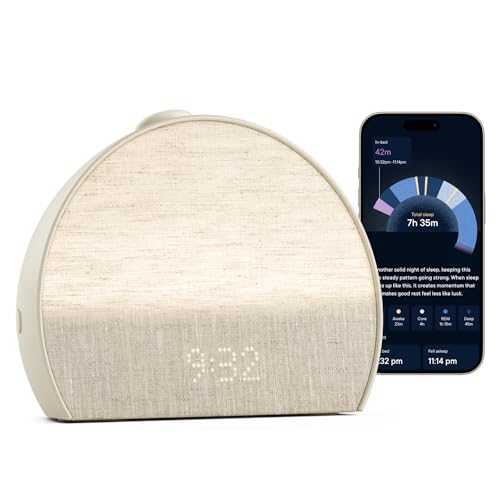
Hatch Restore 3
The better-designed and more convenient adult Hatch alarm clock.
Specs Side by Side
| Feature | Hatch Restore 2 | Hatch Restore 3 |
|---|---|---|
| Controls | Touch-sensitive top and a single-button bedside interaction | Physical volume knob and buttons, including a large main button |
| Sound library | Hatch sound library with fewer built-in choices than Restore 3 | Larger built-in sound library; reviewers commonly report about 63 sounds |
| Light features | Sunrise wake-up light, dimmable clock, reading light, and wind-down lighting | Sunrise wake-up light, reading light, and comparable wind-down lighting functions |
| Connectivity | Hatch Sleep app and 2.4GHz Wi-Fi | Hatch Sleep app and 2.4GHz Wi-Fi, with stronger phone-free bedside use |
| Design | Earlier Restore design with touch-sensitive top | Slimmer footprint and updated colors |
| Availability | Mostly third-party sellers and resale after direct sales ended | Current Restore model from Hatch and authorized sellers, subject to stock |
Head-to-Head Breakdown
Everyday controls
Winner: Hatch Restore 3
Restore 3 is the clear winner when you need to silence an alarm or adjust volume without looking. Its physical controls are easier to find by touch than Restore 2's touch-sensitive top, especially when you are half awake or sharing a room with a partner.
Sunrise light and routines
Tie
Both models provide the central Hatch experience: a gradual wake-up light, sleep sounds, reading light, and wind-down routines. The Restore 3 does not replace the Restore 2's basic light-and-routine concept; it makes the interaction around those features more convenient.
Sound machine use
Winner: Hatch Restore 3
Both can play sleep audio and white noise, but Restore 3 offers a larger built-in library and is better suited to a bedroom where the phone stays outside. Restore 2 remains useful for a light sleeper who simply wants a dependable background sound.
Value
Winner: Hatch Restore 2
Restore 2 wins only when its discount is large enough to offset its older controls and resale uncertainty. At about the same launch-price tier, Restore 3 is the more sensible purchase because it is the current model and has the more practical hardware.
Hatch 2 vs Hatch 3 alarm clock: What are the key differences?
The main difference in the Hatch 2 vs Hatch 3 alarm clock comparison is not the basic sleep philosophy. Both adult Restore models combine a sunrise alarm clock, wake-up light, sound machine, reading light, and wind-down routine through the Hatch Sleep app. Restore 3 updates how you control those features and how much audio it can store or access without reaching for a phone.
Hatch Restore 2 uses a touch-sensitive top. That feels clean and minimal, but a flat touch surface can be awkward when you are trying to snooze in a dark room. Hatch Restore 3 adds a physical volume knob and buttons, including a large main button that is easier to locate by feel.
Restore 3 also has a slimmer footprint, refreshed colors, and a larger built-in sound library. Those changes are practical rather than transformative: they do not guarantee better sleep, but they reduce friction during the moments when you want the alarm clock to stay out of your routine.
The two products are often confused with Hatch Rest, the children's line. This comparison is specifically about the adult Restore 2 and Restore 3, which are designed as bedside sunrise alarm clocks for adults.
- Best overall: Hatch Restore 3
- Best deal if heavily discounted: Hatch Restore 2
- Best for existing owners who are happy: Keep Restore 2
- Best for a phone-free bedroom: Restore 3
| Use case | Better choice | Why |
|---|---|---|
| Snoozing in a dark room | Restore 3 | The large physical button is easier to find than a touch-sensitive surface. |
| Keeping a partner asleep | Either | Both offer gradual light and sound controls; use a low light level and appropriate audio volume. |
| Running white noise all night | Restore 3 | Its larger built-in sound library gives it the edge for phone-free audio selection. |
| Lowest purchase cost | Restore 2 | Older inventory or resale units may be discounted, though condition varies. |
Which Hatch alarm clock has better controls and design?
Hatch Restore 3 has better controls and design for most bedrooms. The volume knob gives you a tactile way to make an adjustment, while the physical buttons and large main button are more dependable than touch controls when the lights are off.
That difference matters in concrete situations. If an alarm starts while your partner is still sleeping, you can reach for Restore 3's button without turning on a phone screen. If a teen or older parent uses the clock, clearly defined buttons may also be easier to understand than remembering where to tap.
Restore 2's touch-sensitive top is not a failure. It keeps the device visually simple and supports phone-free interaction for basic actions. The drawback is that touch controls provide less physical feedback, so you may need to tap or search for the correct area while groggy.
Neither model is a conventional bright digital alarm clock designed around a large time display. Their appeal comes from a calmer bedside setup: dimmable light, scheduled routines, and fewer reasons to keep a phone within reach.
What about a phone-free bedroom?
Restore 3 is the stronger fit for a phone-free bedroom because Hatch designed it to handle more everyday control without a phone. You will still want the Hatch Sleep app for setup and customization, but routine bedside actions do not need to involve a glowing smartphone.
Restore 2 can also start a nighttime routine or turn off a morning alarm with its bedside control. It simply feels less precise when you cannot see the touch surface.
- Choose Restore 3 for tactile control and easier nighttime adjustments.
- Choose Restore 2 if its minimal touch design is familiar and comfortable.
- For an older user, explain the app setup and test the physical routine controls before relying on the clock.
Are the sound and wake-up light features different?
The core sound and light features are similar, but Restore 3 has the advantage for audio variety and independent use. Both models are designed to provide a sunrise wake-up light, sleep sounds, white noise, a reading light, and wind-down routines that transition the room toward bedtime.
For a light sleeper who needs white noise throughout the night, both products can serve as a sound machine. Restore 2 may be all you need if you have one favorite sound and control it through the app. Restore 3 is more flexible when you want to change sounds without bringing a phone into the bedroom.
The supplied product information lists Restore 2 with 80-plus sleep sounds in its product title, while background product reporting commonly describes its built-in selection as smaller than Restore 3's. Restore 3 reviewers often report about 63 built-in sounds, but the exact available selection can depend on software and content access. Check Hatch's current product page for the latest library.
The wake-up light is the more important shared feature. Both are designed to increase light gradually rather than jolting you awake with an immediate alarm. That may make waking feel gentler for some people, but no sunrise alarm clock can replace consistent sleep habits or guarantee a particular health result.
Can a partner use the clock comfortably?
Either model can work beside a sleeping partner when you keep the light dim and choose a low-volume sound. Restore 3 makes last-minute changes easier, which is useful when one person wants white noise and the other wants the room as quiet as possible.
A shared bedroom still requires compromise. Test the light color, brightness, routine timing, and sound level rather than assuming the default settings will suit both sleepers.
- Use a gradual wake-up light rather than maximum brightness.
- Select steady white noise or another unobtrusive sound for background masking.
- Keep the reading light off when one partner is already asleep.
Do you need the Hatch Sleep app or Hatch+ subscription?
You need the Hatch Sleep app for setup and broader customization, and both Restore models use 2.4GHz Wi-Fi for connected operation. The app is where you configure alarms, lights, routines, and available audio, so neither device is completely independent of a phone during initial setup.
Restore 3 is better described as phone-free for everyday bedside use, not entirely app-free. Once configured, its physical controls and built-in capabilities reduce the need to pick up your phone. That distinction matters if you want your phone charging outside the bedroom but still want to snooze, change volume, or start a routine.
Hatch+ is optional. The clocks provide core functions without requiring the subscription, while Hatch+ can provide access to additional premium sleep content and experiences. The exact catalog and current terms can change, so check Hatch's subscription page before assuming a particular meditation, story, or sound is included.
Wi-Fi is another limitation. If your bedroom has weak 2.4GHz coverage, setup and connected features may be frustrating. A buyer who wants a totally offline alarm should consider a simpler nonconnected clock instead of assuming Restore 3 removes every network requirement.
- 1
Set up the clock before bedtime
Connect it through the Hatch Sleep app on a compatible 2.4GHz Wi-Fi network, then create the wake-up time, light behavior, sound, and wind-down routine you want.
- 2
Test phone-free controls
After setup, put the phone away and practice the main bedside actions. This is especially useful when giving the clock to a teen or older parent.
- 3
Review subscription boundaries
Use the free core functions first, then decide whether Hatch+ content justifies an ongoing cost for your household.
Hatch Restore 2 vs Restore 3 price and availability
Restore 3 is the safer purchase when prices are close because it is the current replacement model. Restore 2 launched in the same general premium category, but Hatch no longer sells it directly, so its current price depends on third-party inventory, resale condition, and seller policies.
The Restore 2 product data lists a price of 219.99 USD, but you should not treat that figure as a guaranteed current street price. Older units may be discounted, while some resellers may ask too much because availability is limited. Check the seller, warranty, return window, and whether the product is new or used.
Restore 3 can justify a higher price for buyers who value tactile controls, a slimmer body, updated colors, and a larger built-in sound library. If a Restore 2 offer is substantially lower and you only need a sunrise light plus one reliable sound, the older model can be the more economical choice.
Also consider the long-term cost of Hatch+ if you want premium content. The subscription is optional, but it should be part of the ownership decision rather than an afterthought.
Should you consider another brand?
Philips SmartSleep and Loftie are reasonable alternatives to investigate if you want a different sunrise-light design, sound-machine approach, or subscription model. Compare their current app requirements and feature access directly because product generations and pricing change.
Hatch also sells the newer Hatch Sleep Clock, which adds contactless sleep tracking, personalized insights, and sleep recommendations alongside light and audio features. Choose it when sleep tracking is a priority; choose Restore 3 when you mainly want a straightforward adult sunrise alarm clock.
- Restore 2: best when the discount is meaningful and the seller is trustworthy.
- Restore 3: best when you want the current model and better physical controls.
- Hatch Sleep Clock: best when contactless sleep tracking is central to your decision.
Who should buy Hatch Restore 2 or Restore 3?
Most new buyers should choose Hatch Restore 3. Its physical controls solve the most noticeable Restore 2 annoyance, and its larger built-in sound library and slimmer design make it more comfortable for daily use.
Restore 2 still makes sense for a bargain hunter who finds a clean, working unit at a substantial discount. It is also the right choice for a current Restore 2 owner who already likes the touch controls, routines, and sound selection. An upgrade is optional, not necessary for everyone.
The upgrade becomes easier to justify if you regularly grope for the snooze button, change volume at night, keep your phone outside the bedroom, or want more built-in sounds. If your Restore 2 is reliable and you rarely touch it after setup, spending money on Restore 3 may produce only a modest practical improvement.
For children, neither adult Restore model is the obvious first choice. Hatch Rest products are the kids' sound machines and sleep trainers, while Restore 2 and Restore 3 target adult bedside routines.
| Buyer profile | Recommended model | Buying advice |
|---|---|---|
| New buyer who wants the easiest controls | Hatch Restore 3 | Pay for the current design, physical buttons, and larger built-in sound library. |
| Bargain hunter | Hatch Restore 2 | Buy only if the discount is substantial and the seller offers acceptable condition and returns. |
| Current Restore 2 owner who is satisfied | Keep Restore 2 | There is no urgent reason to upgrade if your routines and touch controls work well. |
| Current Restore 2 owner frustrated by nighttime controls | Hatch Restore 3 | The physical main button and volume knob address the clearest daily-use weakness. |
| Buyer who wants sleep tracking | Hatch Sleep Clock | Consider Hatch's newer tracker instead of either Restore model. |
| Parent shopping for a child's room | Hatch Rest line | Look at the kids' products rather than these adult Restore clocks. |
Hatch Restore 2: Pros and Cons
What we like
- Sunrise wake-up light, sleep sounds, reading light, and wind-down routines
- Touch-sensitive top supports simple bedside interaction
- Can be an excellent value when sold below its original positioning
- Supports the Hatch Sleep app and optional Hatch+ content
What could be better
- Touch controls are harder to locate in a dark room than physical buttons
- Hatch no longer sells it directly, so availability and condition vary
- Initial setup and many customizations depend on the app and 2.4GHz Wi-Fi
- The built-in sound selection is smaller than Restore 3's
Hatch Restore 3: Pros and Cons
What we like
- Physical volume knob and buttons, including a large main button
- Designed to work without a phone for everyday bedside control
- Larger built-in sound library than Restore 2
- Slimmer footprint with updated color options
- Keeps the core sunrise light, sound machine, reading light, and routine functions
What could be better
- Usually costs more than a discounted or used Restore 2
- Still relies on the Hatch Sleep app for setup and broader customization
- Requires compatible 2.4GHz Wi-Fi for connected features
- Optional Hatch+ content adds an ongoing subscription consideration
FAQs About Hatch 2 vs Hatch 3 alarm clock
Is the Hatch Restore 3 worth upgrading from Restore 2?
The Hatch Restore 3 is worth upgrading to if you dislike Restore 2's touch controls, want easier snoozing in the dark, or prefer a larger built-in sound library. It is not an essential upgrade for satisfied Restore 2 owners whose routines work reliably. Consider the upgrade a convenience improvement, not a guaranteed sleep improvement.
Do you need Hatch+ to use the Hatch Restore 3?
No, Hatch+ is optional for Hatch Restore 3. Core alarm, light, sound, and routine functions are available without the subscription, while Hatch+ provides additional premium content and experiences. The Hatch Sleep app and compatible 2.4GHz Wi-Fi are still relevant for setup and connected customization, even without Hatch+.
Does Hatch Restore 3 work without a phone or Wi-Fi?
Restore 3 is designed for phone-free everyday bedside control, but it is not completely app-free or offline. You use the Hatch Sleep app and 2.4GHz Wi-Fi for setup and connected features. After configuration, physical controls and built-in sounds reduce the need to keep a phone beside the bed.
Is the Hatch Restore 2 discontinued?
Hatch Restore 2 has effectively been replaced by Restore 3 and is no longer sold directly by Hatch as the current model. You may still find Restore 2 through third-party sellers or resale marketplaces. Check condition, warranty, return terms, and the seller's reputation before choosing an older unit.
Which Hatch is best for kids?
The Hatch Rest line is the better fit for kids because it is designed as a children's sound machine and sleep trainer. Hatch Restore 2 and Restore 3 are adult sunrise alarm clocks. Choose Restore 3 for an older teen who wants an adult bedside routine, but verify that its controls and content suit the child.
Final Verdict
Winner: Hatch Restore 3
Hatch Restore 3 is the overall winner because it keeps the useful sunrise light, sound machine, and wind-down routine features while fixing the most obvious control weakness.
Its physical buttons, volume knob, larger built-in sound library, slimmer design, and stronger phone-free operation make it the better new purchase.
Hatch Restore 2 remains a sensible value choice when heavily discounted, and satisfied owners do not need to upgrade.
Choose Hatch Restore 2 if
- You find a substantially discounted Restore 2 from a trustworthy seller.
- You already own Restore 2 and are happy with its touch controls, sounds, and routines.
- You mainly need a basic sunrise alarm clock and sound machine rather than the newest hardware.
Choose Hatch Restore 3 if
- You are buying your first adult Hatch Restore clock.
- You want physical controls that are easy to find while half asleep.
- You want a phone-free bedroom, more built-in sound choices, and the current model's slimmer design.
- You are willing to pay more than a discounted Restore 2 for better everyday convenience.