
Place the rug so it extends at least 18–24 inches beyond the bed on all usable sides.
I’ve spent years staging bedrooms and rehabbing homes, so I know how to position area rug under bed to make a room feel larger, more grounded, and cozier. This guide walks you through clear rules, real-life tips I’ve tested, and step-by-step advice for every bed type so you can place a rug with confidence and style.
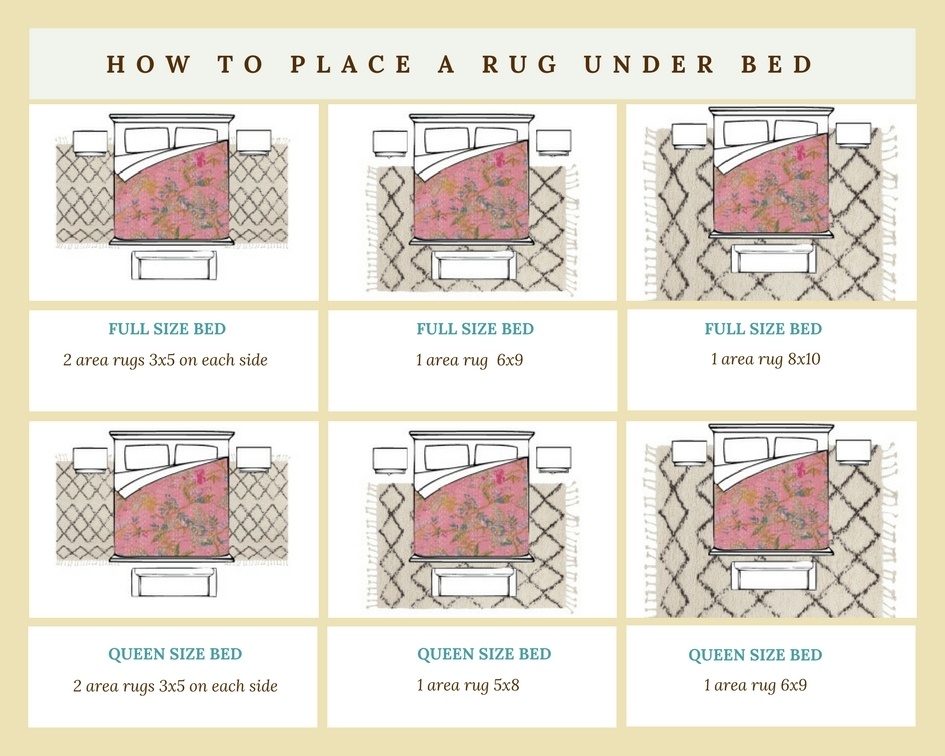
Why rug placement matters for bedrooms
A rug changes how a bedroom feels. Placing a rug well anchors the bed and creates a clear visual zone in the room. Knowing how to position area rug under bed helps with balance, comfort, and traffic flow. A correctly placed rug keeps feet warm, protects floors, and elevates your decor.
:max_bytes(150000):strip_icc()/right-size-area-rug-for-bedroom-350698-8615a8f66ae846159199c384040de351.png)
Basic rules: sizes, spacing, and scale
Use these simple rules to decide what size rug to buy and where to lay it.
- Measure the bed and room first. Record bed length and width, and free floor space.
- Leave 18–24 inches of rug around both sides and the foot of a standard queen or king bed. This is the most common rule for how to position area rug under bed.
- For a twin or full bed, aim for at least 12–18 inches of rug on each side.
- If your room is small, a runner or partial rug that starts under the nightstands can work without overwhelming the space.
- When in doubt, pick a rug large enough to show at least 50% of the bed legs on the rug.
I always sketch the room with tape on the floor before buying. It saves money and avoids returns.

Step-by-step placement by bed type
Follow these measured steps to place a rug perfectly for your bed.
-
Platform or low bed
- Choose a rug that extends 18–24 inches past the sides and foot.
- Center the rug under the bed so the headboard aligns with the rug edge.
- This placement shows rug around the bed and keeps the look balanced.
- Tip: If the platform drops below the mattress, make sure the rug is visible beyond the platform edge.
-
Standard bed with nightstands
- Buy a rug wider than the combined width of the bed and nightstands, or place a rug that extends at least 18 inches beyond each side of the mattress.
- Center the rug so nightstand legs rest on the rug. This emphasizes cohesion.
- If you can’t fit a full rug, place two matching runners on each side as an alternative when space is tight.
-
King bed
- A large area rug (9×12 or bigger) usually works best.
- Position so the rug extends 18–24 inches on all sides and under the nightstands.
- This helps you know exactly how to position area rug under bed in a master suite.
-
Small rooms or shallow closets
- Use an oversized runner that starts under the headboard and extends beyond the foot.
- Leave at least 12 inches at the foot if space is tight.
- This creates a visual bed zone without crowding doors.
I once staged a narrow guest room using two runners and a small bedside rug. The room felt much wider when the rugs were aligned precisely with the bed.

Common mistakes and how to fix them
Avoid these placement errors I see all the time.
-
Rug too small
- Problem: Rug looks lost or like an afterthought.
- Fix: Choose the next standard size up or layer a second rug for more coverage.
-
Rug too large
- Problem: Rug overwhelms and hides floor features.
- Fix: Pull the rug back so it doesn’t cover key floor details or choose a smaller option.
-
Misaligned rug
- Problem: Rug is off-center or uneven relative to the bed.
- Fix: Re-center the rug using the headboard or bed frame as a guide to balance the room.
-
Nightstands off the rug
- Problem: Visual disconnection between bed and nightstands.
- Fix: Move the rug so the front legs of the nightstands sit on it, or place small matching rugs under each nightstand.
When I first learned staging, I placed rugs too far forward. The fix was always to re-align with the headboard. That small change made rooms feel intentional.

Materials, safety, and care tips
Pick the right rug for comfort and durability while keeping safety in mind.
-
Natural fibers
- Wool and cotton feel soft and last long.
- Wool is easier to clean and resists matting.
-
Synthetic fibers
- Polyester and polypropylene can be stain-resistant and budget friendly.
- They work well in high-traffic bedrooms.
-
Rug pad
- Always use a rug pad. It stops slipping and adds cushion.
- A pad also protects floor finish and extends rug life.
-
Cleaning
- Vacuum weekly and treat spills quickly.
- Rotate the rug every 6–12 months to even wear.
I learned to add a good pad after one rug slid every morning. It was a simple fix that improved safety and comfort.

Styling tips to elevate the look
Use these design moves to make rug placement intentional and stylish.
-
Contrast vs. blend
- Use a contrasting rug to make the bed pop.
- Use a neutral rug to create calm and cohesion.
-
Layering
- Layer a small patterned rug over a larger neutral rug for texture and depth.
- Place the top rug centered under the bed for a tailored look.
-
Pattern scale
- Pair large bed frames with larger rug patterns.
- Use small repeat patterns with simpler bed frames.
-
Color flow
- Pull a color from bedding or curtains into the rug to tie the room together.
- Keep balance by limiting the bold colors to two or three accents.
When I redesigned my own bedroom, I chose a soft, neutral rug and added a small patterned runner at the foot. The combo created warmth without clutter.

Frequently Asked Questions of how to position area rug under bed
How far should a rug extend beyond the sides of a bed?
Aim for 18–24 inches beyond each side of a queen or king bed. Use 12–18 inches for twin or full beds in smaller rooms.
Can I place a rug only at the foot of the bed?
Yes, a rug at the foot can work, especially in tight rooms. Make sure it’s wide enough to feel intentional and not like a stray piece.
Should nightstands sit on the rug when positioning under a bed?
Ideally, the front legs of nightstands should sit on the rug to anchor the bed and nightstands together. If that’s not possible, use smaller coordinating rugs under each nightstand.
What size rug fits under a king bed?
A 9×12 rug is a common fit for a king bed, giving 18–24 inches of coverage on the sides and foot. Larger rooms may need a larger custom size.
Do I need a rug pad when placing a rug under a bed?
Yes. A rug pad prevents slipping, cushions feet, and protects the floor. It also keeps the rug from wrinkling and shifting over time.
Will a rug make my small bedroom look smaller?
Not if you use the right rug size and placement. Placing a rug so it extends beyond the bed visually defines the bed zone and can make the room feel more spacious.
Is it okay to layer rugs under a bed?
Absolutely. Layering a smaller patterned rug over a larger neutral rug adds texture and warmth. Ensure the top layer is centered and anchors under the bed.
Conclusion
A well-placed rug transforms a bedroom. Use simple measurements, a quality pad, and the right size to anchor your bed and improve comfort. Try sketching with tape, test a few placements, and commit to what feels balanced. Ready to refresh your bedroom? Place the rug, step back, and enjoy the improved look—then share your before-and-after or subscribe for more styling tips.