
Place a rug so front legs anchor on it, sized to fit furniture and allow walking space.
I have helped dozens of homeowners and staged many rooms. I know the small moves that make a big impact. This guide on how to place an area rug in a living room is practical, tested, and easy to follow. You will learn sizing, layout rules, placement for common floor plans, material choices, styling tips, and mistakes to avoid. Read on and get confident about placing an area rug in your living room.
Why rug placement matters
A rug sets scale, anchors furniture, and defines zones. Poor placement makes a room feel small or awkward. Good placement ties the seating together. It also protects floors and reduces noise. I’ve seen rooms transformed by moving a rug just a few inches. When you learn how to place an area rug in a living room, your space will look balanced and intentional.

Choose the right size and shape
Measure first. Use a tape measure or painter’s tape. Mark potential rug edges on the floor. That helps you visualize.
Common sizes and where they work best
- 5×8 feet — Best for small seating groups or in front of a sofa.
- 6×9 feet — Works under a small sofa and coffee table.
- 8×10 feet — Ideal for standard living rooms with a full seating area.
- 9×12 feet — Fits larger rooms or open-plan layouts.
- Round rugs — Use under a round coffee table or in a cozy corner.
Rules to pick size
- Leave 12 to 24 inches of floor visible along the walls for balance.
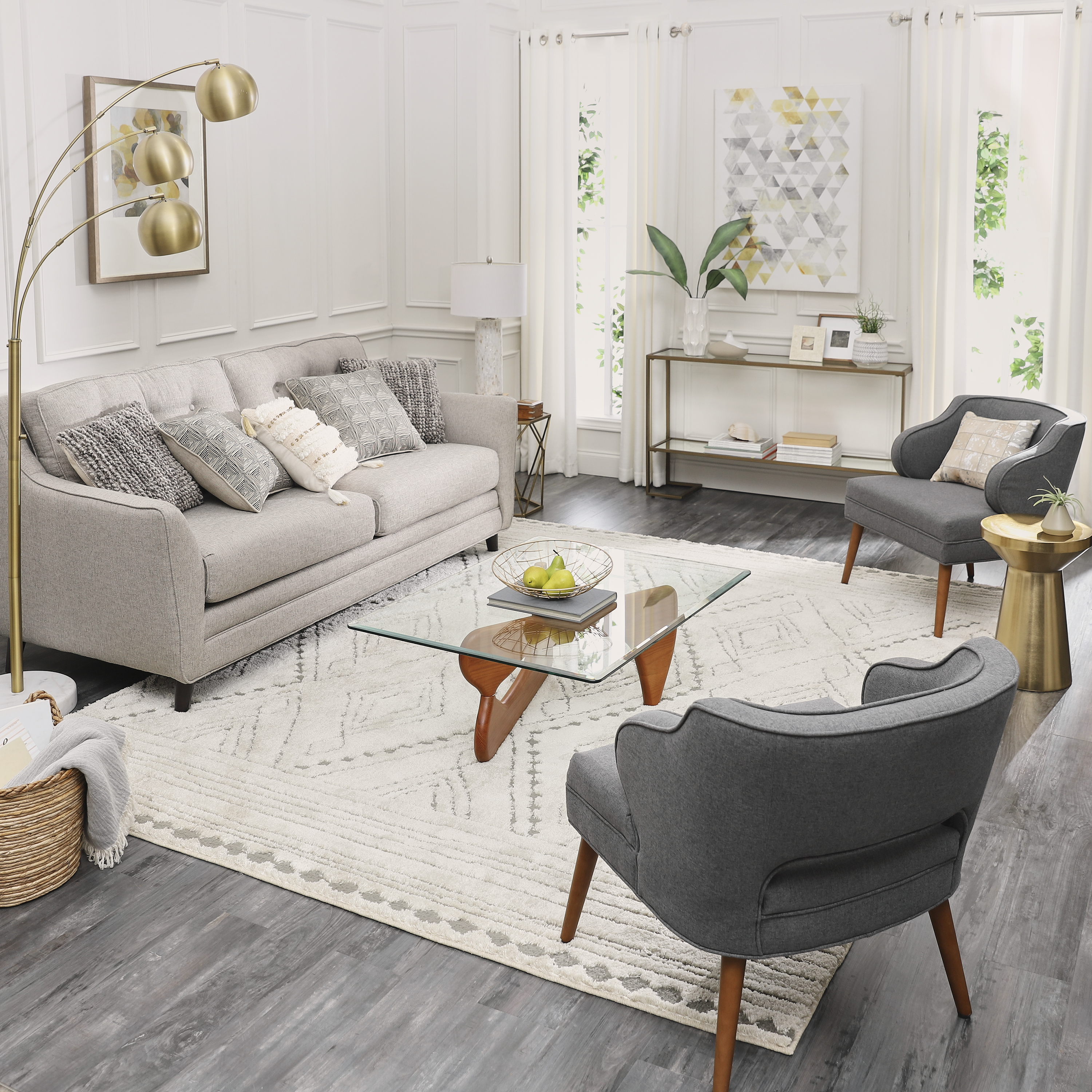
- Aim to have at least the front legs of sofas and chairs on the rug.
- For floating furniture, either all legs on or front legs on the rug looks intentional.
Practical tip from experience
- I once used painter’s tape to test an 8×10 rug in a small room. The room instantly felt anchored. That simple step saves money and time.
Basic rug placement rules
Follow a few simple rules. They make decisions quick and easy.
Key rules
- Anchor seating by placing front legs on the rug. This connects all pieces.
- If possible, place all furniture legs on the rug for a cohesive look.
- Maintain a walkway of 18 to 24 inches from the edge to walls or doors.
- Match rug shape to furniture and room shape for harmony.
Small-room shortcut
- Use a rug under the coffee table only. Keep it smaller than the seating area. This keeps sight lines open.
How to decide between front-legs-only and all-legs
- Front-legs-only works for smaller rugs and older floors.
- All-legs works for larger rugs and a unified look.
Placement for common living room layouts
Different layouts demand different approaches. Here are practical placements for typical rooms.
Sofa against a wall
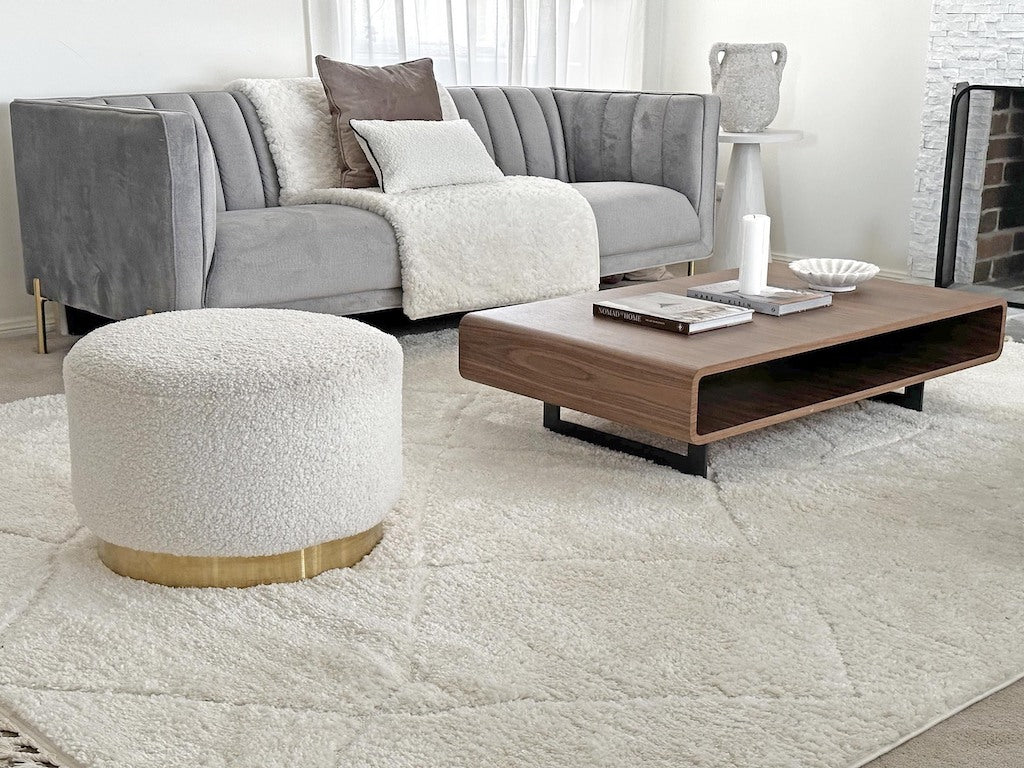
- Use a rug that starts just before the sofa feet and extends under the coffee table.
- Keep 12 to 18 inches of rug in front of the sofa for balance.
Floating seating area
- Choose a rug that fits all furniture legs.
- Leave 18 to 24 inches of floor between rug edge and surrounding walls.
Open-plan living/dining
- Use two rugs to define zones. Keep the living rug large enough for the furniture group.
- Keep at least 30 inches between the two rugs for visual separation.
Small living room
- Place a smaller rug with front legs on. Let the back legs sit off the rug.
- Keep pathways clear for easy movement.
Large living room
- Use a large rug to anchor a conversation area. Consider layering smaller rugs for texture.

Rug materials, pads, and longevity
Material affects look and wear. Choose materials by use and lifestyle.
Common materials and pros
- Wool — Durable and soft. Good for busy rooms.
- Synthetic fibers — Easy to clean and budget-friendly.
- Cotton — Casual and washable. Best for low-traffic areas.
- Jute or sisal — Natural look. Better in low-moisture spaces.
Rug pad importance
- A pad adds cushion and prevents slipping.
- Pads extend a rug’s life by reducing friction.
- Choose a pad slightly smaller than the rug to avoid visible edges.
Care tips
- Rotate rugs every 6 months for even wear.
- Vacuum regularly and spot clean spills fast.
- Professional cleaning once a year keeps fibers fresh.
:max_bytes(150000):strip_icc()/Retouched-Laura-Genevieve-horizontal-af3b84469eb848d99572faeda9950803.jpg)
Styling, layering, and color tips
Rugs set tone and texture. Use them to enhance your style.
Color and scale tips
- Use lighter rugs to open a small room.
- Use darker rugs to ground a large space.
- Scale patterns to furniture size. Big patterns suit large rugs.
Layering rugs
- Layer a smaller patterned rug over a neutral base.
- Use layering to add warmth and protect high-use areas.
Mixing style and function
- Match rug texture to room vibe. Soft shag for cozy rooms. Flatweave for modern rooms.
- Think about pet hair and maintenance when choosing fiber.
Personal styling note
- I like to center a rug under the coffee table. It creates a natural focal point. Small shifts fix awkward sight lines quickly.

Common mistakes to avoid
Avoid these simple errors. They are easy to fix.
Frequent mistakes
- Choosing a rug too small. It makes the room feel disjointed.
- Placing the rug too close to the wall. Keep visible floor border.
- Forgetting a rug pad. Slipping and wear follow.
- Ignoring traffic flow. Rugs should not block easy movement.
How to fix mistakes
- Test rug placement with tape first.
- Move furniture slightly until proportions feel right.
- If a rug is too small, use two rugs or layer a runner to compensate.
:max_bytes(150000):strip_icc()/AmyCooper-MarcellaAlanAfter1-5bef478326874b728b526bac19649802.jpg)
Frequently Asked Questions of how to place an area rug in a living room
How large should an area rug be for a living room?
Aim to have at least the front legs of seating on the rug. For full anchoring, choose a rug that fits all furniture legs. Leave a border of visible floor along walls.
Should a rug go under the sofa?
Yes, placing the front legs of the sofa on the rug anchors the seating. If the rug is large, place all legs on it for a polished look.
How far should a rug be from the walls?
Leave 12 to 24 inches of floor between the rug edge and the walls. This provides balance and shows room scale.
Can you use a rug on hardwood floors without a pad?
You can, but a pad adds grip and protects both floor and rug. A pad also cushions and reduces wear.
What shape rug should I use in a rectangular living room?
A rectangular rug usually works best. Match the rug shape to the furniture layout. Round rugs suit round coffee tables or cozy corners.
How do I pick a rug color for my living room?
Choose a color that complements existing furniture and wall tones. Use the rug to introduce accent color or texture. Keep high-traffic rooms in darker or patterned rugs.
Conclusion
Good rug placement changes how a room feels. Use the simple rules here to anchor furniture, pick the right size, and match materials to your lifestyle. Test placements with tape, use a pad, and adjust until the balance feels right. Try one change this weekend: measure and place the rug so front legs are anchored. Then stand back and notice the difference. If you found these tips helpful, try them and share your result or ask a question below.