Choose a rug so it anchors furniture, leaving 12–24 inches of floor visible around the edges.
I’ve helped dozens of homeowners, staged homes, and tested layouts to answer how big should my area rug be with clear, practical rules. Read on for room-by-room sizing, measuring tips, mistakes to avoid, and straight answers you can use today to pick the right rug size.
Why rug size matters
A rug sets scale and ties a room together. Choosing the wrong rug can make a room look small, chopped up, or poorly planned. When you ask how big should my area rug be, think about traffic flow, furniture layout, and the feeling you want the space to give. A well-sized rug makes a room feel finished and intentional.

Standard rug sizes and what they mean
Rugs come in common sizes that fit typical rooms. Knowing these sizes helps you pick one that fits furniture and leaves a pleasing border of floor.
- 4 x 6 feet — Good for small entryways and reading nooks.
- 5 x 8 feet — Works under a coffee table in small living rooms.
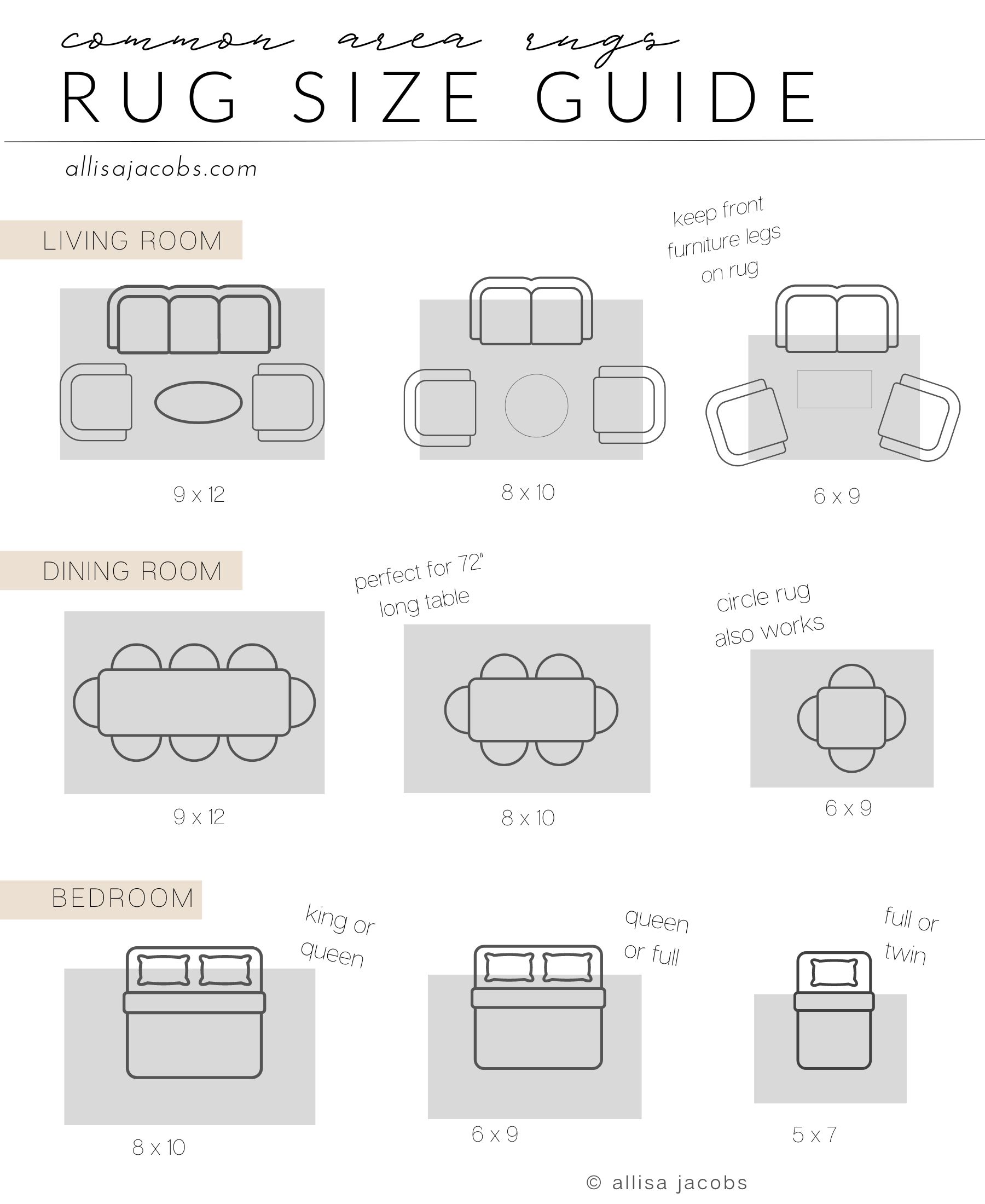
- 6 x 9 feet — Fits smaller living areas or under a dining table for seating of four.
- 8 x 10 feet — A flexible living room and bedroom size for many layouts.
- 9 x 12 feet — Preferred for larger living rooms to hold all furniture.
- 10 x 14 feet and larger — Best for open plans and formal living rooms.
When you wonder how big should my area rug be, pick a size that matches room scale and furniture groupings.

Living room rug rules: simple and fail-safe
Living rooms have the most rug variation. Use these easy rules.
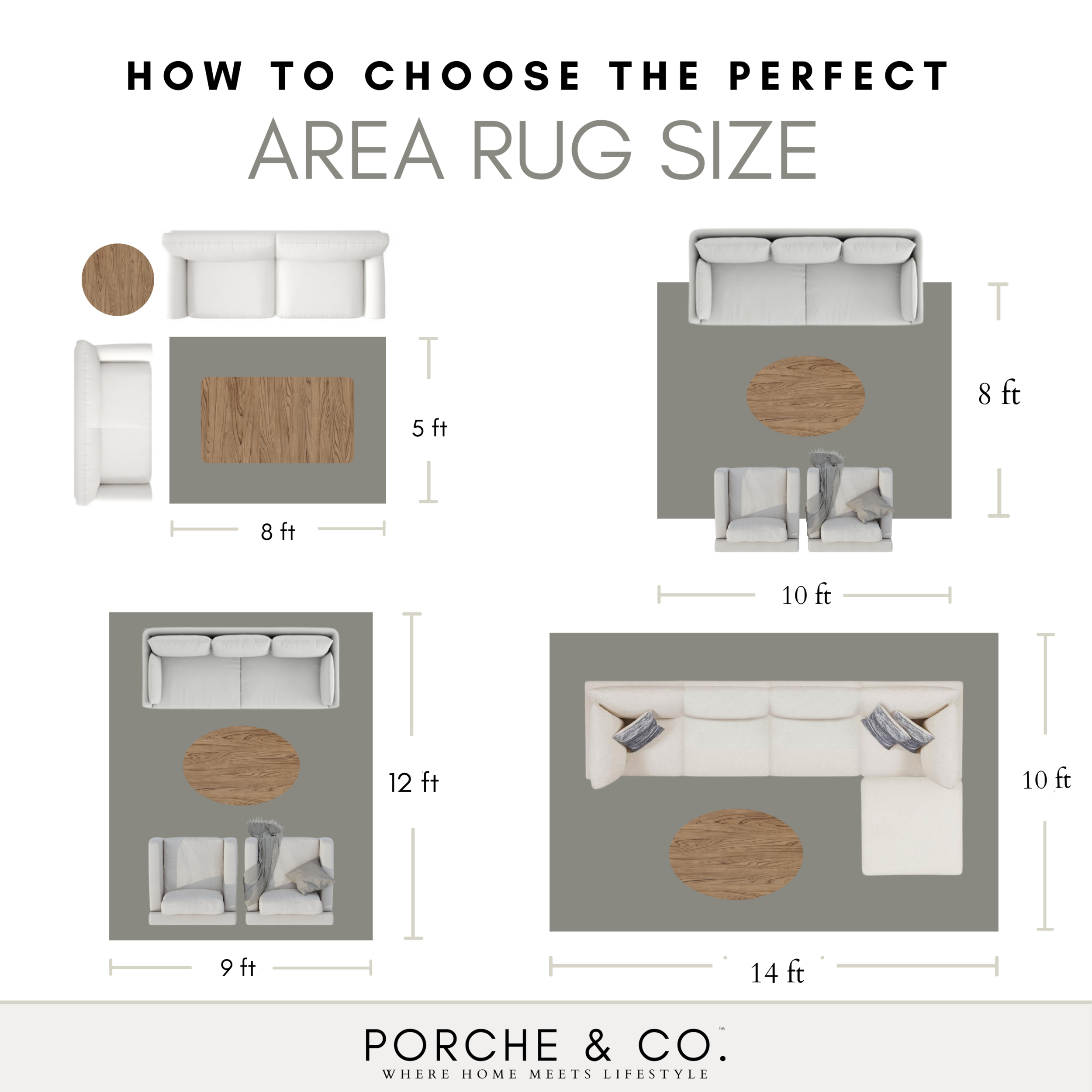
- All-legs-on approach — Choose a rug that fits under all furniture legs for a cohesive look. This often means an 8 x 10 or 9 x 12 for many living rooms.
- Front-legs-on approach — Place the rug under the front legs of sofas and chairs. This works with smaller rugs and still feels anchored.
- Coffee-table-only — A small rug under only the coffee table can work in casual spaces, but keep at least 18 inches of rug beyond the table for balance.
I once staged a small living room with a 5 x 8 rug under just the front legs and saw the space instantly feel larger and more connected. When choosing how big should my area rug be for your living room, measure the furniture footprint and add the rule that fits your budget and style.

Dining room rug sizing: allow for chair clearance
Dining rooms need room for chairs to move without catching rug edges. The main rule is simple.
- Measure the table width and length, then add 48 inches to both dimensions to allow chairs to pull out easily while staying on the rug.
For most dining tables, that leads to an 8 x 10 or 9 x 12 rug. I learned this after a dinner party where chairs snagged the rug—adding 24 inches each side solved the problem. When considering how big should my area rug be in the dining room, prioritize chair movement and comfort.

Bedroom rug sizing: scale to the bed
Bedroom rugs make the room feel warm and tied together. Use these common options.
- Runner on sides — Two 2.5 x 8 runners flanking a bed work well in narrow rooms.
- Partial under-bed — An 8 x 10 or 6 x 9 placed under the lower two-thirds of the bed gives soft landing at your feet.
- Full rug under bed — A large 9 x 12 rug can sit under the entire bed and bedside tables for a cohesive look.
For how big should my area rug be in a bedroom, aim for 18–24 inches of rug showing beyond the sides and foot of the bed for a balanced look.
Hallways, entryways, and layered rugs
Small spaces and layer designs have special needs.
- Hallway runners — Leave 6–12 inches of floor on each side of a runner for a neat look.
- Entry rugs — Choose a rug that covers the main traffic path and gives room for opening doors.
- Layering — Place a smaller rug over a larger one to add texture. Ensure the bottom rug is large enough to anchor the furniture you want to include.
If you ask how big should my area rug be when layering, make the base rug large enough to ground furniture pieces and use the top rug for pattern and color.

How to measure and decide step-by-step
Follow this simple plan to answer how big should my area rug be for your space.
- Sketch the room and mark furniture footprints.
- Measure the seating or bed area you want to anchor.
- Add desired floor border — usually 12–24 inches in living rooms, 18–24 inches for bedrooms, and 24 inches for dining.
- Compare to standard rug sizes and choose the closest match.
- If between sizes, size up to avoid a too-small look.
I always tape out rug sizes on the floor before buying. This saved me from returning rugs and helped clients visualize the final layout.
Materials and pile height that affect perceived size
Material and pile change how a rug looks and behaves.
- Low pile cotton or flatweave — Makes a room feel larger and is easy to clean.
- High pile wool or shag — Adds warmth but can make a rug read smaller.
- Patterns — Large-scale patterns can visually increase a rug’s presence; small patterns can get lost.
When deciding how big should my area rug be, account for how pile and pattern affect scale. Test a sample or tape to imagine the final effect.

Common mistakes and how to avoid them
Avoid these frequent errors when choosing a rug.
- Buying too small — A tiny rug makes a room look disjointed. Measure first.
- Ignoring furniture layout — Rugs should connect pieces, not float randomly.
- Forgetting chair clearance — Especially in dining rooms, allow room for chairs.
- Overlooking traffic flow — Ensure doors open and walkways stay clear.
From staging homes, I learned that a slightly larger rug almost always looks better than one that’s too small. Asking how big should my area rug be early in the design process saves time and money.
Budget tips and shopping strategy
Rug size affects price. Use these tips to get the best result.
- Prioritize size over luxury — A correctly sized affordable rug looks better than a tiny expensive one.
- Consider custom sizes — If budget allows, custom cuts avoid awkward borders.
- Look for samples — Test color and pile in your room light before committing.
When planning how big should my area rug be, factor budget into size selection and remember visual impact often outweighs material prestige.
Personal lessons and quick checklist
My top lessons from years of work with rugs.
- Measure twice before you buy.
- Tape out the rug area on the floor.
- Aim for 12–24 inches of floor border in living rooms.
- Add 24 inches around dining tables for chair ease.
- Err on the larger size if unsure.
Use this checklist when you ask how big should my area rug be and you’ll avoid the common pitfalls.
Frequently Asked Questions of how big should my area rug be
How large should a living room rug be for a sectional?
A rug should either hold all legs of the sectional or at least the front legs. Measure the sectional footprint and leave 12–24 inches of floor border for balance.
What size rug works best under a queen bed?
A common choice is an 8 x 10 rug that extends about 18–24 inches beyond the sides and foot of the bed. This gives a soft landing and frames the bed.
How much rug should extend beyond a dining table?
Aim for 24 inches of rug beyond each side and end of the table so chairs stay on the rug when pulled out. This prevents snagging and keeps the space integrated.
Can I use a small rug in a large room?
Yes, but a small rug can make a large room feel chopped. Use multiple rugs to define zones or choose a larger rug to anchor the main seating group.
Should all furniture legs be on the rug?
It depends on style. Putting all legs on the rug creates a formal, cohesive look; placing only front legs on the rug is more casual and flexible. Choose based on room size and desired feel.
Conclusion
Choosing the right size ends arguments and makes rooms look finished. Use clear rules: measure furniture, allow 12–24 inches of floor border in living rooms, 24 inches for dining, and 18–24 inches for bedrooms. Tape the area first, choose the larger of two sizes if unsure, and consider material and pattern for perceived scale. Try these steps now: measure your room, tape a few sizes on the floor, and pick the rug that feels balanced and comfortable. Share your layout or questions below and subscribe for more practical design tips.