Organize a nursery dresser by sorting, labeling, and using dividers for fast daily access.
I’ve organized dozens of baby spaces and helped new parents tame drawers with smart, simple systems. This guide shows practical, tested steps on how to organize a nursery dresser so you can grab what you need in seconds, reduce stress during changes, and keep clothes tidy as your baby grows. Read on for step-by-step plans, product ideas, maintenance tricks, and real-life tips from my experience.
Why organize a nursery dresser?
A clear system saves time and reduces stress during diaper changes and dressing. When you know how to organize a nursery dresser, late-night changes and hurried mornings become calmer. Good organization protects tiny clothes from wear and waste, and makes laundry rotation easier. It also helps caretakers and visitors find items quickly without asking parents endless questions.
Step-by-step plan to organize a nursery dresser
Follow a simple plan that fits your space and routine. Below is a step-by-step method I use when I organize a nursery dresser for clients or my own home.
- Clear and sort
- Empty each drawer completely so you can see what you have.
- Group items by type and size: onesies, sleepers, socks, bibs, blankets, and diapers.
- Discard or donate anything stained, damaged, or unused.
- Create zones
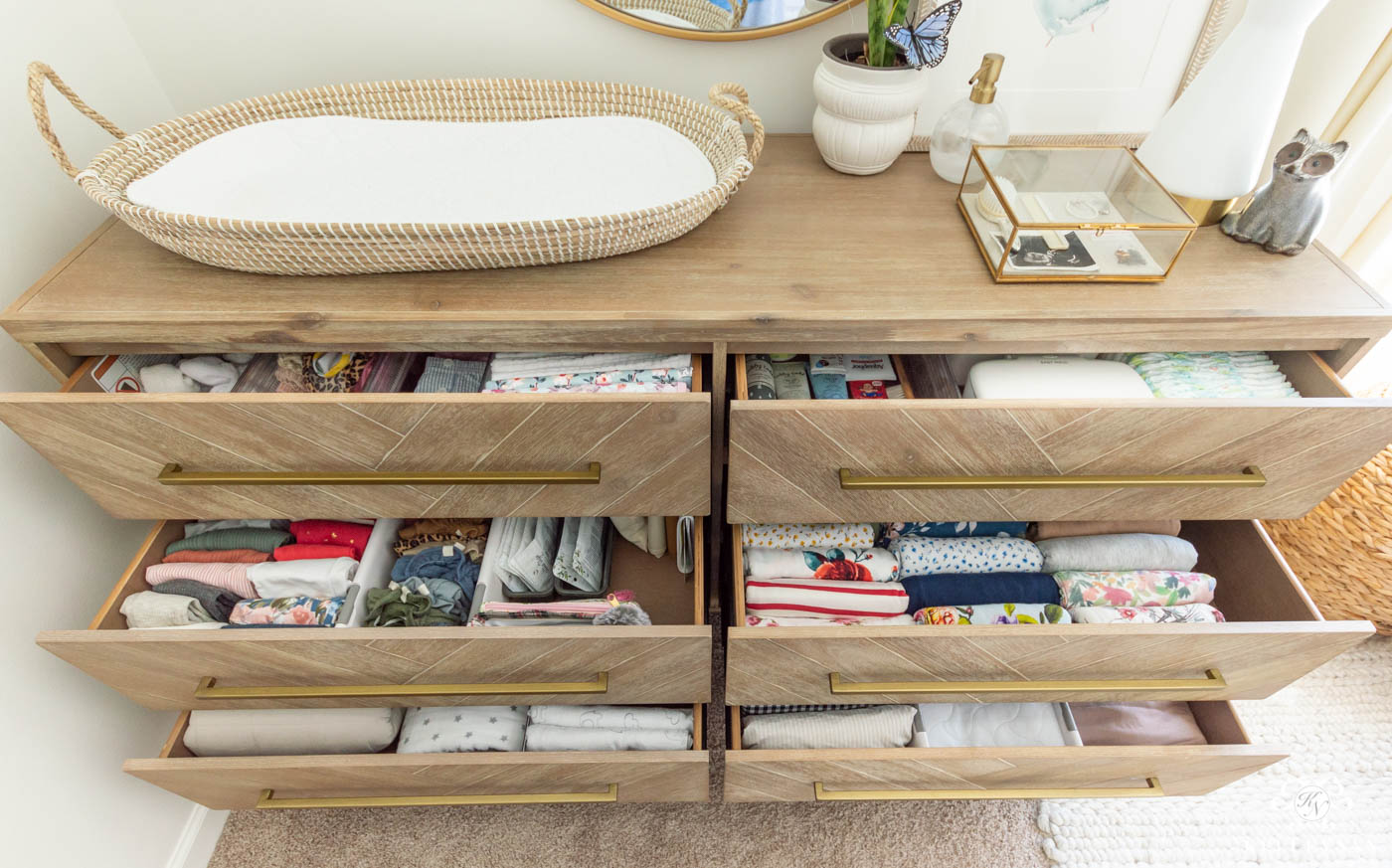
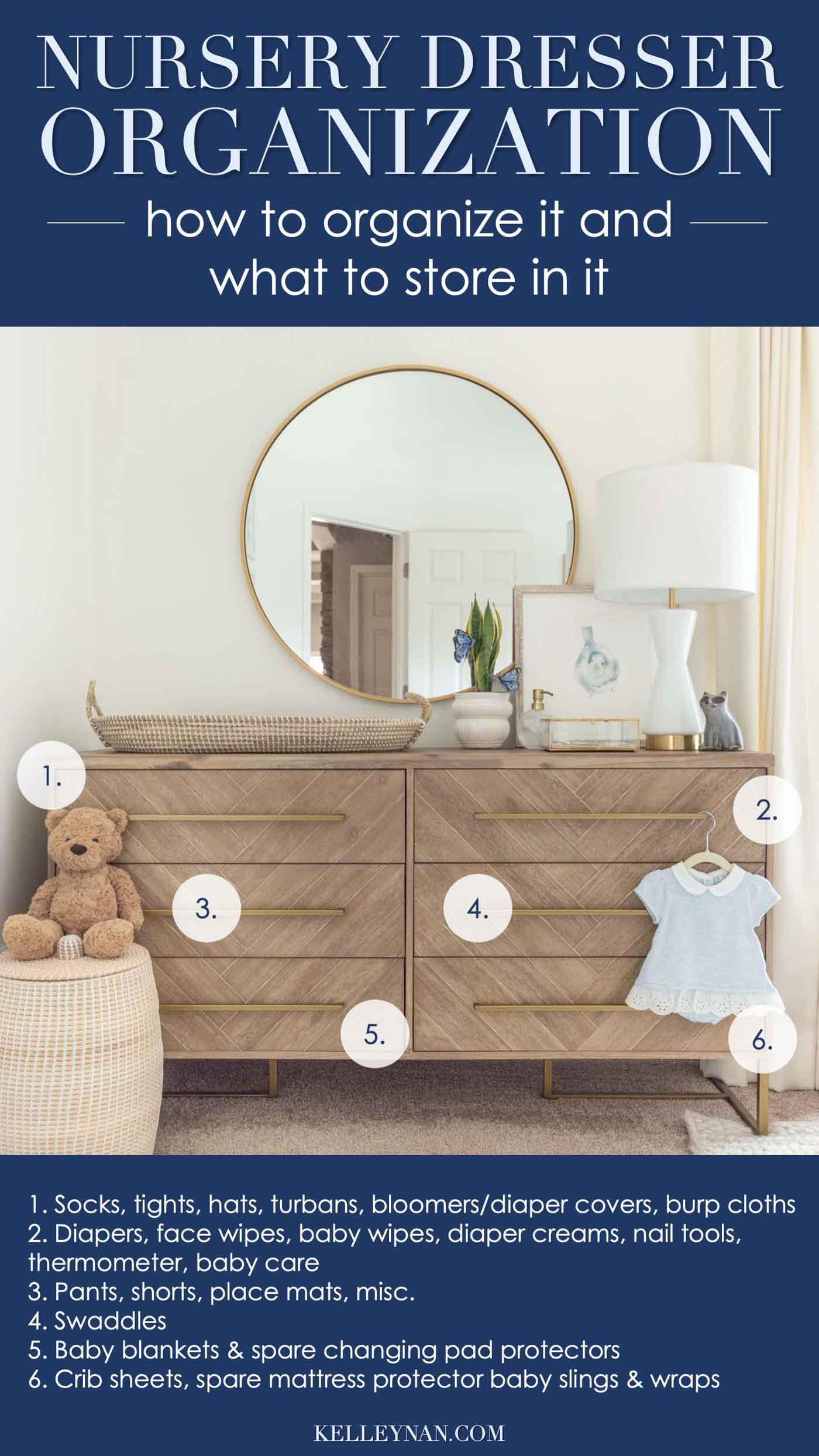
- Assign each drawer a clear purpose — daywear, nightwear, diapers, extras.
- Keep frequently used items in the top drawers for fast reach.
- Reserve lower drawers for out-of-season items or bulk storage.
- Choose organizers
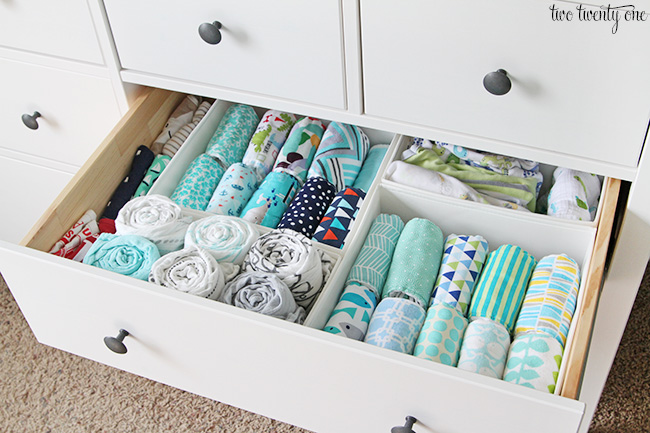
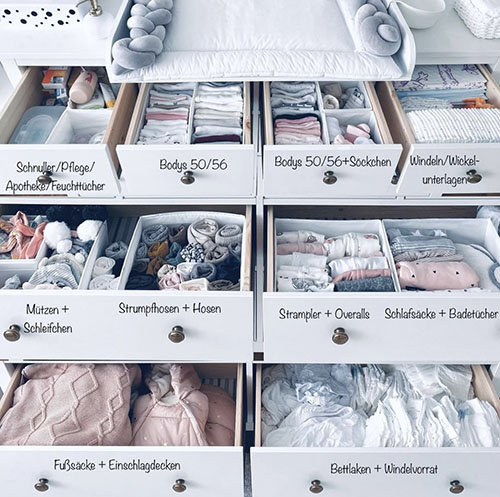
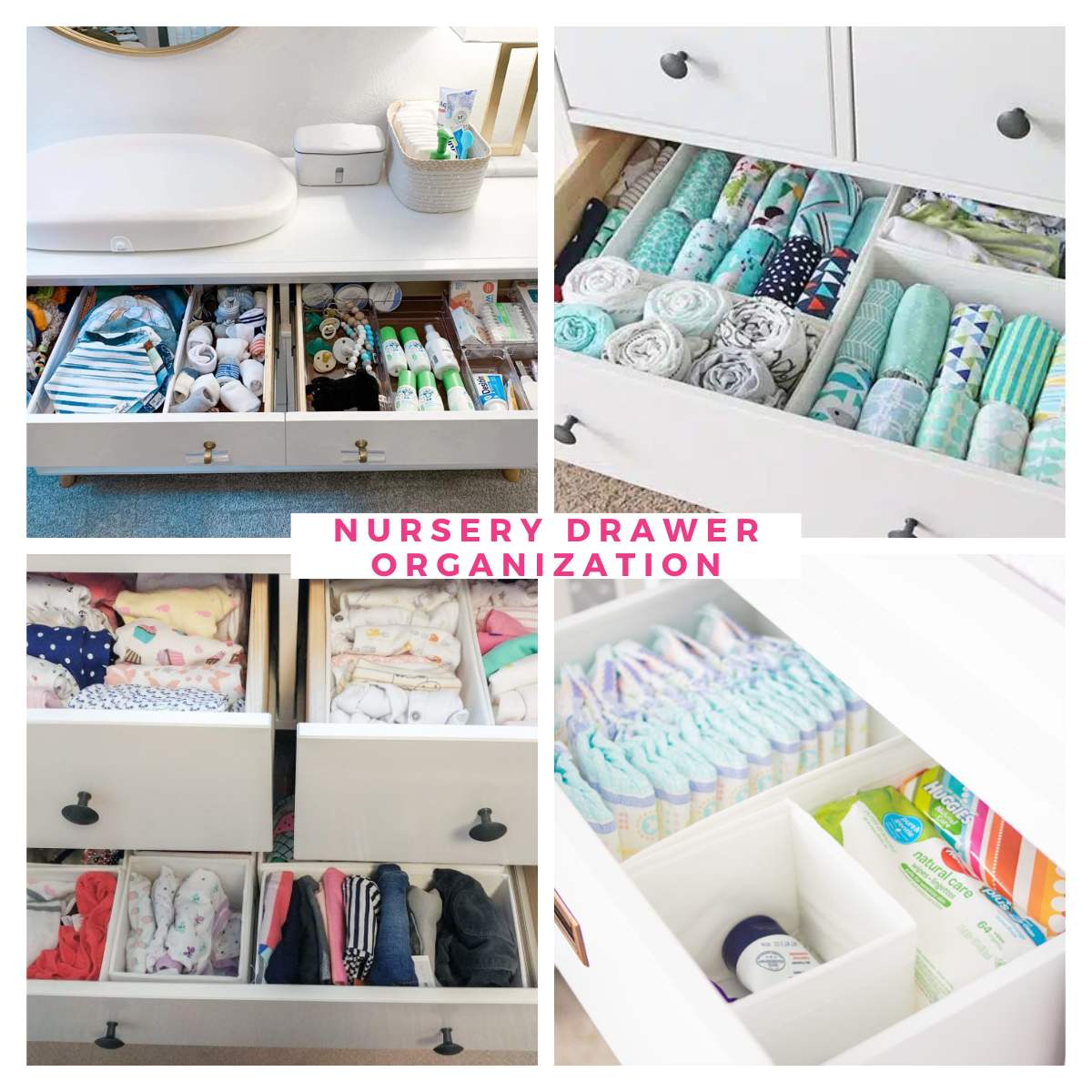
- Use small bins, dividers, and drawer trays to define sub-zones inside a drawer.
- Label each bin or use visual queues like color-coded tags for quick recognition.
- Make a drawer for outfits ready to wear and one for single items like hats and mittens.
- Fold and store smart
- Fold clothes vertically so you see every item at once. This saves space and avoids digging.
- Roll socks and small items together in a tray to prevent loss.
- Use clear or mesh pouches for delicate items to keep them visible.
- Test and tweak
- Live with the layout for a week and adjust based on daily use.
- Move items that are hard to reach or get misplaced.
- Reassess sizes monthly as your baby grows.
From my experience, the biggest win comes from assigning clear zones and keeping the top drawer for immediate needs like diapers and outfits. That small habit changed nightly routines for my family.
Best storage tools and drawer organizers
Selecting the right tools makes organizing effortless and lasting. Here are items I recommend when you want to know how to organize a nursery dresser well.
- Drawer dividers: Simple plastic or bamboo dividers keep categories separate and stop piles from mixing.
- Small bins or trays: Perfect for socks, bibs, and pacifiers. Choose shallow trays so drawers close easily.
- Labeling stickers: Removable labels help everyone follow the system and make swaps easier.
- Clear pouches: Great for newborn clothes or special outfits so they stay dust-free and visible.
- Hanging organizers: Use inside closet doors for overflow, but keep daily items in the dresser.
I prefer neutral, washable materials that stand up to spills. In one nursery I organized, swapping flimsy boxes for sturdy fabric bins reduced clutter by 40% in two weeks.
Clothing organization: sizes, outfits, and rotation
Organize by size and frequency of use to save time and prevent growth surprises. When you arrange clothes, think ahead about the next few weeks.
- Size bins: Keep current size in front and next size behind. Rotate forward as you grow through sizes.
- Outfit-ready drawer: Store full outfits together on the same row so you can grab a complete set quickly.
- Seasonal separation: Move heavier sleepwear to a deeper drawer when not needed, and keep current season on top.
- Frequency placement: Place daily-use items like onesies and sleepers in the top drawers. Reserve bottom drawers for less-used items.
I once labeled five small bins by size and found it saved me from frantic late-night searches when my baby hit a growth spurt. Having sizes pre-sorted felt like a small parenting superpower.
:max_bytes(150000):strip_icc()/David_Casas_6-162fb7582ad4471b90a81f5f8a212d63.jpeg)
Diapering and changing supplies in the dresser
Keep supplies close to the changing area while maintaining safety and hygiene. A well-planned diaper drawer cuts minutes off every change.
- Top drawer for diapers: Store 1–2 days’ supply for quick access, and keep overflow in a nearby closet.
- Wipes and cream station: Keep wipes, barrier cream, and a small hand towel in a shallow tray for spills.
- Spare outfit kit: Include a spare onesie, socks, and plastic bag for soiled clothes in the same drawer.
- Safety first: Store creams and small items out of reach of children, and wipe the drawer regularly.
In my experience, having a diaper kit organized in one drawer reduced stress during early weeks. I recommend checking stocks weekly so you never run out mid-change.

Maintenance routine and quick tidy tips
A little upkeep keeps your system working without big reorganization sessions. Short routines make a huge difference.
- Daily five-minute tidy: Straighten the top drawer each night and return stray items to their bins.
- Weekly check: Fold freshly laundered clothes into the correct bins and rotate sizes as needed.
- Monthly purge: Remove outgrown items and donate what’s not used. This prevents drawer creep.
- Label refresh: Replace worn labels and check organizers for wear.
From practice, short daily routines beat long weekend overhauls. Treat the dresser like a kitchen drawer — small bits of care prevent mess.

Common mistakes to avoid when you organize a nursery dresser
Avoid predictable missteps to keep your system functional. These are common traps I’ve seen and fixed.
- Overfilling drawers: Stuffed drawers make items hard to find and increase wear. Keep a little breathing room.
- No zones or labels: Without clear zones, everything becomes a pile. Labels help everyone follow the system.
- Ignoring growth: Not rotating sizes leads to clutter. Move bigger sizes out of daily reach until needed.
- Wrong organizer sizes: Too deep bins prevent drawers from closing. Measure drawers before buying organizers.
- Hiding essentials: Storing diapers or wipes in a closet far from the changing area slows you down.
Fixing one of these mistakes often restores calm quickly. I once reduced a family's morning chaos by simply relabeling drawers and moving diapers to the top drawer.

Checklist: What to keep in each drawer
Use this simple checklist to set up drawers when you organize a nursery dresser.
- Top drawer
- Diapers, wipes, small changing kit, creams, spare outfit
- Second drawer
- Everyday onesies, short-sleeve sleepwear, socks
- Third drawer
- Sleepers, swaddles, pajamas, extra blankets
- Fourth drawer
- Next-size clothing, less-used items, seasonal pieces
- Bottom drawer
- Bulk storage: extra diapers, bedding, out-of-season clothes
Adjust the checklist to your needs and space. A clear, predictable layout helps babysitters and partners quickly find what they need.
Frequently Asked Questions of how to organize a nursery dresser
How do I start organizing a nursery dresser with little time?
Start by emptying one drawer and sorting only the essentials. Implement a simple system for that drawer, then repeat a drawer at a time until the whole dresser is organized.
What is the best way to fold baby clothes for drawers?
Fold or roll clothes vertically so you can see each item at a glance. This method saves space and prevents piles from collapsing when you pull something out.
How often should I rotate sizes and purge drawers?
Check sizes and purge every 4–6 weeks during the first year, as babies grow quickly. In later months, monthly checks are usually enough.
How do I keep small items like socks and mittens from getting lost?
Use small trays or cubbies inside a drawer to group socks, mittens, and pacifiers. Clear pouches or mesh bags also keep pairs together and visible.
Can a dresser double as a changer, and how do I organize it then?
Yes, many dressers double as changers. Keep a changing pad on top and reserve the top drawer for all changing essentials, ensuring everything is within arm’s reach and safely stored.
Conclusion
Organizing a nursery dresser is about clear zones, right-sized organizers, and small daily habits. When you apply these steps, you cut stress, save time, and protect baby clothes from wear. Start with one drawer, label the system, and tweak as your child grows — you’ll be surprised how peaceful a well-organized dresser makes daily routines. Try one change today and notice the difference; leave a comment or subscribe for more nursery tips.