Learning how to organize a small kitchen starts with understanding that less space does not mean less function. A well-planned kitchen can handle daily cooking, meal preparation, and storage needs without feeling crowded.
From my experience studying home organization methods, the biggest changes often come from simple habits. Removing unused items, improving cabinet space, and keeping everyday tools within reach can completely transform a small kitchen.
Many homes in the United States have compact kitchens, especially apartments, condos, and older homes. With the right approach, even a small kitchen can become comfortable, efficient, and easy to maintain.

Start by Decluttering Your Small Kitchen
The first step in learning how to organize a small kitchen is removing items that take up valuable space. Many kitchens become crowded because they hold duplicate tools, expired food, or appliances that are rarely used.
A clean kitchen begins with a careful review of everything you own. Keep items that support your daily routine and move rarely used items to another storage area.
- ✦ Remove duplicates
Keep only the number of utensils, containers, and tools your household actually uses.
- ✦ Check expiration dates
Clear old spices, canned foods, and pantry items to create more room.
- ✦ Create a donate box
Place unused kitchen items in a box so they can be donated instead of creating clutter.
Use the One Year Rule
If you have not used a kitchen item in the last year, ask whether it truly deserves space in your kitchen. This simple rule helps many homeowners reduce clutter without feeling overwhelmed.
- ✦ Review seasonal items
Store special-use items separately if you only need them during holidays or occasional events.
Maximize Cabinet and Drawer Storage
Cabinets and drawers often contain unused vertical space. When you organize a small kitchen, think upward instead of only focusing on floor and counter space.
Simple organizers can help separate dishes, pans, spices, and cooking tools. This makes it easier to find items and prevents messy piles.

- ✦ Add shelf risers
Shelf risers create extra levels inside cabinets so you can store more items without stacking them.
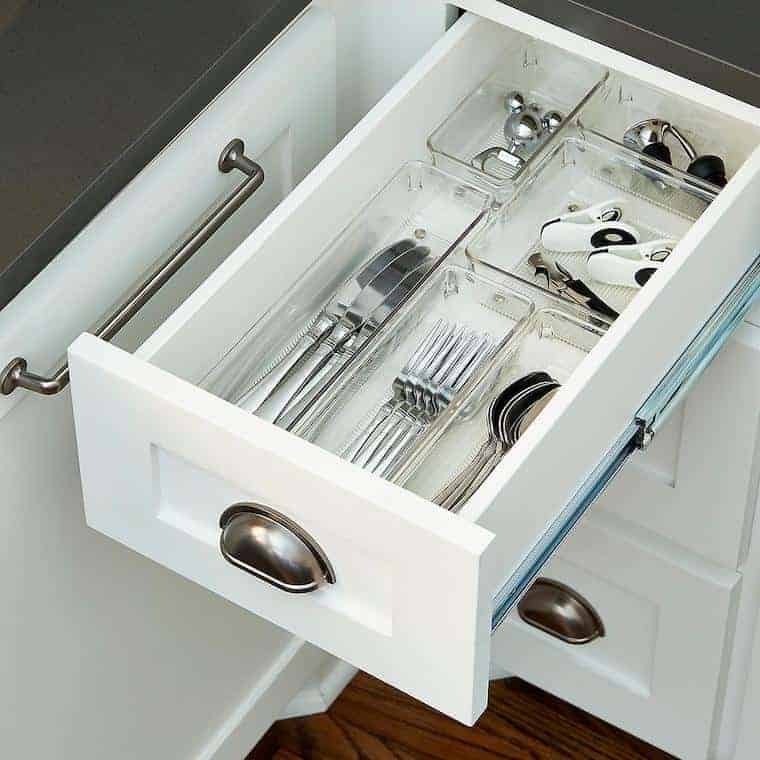
- ✦ Use drawer dividers
Dividers keep utensils separated and make drawers easier to use.
- ✦ Store pans vertically
Vertical storage allows quick access to baking sheets, cutting boards, and pans.
Make Hidden Areas Work Harder
The back of cabinet doors, corners, and narrow gaps can become useful storage areas. Small hooks, racks, and containers can hold many everyday kitchen supplies.
- ✦ Use door space
Install small racks or hooks for wraps, cleaning supplies, or cooking tools.
Create Kitchen Zones for Better Flow
A small kitchen works better when every area has a clear purpose. Creating zones helps reduce unnecessary movement while cooking.
Most kitchens need simple zones for food preparation, cooking, cleaning, and storage. This approach makes your kitchen easier to use every day.
- ✦ Cooking zone
Keep pots, pans, spices, and cooking tools close to the stove.
- ✦ Preparation zone
Store cutting boards, knives, and mixing bowls near your main work surface.
- ✦ Cleaning zone
Keep dish soap, towels, and cleaning products near the sink.
Keep Frequently Used Items Accessible
Items you use every day should be easy to reach. Less-used items can move to higher shelves or deeper cabinets.
- ✦ Prioritize convenience
Organize based on your personal routine rather than following a one-size-fits-all system.
Use Vertical Space to Expand Storage
When floor space is limited, walls become valuable storage areas. Vertical storage is one of the easiest ways to organize a small kitchen without major renovations.
Open shelves, wall hooks, and magnetic strips can keep important items nearby while freeing up cabinets and counters.

- ✦ Install wall shelves
Shelves can hold dishes, jars, and decorative kitchen items while keeping counters clear.
- ✦ Hang cooking tools
Hooks can store utensils, mugs, and lightweight kitchen equipment.
- ✦ Use magnetic storage
Magnetic strips are useful for storing knives and small metal tools safely.
Keep Countertops Clear and Functional
Clear countertops instantly make a small kitchen feel larger. Many people store too many appliances on counters, which reduces workspace.
A useful rule is to keep only daily-use items visible. Store occasional appliances like mixers or specialty tools in cabinets or closets.
:max_bytes(150000):strip_icc()/278451624_792017815107572_66494794558202036_n-01149bd9d9ac42f9a2fafecc95cccf5a.jpg "How to Organize a Small Kitchen: 22 Ideas")
- ✦ Create appliance storage rules
Only keep appliances outside if you use them often.
- ✦ Use attractive containers
Matching containers can reduce visual clutter and keep ingredients organized.
- ✦ Leave preparation space
A clear work area makes cooking faster and more enjoyable.
Avoid Overdecorating Small Kitchens
Decor can add personality, but too many items can make a small kitchen feel crowded. Choose useful decorations that support the space instead of reducing function.
- ✦ Choose practical decor
Use items like attractive storage jars or useful shelves as part of your design.
Choose Smart Storage Products for Small Kitchens
The right storage products can improve a small kitchen without expensive remodeling. Focus on tools that increase space and make daily tasks easier.
Before buying organizers, measure your cabinets and drawers. A product that fits your space will provide more value than a trendy item that does not work.

- ✦ Stackable containers
Stackable containers help organize dry foods while using less shelf space.
- ✦ Pull-out organizers
Pull-out shelves make deep cabinets easier to access.
- ✦ Rolling carts
Small carts can add extra storage and move when needed.
Maintain Your Organized Small Kitchen
Knowing how to organize a small kitchen is only the beginning. Keeping it organized requires small daily habits that prevent clutter from returning.
A few minutes of maintenance each day can save hours of cleaning later. The goal is to create a system that feels natural for your lifestyle.

- ✦ Reset after cooking
Return items to their proper places after each meal.
- ✦ Review storage regularly
Check cabinets every few months and remove items you no longer need.
- ✦ Keep similar items together
Grouping similar products makes finding and replacing items easier.