Place the rug so the front two-thirds of the bed sits on it, with evenly spaced margins.
I’ve placed dozens of rugs in bedrooms as a designer and homeowner, and I know exactly how to place area rug under bed so it looks balanced, feels great underfoot, and protects your floor. This guide walks you through size choices, step-by-step placement, material tips, and real-world mistakes I learned from trial and error. Read on to make your bedroom cozy and camera-ready with confident placement.
:max_bytes(150000):strip_icc()/right-size-area-rug-for-bedroom-350698-8615a8f66ae846159199c384040de351.png)
Why place an area rug under bed matters and common goals
An area rug can anchor a room, add warmth, reduce noise, and protect flooring. Knowing how to place area rug under bed helps the space look intentional. Good placement makes the bed feel grounded and the room larger.
I’ve used rugs to fix awkward layouts and to add comfort on cold mornings. With the right plan, the rug will boost style and function without crowding the room.
Measure first: finding the right rug size
Measure your bed and bedroom before buying. A few common sizes work well but depend on bed size and room layout.
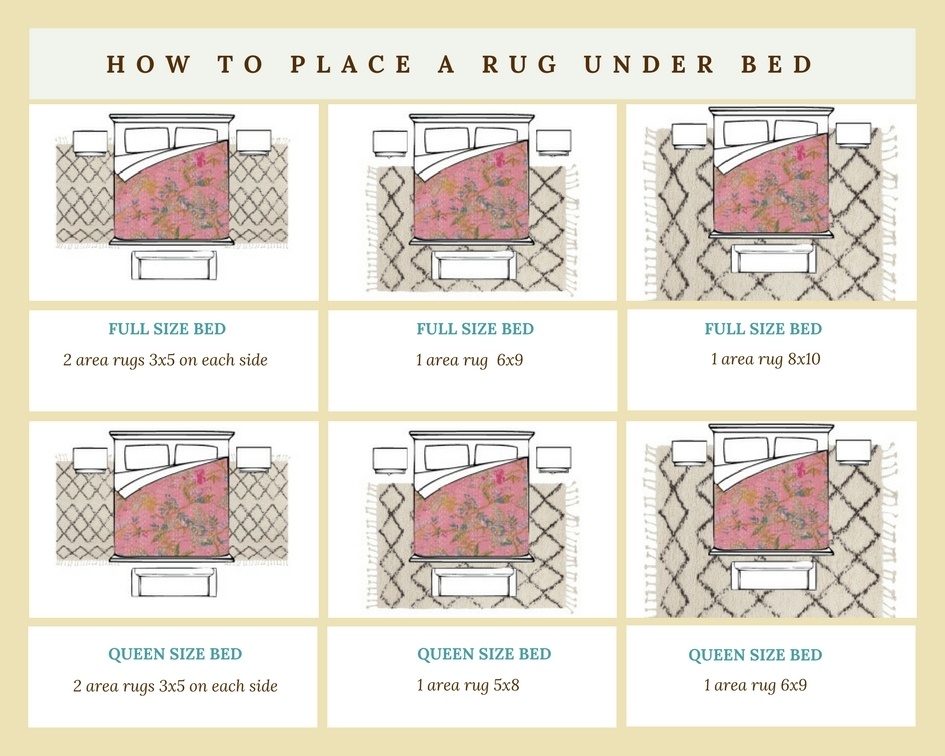
- For a king bed: choose at least 8 feet by 10 feet so the rug extends beyond both sides and the foot of the bed.
- For a queen bed: 8 feet by 10 feet or 6 feet by 9 feet, depending on the room.
- For a full or twin: 5 feet by 8 feet often works. Use 6 feet by 9 feet for more coverage.
- For small rooms: runners on each side can work if a full rug won’t fit.
How you measure matters. Measure from the headboard to the foot of the bed and allow an even margin on both sides. This step answers many common placement problems and makes later steps simple.

Step-by-step: exactly how to place area rug under bed
Follow these steps for a clean, balanced look.
- Clear the floor
- Remove clutter, dust, and furniture that will move. A flat, clean floor helps the rug sit evenly.
- Lay out the rug centered
- Place the rug so it’s centered left-to-right under the bed. The centerline of rug and bed should match.
- Position the rug by type of look
- Full-coverage look: slide the rug under the headboard so it extends beyond the foot. This requires a larger rug.
- Front-legs-on-rug look: align the rug so the front two-thirds of the bed (or just the front legs) rest on the rug. This is a classic, cozy look.
- Runner sides: place runners on both sides for narrow rooms or if you like step-on warmth without a large rug.
- Check furniture placement
- Nightstands: place them fully on the rug if the rug is large enough. If not, let the nightstands sit off the rug but keep bed front legs on it.
- Benches and footboards: ensure they don’t create ripples. Adjust the rug so the bench sits fully on it if possible.
- Final tweaks
- Step back and test. Walk around to see if the rug shifts or wrinkles. Use rug pads to stop sliding.
- Trim or swap if it looks crowded.
I once placed a 6-by-9 rug under a queen bed and found the nightstands looked off. Moving to an 8-by-10 rug solved the balance instantly. Small changes like that matter.

Rug pads, safety, and underlay tips
A good pad prevents slips, protects floors, and makes the rug feel thicker. Use the right pad for the rug material and floor type.
- For hardwood: choose a non-staining pad designed for wood floors.
- For carpeted floors: use a thicker pad to raise the rug and define it.
- For tile: pick a pad with grip to prevent sliding and tripping.
- Thickness tip: avoid pads so thick they create tripping hazards at exposed edges.
Rug pads also reduce wear under the bed. If you place the rug under the bed frame, the pad helps stop movement from legs and foot traffic.

Materials and styles: choose what fits your lifestyle
Pick materials based on traffic and maintenance. Materials affect look, feel, and durability.
- Wool: durable, soft, and naturally stain-resistant. Good for most bedrooms.
- Cotton: affordable and easy to wash but may show wear faster.
- Synthetic fibers: stain-resistant and budget-friendly, great for kids or pets.
- Natural fibers (jute, sisal): textured and eco-friendly but can be rough and stain easily.
Style matters too. Solid colors and low patterns make small rooms feel bigger. Bold patterns can anchor a large room. Match rug color to bed linens or art for cohesion.

Maintenance and cleaning tips
Keep your rug fresh with simple steps that also protect the floor and maintain look.
- Vacuum weekly to remove dust and hair.
- Rotate the rug every 6 months to even wear from sun and traffic.
- Spot clean spills immediately with a gentle blot, not rub.
- Deep clean per material: steam clean synthetics, professional clean wool when needed.
- Address pet accidents fast and use enzyme cleaners to prevent odor.
I learned to rotate rugs after I noticed uneven fading from sunlight. That small habit extended the rug’s life.

Common mistakes and how to avoid them
Avoid these frequent errors when you place a rug under your bed.
- Buying too small a rug: it makes the bed float oddly. Check measurements first.
- Not using a pad: rugs will shift and wear faster without one.
- Crowding furniture: give the rug room to breathe. If a rug reaches under the bed, try to keep nightstands partially on it or clearly off.
- Ignoring traffic flow: place the rug so people can walk naturally without catching edges.
- Choosing wrong material: match material to pets, kids, and cleaning habits.
I once chose a textured natural-fiber rug for a pet household. It looked great but stained too quickly. Choosing a synthetic option solved the issue.

Frequently Asked Questions of how to place area rug under bed
What rug size should I use for a queen bed?
For a queen bed, an 8-by-10 rug is ideal for full coverage, while a 6-by-9 can work if space is tight. Make sure the rug extends at least 18 inches beyond each side for balance.
Should the rug go under the headboard?
Yes, placing the rug under the headboard creates a cohesive look and helps anchor the bed. It requires a larger rug but offers the most balanced aesthetic.
How far should the rug extend past the foot of the bed?
Aim for at least 18 to 24 inches past the foot of the bed to allow room for seating or walking. This ensures the rug reads as part of the bed zone.
Can I use two rugs under a bed instead of one large rug?
Yes. Two runners or matching rugs on each side work well in narrow rooms or if you want step-on warmth without a large rug. Center them evenly for symmetry.
Do I need a rug pad under the rug?
Always use a pad. It prevents slipping, protects the floor, and adds cushioning that helps the rug sit smoothly under the bed.
Conclusion
Placing an area rug under your bed transforms a room. Measure carefully, pick the right size and material, and follow simple steps to center and secure the rug. Small choices like a quality pad and proper rotation will make the rug last and look great. Try one placement, test the feel, and adjust. Share your result or ask a question below to get tailored tips for your bedroom layout.