A good toaster browns bread evenly, stays easy to use, fits the slices you eat, and includes basic safety features. It should also be simple to clean, stable on the counter, and durable enough for daily use.
For most U.S. kitchens, the best toaster is not the one with the most buttons. It is the one that gives consistent results at the settings you use, handles your preferred bread, and shuts off safely when the cycle ends.
What to Look for in a Good Toaster
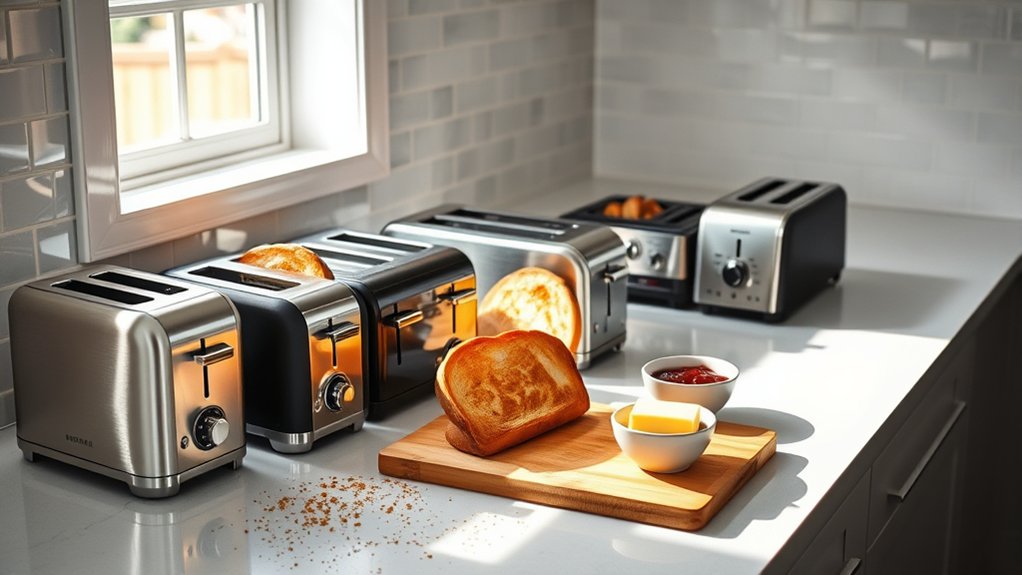
The best toaster balances even browning, useful capacity, accurate controls, safe operation, and easy cleaning. These traits matter more than a long list of special modes.
A toaster may look simple, but several parts affect its performance:
- Heating elements produce the heat.
- Slots hold the bread near the elements.
- A thermostat or electronic control manages the heating time.
- A carriage lowers and raises the bread.
- A crumb tray catches loose food.
- A cancel button stops the cycle early.
A good model makes these parts work together. It should brown the bread without leaving one side pale and the other side burnt.
Even browning
Even browning is the clearest sign of a good toaster. Both sides of the bread should reach a similar color, and the center should not stay cold while the edges burn.
Look for:
- Heating elements that cover much of the slot length
- A carriage that centers bread
- Several browning levels with clear, repeatable results
- A slot wide enough to avoid pressing thick bread against one side
No toaster browns every type of bread in exactly the same way. Moist bread, frozen bread, thick slices, and sweet pastries all heat differently. Still, a good toaster should behave in a predictable way after you learn its settings.
Accurate controls
A browning dial should help you choose a result, not act as a vague timer. The numbers do not use a universal standard. A “3” on one toaster may produce darker toast than a “3” on another.
Useful controls include:
- A clear browning dial or digital setting
- A cancel button
- A reheat function that warms food without adding much color
- A frozen function that adds time for frozen bread
- Separate controls for each pair of slots on a four-slice toaster
A digital display can be helpful, but it does not automatically mean better performance. A well-made mechanical dial can work very well if its settings are consistent.
Suitable slot size
Slot size should match the bread you normally eat. Standard sandwich bread may fit in most models, while bakery bread, Texas toast, bagels, English muffins, and homemade slices need more space.
Check three measurements:
- Slot length: Long slots can hold large or irregular slices.
- Slot width: Wide slots are useful for thick bread and bagels.
- Slot depth: A deep slot helps toast more of the slice, though very tall bread may still extend above it.
A wide slot does not always mean a long slot. Check the product manual or specification sheet if you often toast large slices.
Two-Slice or Four-Slice: Which Toaster Is Better?
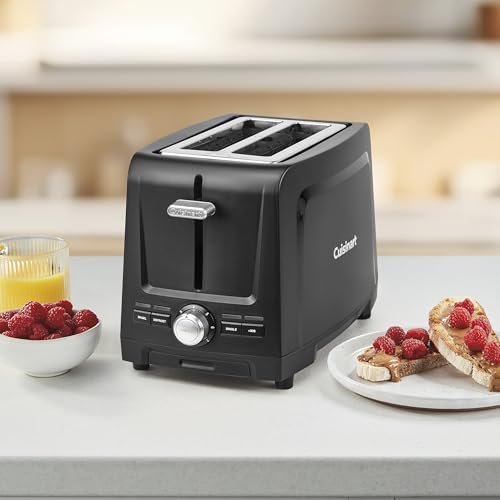
A two-slice toaster is best for small kitchens, one or two people, or homes where people eat toast at different times. A four-slice toaster is more useful for families or busy mornings.
The right choice depends on counter space and control design, not just capacity.
| Type | Best for | Main benefit | Main drawback |
|---|---|---|---|
| Two-slice | Small households and limited counters | Takes less space | Toasts fewer slices at once |
| Four-slice with one control | Fast, simple use | Handles more bread | Less control over different preferences |
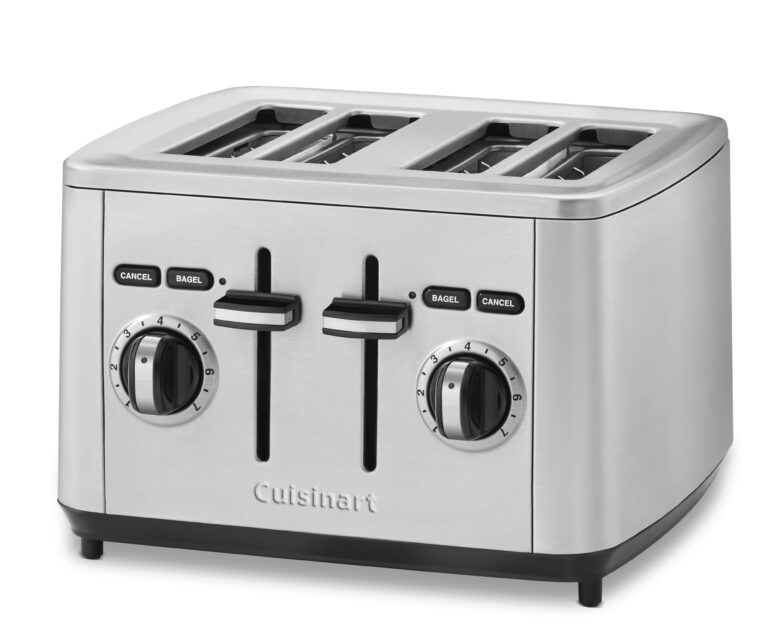
| Four-slice with two controls | Families with different tastes | Runs two settings at once | Usually larger and more costly |
| Long-slot | Large or irregular bread | Fits longer slices | May use more counter space |
A four-slice toaster with two independent control panels can be useful when one person wants light toast and another wants dark toast. If everyone wants the same setting, one control panel may be easier.
Capacity can also affect energy use. A larger toaster may use more power during a cycle, but toasting four slices in one batch can be more practical than running a two-slice toaster twice. The actual result depends on the model and how it is used.
Which Features Matter and Which Are Mostly Extras?
The most useful toaster features solve common problems. Some features add convenience, while others mainly increase the price.
Features worth having
Cancel button: This lets you stop the cycle before the timer ends. It is useful when toast reaches the right color early.
High-lift lever: A high-lift function raises small items above the slot. This makes English muffins and short slices easier to remove without reaching near the heating elements.
Frozen setting: This setting usually adds heating time for frozen bread. It can help, but the result still varies by bread thickness and moisture.
Reheat setting: Reheat is useful when toast has cooled but does not need more browning.
Removable crumb tray: A tray makes routine cleaning much easier. It should slide out smoothly and fit back without forcing.
Separate controls: Independent controls are valuable on four-slice models when people prefer different browning levels.
Features that need careful judgment
Bagel mode: A bagel setting usually heats one side more than the other. It works best when the cut side faces the correct direction. Follow the markings or manual instructions.
Countdown display: A timer can reduce guesswork, but the display does not prove that the toaster heats evenly.
Touch controls: These may look modern, but physical controls can be easier to use with wet or flour-covered hands.
Extra-wide slots: Wide slots help with thick bread, but they may not improve standard sandwich bread. Choose them for a real need.
Single long slot: Long slots can fit artisan bread and large slices. They may also make it harder to toast two small slices evenly if the heating zones are not well designed.
Why Safety Matters in a Toaster
A toaster is a high-heat appliance that can collect dry crumbs. Safe design and safe use both matter.
The U.S. Consumer Product Safety Commission advises consumers to use caution with toasters and other small kitchen appliances. Its general appliance safety guidance includes keeping appliances away from water, unplugging them when not in use where appropriate, and replacing damaged cords or appliances. See the CPSC kitchen and appliance safety information.
A good toaster should have:
- Automatic shutoff at the end of the cycle
- A cancel button that stops heating
- A stable base
- A cord that does not sit near the hot side or heating area
- A housing that does not become dangerously hot during normal use
- A recognized electrical safety certification mark, such as UL or ETL, where applicable
A certification mark addresses compliance with relevant safety requirements. It does not prove that the toaster browns evenly or will last for many years.
Safe toaster habits
Follow these basic rules:
- Place the toaster on a dry, stable, heat-resistant surface.
- Keep it away from curtains, paper, towels, and other flammable items.
- Do not insert knives, forks, or other metal objects into the slots.
- Unplug the toaster before cleaning or removing a stuck item.
- Let the toaster cool before moving or storing it.
- Empty the crumb tray often.
- Stop using it if the cord, plug, housing, or controls show damage.
- Never cover the toaster while it is operating.
- Supervise children around the appliance.
- Use a wooden utensil only when the toaster is unplugged and fully cool, and only if the manual permits safe removal.
Do not pour water into a toaster or rinse it under a faucet. If bread is stuck and cannot be removed safely, unplug the unit and contact the manufacturer or replace the appliance.
How to Judge Toaster Quality Before You Buy
Product specifications can reveal useful limits, but they cannot fully predict real-world toast quality. Use both documented features and practical inspection.
Check the construction
Look for a firm carriage lever, smooth controls, and a base that does not slide easily. The slots should hold bread without excessive movement.
A metal body may feel sturdy, but exterior material alone does not prove durability. Plastic can stay cooler and may weigh less. The more useful question is whether the toaster feels stable and whether its controls operate smoothly.
Check the crumb tray
A removable tray should be easy to reach and simple to empty. A tray that sticks, spills crumbs, or requires awkward handling will discourage cleaning.
Crumbs can collect near heating elements. Regular cleaning helps reduce smoke and burnt odors, although it cannot remove every fire risk.
Read the manual
The manual can answer questions that product listings often omit:
- Maximum slice thickness
- Bagel placement
- Frozen-food instructions
- Cleaning steps
- Cord storage
- Warranty terms
- Whether the toaster supports specific foods
- What to do if the carriage does not stay down
The manufacturer’s instructions take priority over general advice because designs differ.
Consider warranty and repair support
A longer warranty does not guarantee a longer life. It can, however, provide a clearer remedy if the toaster fails early.
Check:
- Warranty length and exclusions
- Whether the company offers replacement parts
- Whether the crumb tray or lever can be replaced
- Customer service contact options
- The return policy from the seller
Small appliances are often difficult or uneconomical to repair. A modestly priced toaster with poor support may cost more over time if it fails quickly.
A Simple Toaster Buying Decision
Use your usual bread and kitchen routine to narrow the choice.
Choose a two-slice toaster if:
- You have limited counter space.
- You usually make one or two slices.
- You do not need separate settings at the same time.
- You want a simpler appliance.
Choose a four-slice toaster if:
- Several people eat breakfast together.
- You often toast four slices in one batch.
- Two people prefer different browning levels.
- The counter has enough room for a larger appliance.
Choose wide or long slots if:
- You eat thick bread, bagels, or bakery slices.
- Your homemade bread is larger than standard sandwich bread.
- You often need to toast irregular shapes.
Choose basic controls if:
- You value simple operation.
- You mainly toast one type of bread.
- You prefer physical controls.
Choose more settings if:
- You regularly toast frozen bread.
- You use bagels and English muffins.
- Different people want different results.
- You are willing to learn how each mode works.
The best toaster for most people is a model with even heating, a removable crumb tray, a high-lift lever, a cancel button, suitable slots, and independent controls when household needs differ.
Common Toaster Mistakes
Many poor results come from use rather than the toaster itself.
Using the same setting for every bread
Fresh white bread, dense whole-wheat bread, frozen slices, and sweet pastries do not need the same time. Start with a lower setting and increase it slowly.
Overloading the slots
Do not force thick bread into a narrow slot. It may heat unevenly or become difficult to remove.
Ignoring the bread position
For bagel mode, place the cut side according to the toaster’s instructions. Wrong placement can leave the part you want toasted pale.
Cleaning while the toaster is plugged in
Unplug first. A toaster contains electrical parts and hot surfaces. Shaking or turning it upside down while connected to power is unsafe.
Using a toaster for foods it was not designed to handle
Avoid foods with loose fillings, heavy icing, or melting cheese unless the manual specifically supports them. These foods can drip onto heating elements and create smoke or a fire hazard.
Leaving the toaster unattended
Automatic shutoff is a safety feature, not permission to leave a toaster running without attention. If smoke appears, cancel the cycle and unplug the appliance when it is safe to do so.
How to Clean and Maintain a Toaster
Routine cleaning helps maintain performance and reduces burnt crumbs.
- Unplug the toaster and let it cool completely.
- Remove and empty the crumb tray.
- Wipe the tray with a dry or slightly damp cloth, following the manual.
- Turn the toaster upside down over a sink or trash can only if the manufacturer allows it.
- Gently shake out loose crumbs.
- Wipe the outside with a soft, damp cloth.
- Dry all parts before reconnecting power.
Never immerse a toaster in water. Do not use abrasive cleaners inside the slots. Do not push objects into the toaster to scrape the heating elements.
Signs that replacement may be safer than continued use include repeated failure to shut off, sparks, a burning electrical smell, a damaged cord, a loose plug, a lever that will not stay down, or smoke during normal use after cleaning.
Frequently Asked Questions
What is the most important feature in a toaster?
Even browning is the most important performance feature. Safety features, suitable slot size, a cancel button, and a removable crumb tray follow closely because they affect daily use and safe operation.
Are expensive toasters better?
Not always. A higher price may pay for larger slots, better controls, stronger construction, or more support. It does not guarantee more even toast. Compare the features you need with documented specifications and return terms.
Is a four-slice toaster worth it?
It is worth considering when several people eat toast at once or when two settings are needed. For one person or a small kitchen, a two-slice model usually takes less space and may be enough.
Should I buy a toaster oven instead?
Buy a toaster oven if you need to heat more than bread, such as pizza, vegetables, or small meals. Choose a pop-up toaster when your main goal is fast toast with a small footprint.
How often should I empty the crumb tray?
Empty it often, especially if you use the toaster daily or notice smoke and burnt odors. Always unplug the toaster and let it cool before cleaning.
Why does my toast burn on one side?
Possible causes include uneven heating, bread that is not centered, crumbs near an element, a setting that is too high, or a faulty toaster. Clean the crumb tray, try a lower setting, and stop using the toaster if it produces sparks, electrical odors, or unusual smoke.
Final Recommendation
A good toaster should produce even, repeatable browning and suit the bread your household eats. Prioritize slot size, control accuracy, a cancel button, automatic shutoff, a high-lift lever, easy crumb removal, and a stable design.
For a small household, a reliable two-slice toaster is often enough. Families may benefit from a four-slice model with separate controls. If you toast thick or irregular bread, measure the slots before buying.
The next step is simple: list the bread you eat, the number of slices you make, and the counter space available. Use that list to choose capacity and slot design first, then compare controls, cleaning, safety features, warranty, and price.