For most homes in the United States, the Breville Die-Cast 4-Slice Smart Toaster is the best all-around toaster. It offers wide slots, clear browning controls, a lift-and-look feature, and room for four slices at once.
Still, no toaster is best for everyone. A two-person home may prefer a compact two-slice model. A large family may need four long slots. Someone who values repairability may choose a Dualit. A design-focused buyer may prefer a Smeg.
The right choice depends on four things:
- How many slices you make
- The size of your bread
- How even you want the toast to be
- How much you value speed, design, repair, and price
This guide compares the leading toaster types sold in the U.S. It uses documented product features and U.S. safety guidance. It does not claim hands-on testing or a universal laboratory winner.

The short answer: Which toaster is best?
The Breville Die-Cast 4-Slice Smart Toaster is the strongest general choice for many U.S. kitchens. Its main benefit is control. The toaster lets you check bread during the cycle without fully stopping it, and it is designed for different bread sizes and thicknesses.
That recommendation changes in some cases:
| Your main need | Best type or model to consider | Why |
|---|---|---|
| Best overall for many homes | Breville Die-Cast 4-Slice Smart Toaster | Good control, wide slots, and four-slice capacity |
| Best value | Cuisinart CPT-180 4-Slice Toaster | Simple controls and a lower typical price |
| Best for long artisan bread | Dualit NewGen 4-Slice Toaster | Long-slot design and a repair-focused design |
| Best for style | Smeg 2-Slice or 4-Slice Toaster | Strong retro design and basic daily use |
| Best for large families | A reliable four-slice long-slot toaster | More usable space and faster batch cooking |
| Best for frozen food | A model with clear frozen and reheat settings | Easier control for bagels, waffles, and frozen bread |
The “best toaster in the world” is therefore not one fixed product. It is the toaster that matches your bread, counter space, and cooking habits.

What should a good toaster do?
A good toaster should brown bread evenly, fit the bread you eat, and let you repeat the same result. It should also be easy to clean and safe to use.
The most useful features are not always the most flashy ones.
Even browning
Even browning is the main job of a toaster. A toaster with weak heat balance may brown one side more than the other. It may also leave the center pale while the crust becomes too dark.
The result depends on more than the control dial. Heating element placement, slot width, bread position, and the toaster’s control system all affect the toast.
A high price does not guarantee even browning. Look for independent testing when possible. Manufacturer claims can explain features, but they do not prove superior real-world results.
Wide or long slots
Wide slots work better for thick bread, Texas toast, English muffins, and some bagels. Long slots can hold larger slices of sourdough or artisan bread.
Check both width and length. A slot can be wide but too short for a large slice. It can also be long but too narrow for thick bread.
Clear controls
a numbered browning dial is useful because it gives you a repeatable starting point. It does not mean every toaster uses the same scale. A “4” on one model may not match a “4” on another.
Useful controls include:
- Browning level
- Frozen
- Reheat
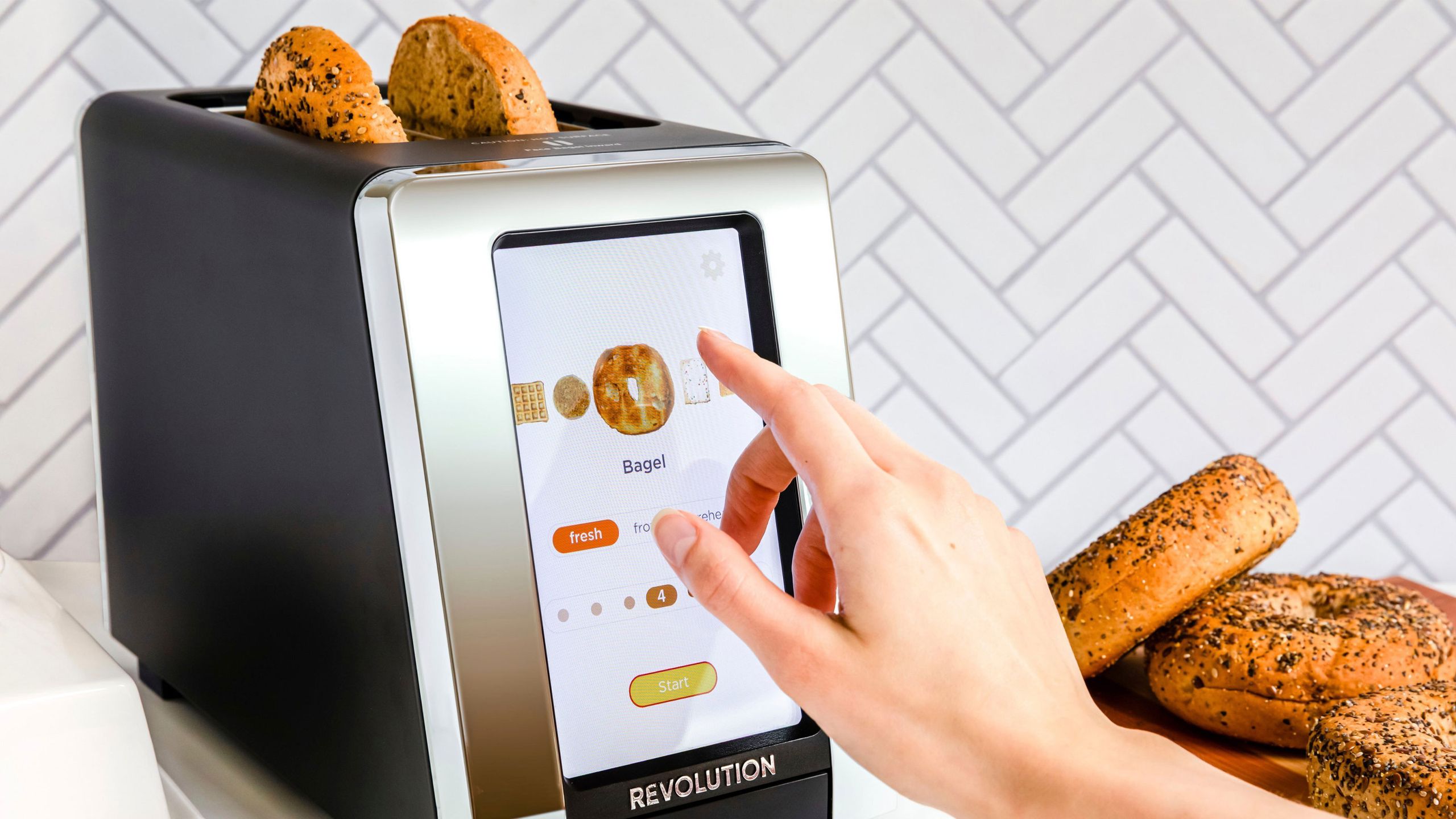
- Bagel
- Cancel
- Lift-and-look
- Separate controls for each pair of slots
Avoid paying for controls you will not use. A simple dial can be better than a complex interface if it is clear and reliable.
Good lift height
Small bread pieces can sit deep inside some toasters. A high-lift lever helps you remove English muffins and small slices without using a fork.
Never insert a metal tool into a toaster. If bread is stuck, unplug the toaster and let it cool before trying to remove it.
Best toaster types for different buyers
The best toaster type depends on your kitchen and your normal breakfast.
Best overall: Breville Die-Cast 4-Slice Smart Toaster
The Breville Die-Cast 4-Slice Smart Toaster is a strong choice for households that want more control than a basic toaster provides.
Its useful features include:
- Four-slice capacity
- Wide slots
- Browning controls
- A lift-and-look function
- Reheat and frozen settings
- A motorized lowering system on versions that include this feature
The lift-and-look feature matters because it lets you check the bread without ending the cycle. That can reduce burnt toast when you are still learning the correct setting.
Its main drawbacks are size, weight, and price. It is not the best choice for a very small kitchen or for someone who wants the cheapest functional toaster.
Check the exact model name before buying. Breville has sold several toaster versions and sizes in the U.S., and features can differ.
Best value: Cuisinart CPT-180 4-Slice Toaster
The Cuisinart CPT-180 is a practical choice for buyers who want four slots and simple controls.
It is suited to people who:
- Make toast for more than one person
- Prefer manual controls
- Want a familiar stainless-steel design
- Do not need a motorized lift or smart features
Its limits are typical of basic four-slice toasters. It may offer less precise control and fewer premium features than Breville. Browning can also vary by bread type and by slot.
This is a better value choice when the goal is dependable daily toast, not a luxury appliance.
Best for long slices: Dualit NewGen 4-Slice Toaster
Dualit is known for long-slot toaster designs and a repair-oriented approach. The NewGen 4-Slice model can suit people who often toast sourdough, large country bread, or other long slices.
Potential benefits include:
- Long slots
- A manual lever
- A sturdy, traditional design
- Replaceable parts on some versions
- A timer-based control system
Dualit models can cost much more than ordinary household toasters. Some users may also prefer the automatic operation of a modern toaster.
Before buying, confirm that the model is intended for the U.S. market. Check voltage, plug type, warranty terms, and available replacement parts.
Best for design: Smeg Toaster
Smeg toasters appeal to buyers who want an appliance that fits a carefully designed kitchen. The brand offers two-slice and four-slice models in several colors.
A Smeg toaster may be a good fit when:
- Appearance matters as much as basic function
- You want a matching kitchen collection
- You need standard toast, bagel, reheat, and frozen settings
- You accept a design premium
A stylish finish does not prove better toast. Choose Smeg for its design and features, not because it is automatically the best performer.
Best for large families
Large families should focus on capacity and workflow. A four-slice toaster with long slots may be more useful than two small two-slice toasters.
Look for:
- Four independent slots
- Wide or long openings
- Separate browning controls
- A large crumb tray
- Strong lift height
- A cool-down routine that is easy to manage
A four-slice model does not always toast four slices in the same time as a two-slice model. Its real advantage is that several slices can cook in one cycle.

Two-slice or four-slice toaster: Which is better?
A two-slice toaster is best for a small household, limited counter space, or light use. A four-slice toaster is better when two people often eat toast at the same time.
Choose a two-slice toaster if:
- You usually make one or two slices
- Your kitchen has limited counter space
- You want a lower purchase cost
- You prefer a smaller appliance
Choose a four-slice toaster if:
- You make breakfast for a family
- You toast bread and bagels at the same time
- You want fewer cooking cycles
- You have enough counter space
A four-slice toaster may use more counter space and cost more. It may also have two separate heating zones. This is useful when one person wants light toast and another wants dark toast.
For very large families, two separate two-slice toasters can sometimes offer more flexibility. They also let two people use different settings. The trade-off is more counter space and more cords.

How to choose the best toaster for your bread
Bread size should guide your purchase more than brand name.
Standard sandwich bread
Most toasters handle standard sliced bread. A simple two-slice model may be enough. Look for a browning dial that moves smoothly and a lever that lifts the bread high enough.
Thick bread and Texas toast
Thick bread needs wide slots. If the bread rubs against the slot walls, it may brown unevenly or fail to lower fully.
Check the manufacturer’s stated slot width when it is available. Do not assume that every “wide-slot” toaster has the same opening.
Bagels
A bagel setting usually reduces heat on one side so the cut side receives more heat than the rounded outer side. Place the bagel according to the manual.
Never force an oversized bagel into a slot. If it does not fit freely, use another method.
English muffins
English muffins are small and can fall deep into a toaster. A high-lift function helps. A crumb tray is also useful because muffins can shed many crumbs.
Frozen bread
A frozen setting usually adds time or changes the heating cycle. It does not make every type of frozen bread toast evenly.
For frozen food, follow the food package instructions. Watch the first few cycles. Bread thickness, moisture, and sugar content can change the result.
Sourdough and artisan bread
Long slots are often more important than extra browning settings. Measure your usual slices before buying.
A toaster that holds the full slice can prevent an unbrowned strip at the top. If your bread is unusually large, a toaster oven may be a better tool.

Toaster features that matter less than buyers think
Some features sound useful but should not decide the purchase by themselves.
Digital screens
A screen can show settings, but it does not guarantee even toast. A clear dial may be faster and easier to use.
Motorized lowering
A motorized system can feel smooth and premium. It also adds mechanical parts. Consider whether the convenience is worth the higher cost.
Many browning levels
More numbers do not always mean more accurate control. The useful question is whether the toaster produces repeatable results between settings.
High wattage
Higher wattage may help a toaster heat quickly, but it does not prove better browning. It may also place a greater load on the electrical circuit.
Use the toaster according to its manual. Do not run several high-power appliances on an overloaded circuit.
Wi-Fi and smart controls
A toaster usually does not need an internet connection. Smart features can add cost and complexity without improving the basic job.
For most buyers, slot size, even heat, controls, cleaning, and safety matter more.

Toaster safety and maintenance
Toasters need airflow and regular cleaning. The U.S. Consumer Product Safety Commission advises unplugging appliances when they are not in use and keeping combustible items away from heat sources.
Follow these basic rules:
- Place the toaster on a stable, heat-resistant surface.
- Keep it away from curtains, paper, towels, and plastic items.
- Do not cover the toaster while it is operating.
- Empty the crumb tray often.
- Unplug the toaster before cleaning.
- Let it cool before moving or storing it.
- Never use a knife, fork, or other metal object to remove stuck bread.
- Stop using it if the cord, plug, controls, or body show damage.
Do not put buttered bread, pastries with loose filling, or food covered in metal into a standard toaster unless the manual specifically permits it. These foods can drip, burn, or create a fire risk.
A toaster that smells strongly of burning plastic, sparks, or repeatedly trips a circuit should be unplugged and removed from service. Do not keep using it to see whether the problem goes away.

Common toaster buying mistakes
The most common mistake is choosing a toaster by appearance alone. A beautiful toaster may still have narrow slots or poor control for your bread.
Other mistakes include:
- Buying two slots when the household needs four
- Ignoring the length of artisan bread
- Assuming “wide slot” means every thick food will fit
- Paying for smart features that will not be used
- Choosing a very cheap model with unclear safety information
- Forgetting the warranty and return policy
- Ignoring crumb-tray access
- Expecting one browning number to work for all bread
- Buying an imported model without checking voltage
Toast changes as bread changes. Fresh bread, dry bread, frozen bread, sweet bread, and dense bread can all need different settings.
Start with a medium setting. Watch the first cycle. Adjust in small steps. This simple method often matters more than buying the most expensive toaster.

How much should you spend on a toaster?
A basic toaster can handle standard bread at a low price. Mid-range models often offer better controls, more space, and improved construction. Premium models may add design, motorized movement, long slots, or replaceable parts.
Use this decision rule:
- Low budget: Buy a simple two-slice or four-slice toaster from a known brand with a clear warranty.
- Mid-range budget: Look for wide slots, separate controls, frozen and bagel settings, and a removable crumb tray.
- Premium budget: Pay for a feature you will use, such as long slots, repairable parts, or lift-and-look control.
Prices and availability change by U.S. retailer and model year. Check the current manufacturer page and warranty before ordering.
The cheapest toaster is not always the lowest-cost choice. A toaster that fails early, burns bread, or cannot fit your food may cost more through replacement and waste.

Final recommendation
For most U.S. households, start with the Breville Die-Cast 4-Slice Smart Toaster if you want premium control and four-slice capacity.
Choose the Cuisinart CPT-180 if you want a simpler and usually more affordable four-slice option. Choose the Dualit NewGen if long bread, manual control, and repairability matter most. Choose Smeg if kitchen design is a major priority.
Before you buy, measure your bread and counter space. Then confirm the slot size, U.S. voltage, warranty, crumb-tray design, and return policy. Those checks will do more for satisfaction than searching for a toaster with the title “best in the world.”
Key takeaways
- The best overall toaster for many U.S. homes is the Breville Die-Cast 4-Slice Smart Toaster.
- No toaster is best for every kitchen.
- Slot size and bread shape matter more than brand prestige.
- Four-slice models suit families; two-slice models suit small households.
- Long slots help with sourdough and artisan bread.
- A numbered dial does not guarantee equal results between brands.
- Clean the crumb tray and never use metal tools inside a toaster.
- Check U.S. voltage, warranty, and safety labeling before buying.
Frequently asked questions
What is the number-one toaster brand?
There is no single number-one brand for every buyer. Breville is a strong premium choice, Cuisinart offers practical value, Dualit focuses on long-slot and repairable designs, and Smeg emphasizes style. The best brand depends on your bread, budget, and desired features.
Is an expensive toaster worth it?
An expensive toaster can be worth it if you use features such as long slots, motorized lowering, lift-and-look control, or replaceable parts. It may not be worth the cost if you mainly toast standard sandwich bread and want a basic appliance.
Are four-slice toasters better than two-slice toasters?
Four-slice toasters are better for families and shared breakfasts. Two-slice models are better for small kitchens and light use. Neither size guarantees better browning.
How long should a toaster last?
Service life varies with use, design, cleaning, and electrical conditions. A toaster used several times each day may wear sooner than one used occasionally. A clear warranty and available replacement parts can make a meaningful difference.
Can I toast bread and bagels in the same toaster?
Yes, if the toaster has a suitable bagel setting and the bagel fits safely. Use the controls and loading direction stated in the manual. Never force oversized food into the slots.
Should I buy a toaster or toaster oven?
Buy a toaster for fast, simple toast. Buy a toaster oven if you also want to heat larger foods, open-faced sandwiches, pastries, or small meals. A toaster oven usually takes more counter space and may take longer to toast a small slice of bread.