The safest toaster oven is not one single brand or model. In the United States, the best choice is a toaster oven that has a recognized safety certification, fits your counter with clear space around it, uses automatic controls correctly, and has no damaged cords, doors, or heating parts.
Look for a UL Listed, ETL Listed, or CSA certification mark on the appliance or its packaging. These marks show that the product was tested to relevant electrical and fire-safety standards by a recognized testing laboratory. No certification can prevent every fire, so safe placement, cleaning, and use still matter.
This guide explains how to choose a safer toaster oven, which features matter, what claims to question, and how to use the appliance with less risk in a U.S. home.
What Makes a Toaster Oven Safe?
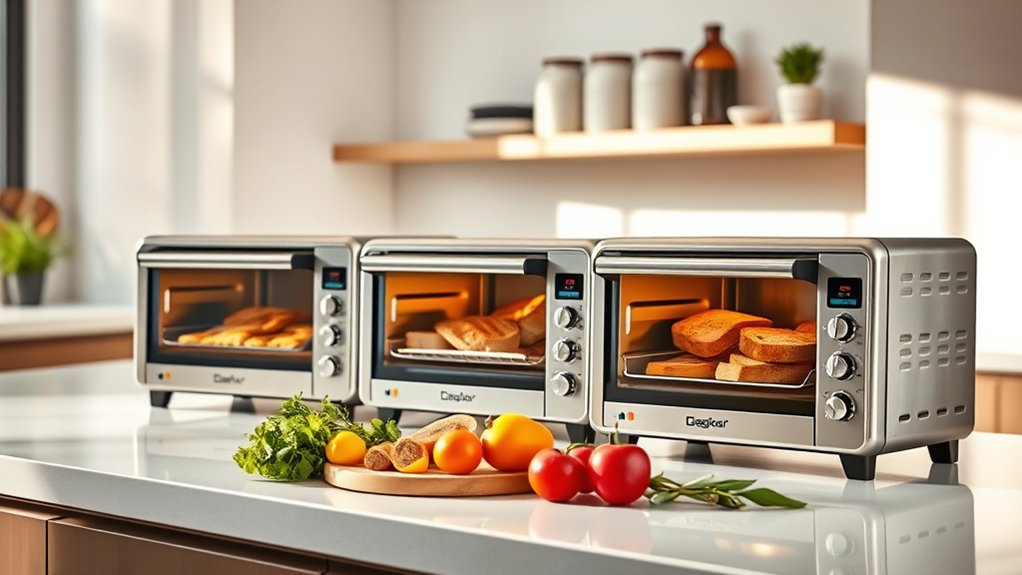
A safer toaster oven combines tested electrical design with features that help control heat. The most useful safeguards include a recognized certification, a stable body, a sound power cord, a timer or automatic shutoff, and a door that closes fully.
Safety does not depend on one feature alone. A certified toaster oven can still cause a fire if it sits under cabinets, collects grease, or runs while no one is home.
Look for a recognized safety certification
Common marks in the United States include:
- UL Listed: Tested by UL Solutions to applicable safety standards.
- ETL Listed: Tested by Intertek to applicable safety standards.
- CSA certification: Tested by CSA Group to applicable standards.
These marks are different from a general statement such as “meets safety standards.” Check the actual product, box, or installation guide for the mark. You can also verify some listings through the testing organization’s online certification database.
A certification mark does not mean the toaster oven is fireproof. It means the product passed specific tests under defined conditions.
Check for a real model number
A clear model number helps you:
- Find the correct owner’s manual.
- Check for recalls.
- Order the right replacement tray.
- Confirm voltage and wattage.
- Contact the manufacturer about repairs.
Avoid products with unclear branding, missing manuals, or no U.S. customer-support information. A low price is not useful if you cannot identify the product or obtain safety instructions.
Prefer a timer and automatic shutoff
A timer that turns off the heating elements can reduce the chance of prolonged heating. It is helpful if someone forgets that food is cooking.
However, automatic shutoff is not a substitute for supervision. A timer may not stop smoke from food, grease buildup, or a fire that begins before the timer ends. Use the feature as a backup, not as permission to leave the appliance unattended.
Inspect the physical design
Before buying, look for:
- A wide, stable base.
- Controls that are easy to read.
- A door that opens without pulling the oven forward.
- A cool-touch or insulated handle.
- A crumb tray that is easy to remove.
- Enough space for air to flow around the case.
- A power cord that does not rest near the hot side or top.
A glass door can help you watch food without opening the oven. It can also become very hot, so keep children away from it.

Which Type of Toaster Oven Is Safest?
For most U.S. homes, a basic certified toaster oven with a timer and simple controls is the easiest type to use safely. More cooking modes add convenience, but they also add settings that require careful reading.
Basic toaster oven
A basic model usually offers toast, bake, and broil settings. It may be the simplest choice for:
- Toast and bagels.
- Small meals.
- Older adults who prefer simple controls.
- Homes where several people use the appliance.
Fewer settings can reduce confusion. The model still needs enough interior space for food to sit away from the heating elements.
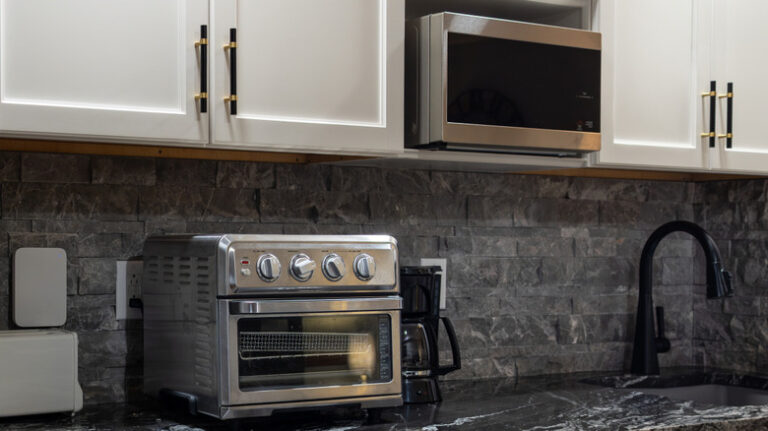
Convection toaster oven
A convection model uses a fan to move hot air. It may cook food more evenly or quickly, depending on the recipe and food size.
The fan does not make the appliance inherently safer. It can move hot air toward nearby items and may blow light foil or parchment into a heating element if those materials are used incorrectly.
Air-fryer toaster oven
An air-fryer toaster oven combines toaster oven heating with high-speed air circulation. It may include a basket or perforated tray.
This type can be safe when used as directed, but the basket may allow more grease to drip. Clean it often, keep food away from heating elements, and use only accessories approved for the model.
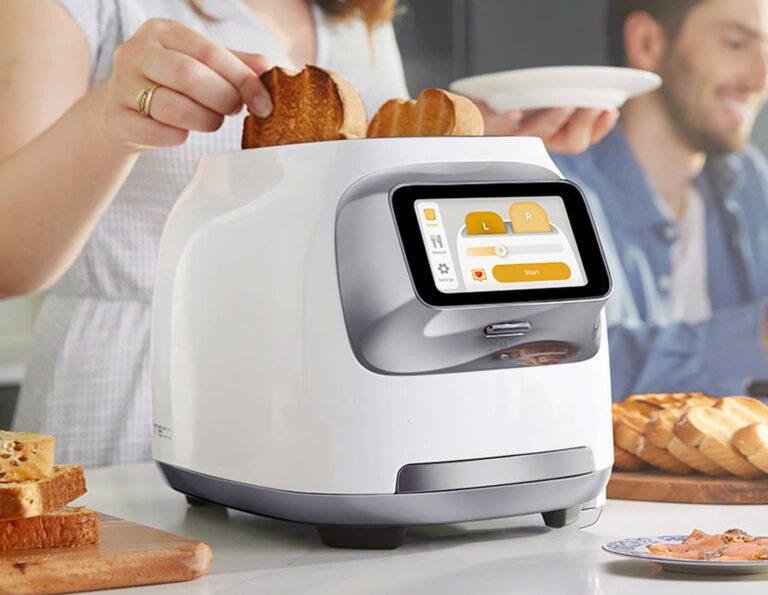
Smart or connected toaster oven
A connected model may offer app controls, alerts, or preset cooking programs. These features can be useful, but they do not automatically improve physical safety.
Before buying one, check whether:
- The oven can start cooking from an app.
- Remote operation can be disabled.
- The app requires an account or internet connection.
- The oven still works safely if the connection fails.
- The manual explains how alerts and shutoff work.
For households with children, pets, or people who may forget an appliance is running, a model without remote start may be the simpler choice.
| Toaster oven type | Main safety advantage | Main concern |
|---|---|---|
| Basic | Simple controls and fewer modes | May have less precise temperature control |
| Convection | More even airflow in some uses | Fan can move light materials |
| Air-fryer style | Fast circulation and removable basket | Grease and crumbs can build up |
| Smart model | Alerts and preset programs | Remote features may add complexity |

The Safest Toaster Oven Features to Prioritize
The best safety features help prevent overheating, reduce mistakes, or make cleaning easier. They should support safe habits rather than replace them.
1. A verified certification mark
This is the first filter. Do not rely only on online seller claims. Confirm that the mark appears on the product or official packaging and that the model can be identified.
2. Automatic shutoff
A timer or automatic shutoff is useful when the heating cycle ends. Read the manual to learn whether the timer shuts off:
- The heating elements only.
- The fan and heating elements.
- The full appliance.
- Some modes but not others.
Different models use different control systems.
3. Overheat protection
Some toaster ovens include thermal protection. If the unit becomes too hot, the protection may cut power or limit heating.
This feature is not a license to block vents or use the oven in a tight space. If overheat protection activates, unplug the unit after it is safe to do so and contact the manufacturer if the problem repeats.
4. A removable crumb tray
Crumbs and grease can ignite when exposed to high heat. A removable tray makes routine cleaning easier.
Choose a design that lets you remove the tray without touching hot surfaces. Clean it only after the oven has cooled and is unplugged.
5. Clear controls and readable markings
Poorly marked controls can lead to the wrong mode or cooking time. A safer interface has distinct settings, visible temperature marks, and a timer that is easy to read.
Digital controls are not automatically safer than knobs. Choose the system that every regular user can operate correctly.
6. A door and rack system that stays secure
The rack should slide smoothly and remain stable when you place a pan on it. The door should close fully without force.
Do not use a toaster oven if the door is broken, the glass is cracked, or the rack falls out of position.
7. A power cord and plug in good condition
The plug should fit firmly into a properly grounded wall outlet. Do not use a toaster oven with:
- A frayed cord.
- A bent or hot plug.
- Melted plastic.
- A loose outlet.
- Signs of arcing or scorch marks.
Avoid extension cords and power strips unless the manufacturer specifically permits them and the device is rated for the appliance’s power draw. High-wattage heating appliances are generally best plugged directly into a suitable wall outlet.
How to Place and Use a Toaster Oven Safely
Placement is one of the biggest safety factors. A good toaster oven can become hazardous when heat cannot escape.
Set it on a noncombustible, level surface
Use a stable surface that can tolerate heat. Keep the oven away from:
- Paper towels and cookbooks.
- Curtains and cloth.
- Wooden wall panels.
- Plastic containers.
- Appliance cords.
- Sink edges and wet areas.
Follow the clearance distances in the owner’s manual. If the manual does not give clear instructions, do not push the oven directly against a wall or under a cabinet.
Keep the top and sides clear
Toaster ovens release heat through vents and the outer case. Do not store items on top of the appliance while it operates.
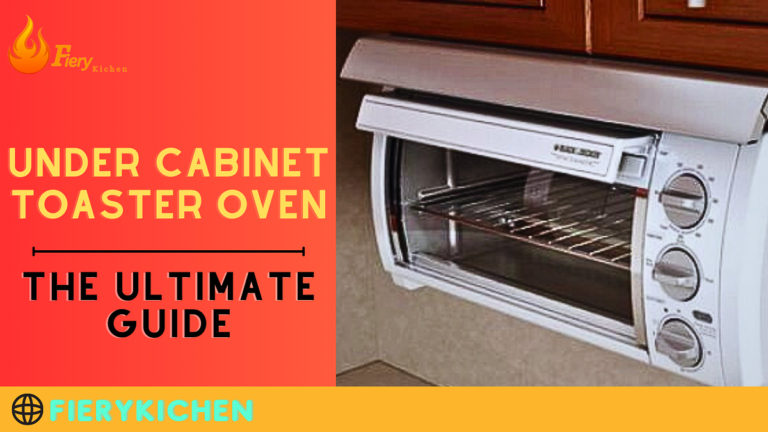
Never place the oven inside a closed cabinet unless the manufacturer specifically designed and approved it for that installation.
Use the right cookware
Use pans and accessories rated for oven temperatures. Keep foil, parchment, and food away from the heating elements.
Do not put these items inside unless the manual allows them:
- Plastic containers.
- Paper plates.
- Disposable packaging.
- Cardboard trays.
- Non-oven-safe glass.
- Oversized pans that touch the door or elements.
Never cover the crumb tray with foil unless the manufacturer expressly permits it. Foil can affect airflow, reflect heat, and create a short circuit if it contacts electrical parts.
Watch foods that drip or brown quickly
Greasy foods, cheese, bread crumbs, and sugary sauces can smoke or ignite. Place foods in a suitable pan and use a lower rack when the manual recommends it.
Stay nearby while cooking. If smoke appears, turn off the oven and unplug it if you can do so safely. Keep the door closed if flames are inside. Do not use water on a grease or electrical fire. Call 911 if the fire does not stop quickly or spreads.
Clean it after it cools
Unplug the oven and let it cool before cleaning. Remove crumbs often, especially after cooking toast, pastries, or greasy food.
Do not pour water into the oven or immerse the appliance. Follow the manual for cleaning the interior, racks, tray, and glass door.

How to Compare Toaster Ovens Before Buying
Use a safety-first checklist instead of choosing by cooking modes alone.
| Question | What to look for | Why it matters |
|---|---|---|
| Is the product certified? | UL, ETL, or CSA mark that can be verified | Helps confirm electrical safety testing |
| Can you identify the model? | Model number, manual, and U.S. support | Makes recalls and repairs easier |
| Does it have a timer? | Shutoff behavior explained in the manual | Limits heating time if you forget |
| Can you clean it easily? | Removable crumb tray and accessible surfaces | Reduces grease and crumb buildup |
| Does it fit your counter? | Manual clearance requirements | Prevents trapped heat |
| Is the cord sound? | Firm plug and undamaged cable | Reduces shock and fire risks |
| Are controls simple? | Clear settings and readable marks | Lowers user error |
| Does it suit the user? | No unnecessary remote or complex modes | Matches the home’s needs |
A simple scoring method
You can compare models without treating safety as a marketing rating. Give each model one point for every item it clearly meets:
- Verified certification mark.
- Clear U.S. model number.
- Available owner’s manual.
- Automatic shutoff or timer.
- Removable crumb tray.
- Stable base and secure door.
- Clear clearance instructions.
- Accessible manufacturer support.
- No unresolved recall found in a search of the U.S. Consumer Product Safety Commission database.
- Controls that all regular users understand.
This is a decision aid, not a laboratory safety score. A model that lacks one feature may still be safe, while poor placement or misuse can make any model dangerous.
Do not choose by these claims alone
Treat the following claims with care:
- “Self-cleaning.”
- “Cool touch.”
- “Fireproof.”
- “Commercial grade.”
- “Smart safety.”
- “The safest.”
- “No risk of overheating.”
Ask what the claim means, under which test conditions, and whether it applies to the complete appliance or only one part.

Common Toaster Oven Safety Mistakes
Many problems come from routine use rather than a hidden defect. Avoid these mistakes:
Leaving the oven unattended
A timer reduces risk but cannot detect every hazard. Stay in the kitchen or nearby while the appliance runs.
Blocking ventilation
Pushing the oven against a wall, placing items on top, or using it inside a cabinet can trap heat.
Using damaged accessories
A warped rack or cracked tray may touch a heating element or cause food to spill. Replace parts with approved items.
Overfilling the oven
Food that touches the elements can smoke or burn. Leave room for heat and air to move.
Ignoring smoke or unusual sounds
Turn off and unplug the oven after it cools enough to do so safely if you notice:
- Repeated sparking.
- A burning-plastic smell.
- A hot plug or outlet.
- Smoke from the appliance itself.
- A door that no longer closes.
- A control that does not respond.
- Repeated circuit trips.
Do not keep using the appliance to “see if it happens again.”
Using a recalled product
Search the model number on the U.S. Consumer Product Safety Commission website. A recall may cover a specific production run, date code, or accessory rather than every product in a brand’s line.
What to Do If a Toaster Oven Catches Fire
If food catches fire inside the oven, turn off the controls and unplug the appliance only if you can do so without touching flames or a hot cord. Keep the door closed to limit oxygen.
Never throw water on a grease or electrical fire. Leave the area and call 911 if the fire continues, smoke becomes heavy, or you cannot safely control the situation.
If the oven produces smoke without visible flames, turn it off and unplug it when safe. Open windows only if doing so does not expose you to smoke or fire. Do not use the appliance again until the manufacturer or a qualified appliance professional determines that it is safe.
Are Expensive Toaster Ovens Safer?
A higher price does not prove better safety. More expensive models may offer better controls, stronger doors, improved insulation, or easier cleaning, but those benefits must be confirmed in the specifications and manual.
A less expensive certified model may be the safer practical choice if it is correctly sized, simple to use, and easy to clean. A large model can create more heat and use more power than a small model, so buy only the capacity you need.
The most useful question is not “Which model costs the most?” It is “Which certified model can everyone in this home operate, clean, and place correctly?”
What Is the Safest Toaster Oven for Older Adults or Families?
For an older adult, choose a model with large controls, clear markings, a stable door, a visible timer, and simple cooking modes. Avoid a design that requires a phone or app for basic operation.
For families, select a model with a secure handle, clear hot-surface warnings, and controls that children cannot easily activate. Keep the oven out of reach when possible, and teach children that the glass, door, and surrounding case may remain hot after cooking.
For homes with pets, keep cords away from chewing and place the oven where animals cannot knock pans or accessories into the heating area.

Frequently Asked Questions
Is a UL-listed toaster oven safer than a non-listed model?
A UL Listed product has been tested by UL Solutions to applicable standards. That is useful evidence of electrical and fire-safety testing, but it does not prevent unsafe placement, poor cleaning, misuse, or later damage.
Are toaster ovens safer than conventional ovens?
Not by default. A toaster oven may use less space and cook smaller portions, but it still has hot surfaces, heating elements, electrical parts, and fire risks. Safe placement and supervision matter for both appliances.
Can I leave a toaster oven plugged in?
Follow the owner’s manual and local safety guidance. Unplugging the oven after use can reduce risks from damaged cords, stuck controls, or accidental activation. Always unplug it before cleaning or inspecting it.
Can I use parchment paper or aluminum foil in a toaster oven?
Only if the owner’s manual and the material’s instructions allow it. Keep both away from heating elements and prevent them from blocking airflow. Never use foil to cover the crumb tray unless the manufacturer specifically approves it.
How often should I clean a toaster oven?
Remove crumbs often and clean grease as soon as the oven cools. The exact schedule depends on use, but frequent users may need to check the crumb tray after each cooking session.
Should I replace a toaster oven that smells like burning plastic?
Stop using it and unplug it when safe. A new-appliance smell may have a limited cause, but a strong or repeated burning-plastic smell can indicate a damaged cord, insulation, control, or internal part. Contact the manufacturer rather than continuing to test it.
Sources and Safety References
The following U.S. and testing-organization resources support the safety guidance in this article:
- U.S. Consumer Product Safety Commission — Recalls
- U.S. Consumer Product Safety Commission — Fire Safety
- UL Solutions — Product Safety Standards and Certification
- Intertek ETL Listed Mark
- CSA Group — Product Certification
- NFPA — Cooking Safety
Certification standards, product designs, recalls, and manuals can change. Check the current manual and the CPSC recall database for the exact model before buying or continuing to use a toaster oven.

Conclusion
The safest toaster oven is a current, identifiable model with a verified UL, ETL, or CSA certification mark, automatic shutoff, a removable crumb tray, clear controls, and a stable design. Choose a size that fits your counter with the manufacturer’s required clearance.
Before the first use, read the manual, inspect the cord and plug, remove packaging, and check the CPSC recall database. During use, keep the oven away from combustible items, clean crumbs and grease, and stay nearby. These basic steps often matter more than extra cooking modes or a premium price tag.