Introduction
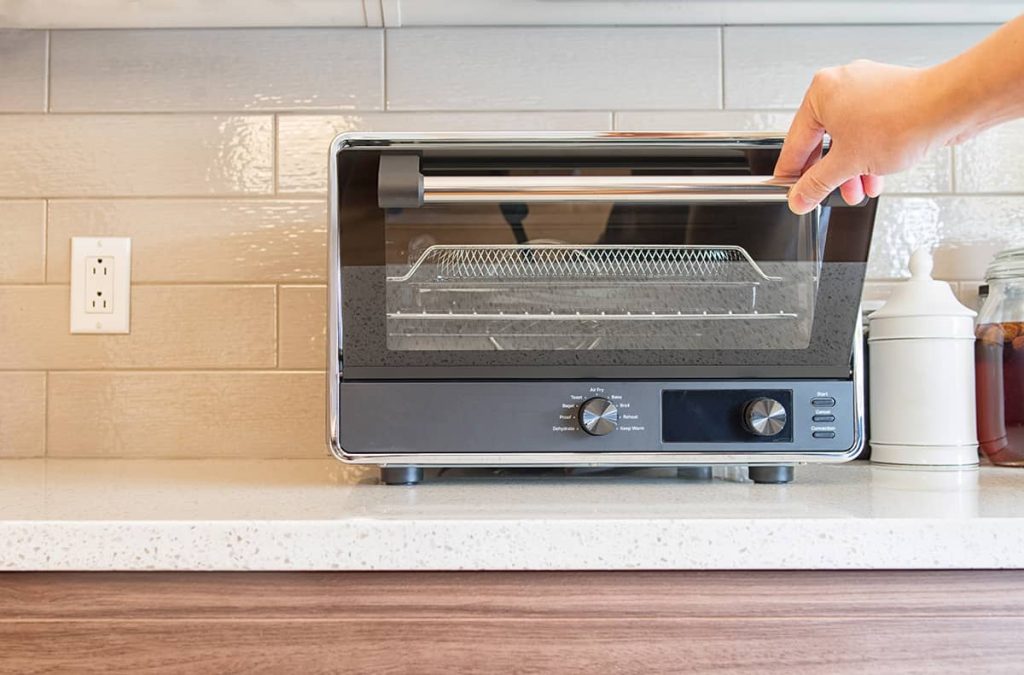
In most U.S. kitchens, the best surface under a toaster oven is a flat, stable, heat-resistant, noncombustible countertop. If you need extra protection, place a toaster oven heat shield or appliance mat rated for the oven’s operating temperature underneath it—but only when the toaster oven’s manual allows that setup.
Do not use a towel, paper, cardboard, plastic cutting board, wood board, or loose baking sheet as a substitute. These materials can melt, burn, trap heat, block vents, or make the appliance unstable.
The owner’s manual is the final authority because toaster ovens differ in their heating element location, vent design, feet, insulation, and required clearances. Before using any mat or tray, check the instructions for your exact model.

The Best Surface for a Toaster Oven
A toaster oven should sit on a level, sturdy, heat-resistant surface with enough open space around it for ventilation. Common suitable surfaces include:
- Stone or quartz countertops
- Ceramic tile
- Metal countertops
- Heat-rated laminate, if the manufacturer permits it
- Concrete or another noncombustible surface
A countertop protector can help shield the surface from crumbs, grease, heat, and small spills. It does not replace the need for ventilation or safe clearance.
Why the surface matters
A toaster oven produces heat from heating elements near the top, bottom, or sides of the cooking chamber. Heat can also move through the oven’s feet and base. Some models release warm air through vents near the rear, sides, or bottom.
A surface that looks safe may still be damaged by repeated heat. Possible problems include:
- Discoloration
- Blistering or bubbling
- Softened laminate
- Cracked tile or grout
- Melted plastic
- Heat marks on wood
- Damage to a countertop seam
A protector can reduce contact with the counter, but it cannot make an unsafe location safe. If the oven vents downward, a thick mat may block airflow and hold heat under the appliance.
What “heat-resistant” really means
“Heat-resistant” is not one universal rating. A product may resist a brief hot pan but fail under hours of repeated toaster oven use. Look for a stated temperature rating and compare it with the toaster oven manual.
The protector should also be:
- Flat and stable
- Large enough to support the appliance feet
- Nonflammable or clearly rated for the intended heat
- Free from curled edges
- Easy to clean
- Thin enough not to block vents
- Compatible with the countertop material
If the product has no temperature rating or usage instructions, do not assume it is suitable.

What You Can Put Under a Toaster Oven
The safest choice depends on the countertop, the toaster oven design, and the manufacturer’s instructions. The following options are not equal.
| Material or product | Usually suitable? | Main concern |
|---|---|---|
| Bare stone or ceramic tile | Often yes | Check heat, seam, and clearance limits |
| Manufacturer-approved tray | Yes, if specified | Must not block vents |
| Rated toaster oven heat shield | Often | Verify temperature and airflow |
| Thin metal sheet | Sometimes | Can transfer heat and slide |
| Silicone mat | Sometimes | May insulate or block bottom vents |
| Wood cutting board | Usually no | Can scorch, warp, or catch fire |
| Plastic cutting board | No | Can melt or deform |
| Towel or cloth | No | Can ignite or trap heat |
| Cardboard or paper | No | Combustible |
| Loose baking sheet | Usually no | Can slide and restrict airflow |
A heat-resistant appliance mat
A purpose-made appliance mat may protect the counter from heat and food residue. Choose one with a clear temperature rating, a firm surface, and no raised edges that interfere with the oven feet.
Do not place a mat under the oven if the manual says to use the appliance directly on the counter. Some toaster ovens rely on the space beneath the feet to release heat.
A metal heat shield
A metal shield can protect a counter from heat, but metal is not automatically safer. It conducts heat well. A thin metal sheet may become hot enough to damage a laminate counter or burn someone who touches it.
A metal shield must also remain stable. If it slides when you open the door, the toaster oven could move or tip.
A silicone mat
Silicone mats can tolerate high temperatures, but their ratings vary. Some are made for baking sheets, not for continuous contact beneath an electrical appliance. A silicone mat may also reduce airflow below the oven.
Use one only when:
- The mat’s rating covers the expected heat.
- The toaster oven manual permits a mat.
- The mat does not cover vents.
- The oven remains stable on top of it.
- The mat manufacturer allows that type of appliance use.
A wooden board
A wooden board is not a dependable heat shield. Wood can absorb heat, dry out, scorch, warp, or ignite if exposed to enough heat. It may also lift the oven and alter the airflow around its base.
Do not use a cutting board simply because it is thick. Thickness does not prove fire resistance.

How to Set Up a Toaster Oven Safely
Use this setup process before the first use and whenever you move the appliance.
1. Read the exact owner’s manual
Find the manual for the model and version sold in the United States. Look for instructions about:
- Countertop materials
- Minimum side and rear clearance
- Space above the oven
- Vent locations
- Heat shields or mats
- Cabinet use
- Extension cords
- Cleaning and crumb removal
Do not rely on instructions for a similar-looking model. Two toaster ovens can have very different vent paths.
2. Inspect the countertop
Check that the surface is:
- Flat
- Dry
- Clean
- Strong enough for the appliance
- Free of paper, cloth, plastic, and clutter
Move the toaster oven away from a sink edge, countertop seam, burner, or area where water may splash.
3. Check the oven feet and base
The feet should sit firmly on the surface. Do not remove them, add improvised spacers, or place the oven on an uneven board.
Look under the appliance for vents. Never cover a vent with a mat, foil, tray, or cloth.
4. Create the required clearance
Keep the space around the toaster oven open. Do not push it against a wall or place objects on top of it unless the manual specifically allows them.
The required distance varies by model. Some instructions call for several inches of open space on the sides and rear. Others require more room above the appliance, especially during broiling or air frying.
Treat the manual’s clearance as a minimum, not a target to reduce.
5. Plug it into a safe outlet
Plug the toaster oven directly into a properly installed U.S. wall outlet when the manual requires it. Avoid overloaded power strips and do not run the cord under the appliance, across a hot surface, or where it can be pulled.
If the plug, cord, or outlet becomes hot, stop using the toaster oven and have the setup checked by a qualified electrician.
6. Run a short supervised test
Operate the toaster oven while staying nearby. Check for:
- A burning smell that does not come from normal first-use residue
- Smoke from the counter or protector
- Softening, bubbling, or discoloration
- Excessive heat below the oven
- Movement when opening the door
- A tripped circuit
- Unusual sounds
Turn the oven off and unplug it if the surface shows damage, smoke continues, or the appliance behaves abnormally.
Signs the setup is working
A safe setup should remain stable and dry. The countertop or protector should not change color, soften, smoke, smell scorched, or become damaged during normal use.
The area around the oven may feel warm. Warmth alone does not prove a problem, but scorching, melting, smoke, or a strong electrical odor does.

What Not to Put Under a Toaster Oven
Some common household items create more risk than protection.
Towels, pot holders, and cloth
Never place fabric under or around an operating toaster oven. Cloth can trap heat and can ignite if it contacts a hot surface or heating element.
Use pot holders only for handling hot cookware. Keep them away from the appliance while it operates.
Paper, cardboard, and newspaper
These materials are combustible and can shift toward a heating element. Cardboard also insulates the bottom of the oven and may trap heat against the counter.
Plastic cutting boards
Plastic can soften, warp, melt, or release unpleasant fumes. A cutting board’s food-safe rating does not make it suitable as an appliance heat shield.
Foil
Aluminum foil is useful in some toaster oven cooking tasks when the manual permits it. It is not a general-purpose countertop protector. Foil can slide, reflect heat, contact heating elements, or block vents.
Do not line the bottom of the toaster oven or cover vents with foil unless the manufacturer specifically instructs you to do so.
A baking sheet
A baking sheet placed under the toaster oven may seem convenient, but it has several drawbacks. It can slide, collect heat, block airflow, and become very hot. Its edges may also prevent the toaster oven feet from sitting securely.
Use a baking sheet for food only. Use a dedicated, rated appliance protector for countertop protection.
A thick cutting board or butcher block
Wood may look sturdy, but it is not automatically safe under a hot electrical appliance. A thick board can also raise the toaster oven into a position that changes its clearance from cabinets.
Toaster Oven Placement by Countertop Type
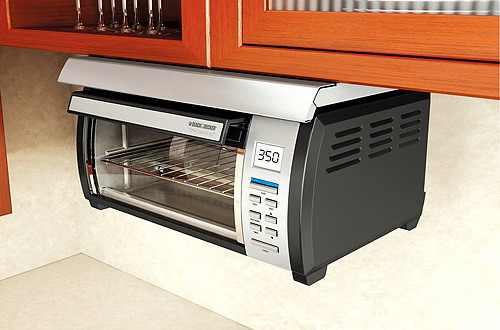
The countertop material changes the risk, but no material removes the need to follow the manual.
Laminate countertops
Laminate may discolor, bubble, or separate when exposed to repeated heat. A manufacturer-approved protector can help, but it must not block ventilation.
Pay special attention to seams and edges. Heat may damage adhesive or loosen the laminate over time.
Wood countertops
Wood can scorch and dry out. Keep the toaster oven away from unfinished edges, paper towels, curtains, and other combustible items.
A noncombustible, rated shield may be useful if the manual allows it. Do not assume that a thick wood counter provides enough protection.
Quartz and natural stone
Stone is generally more heat-tolerant than many laminate surfaces, but sudden temperature changes can still damage some materials. Seams, adhesive, sealers, and nearby surfaces may be less heat-resistant than the stone itself.
Keep the oven level and follow the appliance instructions.
Tile
Tile may handle heat well, but grout can stain or crack. A smooth, stable surface is better than a loose tile or uneven grout line.
Stainless steel or metal
Metal will not burn like wood, but it conducts heat. The surface beneath and around the metal may still become hot. Prevent sliding, especially when opening a heavy oven door.
Troubleshooting Heat, Damage, and Instability
The counter feels very hot
First, turn off and unplug the toaster oven after it cools enough to handle safely. Check whether the heat comes from the oven base, a blocked vent, or a protector that is holding heat in place.
Then:
- Read the manual for required clearance and vent locations.
- Remove any unapproved mat, tray, or board.
- Check that the feet are present and unobstructed.
- Move combustible items away.
- Inspect the counter for damage before using the oven again.
If the base becomes unusually hot even with the correct setup, contact the manufacturer.
The toaster oven slides
A sliding oven can spill hot food or expose a cord to heat. Stop using it until the surface is stable.
Clean grease from the counter and mat. Make sure the protector is flat and correctly sized. Do not use a loose towel or adhesive material as a quick fix.
The mat smells or changes shape
Stop using the mat. A strong odor, bubbling, curling, smoke, or discoloration can indicate overheating or material failure.
Replace it only with a product that has clear heat specifications and is approved for appliance use. Do not keep testing a product after it shows heat damage.
The outlet or plug gets hot
Turn off the toaster oven and unplug it if safe to do so. A warm plug may indicate a loose connection, overloaded circuit, damaged cord, or outlet problem.
Do not use a damaged outlet or continue operating the oven through a power strip. A qualified electrician should evaluate repeated overheating, burning marks, buzzing, or tripped breakers.
The toaster oven smokes
A small amount of smoke may occur during initial use from manufacturing residue, but persistent smoke requires attention. Turn the oven off, unplug it when safe, and let it cool.
Do not pour water into the appliance. If flames appear, keep the door closed if possible, disconnect power only if you can do so safely, leave the area, and call 911. Follow U.S. Fire Administration and local fire department guidance for a kitchen fire.

A Simple Decision Guide
Use this quick guide to choose what belongs under your toaster oven:
- Your manual says the oven can sit on the counter: Use the bare counter if it is stable, heat-resistant, and clear.
- Your laminate or wood counter needs protection: Use a rated appliance mat or shield only if the manual permits it.
- The manual warns against covering the bottom: Do not use a mat, tray, foil, or board beneath the oven.
- The product has no temperature rating: Do not use it.
- The protector curls, smells, smokes, or softens: Remove it and replace it.
- You need more clearance from a cabinet: Move the appliance; do not raise it with an improvised board.
- The oven still overheats the counter: Stop use and contact the manufacturer.
The most useful rule is simple: protect the counter without restricting the oven’s airflow.
Key Takeaways
- Put a toaster oven on a flat, stable, heat-resistant, noncombustible surface.
- A rated appliance mat or heat shield may help, but only if the toaster oven manual allows it.
- Never use towels, paper, cardboard, plastic, or an unapproved wooden board underneath.
- Do not block vents or change the oven’s height with improvised supports.
- Keep required space around and above the oven.
- Stop using the setup if you see smoke, melting, scorching, unusual odor, or electrical damage.
Frequently Asked Questions
Can I put a toaster oven directly on a quartz countertop?
Often, yes, but check both the toaster oven manual and the countertop manufacturer’s care instructions. Keep the oven level, maintain clearance, and protect seams or nearby materials if needed.
Can I put a toaster oven on a silicone baking mat?
Only when the silicone mat is rated for the heat and the appliance manufacturer allows it. A baking mat is not automatically designed to sit under an electrical appliance, and it may block bottom vents.
Should I put a cutting board under my toaster oven?
Usually not. Wood can scorch or warp, and plastic can melt. A cutting board also does not prove that the appliance has enough ventilation.
Can a toaster oven sit under kitchen cabinets?
Only if the owner’s manual permits that placement and the required clearance is maintained. Heat, steam, and grease can damage cabinets. Move the oven to an open area if the manual requires overhead space.
Is a metal tray safe under a toaster oven?
Not necessarily. Metal can conduct heat, slide, and block vents. Use a metal shield only when it is designed and rated for this purpose and does not interfere with the oven’s stability or airflow.
What should I do if my countertop is already scorched?
Stop using the toaster oven in that location. Inspect the cord, feet, vents, and surface, then check the manual for placement requirements. Move the oven to a suitable location, and contact the manufacturer if the base produces excessive heat.
Conclusion
The right thing to put under a toaster oven is usually nothing beyond a safe countertop. When extra protection is needed, choose a properly rated appliance mat or heat shield that fits the oven, supports its feet, and leaves all vents open.
Never trade ventilation for surface protection. If the counter burns, the mat smells, the plug heats up, or the oven becomes unstable, stop using the setup and correct the cause before cooking again.