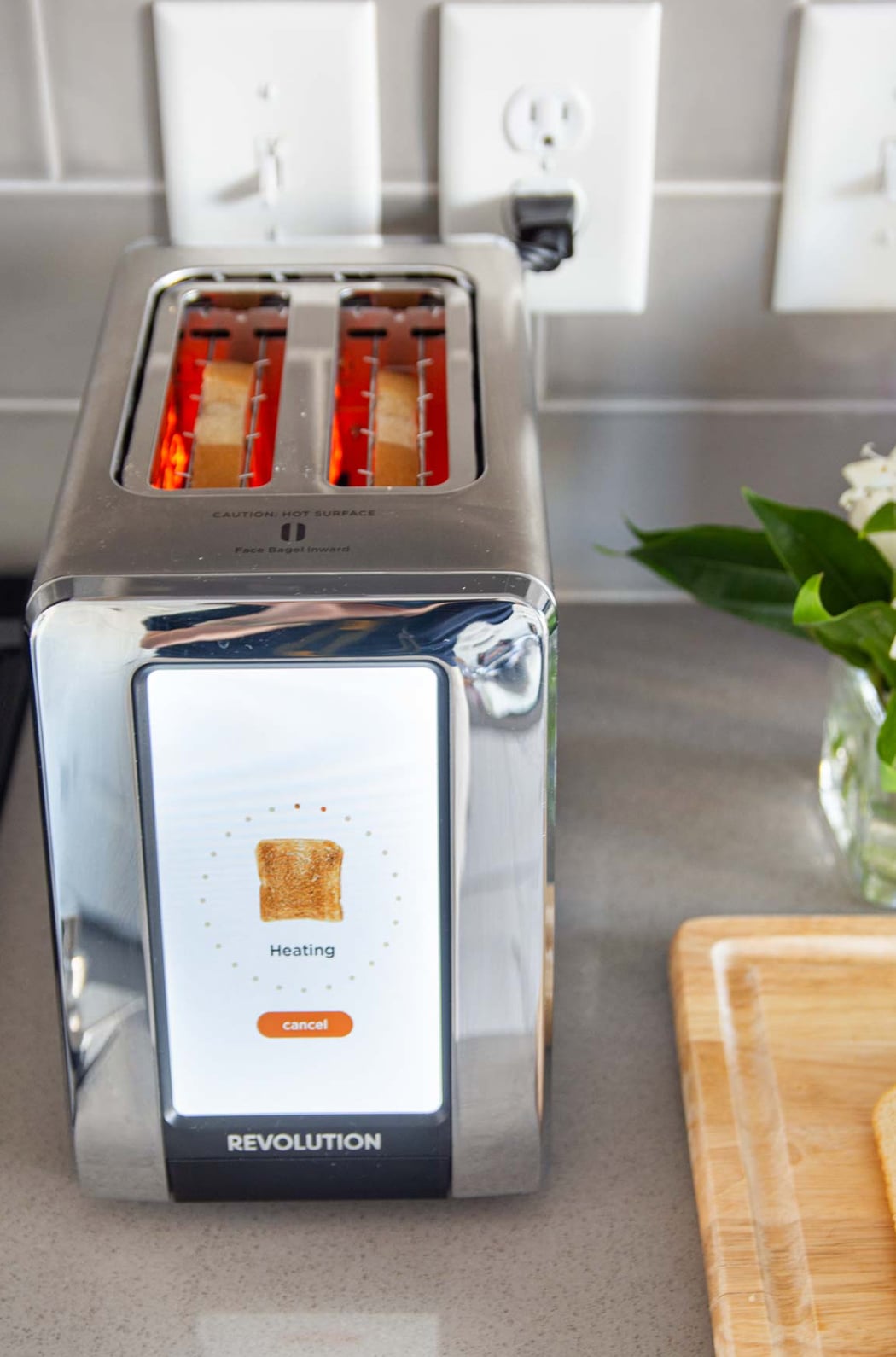
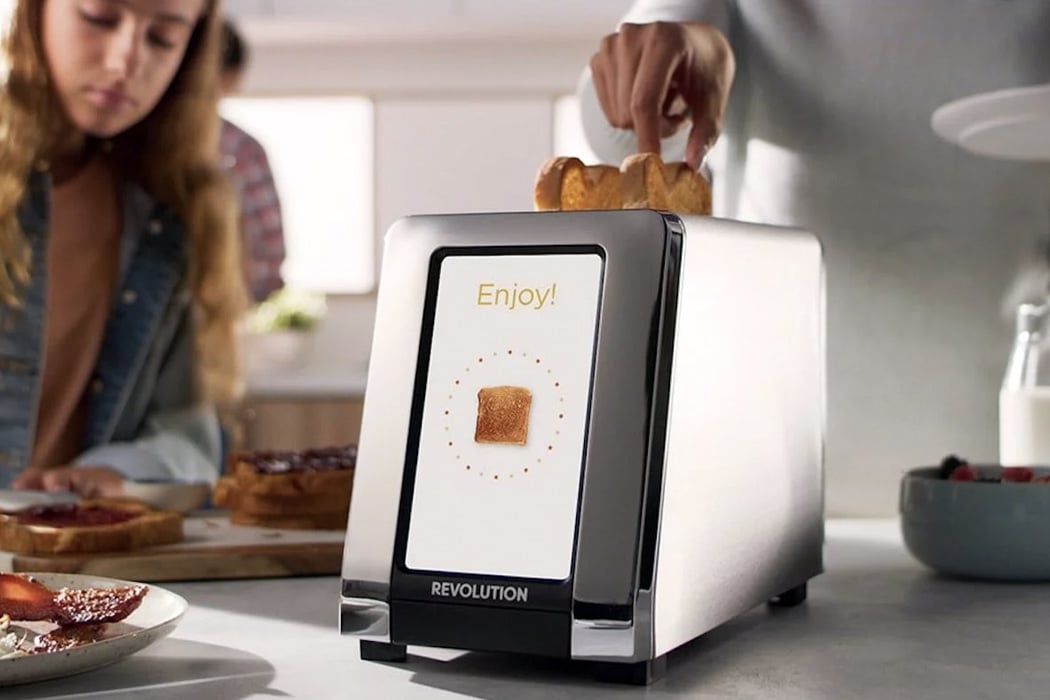
The fastest toaster for most homes in the United States is a smart toaster that uses fast heating and sensor control, such as the Revolution InstaGLO. The brand claims some toast cycles can finish in about 35 seconds. However, that number depends on the bread type, shade setting, starting temperature, and model.
For the highest output, a commercial conveyor toaster is faster overall. It can toast many slices in a short time, but it is large, costly, and usually needs more power than a home kitchen outlet can provide.
The best choice depends on what “fastest” means to you:
- Fastest single cycle: A high-speed smart toaster may be the best fit.
- Fastest breakfast for a family: A four-slice toaster may finish more bread per batch.
- Fastest large-volume service: A commercial conveyor toaster is the clear winner.
- Fastest low-cost option: A basic two-slice toaster with high wattage may offer good speed for less money.
This guide compares toaster speed in practical terms. It also explains why a claimed cycle time does not always equal faster, better toast.

What Does “Fastest Toaster” Really Mean?
The fastest toaster is not always the toaster with the shortest advertised cycle. You should compare cycle time, slice capacity, heat recovery, and toast quality.
A toaster may finish one cycle quickly but take longer to brown bread evenly. Another model may toast four slices at once and finish breakfast faster overall.
Key speed terms
| Term | Meaning | Why it matters |
|---|---|---|
| Cycle time | Time from lowering the lever to toast popping up | Measures one batch |
| Throughput | Number of slices toasted in a set time | Matters for families and offices |
| Heat recovery | How fast the toaster regains heat after a cycle | Affects back-to-back use |
| Slot capacity | Number of slices the toaster can hold | Changes total breakfast time |
| Browning control | How the toaster adjusts heat and time | Affects repeatable results |
A simple two-slice toaster that takes 60 seconds makes about two slices per minute. A four-slice toaster that takes 90 seconds makes about 2.7 slices per minute. In that example, the four-slice toaster has a slower cycle but higher output.
The best comparison is:
Total time = number of batches × cycle time
For example, four slices in two batches on a two-slice toaster may take about two minutes. A four-slice toaster may toast all four slices in one longer cycle.

The Fastest Types of Toasters
Different toaster designs solve different speed problems. A home pop-up toaster, a smart toaster, and a commercial conveyor toaster should not be compared as if they serve the same purpose.
Fast smart toasters for home kitchens
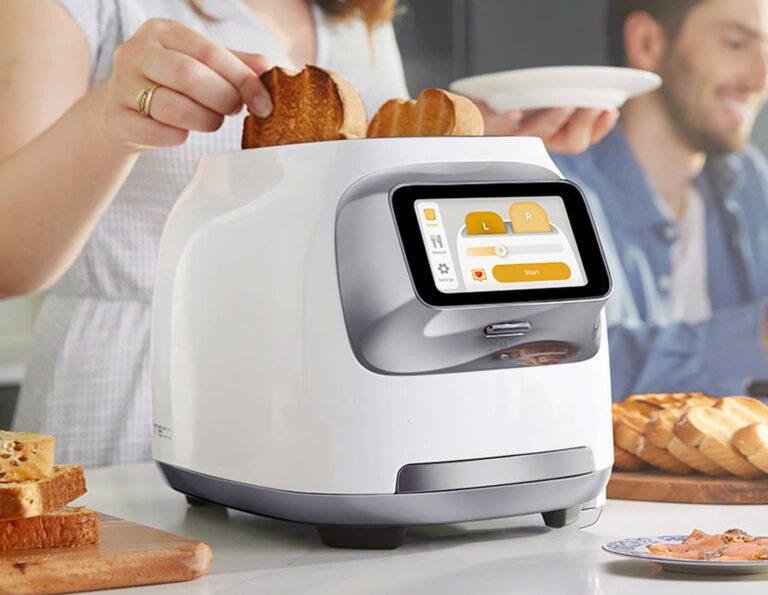
Smart toasters use sensors and software to adjust the heat cycle. The Revolution InstaGLO is one example. Its manufacturer promotes a fast cycle and sensor-based control.
This type of toaster may suit you if:
- You want one or two slices quickly.
- You use different kinds of bread.
- You want digital controls.
- You care about repeatable browning.
- You can pay more than the price of a basic toaster.
The main limit is evidence. A manufacturer’s cycle claim is a documented product claim, not independent proof that the toaster is fastest in every kitchen. The cycle may change with frozen bread, thick bread, bagels, shade settings, and voltage.
High-wattage pop-up toasters
A toaster with more power can often heat its elements quickly. Many standard U.S. toasters use roughly 800 to 1,500 watts, though the exact rating varies by model.
More wattage does not guarantee faster toast. The toaster also needs:
- Efficient heating elements
- Good heat transfer
- A working thermostat or sensor
- Enough slot space for the bread
- A control system that does not add needless time
A high-wattage model may toast quickly, but it can also brown thin bread too fast. It may need more care with light bread, sweet bread, or pastries.
Four-slice toasters
A four-slice toaster is often the fastest practical choice for a household. It may not finish one slice faster than a two-slice model, but it can cut the total number of batches in half.
Look for:
- Two separate control zones
- Even heat across all slots
- Wide slots for thick bread
- A high-lift lever
- A useful reheat setting
- A crumb tray that is easy to remove
Two independent control zones help when one person wants light toast and another wants dark toast. A single control for all four slots may be faster, but it offers less control.
Commercial conveyor toasters
Commercial conveyor toasters are built for volume. Bread moves through a heated chamber on a belt. Some models can toast hundreds or even thousands of slices per hour, depending on the model and setting.
These machines are common in:
- Restaurants
- Hotels
- Cafeterias
- Hospitals
- Large dining rooms
They are not usually suitable for a U.S. home. They can be wide, loud, hot, and expensive. Some require a dedicated 208- or 240-volt circuit. A licensed electrician should confirm the circuit before installation.
A conveyor toaster is the fastest type for large output, but not the fastest sensible choice for a kitchen counter.
Fastest Toaster Options by Use Case
There is no single best speed winner for every buyer. Use the table below to match the toaster type to your need.
| Your need | Best toaster type | Main advantage | Main drawback |
|---|---|---|---|
| One quick slice | Fast smart toaster | Short advertised cycle | High price |
| Breakfast for two to four people | Four-slice pop-up toaster | More slices per batch | Takes more counter space |
| Frozen bread | Smart toaster with a frozen setting | Adds time in a controlled way | Frozen cycles are slower |
| Bagels and thick bread | Wide-slot toaster | Fits large items | Wide slots may not toast thin bread as evenly |
| Restaurant service | Conveyor toaster | High slice throughput | Commercial cost and power needs |
| Low budget | Basic two-slice toaster | Low purchase price | Slower for several people |
| Small kitchen | Two-slice toaster | Compact size | More batches for groups |
For most U.S. households, a four-slice toaster is the practical speed choice when two or more people eat toast at the same time.
For one person who wants the shortest possible cycle, a fast smart toaster may be more suitable. Check the exact model’s manual and product page before buying. Product names and specifications can change.
How to Choose the Fastest Toaster
Use a few measurable details instead of relying on the word “fast” in a product title.
1. Check the advertised cycle time
Manufacturers may list a cycle time for a certain bread type and shade level. Read the conditions carefully.
A short cycle may apply only to:
- Fresh white bread
- A light or medium shade
- Room-temperature bread
- A specific model
- A standard U.S. electrical supply
Do not assume the same time applies to frozen bread or thick slices.
2. Compare slices per batch
A toaster that holds more slices can reduce total breakfast time. This matters more than a small difference in cycle time.
Hypothetical example:
- Two-slice toaster: 60 seconds per cycle
- Four-slice toaster: 90 seconds per cycle
- Four slices needed
The two-slice model needs two cycles, or about 120 seconds. The four-slice model needs one cycle, or about 90 seconds.
The four-slice model wins even though its individual cycle is longer.
3. Look for separate controls
Separate controls let you run different settings at the same time. This prevents a second batch when people want different toast shades.
A four-slice toaster with one shared control may be less useful than a four-slice toaster with two control zones.
4. Check slot size
Wide slots help with Texas toast, thick sourdough, English muffins, and bagels. If the bread does not fit well, you may need extra cycles or manual turning.
Slot length matters too. Long bread may stick out of a short slot and brown unevenly.
5. Consider frozen and bagel settings
Frozen bread needs extra heat or time. A frozen setting can make the process more consistent, but it will not be as fast as toasting fresh bread.
A bagel setting usually heats one side more than the other. This helps toast the cut side while warming the outside. It may take longer than a standard cycle.
6. Check the U.S. electrical rating
Most household toasters in the United States use a standard 120-volt outlet. Do not use a travel adapter or an unsuitable transformer to run a high-power appliance.
Use the toaster only with the power supply listed by the manufacturer. Never use an extension cord unless the product instructions allow it and the cord is rated for the appliance’s load.

Why a Faster Toaster May Not Make Better Toast
Speed is only useful when the bread is evenly browned and not burned. Very fast heating can create dark edges before the center dries and browns.
Toast quality can change with:
- Bread thickness
- Bread moisture
- Sugar content
- Frozen or fresh bread
- Slot position
- Shade setting
- Room temperature
- Crumb buildup
- Voltage and circuit load
Sweet bread can brown faster than plain bread. Dense bread can take longer. A thick bagel may need a bagel setting and more time.
A toaster also needs room around it. Do not push it against a wall, under a low cabinet, or beside items that can catch fire. Fast heating does not reduce the need for safe placement.

Toaster Safety for U.S. Homes
The U.S. Consumer Product Safety Commission advises consumers to use toasters with care and to keep appliances away from water and flammable materials.
Follow these basic rules:
- Unplug the toaster before cleaning it.
- Let it cool before removing stuck food.
- Do not insert a knife, fork, or other metal object.
- Empty the crumb tray as directed.
- Never cover the toaster while it is operating.
- Keep it away from curtains, paper, and plastic.
- Do not toast food with coatings or fillings unless the manual allows it.
- Stop using the toaster if the cord, plug, or housing is damaged.
- Do not leave a toaster running when you leave the room.
If bread becomes stuck, unplug the toaster first. Let it cool. Then follow the manufacturer’s instructions. Do not shake a hot toaster over a sink or use metal tools to pull out the bread.
A toaster that smells strongly of burning, sparks, or trips the circuit should be unplugged. Do not continue using it until the cause is clear.

Common Mistakes That Make Toasting Slower
Many speed problems come from use, not from the toaster itself.
Using the wrong shade setting
A very dark setting takes longer and uses more heat. Choose the lightest setting that gives the color you want.
Overloading the toaster
Do not force thick bread into narrow slots. It can block movement, touch the heating elements, or become hard to remove.
Ignoring the crumb tray
Crumbs can collect near the heating elements. This may create smoke, odor, or uneven heating. Clean the tray on the schedule listed in the manual.
Using frozen bread without the correct setting
Frozen slices often need a longer cycle. Use the frozen setting when available instead of repeatedly running short cycles.
Comparing marketing claims without conditions
A “30-second toaster” may not produce medium-brown toast in 30 seconds for every bread type. Treat the claim as a starting point. Check the test conditions and independent reviews when available.

Is the Revolution InstaGLO the Fastest Toaster?
The Revolution InstaGLO is among the fastest home toasters based on its manufacturer’s advertised cycle claims. The company promotes rapid heating and sensor control, including a cycle that can take about 35 seconds under selected conditions.
That does not prove it is the fastest toaster for every home. Independent comparisons may use different bread, shade settings, and timing methods. The toaster also costs much more than a basic model.
Choose it when:
- Short single-batch time matters most.
- You want digital controls.
- You often toast different kinds of bread.
- You accept a premium price.
Choose a four-slice toaster instead when several people need toast at once. Choose a commercial conveyor model only when you need large-volume service.
Frequently Asked Questions
What is the fastest toaster for home use?
A fast smart toaster, such as the Revolution InstaGLO, is one of the leading home options based on its advertised cycle time. A four-slice toaster may be faster for a family because it can toast more slices in one batch.
How fast can a toaster toast bread?
A home toaster may finish a cycle in about 30 seconds to several minutes. The exact time depends on the toaster, bread, shade setting, and whether the bread is frozen.
Is a four-slice toaster faster than a two-slice toaster?
It can be faster for multiple slices. It may use a longer cycle, but it can toast twice as many slices in one batch. For one slice, the difference may be small.
Does higher wattage make a toaster faster?
Higher wattage can support faster heating, but it does not guarantee faster or more even toast. Heating design, sensors, slot size, and controls also matter.
Are commercial conveyor toasters faster than home toasters?
Yes, commercial conveyor toasters are faster for high-volume work. They are usually too large, costly, and power-hungry for ordinary home kitchens.
What is the fastest toaster for frozen bread?
A toaster with a dedicated frozen setting is usually the most practical choice. Frozen bread needs more time than fresh bread, so it will not match the toaster’s shortest advertised cycle.
Bottom Line
The fastest toaster for a single home cycle is likely a high-speed smart toaster, with the Revolution InstaGLO standing out through its advertised short cycle. The fastest practical toaster for a family is often a four-slice model, because it reduces the number of batches. A commercial conveyor toaster is fastest for large volume, but it is not a sensible choice for most U.S. homes.
Before buying, compare the full cycle time, slice capacity, bread settings, slot size, power rating, and safety instructions. The shortest number on the box is only useful if the toaster can make the amount and type of toast you need.