For most people in the United States, a toaster is better for fast, simple toast, while a toaster oven is better for cooking more kinds of food. The right choice depends on what you eat, how much counter space you have, and whether speed or versatility matters more.
Choose a toaster if you mainly make sliced bread, bagels, English muffins, and waffles. Choose a toaster oven if you want to reheat pizza, bake small meals, broil food, or cook without turning on a full-size oven.
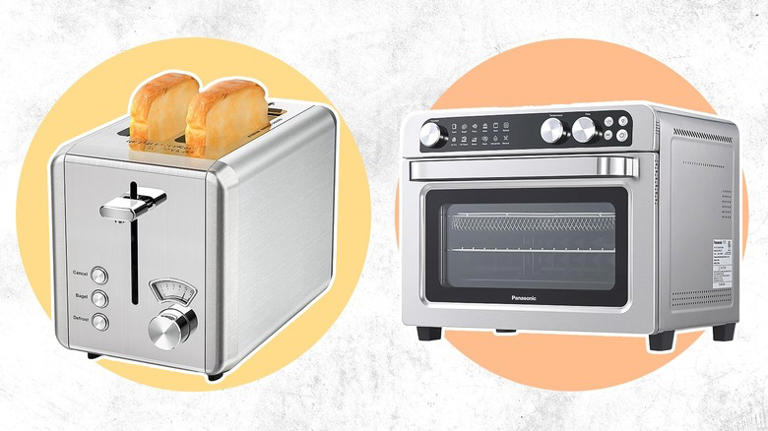
Toaster vs. Toaster Oven: The Main Difference
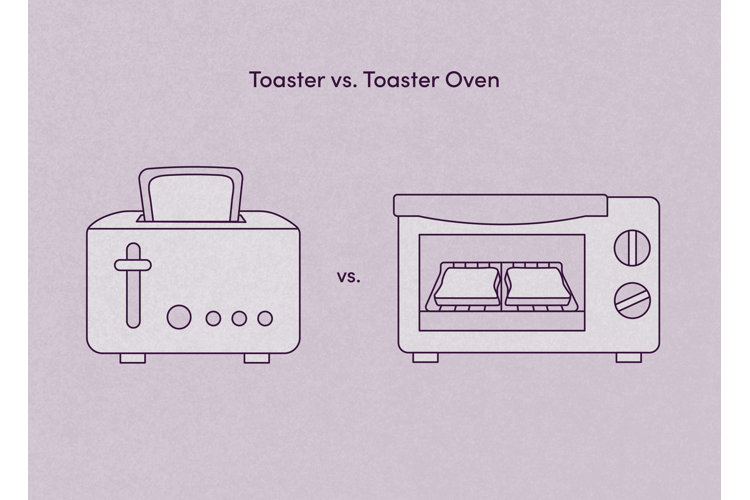
A toaster uses narrow slots and direct radiant heat to brown bread on both sides. A toaster oven uses a heated chamber, a rack, and often a baking pan. It works more like a small oven.
This basic design difference affects nearly every part of the decision:
| Feature | Toaster | Toaster oven |
|---|---|---|
| Best use | Sliced bread and bagels | Toast, reheating, baking, and broiling |
| Toasting speed | Usually faster | Usually slower |
| Food capacity | One item per slot | Several items, depending on size |
| Cooking options | Limited | Much broader |
| Counter space | Small footprint | Larger footprint |
| Cleanup | Usually simple | More parts and surfaces to clean |
| Preheating | Usually not needed | May be needed for some foods |
| Best for | Quick breakfast | Small meals and leftovers |
A toaster is a focused tool. It does one job well. A toaster oven takes more time and space, but it can replace several small cooking tasks.
What counts as a toaster?
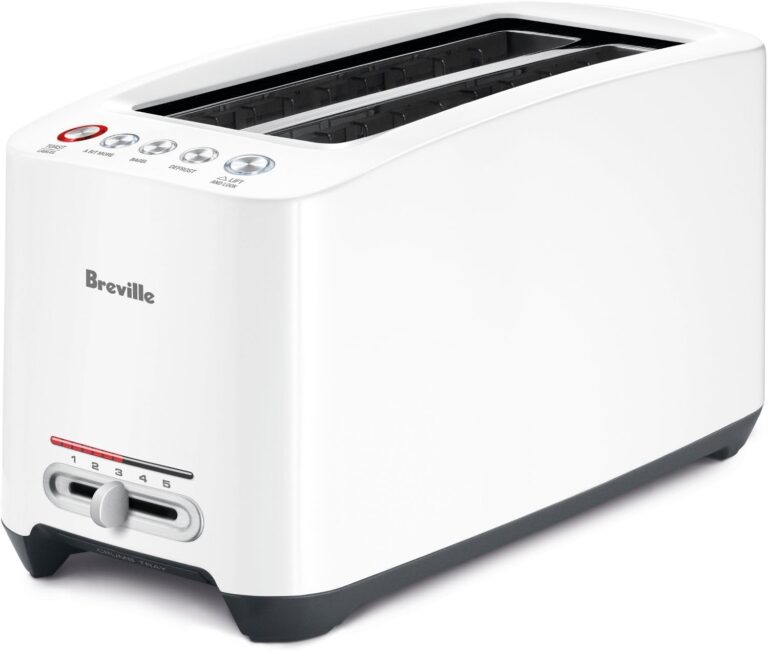
A standard pop-up toaster has two or more slots. You place bread into the slots, select a browning level, and press a lever. The toaster raises the bread when the cycle ends.
Some toasters include settings for frozen bread, bagels, or reheating. These features vary by model. A bagel setting commonly heats one side more than the other, but the exact operation depends on the appliance.
What counts as a toaster oven?
A toaster oven is a small electric oven with a door. It usually includes bake, broil, toast, or warm settings. Some models also include convection fans or air-fry settings.
Because the food sits on a rack or tray, a toaster oven can handle items that do not fit in a pop-up toaster. These may include pizza slices, vegetables, sandwiches, chicken pieces, and small casseroles.

When a Toaster Is the Better Choice
A toaster is usually the better choice when you want toast quickly and often. It also makes sense when your counter is small or your cooking needs are basic.
Choose a toaster if you mainly eat:
- Sliced sandwich bread
- Whole-wheat or multigrain bread
- English muffins
- Bagels
- Frozen waffles
- Toasted pastries that fit the slots
A toaster also offers a simple morning routine. Put in the bread, select the setting, and move on to another task. There is no rack to position and usually no pan to wash.
Toasters are often faster for bread
A toaster directs heat close to the bread. It does not need to heat a large chamber. This can make it faster for a small amount of toast.
The exact time depends on bread thickness, moisture, starting temperature, and the toaster’s design. A thick frozen bagel may take longer than a thin slice of white bread.
Toasters use less space
Many U.S. kitchens have limited counter space. A toaster can fit beside a coffee maker or under a cabinet when stored. A toaster oven needs enough room for its body, door movement, ventilation, and safe clearance from nearby materials.
Always follow the clearance rules in the manual. Do not place a toaster or toaster oven where heat can damage cabinets, walls, curtains, or other appliances.
Toasters can be easier to clean
Crumbs usually collect in a removable tray. Empty the tray only after the appliance is unplugged and cool. Shake crumbs out over a sink or trash can, then wipe the tray as directed by the manufacturer.
Never pour water into a toaster. Never use a knife, fork, or other metal object to remove stuck bread. Unplug the appliance and let it cool before dealing with a jam.
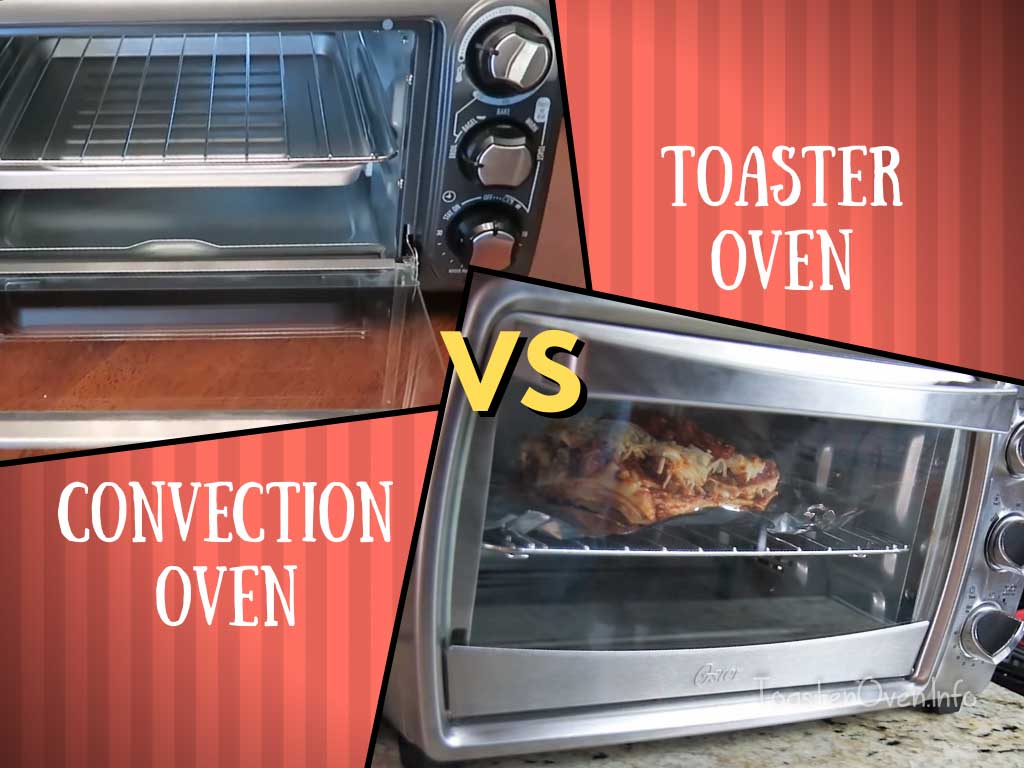
When a Toaster Oven Is the Better Choice
A toaster oven is usually better for people who want one compact appliance for several cooking jobs. It is especially useful for small portions and leftovers.
A toaster oven can handle more foods
Depending on its size and instructions, a toaster oven may be used for:
- Toast and bagels
- Pizza slices
- Open-faced sandwiches
- Quesadillas
- Baked potatoes
- Roasted vegetables
- Cookies
- Small portions of meat or fish
- Frozen snacks
- Leftovers that become soft in a microwave
The cooking space is the key advantage. Food can sit on a pan or rack instead of being forced into a narrow slot.
It can produce crisp results
A toaster oven uses dry heat around the food. This can help crisp the surface of pizza, breaded food, and roasted vegetables.
A microwave heats food in a different way. It is often faster for moist foods, but it may leave breaded or toasted foods soft. A toaster oven takes longer, yet it can restore some crispness.
It can replace some full-size oven use
A toaster oven may use less total energy than a full-size oven for a small portion because it heats a smaller space. The result depends on the appliance, cooking time, food, temperature, and whether the larger oven would have been used for the same task.
Do not assume that every toaster oven is automatically cheaper or faster. Large toaster ovens, long preheats, and repeated cooking cycles can change the result.
Convection and air-fry models add features
A convection toaster oven uses a fan to move hot air around the food. This may improve browning and cooking consistency, but the correct time and temperature can differ from a recipe written for a conventional oven.
An air-fryer toaster oven uses a strong airflow system and a basket or tray. It can cook foods such as fries, wings, and vegetables with a crisp surface. It still needs space, cleaning, and careful use. “Air fry” does not mean the appliance uses no oil or that every food cooks in the same way.

Which Appliance Is More Energy Efficient?
For a small amount of toast, a toaster is often the more efficient tool because it heats only the bread area and finishes quickly. For a small meal, a toaster oven may use less energy than heating a full-size oven, but the answer depends on the cooking cycle.
The U.S. Department of Energy explains that countertop cooking appliances can be useful for smaller cooking jobs. However, appliance energy use varies by wattage, run time, temperature, and cooking method. A higher-wattage appliance is not automatically less efficient because it may finish the job sooner.
A simple way to compare energy use
You can estimate electricity use with this formula:
Energy used in kilowatt-hours = watts ÷ 1,000 × hours used
For example, a hypothetical 1,500-watt toaster oven running for 20 minutes would use:
1.5 × 0.33 = about 0.50 kilowatt-hours
This is only an estimate. The heating elements may cycle on and off, and the appliance may not draw its full rated power for the entire time.
To estimate cost:
Cost = kilowatt-hours × your electricity rate
Check your electric bill for the rate in your area. U.S. electricity prices vary by state, utility, plan, and time of use.
Practical energy advice
- Use a toaster for one or two pieces of bread.
- Use a toaster oven for several items or a small meal.
- Avoid running a large oven for a very small portion when a countertop appliance can safely do the job.
- Do not extend cooking time just to use less power; undercooked food can create a food-safety problem.
- Use the manual’s recommended rack position and temperature.
Energy savings should not be the only deciding factor. Time, food quality, capacity, and safe use matter too.

Which One Is Safer?
Both appliances can be used safely when operated as directed. The main risks are burns, fire, electrical damage, and food that is not cooked or stored safely.
The U.S. Consumer Product Safety Commission advises consumers to use appliances according to manufacturer instructions and keep combustible materials away from heat sources. The U.S. Fire Administration also recommends safe cooking practices and attention while cooking.
Toaster safety
Follow these basic rules:
- Keep the toaster away from water and wet countertops.
- Do not use it near curtains, paper towels, or other flammable items.
- Unplug it before cleaning or clearing a jam.
- Do not insert metal utensils.
- Empty the crumb tray as directed.
- Do not operate a damaged toaster.
- Do not leave a toaster running if the manual warns against unattended use.
If bread catches fire, unplug the toaster if you can do so safely. Do not put your hands inside. Keep the toaster away from water unless emergency guidance specifically calls for another action.
Toaster oven safety
Use these precautions:
- Keep the door, vents, and exterior clear.
- Use only cookware rated for the temperature and appliance.
- Do not block ventilation openings.
- Keep paper, plastic, towels, and packaging away from the heating elements.
- Use oven mitts when removing hot pans.
- Clean grease and food buildup as directed.
- Do not cover the crumb tray with foil unless the manual allows it.
- Use foil only as the manufacturer permits.
A common mistake is putting foil too close to a heating element. It can block airflow, reflect heat, or create a fire risk. The manual for the exact model controls.
Neither appliance should be used as a substitute for a smoke alarm, safe food handling, or direct attention during high-heat cooking.

Which One Should You Buy?
Your best choice depends on your routine, not on the number of features listed on the box.
Buy a toaster when:
- You make toast most mornings.
- You want the fastest way to brown sliced bread.
- You have limited counter space.
- You rarely reheat pizza or cook small meals.
- You want simple controls and easy cleanup.
- You already own a full-size oven or air fryer.
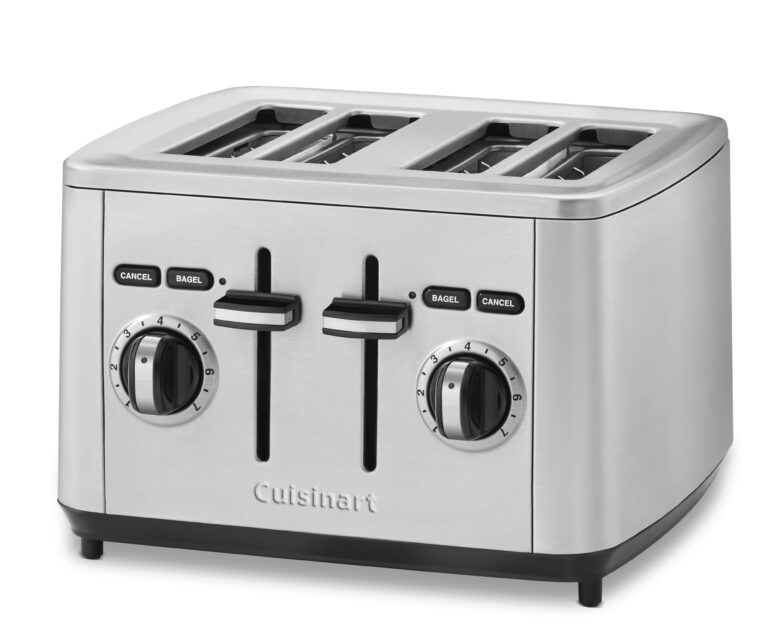
A two-slot toaster may suit one person or a small household. A four-slot toaster can save time when several people make toast at once, but it takes more space.
Buy a toaster oven when:
- You reheat leftovers often.
- You want crisp pizza or sandwiches.
- You cook for one or two people.
- You need to bake or broil small portions.
- You want convection or air-frying functions.
- You want to avoid heating a full-size oven for small meals.
Check the interior dimensions, not just the advertised capacity. A model may claim it fits a certain pan or number of slices, but real usable space depends on rack position, food thickness, and clearance from the heating elements.
Consider buying both
A toaster and toaster oven can work well together. The toaster handles daily bread, while the toaster oven handles leftovers and small meals.
Buying both makes less sense if your counter space is tight or you already own an air fryer, compact oven, or reliable full-size oven. In that case, choose the appliance that fills the larger gap in your kitchen.
Key Features to Check Before You Buy
The most useful features depend on the food you plan to make. Start with capacity and controls rather than choosing a model based only on its feature count.
For a toaster
Look for:
- Slot width that fits your usual bread and bagels
- Even browning controls
- A bagel setting if you eat bagels often
- A frozen-food setting if you toast frozen waffles or bread
- A removable crumb tray
- A cord length that works for your outlet
- A design that stays stable on the counter
Very thick bakery bread may not fit in every slot. Measure or check the slot width when this matters.
For a toaster oven
Look for:
- Interior dimensions
- Rack and pan size
- Bake, broil, toast, and warm settings
- Convection, if useful for your recipes
- A clear timer and temperature controls
- An easy-to-clean crumb tray
- Exterior and door clearance
- A power cord and outlet setup that match your kitchen
A digital display can be convenient, but it does not guarantee better cooking. A simple model with clear controls may be easier to use.
For any countertop appliance
Check the product manual before purchase when possible. Confirm:
- Required clearance
- Approved cookware
- Cleaning instructions
- Warranty terms
- Voltage and plug requirements
- Whether replacement trays or racks are available
Most U.S. household outlets provide standard residential power, but use the appliance only with the plug and electrical setup specified by the manufacturer. Do not use a damaged cord or overloaded outlet.

Common Mistakes to Avoid
Several mistakes can reduce performance or create a safety problem.
Choosing by wattage alone
Wattage describes electrical power, not the full cooking result. A toaster with more wattage may brown faster, but browning also depends on slot design, heating elements, sensors, bread moisture, and control settings.
Ignoring usable capacity
Exterior size does not show how much food fits inside. Measure the interior and check whether the door, rack, and heating elements leave enough room for your usual pans.
Treating a toaster oven like a microwave
A toaster oven needs heat and time. Foods with high water content may take longer than they would in a microwave. Foods with paper wrapping, plastic packaging, or unsuitable containers may be unsafe.
Using the wrong setting
Toast, bake, broil, convection, and air-fry settings may use different heating elements and fan behavior. Follow the recipe and manual for the setting you select.
Failing to clean crumbs and grease
Crumbs can burn. Grease can smoke and may ignite at high temperatures. Let the appliance cool, unplug it, and clean it according to the manual.
Trusting the timer as a safety device
A timer can stop or signal the end of a cycle, but it does not remove the need for safe placement and supervision. Do not leave cooking food unattended when the manufacturer advises against it.

Frequently Asked Questions
Is a toaster oven better than a toaster for toast?
Not usually if toast is your only goal. A pop-up toaster is often faster and takes less space. A toaster oven becomes the better option when you also want to reheat, bake, broil, or cook other foods.
Can a toaster oven replace a regular toaster?
Yes, for many households. It can toast bread and bagels, but it may take longer and require more counter space. It may also produce different browning results depending on the rack position and heating pattern.
Is it cheaper to use a toaster or toaster oven?
For a small amount of bread, a toaster will often use less total energy because it runs for a shorter time and heats a smaller area. For small meals, a toaster oven may use less energy than a full-size oven. Compare actual wattage and run time for your appliance.
Can you put aluminum foil in a toaster oven?
Only if the appliance manual permits it and gives instructions for placement. Do not let foil touch heating elements or block vents. Never put aluminum foil inside a pop-up toaster.
Which is better for reheating pizza?
A toaster oven is usually better. It can warm the pizza while helping the crust stay firm. A microwave may be faster, but the crust can become soft.
Is an air-fryer toaster oven worth it?
It can be worth it if you want one appliance for toast, baking, reheating, and crisp cooking. It may not be worth the extra size or cost if you mainly make toast or already own a separate air fryer.

Final Verdict: Toaster or Toaster Oven?
A toaster is better for speed, simplicity, and daily bread. A toaster oven is better for flexibility, leftovers, and small meals.
If you mainly want toast, buy a toaster. If you want a compact cooking appliance that can handle more than bread, choose a toaster oven. If you have enough space and use both functions often, owning both can be practical.
Before buying, write down the foods you make in a normal week. The appliance that handles those foods with less time, less space, and less cleanup is the better choice for your kitchen.