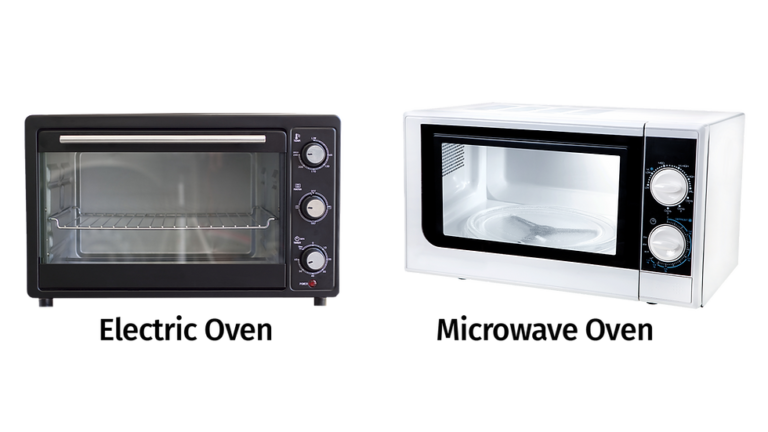
For most short cooking and reheating tasks, a toaster oven usually uses more electricity than a microwave. A typical U.S. microwave may draw about 600 to 1,200 watts, while a toaster oven often draws 1,200 to 1,800 watts. However, total energy use depends on both power and time.
A microwave often wins for heating leftovers, soup, vegetables, and small portions. A toaster oven may use less energy than a full-size oven, but it usually needs more time and power than a microwave.
This guide explains how to compare them using wattage, cooking time, energy use, and cost.
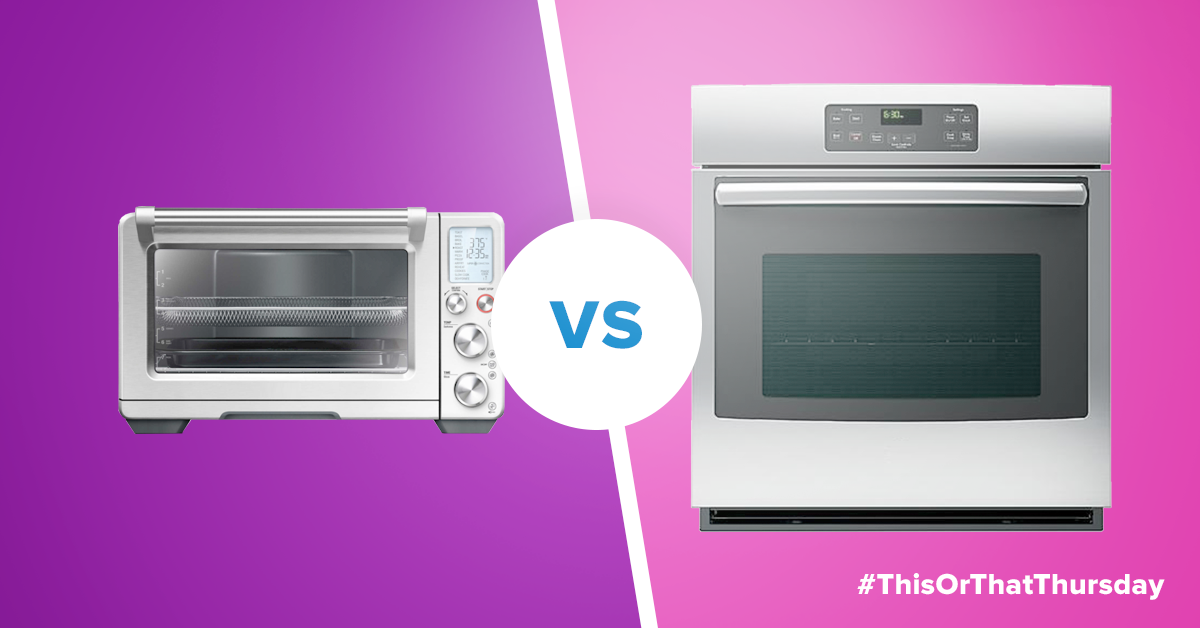
Microwave vs. Toaster Oven: Quick Comparison
A microwave is usually the lower-energy choice for small portions and short heating jobs. A toaster oven becomes more competitive when you need dry heat, browning, crisp food, or a longer cooking cycle.
| Appliance | Common power range in the U.S. | Typical use time | Best for |
|---|---|---|---|
| Microwave | 600–1,200 watts | 1–10 minutes | Reheating and moist foods |
| Toaster oven | 1,200–1,800 watts | 5–30 minutes | Toasting, baking, and crisping |
| Full-size electric oven | 2,000–5,000 watts | 20–60 minutes | Large meals and multiple dishes |
These ranges are general examples. Check the label on your appliance or its manual for the rated input power. The number printed on a microwave may describe cooking output rather than the electricity it draws from the wall.
For the same 10-minute task, a 1,500-watt toaster oven uses about twice as much energy as a 750-watt microwave. The microwave may still use more energy if it runs much longer.
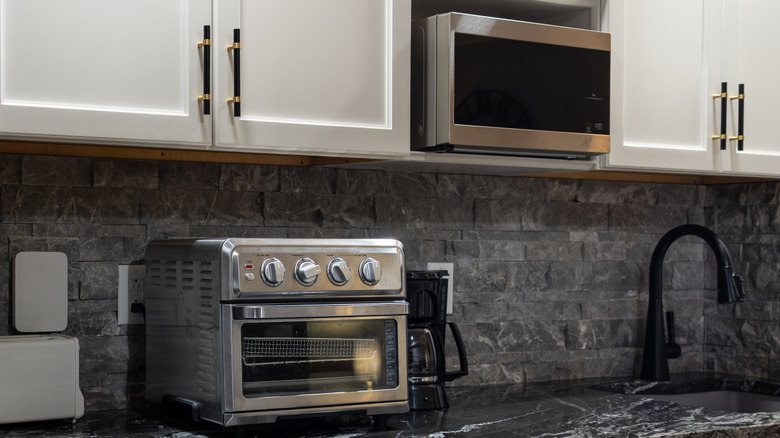
How Electricity Use Is Calculated
Electricity use depends on wattage and operating time. The basic formula is:
Energy used in kilowatt-hours (kWh) = watts × hours ÷ 1,000
Electric utilities in the United States bill households in kilowatt-hours. One kilowatt-hour equals 1,000 watts used for one hour.
Example: 5-minute microwave cycle
Assume a microwave draws 1,000 watts and runs for 5 minutes:
- 5 minutes ÷ 60 = 0.083 hours
- 1,000 watts × 0.083 hours ÷ 1,000
- Energy use = about 0.083 kWh
Example: 15-minute toaster oven cycle
Assume a toaster oven draws 1,500 watts and runs for 15 minutes:
- 15 minutes ÷ 60 = 0.25 hours
- 1,500 watts × 0.25 hours ÷ 1,000
- Energy use = about 0.375 kWh
In this example, the toaster oven uses about four and a half times more electricity than the microwave.
This is a hypothetical comparison, not a measurement of every appliance. Heating cycles can change. Some toaster ovens cycle their heating elements on and off after reaching temperature, and some microwaves reduce power by switching on and off during a lower-power setting.
Which Uses More Electricity for Common Foods?
The microwave generally uses less electricity for foods that need fast internal heating. The toaster oven may be worth the extra energy when texture matters.
Reheating leftovers
A microwave is usually the more efficient choice for a single serving of rice, pasta, meat, vegetables, or soup. It heats the food directly and normally finishes in a few minutes.
A toaster oven must heat the air, rack, pan, and food. It may also need preheating. That extra time makes it less efficient for a small portion.
Toast and bagels
A toaster oven can use more energy than a standard pop-up toaster because it heats a larger space. A microwave is not a good replacement for toast because it does not create the dry heat needed for a crisp surface.
For one or two slices of bread, a pop-up toaster may use less electricity than either appliance. For open-faced sandwiches or several items, a toaster oven may be more useful.
Pizza and crisp foods
A toaster oven often gives better results for pizza, fries, breaded food, and roasted vegetables. The dry heat can restore crispness that a microwave cannot provide.
The microwave may use less electricity, but it can make some foods soft or chewy. The lower energy bill may not justify the poorer result if texture is your main goal.
Frozen meals
The lower-energy choice depends on the package instructions. A microwaveable frozen meal may finish quickly in a microwave. A frozen pizza or breaded meal designed for an oven may need a longer toaster-oven cycle.
Follow the food maker’s instructions. Do not use a microwave setting simply because it is faster if the package requires an oven for safe or proper cooking.
Small baked foods
A toaster oven may use less electricity than a full-size oven when baking one small item. It still may use more electricity than a microwave because baking needs dry, steady heat.
A microwave can cook some foods quickly, but the result may differ in texture. It is not a direct replacement for a toaster oven in recipes that depend on browning.
Why a Microwave Often Uses Less Energy
A microwave transfers electromagnetic energy into water molecules in the food. This lets it heat the food quickly without first warming a large oven chamber.
A toaster oven uses electric heating elements. Those elements heat the air and nearby surfaces before the food reaches the desired temperature. The oven may also cycle its elements to maintain heat.
This does not mean microwaves convert every unit of electricity into useful food heat. They still have electrical losses. The practical advantage is usually speed and the smaller amount of space that must be heated.
The difference is most noticeable with:
- One serving instead of a full meal
- Short reheating tasks
- Foods with high moisture
- No-preheat cooking
- Repeated daily use
The difference becomes smaller when the toaster oven cooks several servings at once. A toaster oven may also compare favorably with a full-size electric oven for small meals because its chamber is much smaller.
When a Toaster Oven May Be the Better Choice
A toaster oven may use more electricity but still be the better tool when the food needs crispness, browning, roasting, or baking.
Choose the toaster oven when you need to:
- Brown the top of a dish
- Crisp bread, pizza, or fries
- Roast a small tray of vegetables
- Bake a small batch
- Cook food that should stay dry
- Avoid the soft texture that microwaves can create
A toaster oven can also save energy compared with a full-size electric oven for a small meal. The comparison is not “toaster oven versus microwave” in every case. The right comparison is often “toaster oven versus full-size oven,” especially when you need oven-style cooking.
For a single baked item, use the smallest appliance that can do the job well. For several portions, compare total cooking time rather than wattage alone.
How Much Does Each Appliance Cost to Run?
You can estimate operating cost with this formula:
Cost = kWh used × your electricity rate
Use the per-kilowatt-hour rate on your U.S. electric bill. Rates vary by state, utility, season, and time of use.
Hypothetical cost comparison
Assume an electricity rate of $0.16 per kWh:
| Appliance and example cycle | Estimated energy | Estimated cost |
|---|---|---|
| 1,000-watt microwave for 5 minutes | 0.083 kWh | About $0.01 |
| 1,500-watt toaster oven for 15 minutes | 0.375 kWh | About $0.06 |
| 1,500-watt toaster oven for 30 minutes | 0.750 kWh | About $0.12 |
These examples exclude small differences from cycling, standby power, and preheating. They show why a single microwave cycle often costs only a few cents, while a toaster-oven cycle may cost several cents more.
To estimate your own appliance:
- Find the input wattage on the rating label or manual.
- Estimate the time the heating system runs.
- Convert minutes to hours.
- Multiply watts by hours and divide by 1,000.
- Multiply the result by your utility’s kWh rate.
If your toaster oven cycles off after reaching temperature, the simple calculation may overstate actual use. A plug-in energy monitor can provide a more direct reading, but use one that is rated for the appliance’s load and follow its instructions.
Does Wattage Tell the Whole Story?
Wattage is useful, but it does not answer the question by itself. A high-wattage appliance that runs briefly can use less energy than a lower-wattage appliance that runs for a long time.
For example:
- A 1,200-watt microwave running for 3 minutes uses about 0.06 kWh.
- A 1,400-watt toaster oven running for 20 minutes uses about 0.47 kWh.
The toaster oven draws only slightly more power at a given moment, but it runs much longer.
Other factors also affect the result:
- Preheating time
- Food quantity
- Food temperature at the start
- Appliance insulation
- Heating-element cycling
- Door openings
- Cooking mode
- Whether the appliance heats one item or several
Use the appliance’s input wattage, not only its advertised cooking output. For a precise comparison, measure both appliances while performing similar tasks under similar conditions.
Ways to Reduce Electricity Use
You can lower energy use without always choosing the microwave. Small changes often matter more than minor differences between appliance models.
Match the appliance to the food
Use the microwave for quick reheating and moist foods. Use the toaster oven for crisping, browning, and baking. The best energy choice is often the appliance that finishes the job properly in the shortest practical time.
Avoid unnecessary preheating
Preheat a toaster oven only when the recipe or food instructions require it. A short heating task may not need a long preheat.
Do not skip preheating when it affects food safety, rising, browning, or cooking quality.
Cook more than one item
If you use the toaster oven, fill the cooking space safely with several compatible items instead of running it for one small item. Leave enough room for air to move and follow the manual’s limits.
Use the correct container
A microwave-safe container can improve heating and reduce the need for repeated cycles. In a toaster oven, use cookware rated for oven temperatures.
Keep the appliances clean
Food buildup can cause smoke, poor heating, and inefficient operation. Clean both appliances according to their manuals, and unplug them before cleaning when the instructions require it.
Do not repeatedly reheat food
Plan portions when possible. Repeated short cycles can waste energy and may affect food quality. Refrigerate leftovers promptly and reheat only the amount you plan to eat.
Common Mistakes When Comparing a Microwave and Toaster Oven
The most common mistake is comparing wattage without comparing time. Energy use requires both numbers.
Other mistakes include:
- Treating microwave cooking output as wall-power input
- Ignoring toaster-oven preheating
- Comparing a one-serving microwave cycle with a large toaster-oven batch
- Assuming the cheapest appliance always produces the desired result
- Using an oven-safe dish in a microwave
- Using metal or foil in a microwave without clear manufacturer approval
- Blocking airflow around a toaster oven
- Leaving either appliance running while unattended
- Assuming a “lower power” microwave setting always uses less electricity overall
A lower microwave power setting often extends cooking time. It may improve food quality, but it does not always reduce total energy use.
Microwave and Toaster Oven Safety
Use each appliance only for its intended purpose. Safety rules can vary by model, so the owner’s manual is the final source for appliance-specific limits.
For microwaves:
- Do not run the microwave empty.
- Use containers labeled microwave-safe.
- Do not use metal unless the manual specifically permits it.
- Vent covered food to prevent pressure buildup.
- Be careful with superheated liquids, which can erupt when moved.
- Stir and check food for cold spots when safe cooking matters.
For toaster ovens:
- Keep the appliance on a stable, heat-resistant surface.
- Leave the clearance required by the manual.
- Keep paper, cloth, plastic, and other flammable items away.
- Use oven-rated cookware.
- Clean crumbs and grease buildup.
- Do not cover the appliance or block its vents.
- Unplug it when cleaning or when the manual directs you to do so.
If a cord, plug, outlet, or appliance becomes unusually hot, sparks, smells burned, or trips a breaker, stop using it. Unplug the appliance if it is safe to do so, and contact the manufacturer or a qualified electrician.
The Best Choice for Different Situations
Use this decision guide:
| Your task | Usually the better choice | Reason |
|---|---|---|
| Reheat one plate of food | Microwave | Fast and usually lower energy |
| Heat soup or a drink | Microwave | Direct, quick heating |
| Make crisp toast | Toaster oven or pop-up toaster | Dry heat creates a crisp surface |
| Reheat pizza with a crisp crust | Toaster oven | Better texture |
| Bake a small dish | Toaster oven | Provides dry, even heat |
| Cook a large meal | Full-size oven or batch cooking | More space may reduce repeated cycles |
| Warm several servings | Depends on quantity | Compare total time and capacity |
| Reduce energy for a small meal | Microwave or toaster oven | Choose based on food type and cooking time |
The lowest-electricity option is not always the best overall option. Food quality, safety, portion size, and cooking requirements also matter.
Frequently Asked Questions
Is a microwave cheaper to run than a toaster oven?
Usually, yes, for short tasks such as reheating one serving. A microwave often uses less electricity because it runs for less time and heats a smaller amount of space. A toaster oven may cost more per use but provide better browning and crispness.
Does a toaster oven use less electricity than a regular oven?
Often, yes, for small meals. A toaster oven has a smaller chamber and may need less total energy than a full-size electric oven. The result depends on its wattage, preheat time, cooking time, and the size of the meal.
Is it cheaper to reheat food in a microwave or toaster oven?
A microwave is usually cheaper for a small portion. A toaster oven may be worth the extra cost when a crisp crust or browned surface is important.
Does microwave wattage equal electricity use?
No. Microwave wattage may refer to cooking output, while electricity use depends on the appliance’s input power from the outlet. Check the rating label or manual for the input specification.
Can a toaster oven replace a microwave?
Not fully. A toaster oven can reheat and cook many foods, but it is slower for liquids and moist foods. It also cannot provide the same fast internal heating as a microwave.
Which appliance is better for a family?
It depends on the food and quantity. A microwave is usually efficient for several individual reheating tasks. A toaster oven may be more useful for crisp food or small baked meals. For large portions, compare batch size and total cooking time.
Conclusion
A microwave usually uses less electricity than a toaster oven when reheating or cooking a small portion. Its shorter operating time is the main reason.
A toaster oven generally uses more electricity, but it can be the better choice for toast, pizza, baked foods, roasted vegetables, and anything that needs a crisp or browned surface. It may also use less energy than a full-size oven for a small meal.
For the most accurate answer, check both appliances’ input wattage, measure the actual cooking time, and apply the kWh formula. Choose the microwave for speed and low-energy reheating; choose the toaster oven when dry heat and texture matter.
Sources and method notes
- U.S. Department of Energy, Energy Saver: Kitchen Appliances
- U.S. Department of Energy, Energy Saver: Estimating Appliance and Home Electronic Energy Use
- U.S. Energy Information Administration: Electricity Explained
- U.S. Food and Drug Administration: Microwave Oven Safety
- U.S. Department of Agriculture Food Safety and Inspection Service: Kitchen and Food Safety