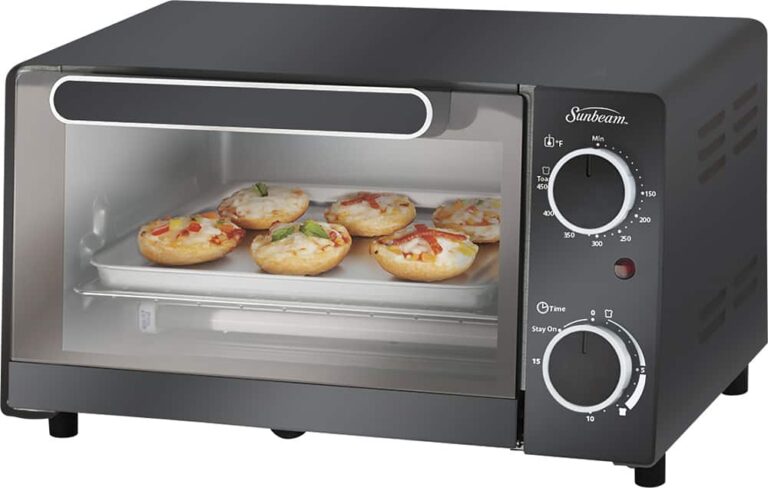
For most homes in the United States, the Breville Smart Oven Air Fryer Pro is the best all-around tabletop oven. It has a large interior, strong temperature control features, air-fry and convection modes, and enough space for family-size meals.
It is not the best choice for everyone. A smaller kitchen may need a compact toaster oven, while a family that mainly cooks frozen foods may prefer a less expensive air-fryer toaster oven. The right choice depends on capacity, cooking modes, counter space, energy use, controls, and price.
This guide compares the leading types of countertop ovens and explains what to check before you buy.

Quick Answer: Which Tabletop Oven Is Best?
The Breville Smart Oven Air Fryer Pro is the strongest overall pick for many U.S. households because it combines a large cooking area with several useful modes. Breville lists features such as air frying, roasting, baking, broiling, dehydrating, slow cooking, and proofing on the BOV900 model.
Here are the best choices by need:
| Best for | Recommended type or model | Why it stands out | Main limit |
|---|---|---|---|
| Best overall | Breville Smart Oven Air Fryer Pro | Large capacity and many cooking modes | High price and large footprint |
| Small kitchens | Panasonic FlashXpress | Compact size and fast heating | Small interior |
| Air frying on a budget | Cuisinart AirFryer Toaster Oven | Combines toast, bake, and air fry functions | Air-fry space is limited compared with a basket fryer |
| Large family meals | Large convection or “XL” countertop oven | Fits larger pans and more food | Uses more counter space |
| Simple daily use | Basic convection toaster oven | Easy controls and lower cost | Fewer automatic programs |
| Baking and roasting | Digital convection oven | More even heat and precise settings | May cost more than a basic toaster oven |
The best tabletop oven should fit your cooking habits. A large model is useful only if you have room for it and often cook large meals.
What Is a Tabletop Oven?
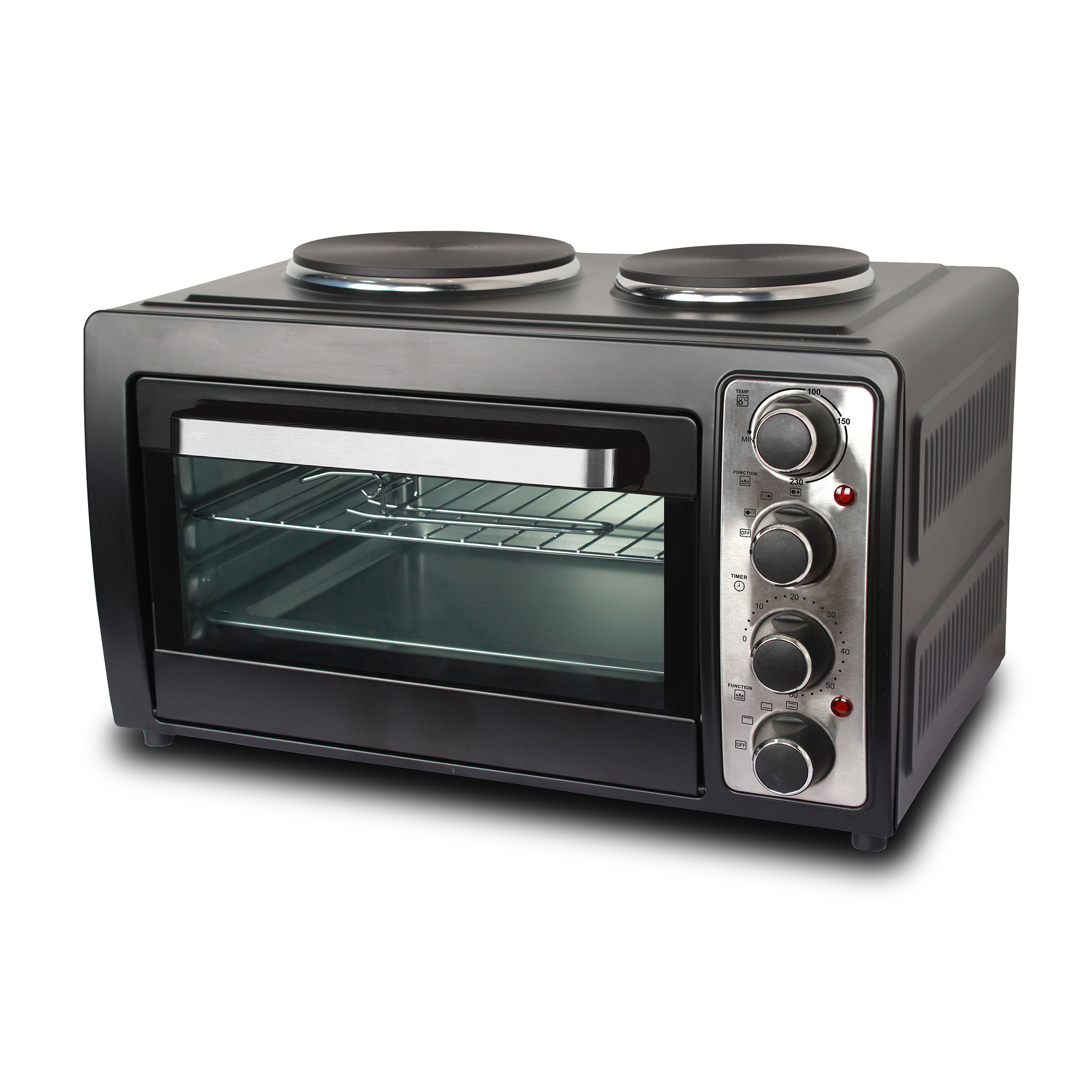
A tabletop oven is a small electric oven that sits on a kitchen counter. In the United States, it may also be called a countertop oven, toaster oven, convection toaster oven, or air-fryer toaster oven.
Most tabletop ovens use electric heating elements at the top and bottom. A convection model adds a fan that moves hot air around the food. This can help food cook more evenly and may improve browning, though results depend on the food, pan, rack position, and recipe.
Tabletop ovens are useful for:
- Toasting bread and bagels
- Reheating pizza and leftovers
- Baking cookies and small casseroles
- Roasting vegetables and meat
- Broiling
- Air frying
- Dehydrating food
- Proofing dough on some models
A tabletop oven does not fully replace a standard wall oven or range oven. Its cooking space is smaller, and many models cannot hold a full-size baking sheet, Dutch oven, or large roasting pan.
Tabletop oven versus microwave
A tabletop oven cooks mainly with radiant heat and, in some models, moving hot air. A microwave uses electromagnetic energy to heat food quickly, especially food with water in it.
Choose a tabletop oven when you want:
- Crisp toast
- Browned cheese
- Roasted vegetables
- Baked food
- Crisp pizza crust
- Air-fried food
Choose a microwave when speed matters more than browning or crispness.
Tabletop oven versus air fryer
A basket air fryer is usually smaller and may circulate air more forcefully around food. A tabletop air-fryer oven offers more space and can often toast, bake, broil, and roast.
A basket air fryer may be better for:
- Small batches of fries
- Chicken wings
- Quick reheating
- Foods that benefit from strong air movement
A tabletop oven may be better for:
- Pizza
- Toast
- Casseroles
- Cookies
- Larger portions
- Foods that need a flat rack or baking pan
Our Best Tabletop Oven Picks by Use
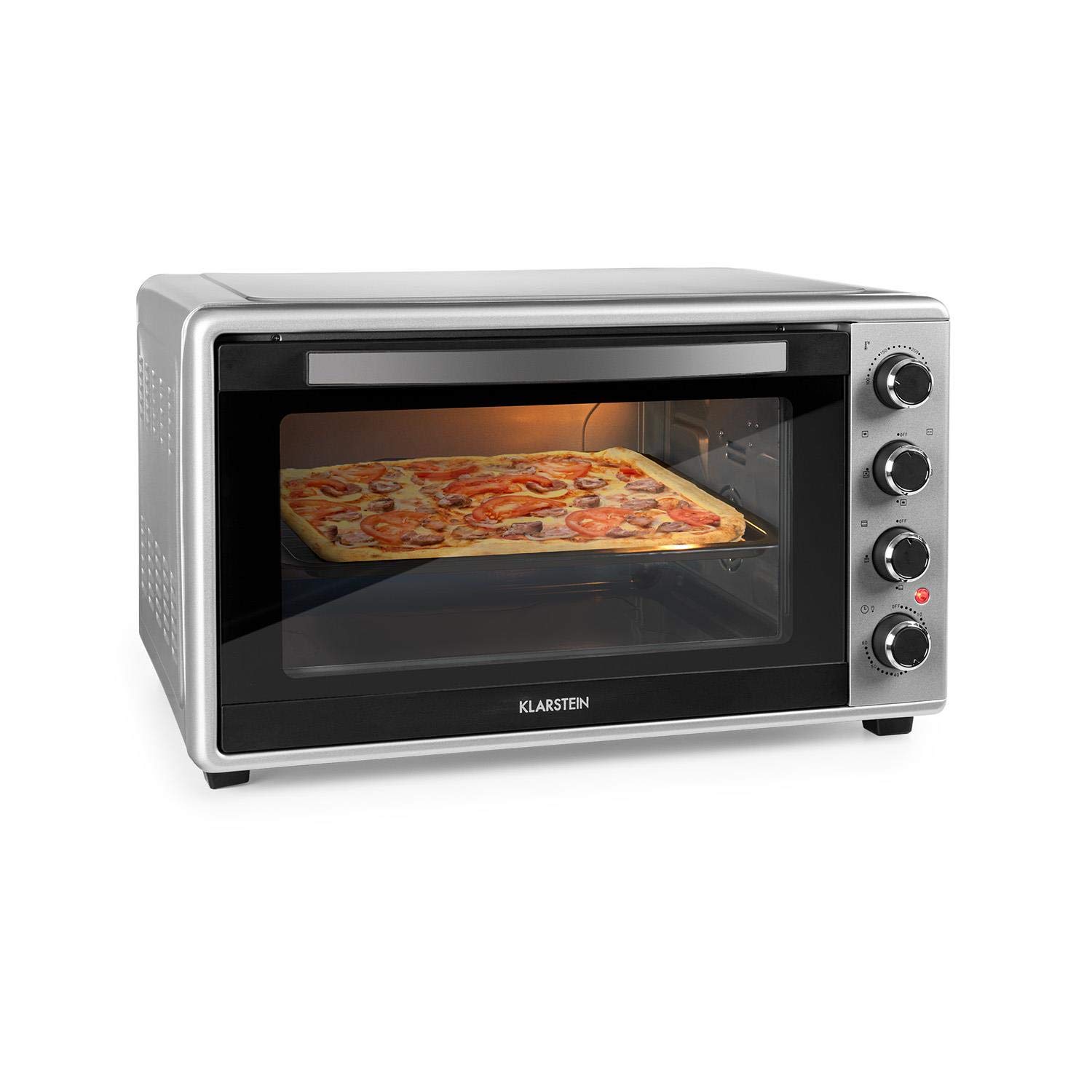
The best tabletop oven changes with the job. The models below are examples of useful categories, not a claim that one appliance is best for every buyer.
Best overall: Breville Smart Oven Air Fryer Pro
The Breville Smart Oven Air Fryer Pro is a strong overall choice for people who want one appliance to handle many tasks. The BOV900 series includes multiple cooking functions and a large interior designed for more than toast and snacks.
Its advantages include:
- Large cooking cavity
- Convection and air-fry modes
- Baking, roasting, broiling, and dehydrating functions
- Digital controls
- Preset cooking programs
- Space for larger pans than many compact toaster ovens
Breville’s product information describes the oven as large enough for items such as a 13-inch pizza, a 9-by-13-inch pan, or a larger roast, depending on the rack and pan arrangement. Check the current manual before buying because included accessories and dimensions can vary by model or region.
Best for: Families, frequent home cooks, and people replacing several smaller appliances.
Limitations: It is expensive, heavy, and wide. Measure your counter, cabinet clearance, and storage space first.
Best compact option: Panasonic FlashXpress
The Panasonic FlashXpress is a better fit for a small apartment, office, dorm-style kitchen where permitted, or household that mainly reheats food and makes toast.
Its compact design can save counter space. Panasonic lists cooking functions such as toast, bake, and broil on the FlashXpress line. Some models use infrared heating technology to warm food quickly.
Best for: One or two people who need a small oven for toast, snacks, and reheating.
Limitations: Its smaller cavity cannot match the capacity of a large convection oven. It is not the best choice for large pizzas, casseroles, or holiday cooking.
Best lower-cost air-fryer oven: Cuisinart AirFryer Toaster Oven
The Cuisinart AirFryer Toaster Oven line combines standard toaster-oven functions with an air-fry setting. Models vary, so check the exact model number before comparing capacity, presets, and accessories.
This type of oven can handle:
- Toast
- Baking
- Broiling
- Convection cooking
- Air frying
- Reheating
Best for: Buyers who want air frying without purchasing a separate basket appliance.
Limitations: An air-fryer toaster oven may cook more slowly than a dedicated basket air fryer for small portions. Its large cavity also takes more time and energy to heat than a small basket.
Best for simple cooking: Basic convection toaster oven
A basic convection toaster oven may be the best value when you mainly toast bread, bake small dishes, and reheat leftovers. It usually has fewer digital features, but that can make it easier to operate.
Look for:
- A clear temperature dial or display
- A timer with an automatic shutoff
- Separate bake, broil, toast, and convection settings
- A removable crumb tray
- A rack that slides out safely
- A cooking guide with rack positions
Best for: People who prefer simple controls and do not need air frying or smart features.
Limitations: Basic models may have less precise temperature control and fewer accessories.
How to Choose the Best Tabletop Oven
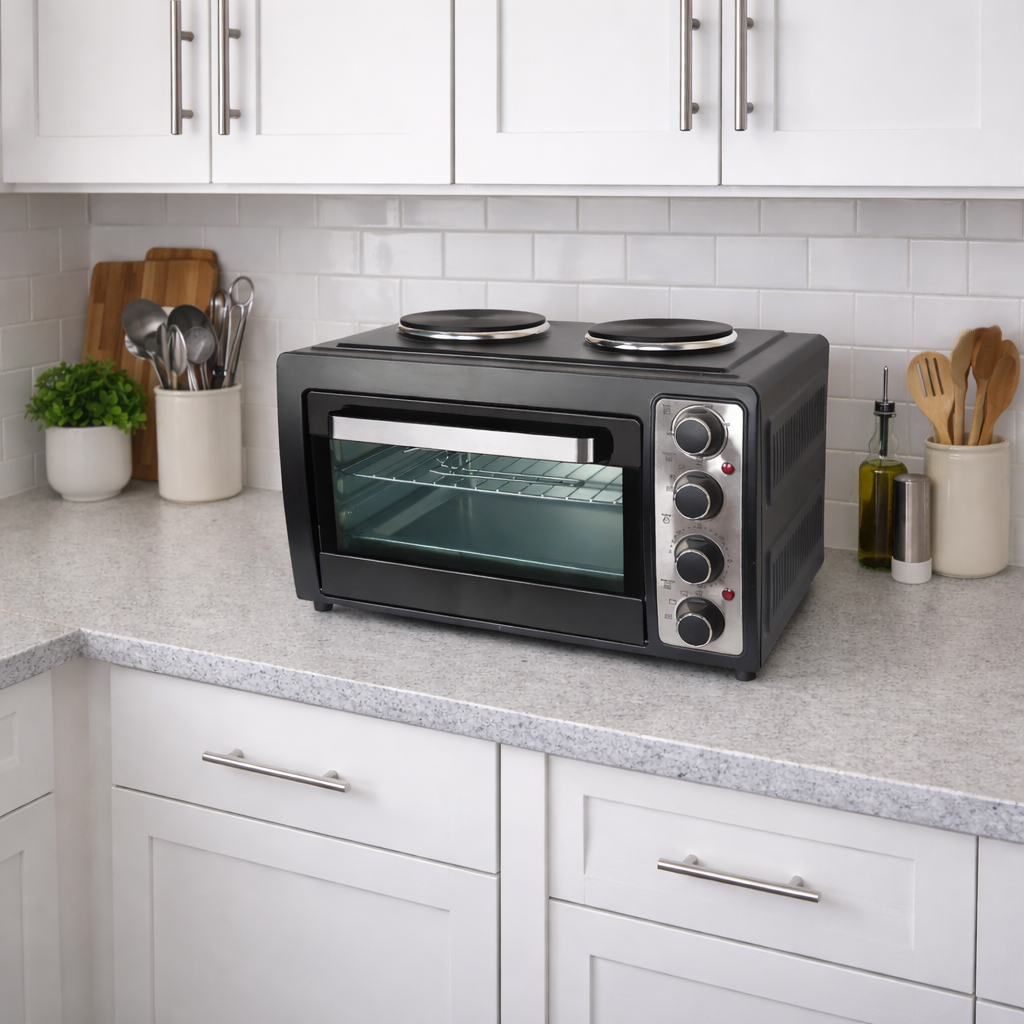
Start with your most common cooking task. Do not choose a large oven only because it has the longest feature list.
1. Measure your available space
Measure the full area where the oven will sit. Include:
- Width
- Height
- Depth
- Door swing
- Side clearance
- Space above the oven
- Room behind the oven for heat and the power cord
Manufacturers often require clearance around a countertop oven. Follow the owner’s manual rather than placing the oven directly under cabinets or against a wall.
A large countertop oven may need more room than its listed width suggests. The door may open forward, and hot air may leave through vents on the sides, top, or rear.
2. Match the interior to your pans
Capacity matters more than the outside size. Check whether the oven fits the pans you already use.
Common size questions include:
- Can it fit a 12-inch or 13-inch pizza?
- Can it hold a 9-by-13-inch baking pan?
- Can it fit a standard quarter-sheet pan?
- Can it roast a whole chicken?
- Can it hold two racks of food?
- Does the air-fry tray reduce usable height?
A product listing may describe a large capacity, but usable space can change when you add a rack, tray, food, or tall pan.
3. Decide whether convection is useful
Convection uses a fan to circulate hot air. It can help with browning and may reduce cooking time for some foods.
Convection is useful for:
- Roasted vegetables
- Cookies
- Chicken
- Frozen foods
- Multiple trays of food, if the oven supports them
You may need to adjust a standard recipe. Many convection recipes use a lower temperature or shorter cooking time, but there is no single adjustment that works for every oven.
Use the oven’s manual first. Then check the food with a thermometer or visual signs of doneness.
4. Check air-fry performance claims carefully
“Air fryer” usually means the oven includes a fan and a perforated tray or basket. It does not guarantee the same result as a small basket air fryer.
Air-fry results depend on:
- Fan speed
- Tray design
- Food spacing
- Food moisture
- Cooking temperature
- Whether the oven is preheated
- How often the food is turned
For crisp food, keep pieces in a single layer when possible. Do not cover the air-fry tray with foil if it blocks airflow.
5. Compare controls and presets
Digital presets can make cooking easier, but more settings do not always mean better cooking.
Useful controls include:
- Independent temperature adjustment
- A visible timer
- Automatic shutoff
- Preheat indication
- Interior light
- Memory for custom settings
- Clear rack-position guidance
- A cancel button that stops the heating elements
Smart features can be useful if you want app control or notifications. They can also add setup steps, software needs, and privacy considerations. A connected feature should not be the main reason to buy an oven unless you will use it.
6. Review included accessories
A countertop oven may include some combination of:
- Wire rack
- Baking pan
- Broiler pan
- Air-fry basket
- Crumb tray
- Pizza pan
- Temperature probe
Check replacement-part availability before buying. A missing tray can make a special cooking mode less useful.
7. Consider power and electrical requirements
Many tabletop ovens use around 1,300 to 1,800 watts, although exact power varies by model. A higher wattage does not automatically mean better cooking, but it can affect heating speed and electrical load.
Plug the oven directly into a properly grounded wall outlet unless the manual says otherwise. Avoid using a damaged extension cord or sharing an overloaded circuit with another high-power appliance.
If the circuit trips, the plug gets hot, or the cord is damaged, stop using the oven and seek help from a qualified electrician or the manufacturer.

Tabletop Oven Features That Matter Most
The most valuable features improve cooking, cleaning, or safety. Decorative features should come last.
Interior light
An interior light lets you check food without opening the door. This can help prevent heat loss and reduce the risk of undercooking or burning food.
Removable crumb tray
A removable crumb tray makes routine cleaning easier. Crumbs and grease can build up near heating elements, so clean the tray after the oven cools.
Automatic shutoff
An automatic shutoff can reduce risk if you forget the timer. It is not a replacement for supervision, especially when cooking greasy foods or using the broil setting.
Temperature probe
Some premium ovens include a probe for meat. A probe can help monitor internal temperature, but you should place and use it according to the manual. Confirm food safety with a reliable thermometer and USDA guidance.
Quiet fan
Convection fans vary in sound. If the oven will sit in a small kitchen, noise may matter. Look for user-manual information or independent testing, since manufacturers do not always publish sound levels.
Dual cooking racks
Two racks can increase capacity, but they can also create uneven browning. Use the rack positions recommended by the manual, and rotate pans only when the recipe and oven instructions allow it.

Safety and Food Handling
A tabletop oven is a high-heat electrical appliance. Safe placement and food handling matter as much as cooking performance.
Follow these practices:
- Read the manual before first use.
- Place the oven on a stable, heat-resistant surface.
- Keep paper towels, curtains, plastic, and other flammable items away.
- Do not cover the oven’s vents.
- Do not place objects on top unless the manual permits it.
- Keep children away from the hot door and exterior.
- Use oven mitts when handling trays.
- Let the oven cool before cleaning.
- Unplug it before removing stuck food or performing care.
- Never immerse the oven, cord, or plug in water.
- Clean grease and food buildup on a regular schedule.
The U.S. Department of Agriculture recommends using a food thermometer to verify safe internal temperatures. For example, poultry should reach 165°F, while whole cuts of beef, pork, lamb, and veal should reach at least 145°F with a rest period of three minutes. Ground meats should reach 160°F. Verify current guidance at FoodSafety.gov.
Do not rely only on the oven timer. A timer measures time, not the internal temperature of food.
How to Use a Tabletop Oven Correctly
Use the owner’s manual for model-specific instructions, then follow this general process.
Step 1: Prepare the oven
Remove all packing materials. Wash removable trays and racks if the manual allows it. Run the recommended first-use cycle to remove manufacturing odors.
Step 2: Preheat when the recipe requires it
Preheating helps the food begin cooking at the intended temperature. It matters most for baking, roasting, and recipes with a short cooking time.
Some reheating tasks do not need a full preheat. The manual may provide separate instructions.
Step 3: Choose the correct rack
Use the middle rack for many baking tasks. Use a higher rack for broiling only when the manual permits it. Keep food away from the heating elements unless the recipe specifically calls for close broiling.
Step 4: Leave room for airflow
Do not crowd food in convection or air-fry modes. Air must move around the food. Crowding can lead to soft, unevenly cooked results.
Step 5: Check food before the timer ends
Begin checking early when using a new oven. Countertop ovens differ in heating pattern, even when they display the same temperature.
For meat, use a food thermometer. For baked goods, check color, texture, and the recipe’s doneness test.
Step 6: Cool and clean the oven
Remove crumbs after the oven cools. Wipe grease from the interior with a damp cloth if the manual permits it. Do not use harsh cleaners on nonstick trays unless the manufacturer approves them.

Common Tabletop Oven Problems and Fixes
Food burns on top
Possible causes include a high rack position, strong broil heat, a small oven cavity, or a temperature that runs high.
Try moving the rack lower, lowering the temperature, or covering the food only when the recipe permits it. Do not place foil near heating elements.
Food cooks unevenly
Possible causes include crowded trays, poor rack placement, blocked airflow, or an oven that needs calibration.
Use the recommended rack. Leave space between food pieces. Rotate the pan only if the manual or recipe supports it.
The air-fry setting produces soft food
Make sure food is dry and spaced apart. Avoid stacking food on the tray. Preheat if the manual recommends it, and turn food during cooking when appropriate.
A large oven may need a longer cooking time than a small basket air fryer because the food is farther from the fan.
The oven smells during first use
A mild odor during the first heating cycle can occur with some new appliances. Follow the manufacturer’s first-use instructions and ventilate the room.
Stop using the oven if you notice smoke that continues, a burning electrical smell, sparks, or unusual noise. Unplug it when safe and contact the manufacturer.
The circuit trips
A tabletop oven draws substantial power. Turn off other high-wattage appliances on the same circuit. If the problem continues, stop using the oven and ask a qualified electrician to inspect the circuit.

How Much Should You Spend on a Tabletop Oven?
The right budget depends on how often you will use the appliance.
| Price range | What to expect | Best for |
|---|---|---|
| Lower cost | Basic toast, bake, and broil functions | Simple reheating and toast |
| Mid-range | Convection, air fry, digital controls, larger capacity | Daily cooking for small families |
| Premium | Large cavity, many modes, better controls, accessories | Frequent cooking and appliance replacement |
Prices change by retailer, model, sales event, and included accessories. Compare the exact model number rather than relying only on the product family name.
A cheap oven may cost more over time if replacement trays are unavailable or if the interior is too small for your normal meals. A premium oven may be wasteful if you mainly make toast.
What Size Tabletop Oven Do You Need?
Use your normal serving size as the main guide.
- One person: A compact oven may be enough for toast, sandwiches, and small portions.
- Two people: A medium convection oven can handle most daily meals.
- Three to four people: A larger oven is more useful for casseroles, vegetables, and multiple servings.
- Large household: Choose the biggest model that fits safely and can use your preferred pans.
A larger capacity is helpful, but it comes with trade-offs. The oven takes more space, may cost more, and can require more energy for small portions.
Frequently Asked Questions
Is a tabletop oven worth buying?
A tabletop oven is worth buying if you often cook small meals, reheat food, or want to avoid heating a full-size oven. It is less useful if your kitchen already has a reliable wall oven and you rarely cook small portions.
Can a tabletop oven replace a regular oven?
It can replace a regular oven for some tasks, such as toast, pizza, small casseroles, vegetables, and modest roasts. It usually cannot replace a full-size oven for large holiday meals, multiple large dishes, or very large cookware.
Is a convection tabletop oven better than a regular toaster oven?
A convection model is often more versatile because the fan moves hot air around the food. A regular toaster oven may be cheaper, quieter, and simpler. The better choice depends on whether you value roasting and browning or basic toast and reheating.
Can you use aluminum foil in a tabletop oven?
Only use aluminum foil when the manufacturer and recipe allow it. Do not let foil touch heating elements, block vents, or cover the crumb tray in a way that creates a fire risk. Check the owner’s manual for model-specific rules.
Does an air-fryer oven use less electricity than a full-size oven?
It may use less energy for small portions because it has a smaller cavity, but the result depends on cooking time, temperature, food quantity, and the full-size oven’s efficiency. Do not assume a smaller appliance always costs less to operate.
What is the safest way to clean a tabletop oven?
Unplug the cool oven before cleaning. Remove and wash approved trays and racks. Wipe the interior with a soft, damp cloth, and keep water away from electrical parts. Follow the manufacturer’s instructions instead of using oven cleaner by default.
Final Recommendation
The Breville Smart Oven Air Fryer Pro is the best all-purpose tabletop oven for many U.S. households because it offers a large cavity, convection cooking, air frying, and several other modes.
Choose a compact Panasonic FlashXpress if counter space matters most. Choose a Cuisinart AirFryer Toaster Oven if you want air frying and standard toaster-oven functions at a lower price than some premium models. Choose a basic convection toaster oven if you value simple controls over extra programs.
Before buying, measure the counter, check the pan capacity, review the electrical requirements, and read the current manual for the exact model. The best tabletop oven is the one that fits your kitchen safely and matches the meals you actually cook.