Learning how to clean kitchen cabinets is one of the easiest ways to keep your kitchen fresh and inviting. In many U.S. homes, kitchen cabinets collect cooking oils, food dust, fingerprints, and daily grime because they are used several times every day.
From my experience helping homeowners improve their cleaning routines, the biggest mistake is using harsh products too often. A simple cleaning method done regularly usually works better and helps protect the cabinet finish for years.

Why Cleaning Kitchen Cabinets Regularly Matters
Kitchen cabinets face constant exposure to steam, grease, spills, and dust. Over time, these small messes can create a sticky layer that makes cabinets look dull and dirty.
Knowing how to clean kitchen cabinets on a regular schedule helps protect the surface and reduces the need for deep cleaning. It also makes your kitchen feel brighter and more comfortable.
- ✦ Protects cabinet finishes
Regular cleaning removes harmful buildup before it can wear down paint, stain, or protective coatings.
- ✦ Improves kitchen hygiene
Clean cabinets reduce the amount of food residue and grime around cooking areas.
- ✦ Extends cabinet life
Proper care helps cabinets stay attractive and functional for a longer time.
Supplies You Need Before Cleaning Kitchen Cabinets
Before starting, gather simple tools that will not scratch or damage your cabinets. Most cleaning jobs do not require expensive products.
For everyday cabinet care, soft microfiber cloths, warm water, mild dish soap, and a gentle brush are usually enough. Always test a cleaner on a hidden area first.

- ✦ Microfiber cloth
A microfiber cloth removes dirt without leaving scratches on cabinet surfaces.
- ✦ Mild dish soap
A small amount of gentle soap helps break down grease and food residue.
- ✦ Soft cleaning brush
A soft brush helps clean corners, handles, and detailed cabinet designs.
- ✦ Warm water
Warm water helps loosen dirt before wiping.
How to Clean Kitchen Cabinets Step by Step
The best way to clean kitchen cabinets is to work slowly and avoid soaking the surface. Too much water can damage some wood and laminate finishes.
Follow a simple process from removing loose dirt to drying the cabinet completely. This method works well for most everyday kitchen cleaning tasks.
- ✦ Step 1: Remove loose dust
Wipe cabinet doors and shelves with a dry microfiber cloth to remove surface dust.
- ✦ Step 2: Mix a gentle cleaner
Combine warm water with a small amount of mild dish soap for a safe cleaning solution.
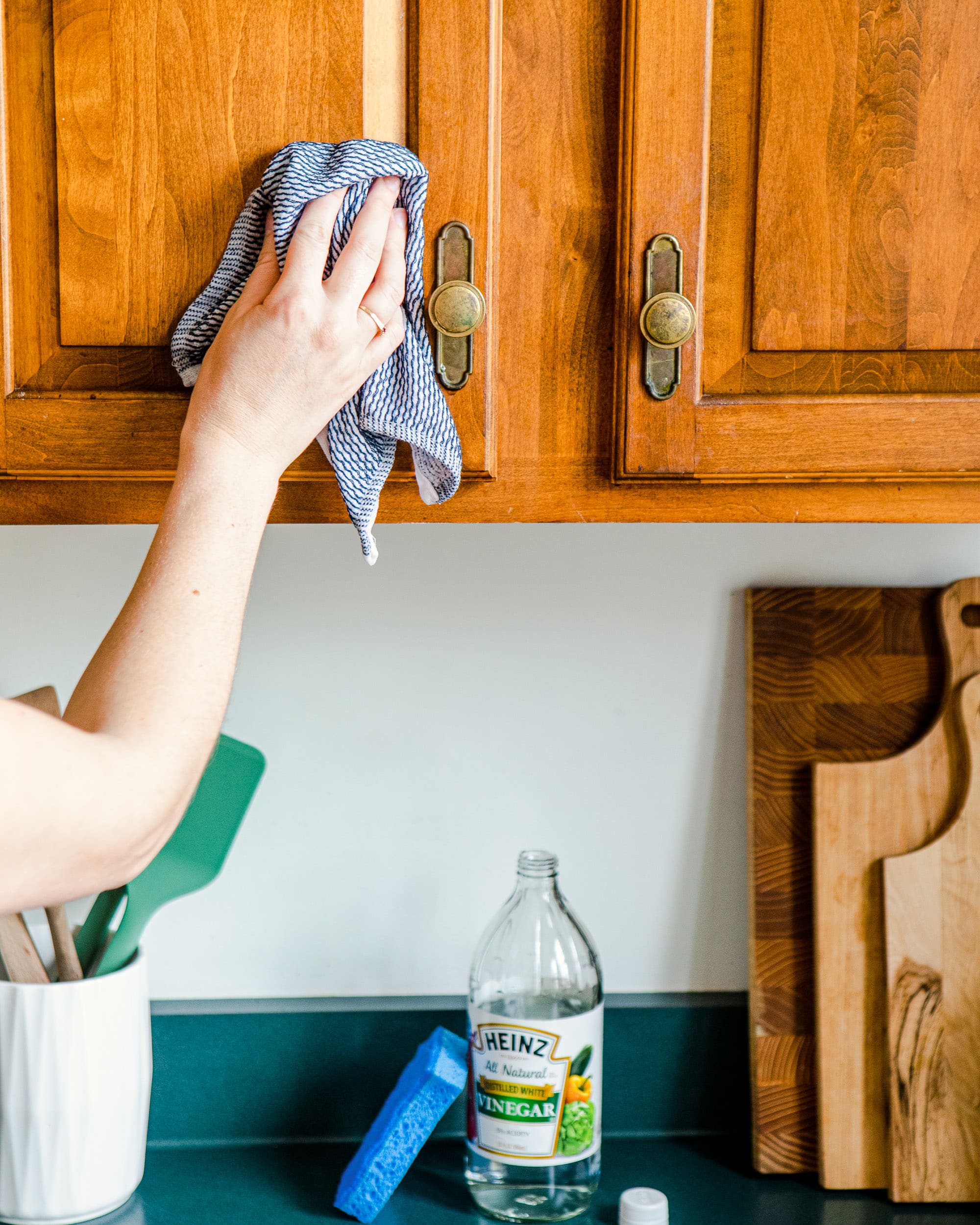
- ✦ Step 3: Wipe cabinet surfaces
Clean doors, drawers, and handles with a damp cloth using gentle motions.
- ✦ Step 4: Dry completely
Use a clean dry cloth to remove moisture and prevent water marks.
How to Remove Grease From Kitchen Cabinets
Grease is one of the most common cabinet problems, especially near stoves and ovens. A mixture of warm water and mild soap can loosen fresh grease without harming the finish.
For stubborn grease, apply the cleaner for a few minutes before wiping. Avoid rough scrubbers because they can leave permanent marks.
- ✦ Focus on high-touch areas
Handles and cabinet edges often collect the most grease and fingerprints.
How to Clean Different Types of Kitchen Cabinets
Different cabinet materials need different care. Using the wrong cleaner can cause fading, peeling, or surface damage.
When learning how to clean kitchen cabinets, identify the material first. Wood, laminate, and painted cabinets each have unique needs.

- ✦ Wood cabinets
Use gentle cleaners and avoid excessive water to protect natural wood finishes.
- ✦ Laminate cabinets
Laminate surfaces usually handle mild soap solutions well and are easy to maintain.
- ✦ Painted cabinets
Use soft cloths and avoid strong chemicals that may remove paint.
Common Mistakes to Avoid When Cleaning Kitchen Cabinets
Many cabinet cleaning problems happen because people use methods that are too aggressive. Strong chemicals and rough tools may create more damage than improvement.
A careful approach keeps cabinets looking better and saves money on repairs or refinishing.

- ✦ Using too much water
Excess moisture can seep into cabinet materials and cause swelling or damage.
- ✦ Using abrasive scrubbers
Rough pads can scratch finishes and make surfaces look worn.
- ✦ Ignoring cabinet handles
Handles collect oils from hands and need regular attention.
How Often Should You Clean Kitchen Cabinets?
The ideal cleaning schedule depends on how often you cook and how much use your kitchen gets. Busy households may need more frequent cleaning than smaller homes.
A quick weekly wipe and a deeper cleaning every few months can keep cabinets in good condition.

- ✦ Weekly cleaning
Wipe visible dirt, fingerprints, and spills from cabinet doors.
- ✦ Monthly cleaning
Clean handles, corners, and areas near cooking appliances.
- ✦ Seasonal deep cleaning
Remove stored items and clean inside cabinets for a complete refresh.