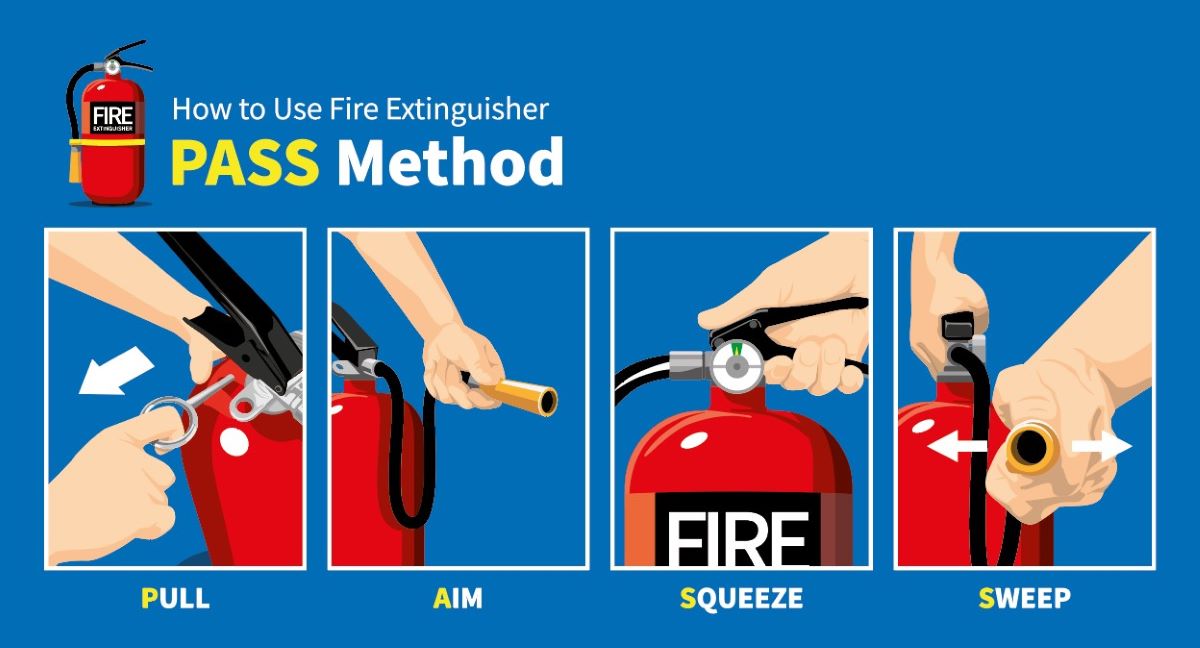
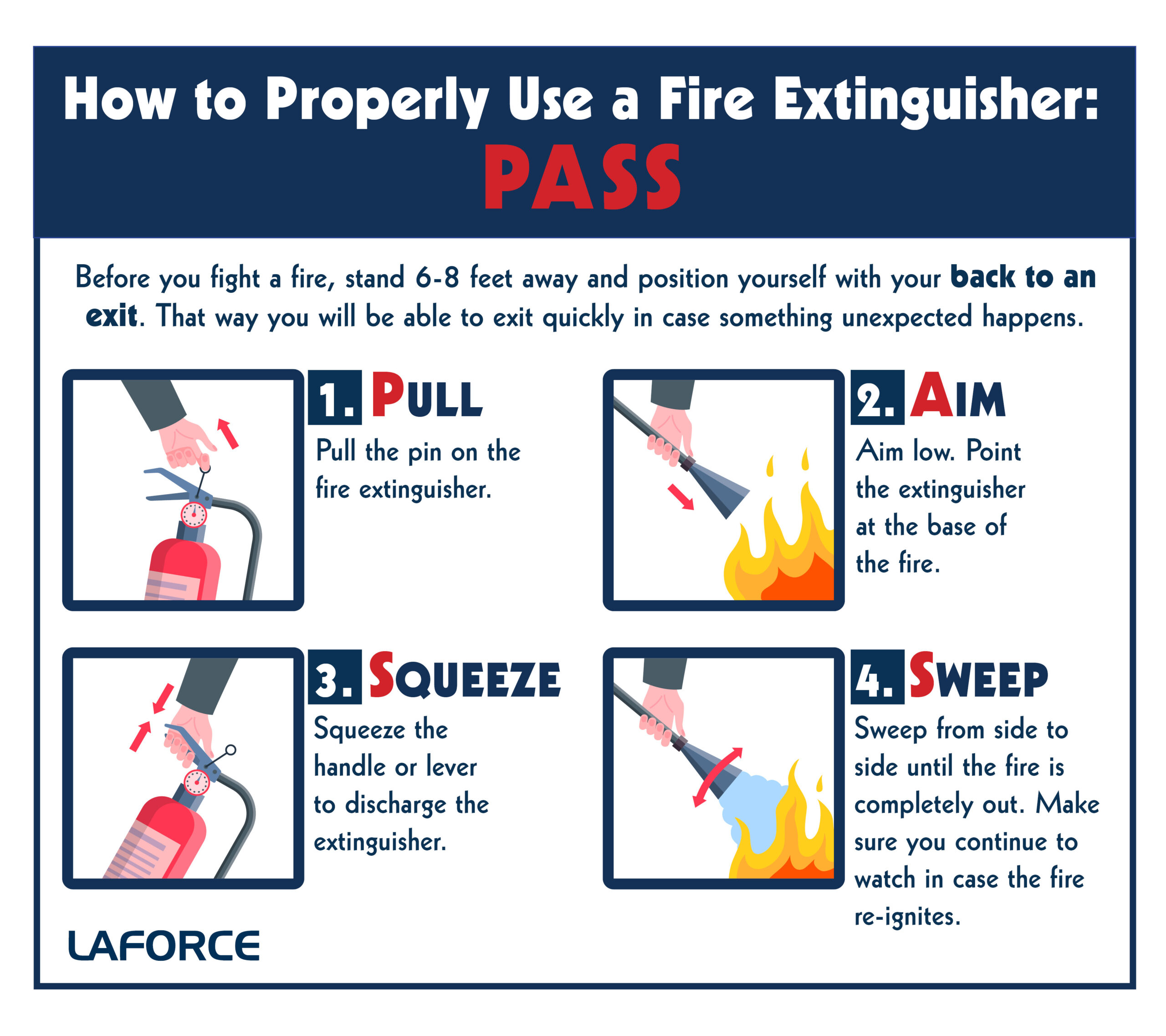
To properly use a fire extinguisher, remember PASS: pull, aim, squeeze, and sweep from a safe distance.
Knowing how to properly use a fire extinguisher can help you act with calm purpose during the first seconds of a small fire. The right extinguisher, a clear exit path, and a quick call to 911 matter just as much as the technique. This guide explains the safest method, common mistakes, extinguisher types, and when you should leave instead of fighting the fire.
When You Should Use a Fire Extinguisher
A fire extinguisher is for a small, early-stage fire. It is not a tool for fighting a large fire, thick smoke, or flames that spread across a room.
Before you reach for an extinguisher, check these points:
• The fire is small and contained, such as a wastebasket fire or a small pan fire.
• Someone has called 911 or is calling emergency services.
• You have a clear exit behind you.
• The room is not filling with smoke.
• You know which extinguisher to use.
• You feel able to act without panic.
If any of these conditions are missing, leave at once. Close the door if you can do so safely, warn others, and move outside. Never go back inside for pets, phones, wallets, or other belongings.
A useful rule is simple: if the fire is taller than you, spreading quickly, or blocking your exit, do not fight it. Evacuate and wait for firefighters.
Why smoke is so dangerous
Smoke can harm you before flames reach you. It may contain carbon monoxide, toxic gases, and tiny particles that damage the lungs. Smoke can also make it hard to see your exit within seconds.
This is why how to properly use a fire extinguisher starts with personal safety. Fire control is never more important than getting out alive.
Choose the Correct Fire Extinguisher
Learning how to properly use a fire extinguisher also means learning the fire classes. Using the wrong extinguisher can make a fire worse or create an electric shock risk.
Class A fires
Class A fires involve ordinary materials, such as:
• Wood
• Paper
• Cardboard
• Cloth
• Many types of plastic
Water, foam, and multipurpose dry chemical extinguishers may work on Class A fires. Always check the label before use.
Class B fires
Class B fires involve flammable liquids, such as:
• Gasoline
• Kerosene
• Paint thinner
• Oil-based solvents
Use an extinguisher rated for Class B fires. Never use water on a flammable liquid fire. Water can spread the burning liquid and cause flames to move across the floor.
Class C fires
Class C fires involve energized electrical equipment. Examples include:
• Computers
• Appliances
• Power strips
• Circuit panels
• Office equipment
Use a nonconductive extinguishing agent, such as dry chemical or carbon dioxide. If possible, turn off the power first, but do not touch the equipment if doing so puts you at risk.
Class D fires
Class D fires involve combustible metals, such as magnesium, titanium, or sodium. These fires need special dry powder extinguishers. Ordinary household extinguishers may not work.
Class K fires
Class K fires involve cooking oils and fats. They often occur in commercial kitchens, but they can also happen at home.
Use a Class K extinguisher for a large cooking oil fire. For a small pan fire, turn off the heat if safe, cover the pan with a metal lid, and leave it covered. Never carry a burning pan to the sink.
Most homes benefit from an extinguisher labeled ABC. This type is made for many common Class A, B, and C fires. However, an ABC extinguisher is not the best choice for every fire, especially a grease, metal, or deep fryer fire.
How to Properly Use a Fire Extinguisher With the PASS Method
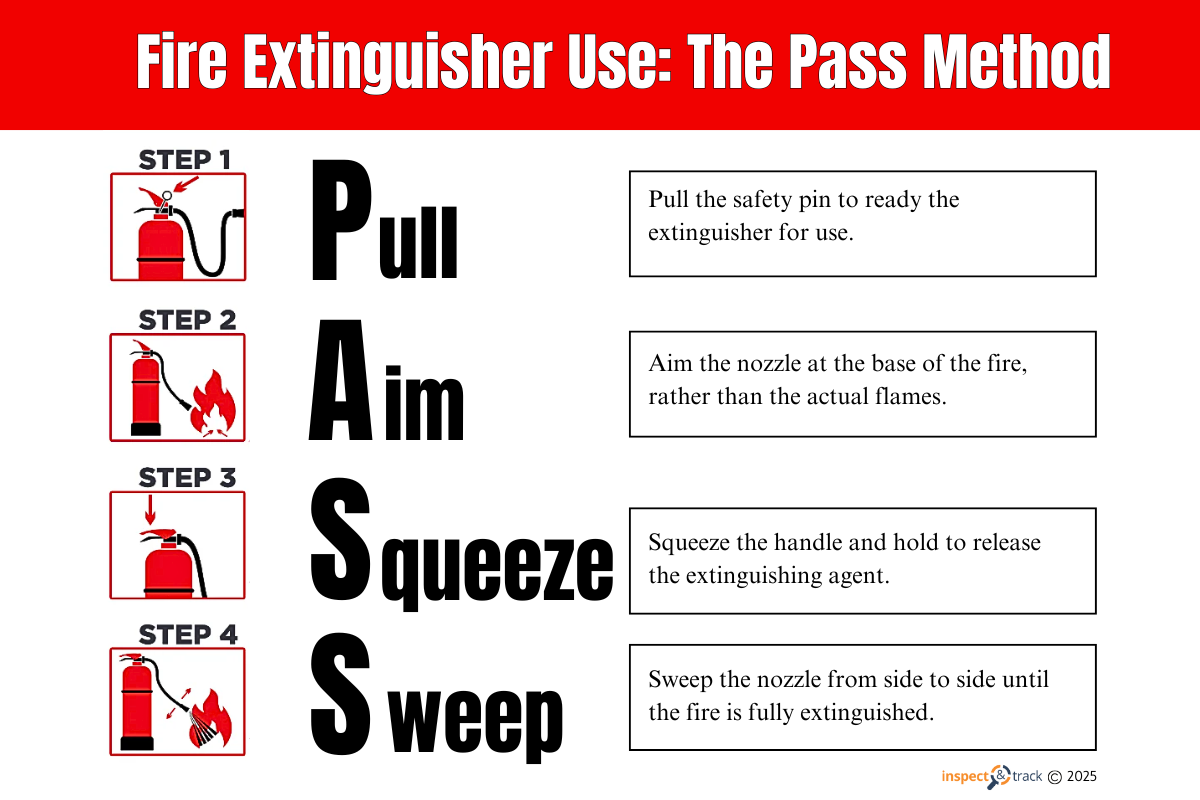
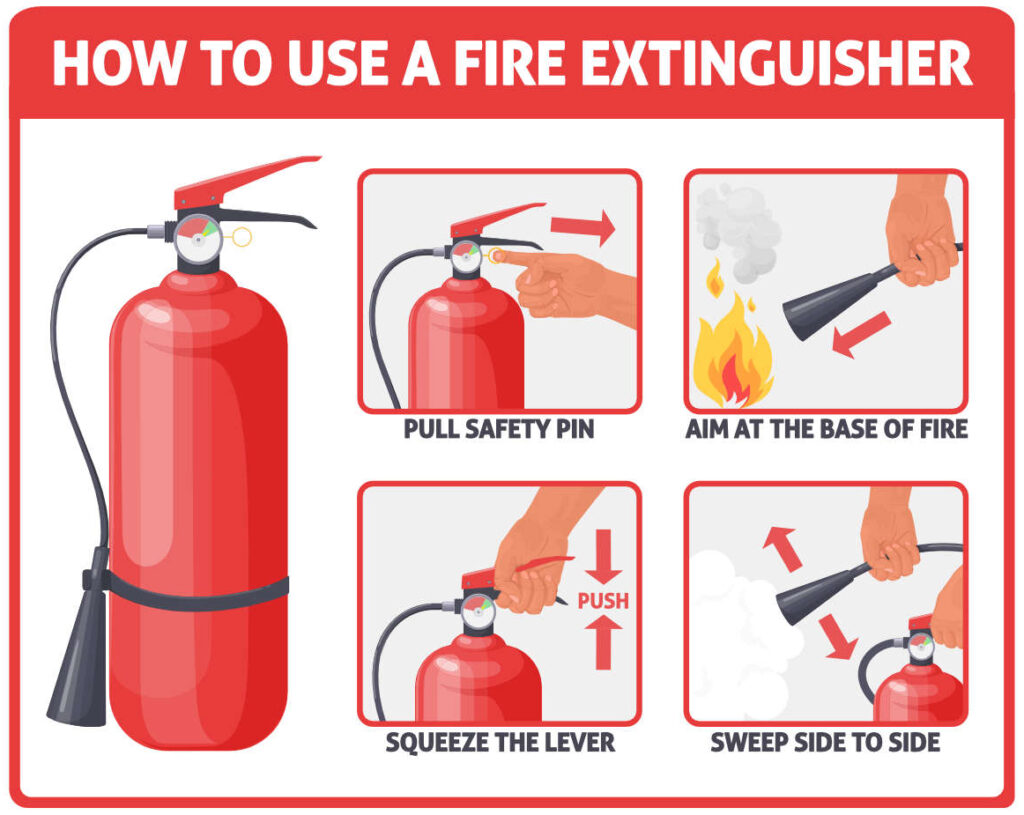
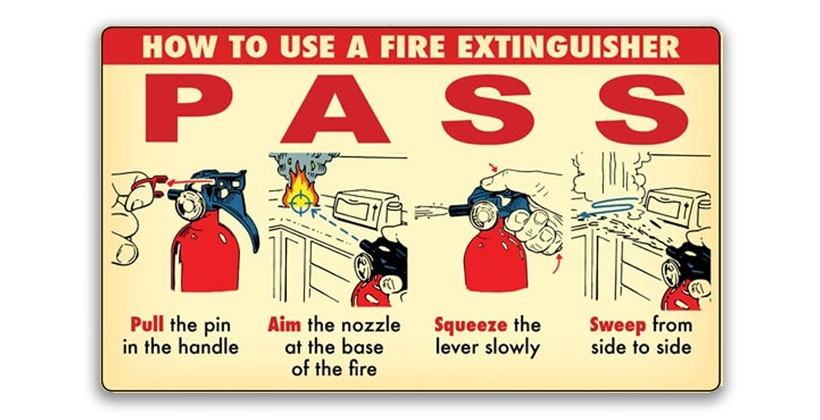
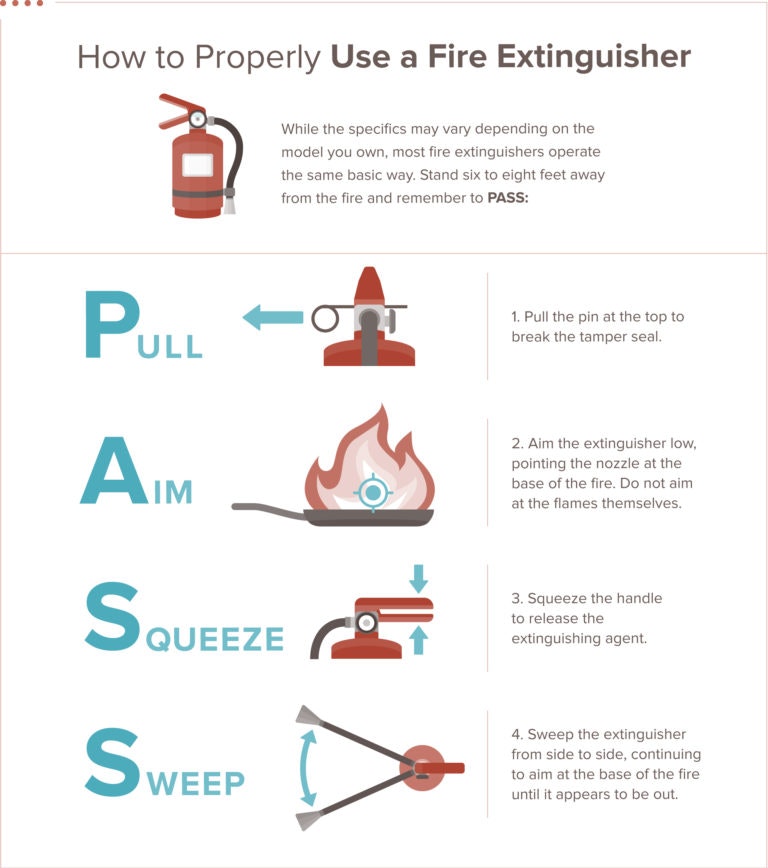
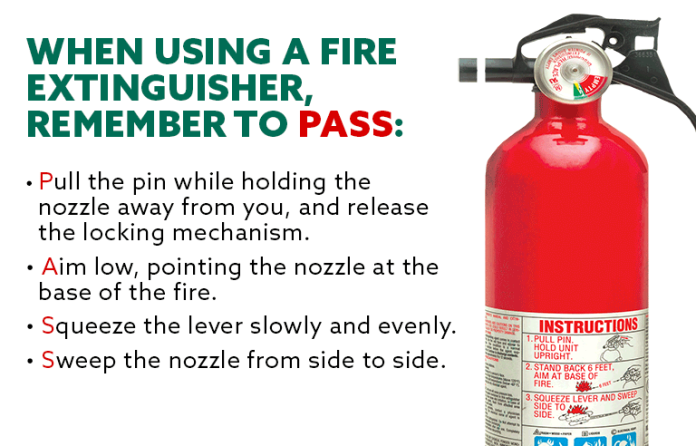
The best-known answer to how to properly use a fire extinguisher is the PASS method. PASS stands for Pull, Aim, Squeeze, and Sweep.
1. Pull the pin
Stand several feet away from the fire. Hold the extinguisher upright, then pull the safety pin from the handle.
The pin prevents accidental discharge. Some extinguishers use a seal, clip, or locking tab instead. Remove or break it as directed by the label.
Do not waste time trying to save the pin. Once removed, the extinguisher is ready to use.
2. Aim at the base of the fire
Point the nozzle or hose at the base of the flames. The base is where the fire meets the fuel.
Do not aim at the top of the flames. Spraying the upper flames is like trying to cut the leaves of a weed while leaving its roots in the ground. The fire will keep burning.
Keep the extinguisher pointed away from your face. If the unit has a hose, hold the hose with one hand and the handle with the other.
3. Squeeze the handle
Squeeze the handle firmly to release the extinguishing agent. Use steady pressure rather than short bursts.
Many people hesitate at this step because the extinguisher may shake or make a loud sound. That reaction is normal. Keep your eyes on the base of the fire and stay aware of your exit.
4. Sweep from side to side
Move the nozzle from side to side across the base of the fire. Sweep slowly and evenly.
Continue until the flames appear to be out. Then watch the area for several minutes. A fire can reignite if hot fuel remains.
If the extinguisher runs out and the fire is still burning, leave immediately. Do not stop to find another extinguisher unless another person has already handled the evacuation and the fire remains clearly small.
Step-by-Step Fire Extinguisher Procedure
PASS is easy to remember, but safe use involves more than four actions. Follow this order whenever conditions allow:
-
Alert people nearby.
-
Call 911 or make sure someone else has called.
-
Identify the type of fire.
-
Select the correct extinguisher.
-
Check that the exit is behind you.
-
Remove the extinguisher from its wall bracket or storage location.
-
Stand at the distance listed on the label.
-
Pull the pin.
-
Aim at the base of the flames.
-
Squeeze the handle.
-
Sweep from side to side.
-
Stop if the fire grows, smoke increases, or your exit becomes less clear.
-
Evacuate, close the door if safe, and wait for firefighters.
Many portable extinguishers discharge for only a short time. Some may empty in less than 30 seconds, depending on their size and design. Use the agent with purpose, and do not assume you have unlimited time.
Where to Stand When Using an Extinguisher
Distance gives you time. It also gives you space to retreat if the fire grows.
Begin at the distance printed on the extinguisher label. Many household units are used from about 6 to 10 feet away, but the correct distance depends on the model and agent.
Use these positioning tips:
• Keep your back toward a clear exit.
• Stand upwind outdoors when possible.
• Stay low if smoke is present, but do not crawl toward the fire.
• Avoid standing directly over a pan or container.
• Do not let flames move between you and the exit.
• Keep other people behind you and away from the fire.
As you spray, move closer only if the label allows it and the fire is clearly shrinking. If you must move toward the flames to reach them, the fire may already be too large for a portable extinguisher.
Common Fire Extinguisher Mistakes to Avoid
Knowing how to properly use a fire extinguisher includes knowing what not to do. Small mistakes can turn a manageable fire into an emergency.
Waiting too long
People often spend valuable seconds looking for a unit, reading every word on the label, or trying to move items near the fire. Keep your actions simple: alert, call, evacuate others, and use the extinguisher only if the fire is small.
Aiming at the flames
Aiming high may look natural, but it does not remove the fuel at the base. Point the nozzle where the fire begins.
Using water on the wrong fire
Water can spread burning grease and some flammable liquids. It can also create a serious shock hazard around energized electrical equipment.
Standing too close
Heat can injure you even when the flames seem small. Start at a safe distance and follow the label.
Blocking the exit
Never place yourself in a corner or narrow space. Your exit must remain open during the entire attempt.
Turning your back too soon
A fire that appears to be out can flare up again. Back away while watching the area, then leave and wait for professionals.
Reusing an extinguisher without service
Even a short discharge can reduce pressure. A used extinguisher should be replaced or inspected by a qualified service provider.
A lesson often emphasized in fire safety training is that confidence should never become overconfidence. The extinguisher is a backup for escape, not a reason to stay in danger.
How to Use a Fire Extinguisher on a Kitchen Fire
Kitchen fires need special care because cooking oil and grease can spread fast.
For a small grease fire in a pan:
-
Turn off the burner if you can do so safely.
-
Slide a metal lid over the pan from the side.
-
Leave the lid in place.
-
Turn off the heat source if it is safe.
-
Leave the area and call 911.
Never use water on burning oil. Water turns into steam very fast when it touches hot oil. The steam can force burning oil out of the pan and spread flames across the kitchen.
Do not move the pan. Do not use flour, sugar, towels, or other household items to smother the fire. A Class K extinguisher is the proper choice for larger cooking oil fires, especially in commercial kitchens.

How to Maintain a Fire Extinguisher
An extinguisher cannot help if it is empty, damaged, or buried behind boxes. Check your units regularly and keep them easy to reach.
Look for these signs:
• The pressure gauge is in the green zone, if the unit has a gauge.
• The pin and tamper seal are in place.
• The hose or nozzle is not blocked.
• The cylinder has no rust, dents, leaks, or bulges.
• The label is readable.
• The unit is mounted upright and within easy reach.
• The inspection tag is current when required.
Do not test an extinguisher by spraying it. A partial discharge may leave it unreliable during a real emergency.
Follow the manufacturer’s instructions and local fire code. Some extinguishers need professional inspection, maintenance, or hydrostatic testing at set intervals. Replace any unit that is damaged, discharged, expired under its label requirements, or not suitable for the hazards in your home or workplace.
Where to Store Fire Extinguishers
Place extinguishers near likely hazards but not directly beside them. For example, keep a kitchen extinguisher near an exit from the kitchen, not directly over the stove.
Good locations may include:
• Near the kitchen exit
• In a garage near the door to the home
• Near a workshop exit
• In a utility room
• Along a workplace evacuation route
• Near electrical equipment, when the unit is rated for electrical fires
Do not hide extinguishers in cabinets, behind furniture, or under a sink. Everyone in the home or workplace should know where they are and how to use them.
Mount the unit at a height that allows adults to reach it. Follow local rules for commercial buildings, apartments, and public spaces.
Fire Extinguisher Training and Practice
Reading about how to properly use a fire extinguisher is helpful, but practice improves your response. Many people freeze during emergencies because they have never held an extinguisher before.
You can practice without discharging a live unit:
• Find the pin, handle, hose, and pressure gauge.
• Read the label.
• Practice the PASS motions with an empty training unit.
• Walk the route from the extinguisher to the exit.
• Teach children to alert an adult and leave, not to fight the fire.
• Review your home evacuation plan twice a year.
Some fire departments and safety organizations offer live extinguisher training. A controlled training session can teach you how the unit feels, how quickly it discharges, and how loud it sounds.
In workplace settings, training should follow the employer’s safety program and applicable OSHA requirements. Employees must also know when evacuation is the only safe choice.
What to Do After Using a Fire Extinguisher
Call the fire department even if the flames seem fully out. Hidden heat can cause the fire to restart, especially inside walls, furniture, appliances, or cooking materials.
After using an extinguisher:
• Leave the area if smoke or heat remains.
• Do not touch hot surfaces.
• Keep people and pets away.
• Tell firefighters exactly what burned and which extinguisher you used.
• Replace or service the extinguisher.
• Report injuries, smoke exposure, or property damage.
• Ventilate only when emergency officials say it is safe.
Extinguishing the visible flame does not prove the area is safe. Firefighters use thermal tools and other checks to find hidden heat that you may not see.
Frequently Asked Questions About How to Properly Use a Fire Extinguisher
What is the correct way to use a fire extinguisher?
Use the PASS method: pull the pin, aim at the base of the fire, squeeze the handle, and sweep from side to side. Only attempt this when the fire is small, your exit is clear, and someone has called 911.
How far away should you stand from a fire?
Start at the distance shown on the extinguisher label, which is often about 6 to 10 feet for household models. Stay far enough away to avoid heat, and move closer only if the fire shrinks and the exit remains open.
Can I use water on a grease fire?
No. Water can spread burning grease and cause a dangerous fireball. Turn off the heat if safe, cover a small pan with a metal lid, use a suitable Class K extinguisher for larger oil fires, and evacuate if the fire grows.
What type of extinguisher is best for a home?
A properly rated ABC extinguisher is a common choice for many home fires involving ordinary materials, flammable liquids, and energized electrical equipment. Homes with special risks, such as deep fryers or workshops, may need additional extinguisher types.
Should I fight a fire if there is a lot of smoke?
No. Heavy smoke is a warning to evacuate. Smoke can contain toxic gases and can quickly block your view, breathing, and escape route.
Can I use an extinguisher after removing the safety pin?
Yes, but only after checking the fire, choosing the correct unit, and confirming your escape path. Removing the pin does not mean you must fight the fire; you can still leave if conditions become unsafe.
Conclusion
How to properly use a fire extinguisher comes down to preparation, correct selection, and the PASS method: pull, aim, squeeze, and sweep. Use an extinguisher only on a small fire, keep your back to a clear exit, and leave immediately if smoke, heat, or flames increase.
Check your extinguishers, review your evacuation plan, and teach everyone at home where the units are stored. For more practical fire safety guidance, explore local fire department training resources, and share this guide with someone who may need it.