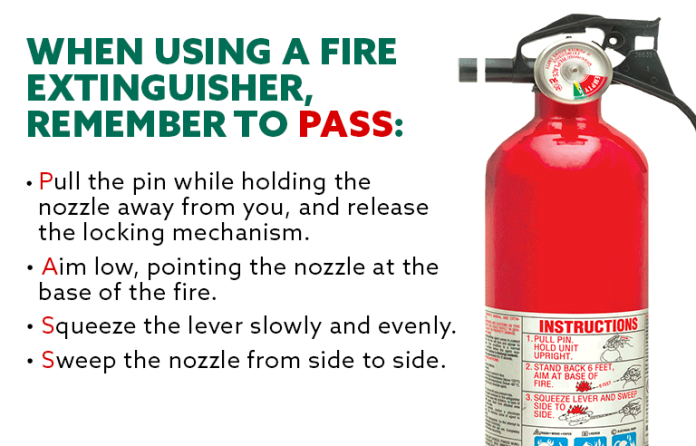
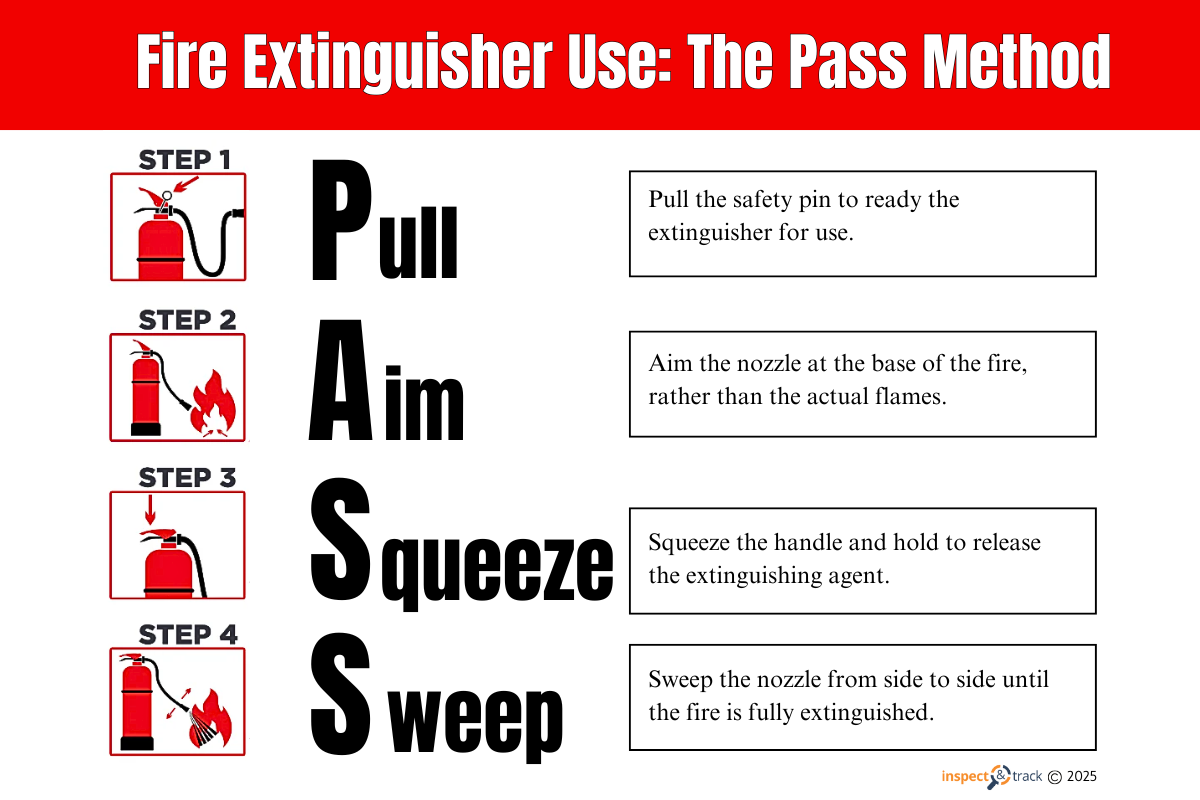
Pull the pin, aim at the fire’s base, squeeze the handle, and sweep from side to side.
Learning how to use a fire extinguisher can help you act with calm judgment during a small, early-stage fire. The right extinguisher, a clear escape route, and proper technique matter just as much as speed. This guide explains how to use a fire extinguisher safely at home, at work, or in a vehicle.
When You Should Use a Fire Extinguisher
A fire extinguisher is for a small fire that has just started. It is not a tool for fighting a large, spreading, or smoky fire. Your first duty is always to protect people and call 911.
Before learning how to use a fire extinguisher, check these safety points:
• The fire is small and contained, such as a wastebasket fire or a small pan fire.
• The room is not filling with smoke.
• You have a clear path to an exit behind you.
• Someone has called 911 or is calling now.
• You have the correct extinguisher for the type of fire.
• You feel able to use the extinguisher without panic.
Leave at once if the fire grows, blocks your exit, produces heavy smoke, or spreads beyond its original area. Fire can double in size very quickly, and smoke can make breathing difficult before flames reach you.
A useful rule is simple: if you are unsure, get out. Property can be replaced. People cannot.
Understand Fire Classes
Knowing the fire class helps you choose the right extinguisher. Using the wrong agent can make a fire worse or expose you to serious danger.
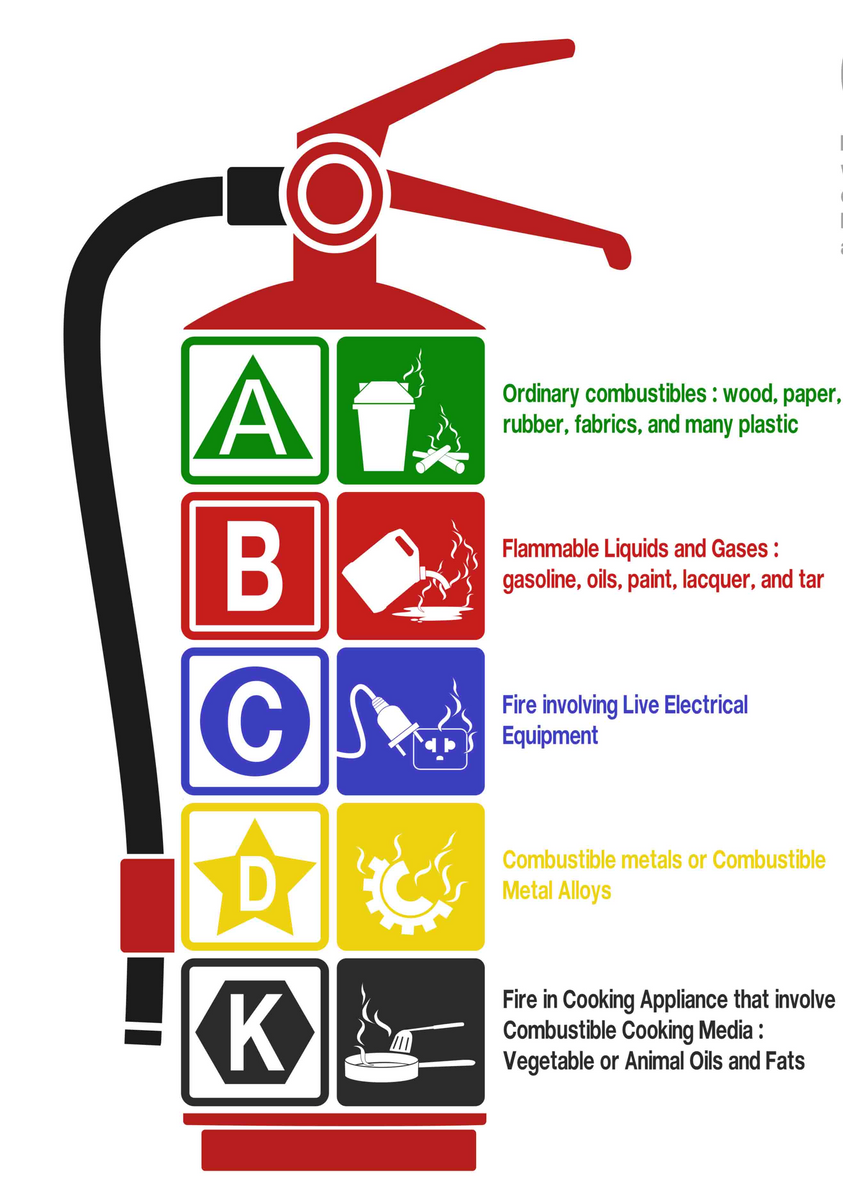
Class A fires
Class A fires involve ordinary materials, such as:
• Wood
• Paper
• Cloth
• Cardboard
• Many plastics
Water, foam, and multipurpose dry chemical extinguishers may work on Class A fires. Always check the label before use.
Class B fires
Class B fires involve flammable liquids, such as:
• Gasoline
• Oil
• Paint
• Solvents
• Grease-based products
Never use a strong stream of water on a flammable liquid fire. Water can spread the burning liquid across a surface.
Class C fires
Class C fires involve energized electrical equipment. Examples include:
• Computers
• Appliances
• Power strips
• Wiring
• Circuit panels
Use an extinguisher rated for electrical fires. Carbon dioxide and dry chemical extinguishers are common choices. If it is safe, disconnect the power first, but do not touch damaged wires or wet equipment.
Class D fires
Class D fires involve combustible metals, such as magnesium or titanium. These fires need special dry powder extinguishers. A normal household extinguisher may not be safe or effective.
Class K fires
Class K fires involve cooking oils and fats. They are common in commercial kitchens but can also occur in homes. Class K extinguishers use a wet chemical agent designed for hot cooking oil.
Never carry a burning pan outside. Moving it can spread the fire and cause severe burns.
Choose the Right Fire Extinguisher
Many homes use an ABC-rated extinguisher. This type is designed for Class A, B, and C fires and is often suitable for general household risks.
Read the label before an emergency. Look for the fire classes printed on the front, the size rating, and the operating instructions. An extinguisher may look familiar, but its contents and limits can differ.
Common extinguisher types include:
• Dry chemical: Common for homes, cars, and offices. It leaves a powdery residue that can damage electronics if not cleaned soon.
• Carbon dioxide: Useful for some liquid and electrical fires. It leaves little residue but may not stop a deep Class A fire from reigniting.
• Water: Designed for some Class A fires only. Never use it on grease, gasoline, or energized electrical equipment.
• Wet chemical: Made for cooking oil and grease fires, especially Class K fires.
• Foam: Used for some Class A and Class B fires, depending on the product label.
If the label does not clearly match the fire, do not use that extinguisher. Exit the area and wait for firefighters.
How to Use a Fire Extinguisher: The PASS Method
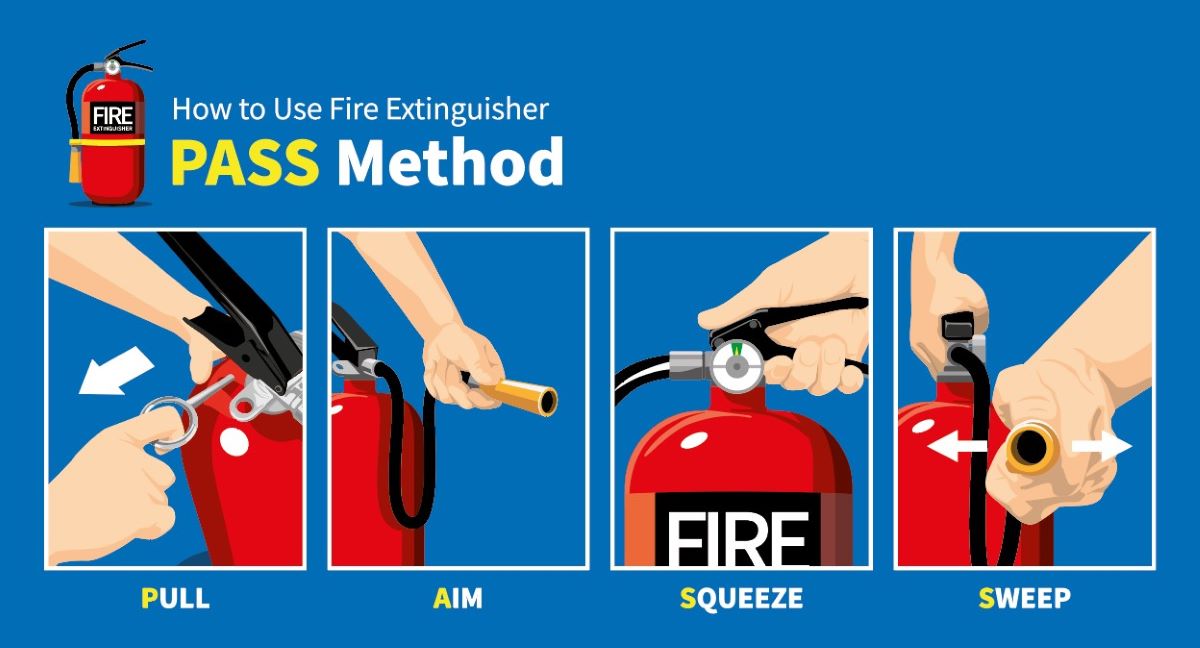
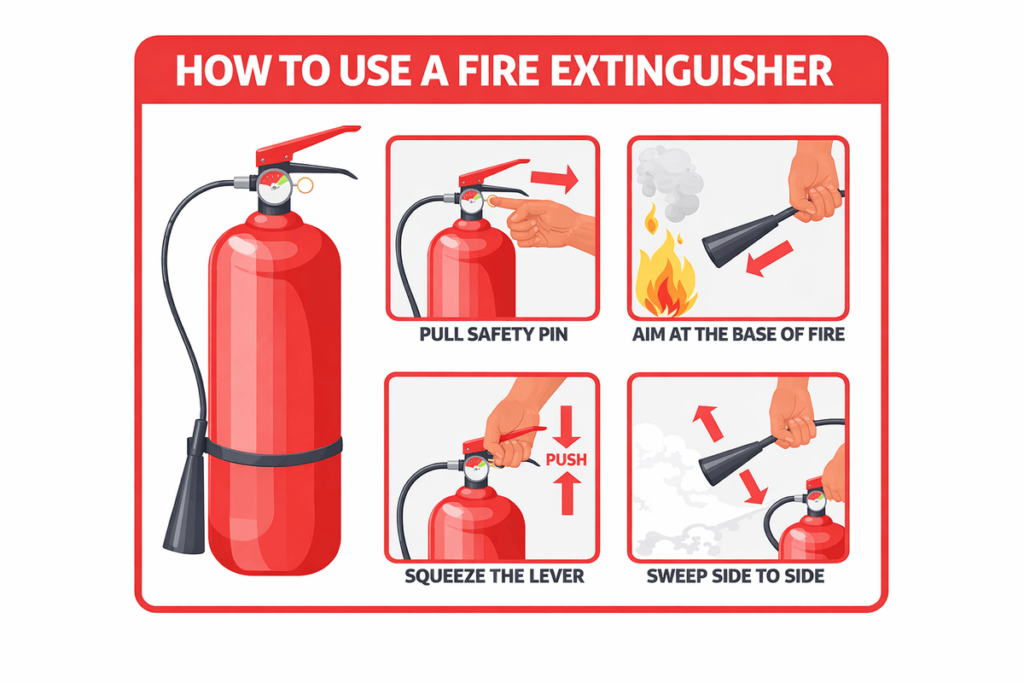
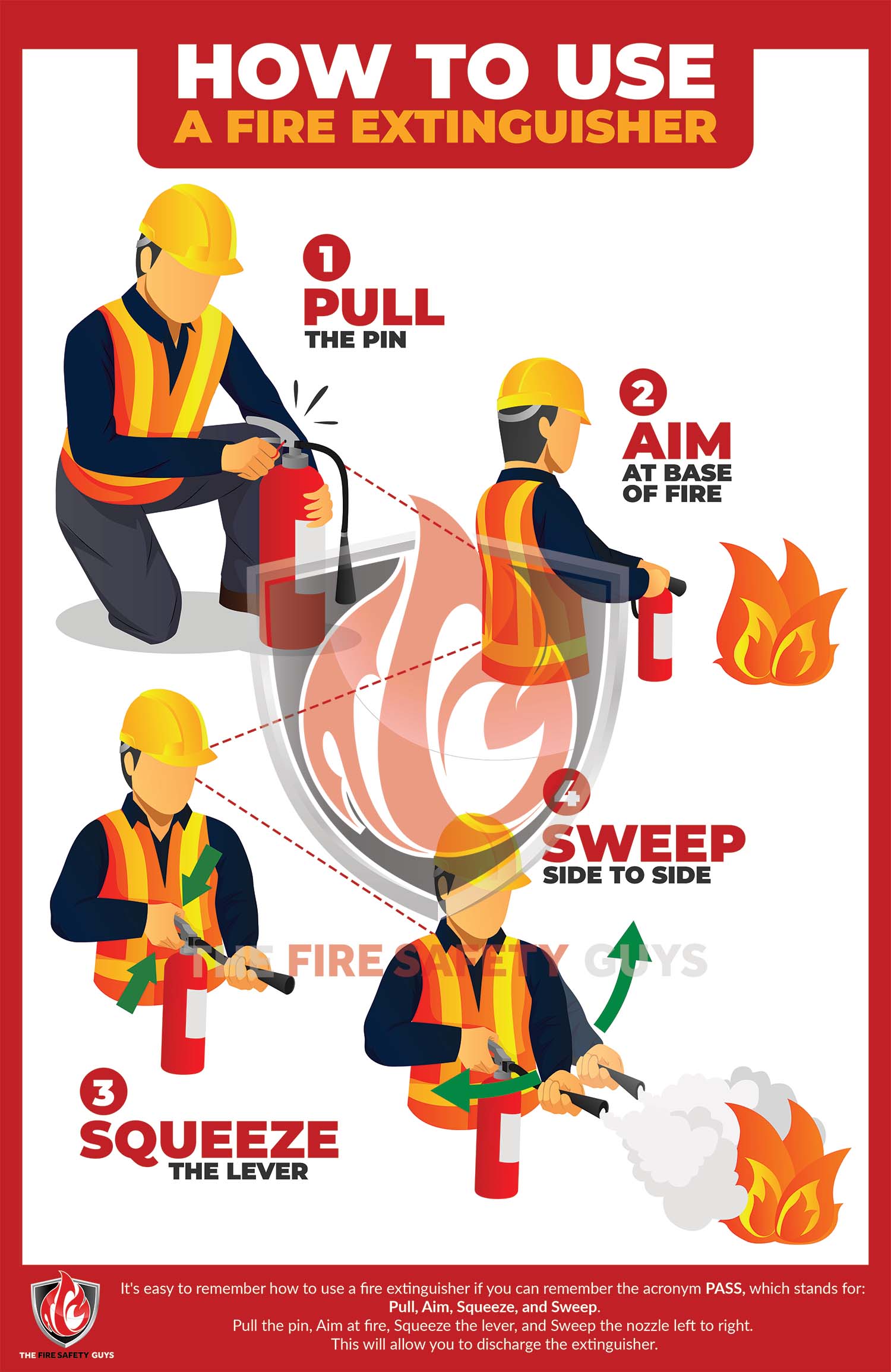
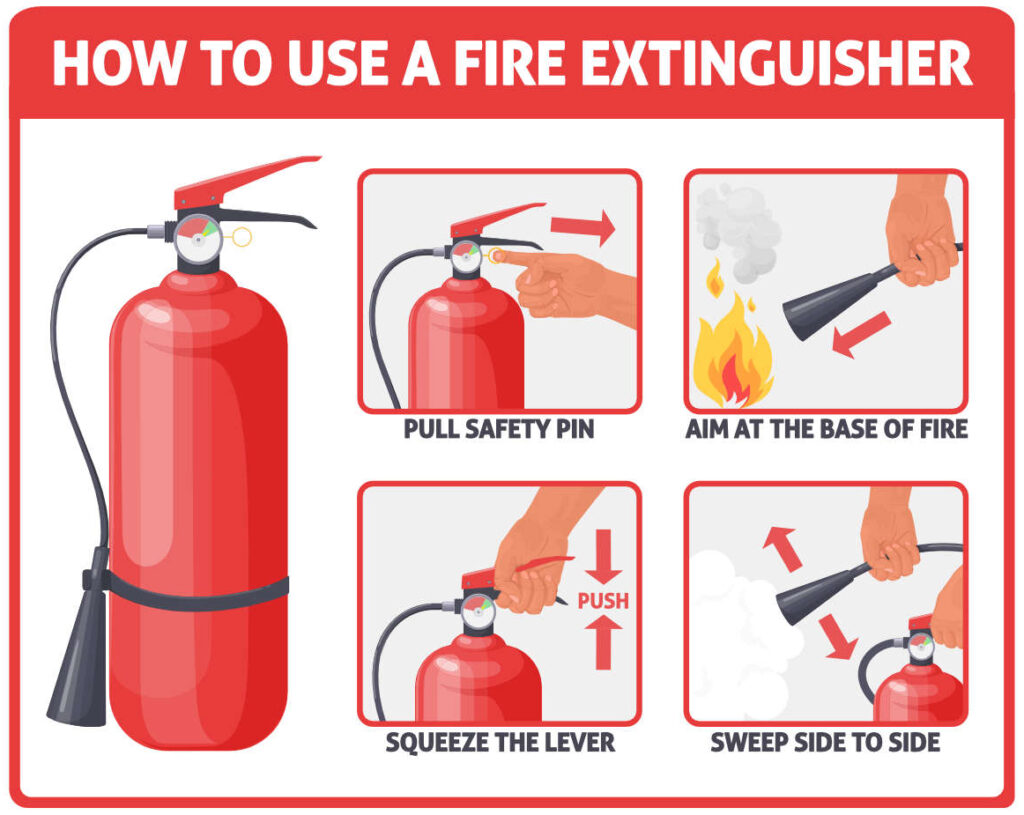
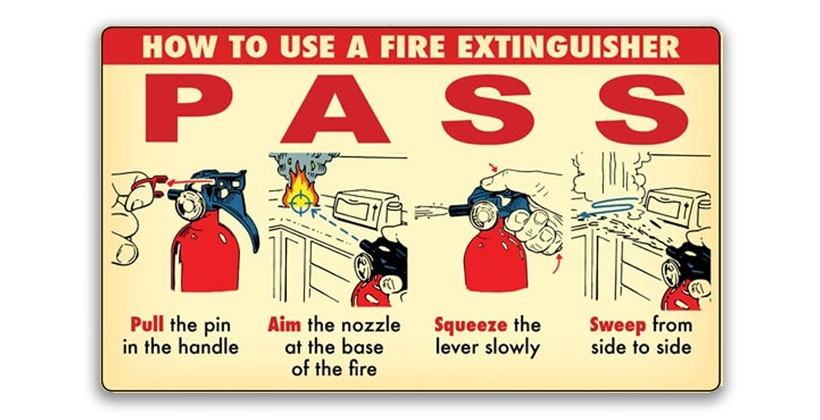
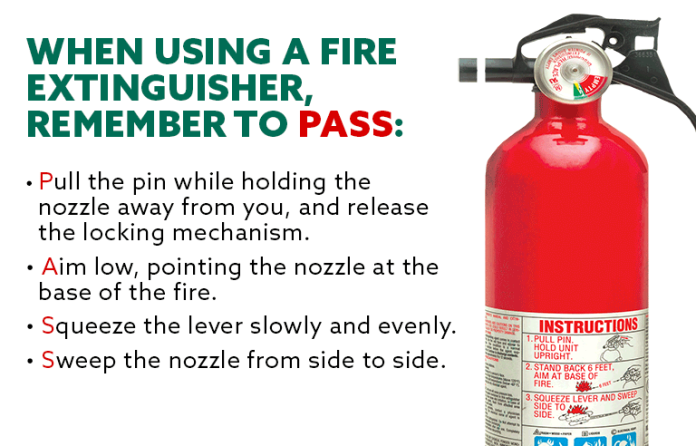
The standard method for how to use a fire extinguisher is PASS. It stands for Pull, Aim, Squeeze, and Sweep.
1. Pull the pin
Stand several feet from the fire. Hold the extinguisher with the nozzle pointed away from you, then pull the safety pin.
The pin prevents accidental discharge. Some extinguishers use a tamper seal or clip that breaks when you pull the pin. Do not waste time trying to save the seal.
2. Aim at the base
Point the nozzle at the base of the flames, not at the top of the fire. The base is where the fuel burns.
For a pan fire, aim toward the front edge of the flames while staying back. Do not lean over the pan. Heat can rise suddenly and burn your face, hair, or hands.
3. Squeeze the handle
Squeeze the handle slowly and firmly. The extinguisher will release its agent under pressure.
Keep the nozzle pointed at the base. Short bursts may help you control the discharge, but follow the instructions on the extinguisher.
4. Sweep from side to side
Move the nozzle from side to side across the base of the fire. Work from a safe distance and move closer only if the flames shrink.
Watch the area after the flames go out. A fire can hide under paper, fabric, grease, or other material and start again. If the fire returns, leave immediately unless you still have a safe exit and a suitable extinguisher.
Remembering how to use a fire extinguisher is easier when you picture the agent as a blanket. You are covering the fuel at its base, not chasing the flames in the air.
Step-by-Step Safety Procedure
The PASS method explains the physical action. This wider process helps you decide whether using an extinguisher is safe.
-
Alert everyone nearby.
-
Tell someone to call 911.
-
Identify the fire source if you can do so without getting close.
-
Check that your escape route remains open.
-
Select the correct extinguisher.
-
Stand several feet away, with your back toward the exit.
-
Use the PASS method.
-
Watch for signs of reignition.
-
Leave immediately if the extinguisher runs empty or the fire grows.
-
Close the door behind you if you can do so safely.
Never allow the fire to get between you and the exit. Do not crawl toward a fire, trap yourself in a corner, or use an extinguisher while smoke blocks your view.
People often ask how to use a fire extinguisher in a crowded room. The answer is to keep others behind you, maintain space, and avoid creating a path that blocks people from leaving.
How to Use a Fire Extinguisher on Common Fires
Kitchen grease fire
Turn off the heat only if you can reach the control without crossing the flames. Use a metal lid or baking sheet to cover a small pan fire, and leave it covered until it cools.
A Class K extinguisher is the best choice for cooking oil fires. Some home extinguishers are labeled for small kitchen fires, but check the label first.
Never use water. Water turns into steam when it hits hot oil and can spread burning grease in a violent burst.
Electrical fire
If safe, unplug the equipment or turn off power at the breaker. Do not touch the equipment if there is water nearby, damaged wiring, or a risk of shock.
Use an extinguisher rated for Class C fires. Keep in mind that shutting off power does not remove all danger from damaged electrical systems.
Trash or paper fire
A small paper or trash fire may be a Class A fire. Use an ABC extinguisher or another product labeled for Class A fires.
Watch for hidden embers. Paper can smolder beneath other waste and reignite after the visible flames disappear.
Grill or gasoline fire
Move away and call 911. Use only an extinguisher rated for the type of fire, and never use water on burning gasoline or oil.
Outdoor fires can spread through grass, fuel, and nearby structures. Wind can also push flames toward you within seconds.
Common Mistakes to Avoid
Learning how to use a fire extinguisher also means learning what not to do. Small mistakes can turn a manageable event into an emergency.
• Do not use water on grease, gasoline, or electrical fires.
• Do not aim at the tops of the flames.
• Do not stand with the fire between you and the exit.
• Do not fight a fire that is larger than you can control.
• Do not use an extinguisher without checking its rating.
• Do not assume one short spray has solved the problem.
• Do not turn your back on the fire while leaving.
• Do not reenter a smoke-filled building.
• Do not use a damaged, corroded, leaking, or expired extinguisher.
• Do not ask children to fight a fire.
In safety drills, one common mistake is standing too close at the start. Heat and smoke can reach you faster than expected. Begin at the distance stated on the label, then move forward only if the fire clearly shrinks.
Another common mistake is holding the extinguisher by the hose or nozzle instead of the handle. Keep a firm grip and control the nozzle so the agent reaches the fuel.
Fire Extinguisher Maintenance and Storage
An extinguisher helps only if it works when you need it. Inspect it regularly and follow the manufacturer’s instructions.
Check for:
• A readable label
• A full pressure gauge in the green zone, when a gauge is present
• An intact pin and tamper seal
• No dents, rust, leaks, or damaged hose
• No blocked nozzle
• Easy access and clear visibility
Store extinguishers where adults can reach them quickly. Good locations may include the kitchen exit, garage entry, workshop, or hallway. Do not hide one behind boxes or place it beside the likely fire source where flames could block access.
Most disposable extinguishers need replacement after use, even if some agent remains. Rechargeable models must be serviced by a qualified professional after discharge. Never test an extinguisher by spraying a small amount unless the manufacturer gives specific instructions.
The National Fire Protection Association recommends regular inspection and proper servicing of portable fire extinguishers. Workplace requirements may also call for documented inspections and employee training under federal occupational safety rules.
Practice Before an Emergency
A short review can make how to use a fire extinguisher feel less stressful. Read the label before a crisis, because every model may have slightly different instructions.
You can practice safely by:
• Finding the pin, handle, hose, and pressure gauge.
• Reading the fire rating on the label.
• Checking the distance range.
• Identifying your nearest exit.
• Discussing who will call 911.
• Joining a workplace or community fire safety drill.
Never discharge a working extinguisher indoors just for practice. Many training centers use special rechargeable units and controlled fire simulators.
If you have used an extinguisher, tell the fire department when they arrive. Firefighters can check for hidden heat, structural damage, and toxic smoke. A fire that looks out may still be dangerous inside a wall, appliance, cabinet, or ceiling.
What to Do After Using a Fire Extinguisher
Leave the area if there is any smoke, heat, or uncertainty. Even a small fire can produce carbon monoxide and other harmful gases.
After the incident:
• Call 911 if you have not already done so.
• Keep people away from the burned area.
• Do not touch hot items with bare hands.
• Do not restart damaged appliances.
• Replace or recharge the extinguisher.
• Report the incident to a landlord, manager, or building owner when appropriate.
• Arrange an inspection if wiring, walls, appliances, or fuel systems were involved.
Dry chemical residue can be irritating and corrosive. Ventilate and clean it according to the extinguisher manufacturer’s guidance. For major damage, use a professional restoration service rather than sweeping residue into the air.
Personal Safety Lessons From Fire Drills
One lesson that stands out in fire training is that calm movement matters more than speed. People often rush toward the extinguisher without checking the exit behind them. That single pause can prevent a person from becoming trapped.
Another lesson is to treat smoke as an early warning, not a minor nuisance. If smoke is thick, dark, or moving quickly, evacuation is safer than attempting to use a fire extinguisher.
I also recommend practicing the words “Pull, aim, squeeze, sweep” out loud. A simple memory aid can cut through stress when every second feels important. The goal is not to become a firefighter. The goal is to make a safe choice during the first moments of a small fire.
Frequently Asked Questions About How to Use a Fire Extinguisher
What is the correct way to use a fire extinguisher?
Use the PASS method: pull the pin, aim at the base of the fire, squeeze the handle, and sweep from side to side. Use an extinguisher only when the fire is small, the type matches, and you have a clear exit.
How far away should you stand when using a fire extinguisher?
Start at the distance printed on the extinguisher label, which is often several feet away. Move closer only if the flames shrink and your exit remains clear.
Can you use water on a grease fire?
No. Water can cause burning grease to spread rapidly and create a dangerous fireball. Turn off the heat if safe, cover the pan with a metal lid, or use a properly rated Class K extinguisher.
How do you know which fire extinguisher to use?
Read the class rating on the label. ABC extinguishers cover many common household fires, while cooking oil, combustible metal, and some electrical fires may need specialized products.
Should you fight a fire if the room is smoky?
No. Smoke can contain toxic gases and can quickly reduce visibility and breathing ability. Leave, close the door if possible, and call 911.
Can a fire extinguisher be reused after one use?
Most disposable extinguishers should be replaced after any discharge. Rechargeable models must be inspected and refilled by a qualified service provider.
Where should a home fire extinguisher be stored?
Keep it visible and easy to reach near an exit, such as by the kitchen doorway or garage entry. Do not store it next to the stove or behind objects that could block access.
Conclusion
Knowing how to use a fire extinguisher can help you respond wisely to a small fire, but safety comes first. Check the fire class, keep an exit behind you, use the PASS method, and leave immediately if conditions worsen.
Take a few minutes today to inspect your extinguisher, read its label, and review your home’s escape plan. Share this guide with your family or coworkers, and consider joining a certified fire safety training session for hands-on practice.