Introduction
The best mini oven for most U.S. homes is a countertop convection toaster oven with a usable interior, simple controls, steady heat, and enough power for the food you cook most. A model with convection is usually more useful than a basic toaster oven because it can toast, bake, roast, broil, and often air fry.
The right choice still depends on your counter space, budget, cooking needs, and electrical setup. A small two-slice oven may suit one person, while a larger model may be better for a family that wants to cook a 12-inch pizza, a 9-by-13-inch pan, or several servings at once.
This guide compares the main types of mini ovens sold in the United States. It also explains what to check before buying, how much capacity you need, and which features are worth paying for.

Quick Answer: Which Mini Oven Is Best?
For most buyers, choose a medium or large countertop convection oven with:
- A temperature range of about 200°F to 450°F or higher
- At least 1,500 watts
- A timer with automatic shutoff
- A removable crumb tray
- Two rack positions
- A clear door and interior light
- A cooking space that fits your usual pans
- A U.S. 120-volt plug
- Independent temperature and function controls
If you only need toast and small reheated meals, a compact oven such as the Panasonic FlashXpress may fit better. If you want baking, roasting, air frying, and larger meals, consider a model such as the Breville Smart Oven Air Fryer Pro, Cuisinart Chef’s Convection Toaster Oven, or Ninja Foodi XL Pro Air Oven.
These are not one-size-fits-all winners. Their features, size, price, and control systems differ. Always check the current manufacturer manual before buying because specifications and included accessories can change.
Best mini oven types by need
| Need | Best type | Why |
|---|---|---|
| Toast and reheating | Compact toaster oven | Small footprint and fast warm-up |
| Baking and roasting | Convection toaster oven | Better heat movement and more even cooking |
| Air frying | Oven with a dedicated air-fry setting and basket | Handles larger batches than many small basket fryers |
| Pizza | Oven with a wide interior | Fits a 12-inch pizza or pizza pan |
| Small apartment | Compact oven | Uses less counter space |
| Family meals | Extra-large countertop oven | Holds larger pans and more food |
| Precise cooking | Digital convection oven | Often offers better time and temperature control |
| Simple controls | Mechanical toaster oven | Easy to use and usually less costly |

What Is a Mini Oven?
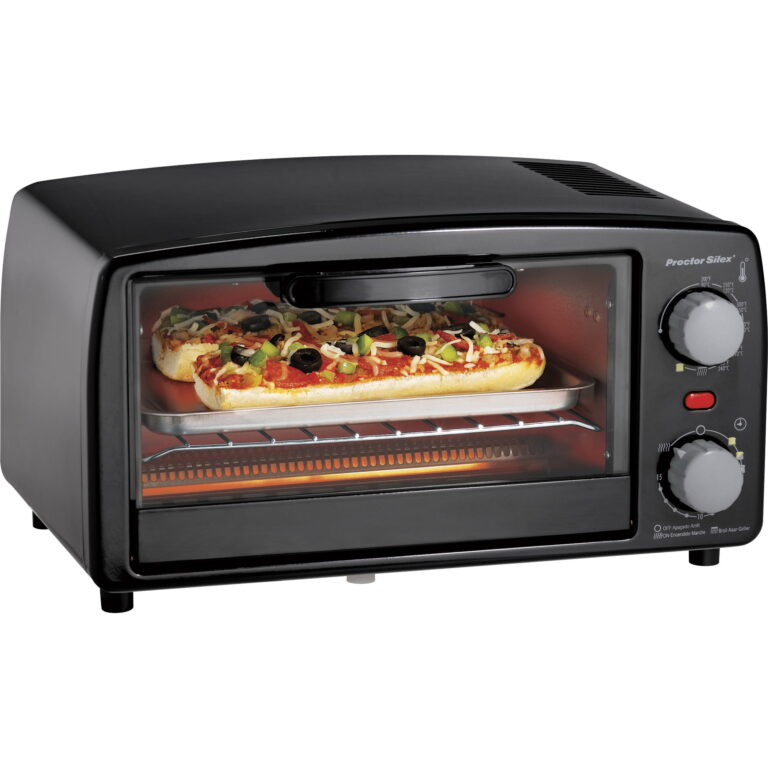
A mini oven is a small electric oven designed to sit on a kitchen counter. In the United States, the term often includes toaster ovens, countertop convection ovens, air-fryer ovens, and compact electric ovens.
These appliances are smaller than a full-size range oven. They can use less energy for small meals because they heat a smaller space. They also warm up quickly and can help you avoid heating a large oven for one sandwich, a few vegetables, or a small frozen meal.
A mini oven is not always a true replacement for a full-size oven. Capacity is the main limit. A compact unit may not fit a standard baking dish, tall casserole, or large roast. Some models also have hot spots, shallow racks, or controls that are less precise than those on a built-in oven.
Mini oven versus toaster oven
The terms often overlap, but there is a useful difference:
- A toaster oven is usually designed for toast, reheating, baking, and broiling.
- A convection toaster oven adds a fan to move hot air around the food.
- An air-fryer oven adds a high-airflow setting and a perforated basket.
- A countertop electric oven may have a taller or wider cavity for baking and roasting.
The name matters less than the interior size, heating elements, controls, and safety features.

The Best Mini Oven for Most U.S. Kitchens
A medium-size convection toaster oven is the best general choice for most people. It offers more uses than a two-slice toaster oven without taking as much space as the largest countertop ovens.
Look for a model that can fit at least one of these items:
- A 9-inch by 13-inch pan
- A 12-inch pizza
- Six slices of toast
- A small roasting pan
- A standard quarter-sheet pan
Do not assume that a listed capacity guarantees that your pan will fit. Manufacturers may measure the whole cavity, while the usable rack area is smaller. Check the internal dimensions and the rack dimensions before ordering.
Why convection helps
A convection oven uses a fan to move heated air around the food. This can improve browning and may reduce uneven cooking. It does not make every food cook at the same speed, though. Dense foods still need enough time to heat through.
Convection is most useful for:
- Roasted vegetables
- Chicken pieces
- Cookies
- Frozen foods
- Toasted sandwiches
- Foods that need a crisp surface
A fan can also dry food faster. Reduce the temperature or check the food early if the manual or recipe gives convection guidance.
When a basic toaster oven is better
A basic oven may be better if you mainly want to:
- Toast bread
- Reheat leftovers
- Warm bagels
- Cook small frozen foods
- Avoid digital menus
- Spend less
A simple oven has fewer parts and fewer settings. That can make it easier to use. It may not bake as evenly or offer the same capacity as a convection model.

Best Mini Oven Models to Consider
The following models are examples of well-known U.S. countertop ovens. They represent different needs rather than a single universal ranking. Confirm current features, dimensions, warranty terms, and included accessories on the manufacturer’s website.
Best for baking and large meals: Breville Smart Oven Air Fryer Pro
The Breville Smart Oven Air Fryer Pro is designed for buyers who want one countertop appliance to handle many cooking tasks. Its large cavity, convection system, air-fry function, and multiple cooking programs make it suitable for baking, roasting, broiling, dehydrating, and reheating.
Best fit:
People with enough counter space who want a versatile oven for family meals.
Main strengths:
- Large interior
- Many cooking functions
- Digital controls
- Convection and air-fry modes
- Interior light
- Useful for larger pans and several servings
Main limits:
- Larger and heavier than a basic toaster oven
- Higher purchase price
- Uses more counter space
- More settings may take time to learn
This is a strong choice when oven capacity matters more than a small footprint.
Best for precise everyday cooking: Cuisinart Chef’s Convection Toaster Oven
The Cuisinart Chef’s Convection Toaster Oven is a large countertop model with convection cooking, multiple functions, and digital controls. It suits people who bake often or want room for larger meals.
Best fit:
Home cooks who want a broad cooking range but prefer a conventional oven layout.
Main strengths:
- Large cooking area
- Convection cooking
- Multiple rack positions
- Digital temperature and time controls
- Suitable for baking, broiling, roasting, and toast
Main limits:
- Takes significant counter space
- Exterior and door can become hot
- More expensive than small toaster ovens
- Results depend on the pan position and recipe
Measure the space carefully. A large oven needs open space around it for ventilation.
Best compact option: Panasonic FlashXpress
The Panasonic FlashXpress is a compact oven aimed at quick toast, reheating, and small meals. It uses infrared heating elements and has preset cooking programs.
Best fit:
People in apartments, dorm-style spaces, or small kitchens who value a small footprint.
Main strengths:
- Compact design
- Fast operation for small portions
- Simple preset controls
- Useful for toast, snacks, and reheating
Main limits:
- Smaller interior
- Not ideal for large pans
- Limited room for family-size meals
- Less flexible than a large convection oven
This type of oven works well when counter space is the main concern. It is not the best choice for frequent baking or roasting.
Best for air-frying and family-size portions: Ninja Foodi XL Pro Air Oven
The Ninja Foodi XL Pro Air Oven is designed for larger meals and high-airflow cooking. It may appeal to buyers who want air-frying, roasting, baking, and other functions in one appliance.
Best fit:
Families or cooks who want to prepare larger portions and crisp foods.
Main strengths:
- Large interior
- Air-fry capability
- Multiple cooking functions
- Useful for trays and family-size portions
- High airflow for crisping
Main limits:
- Requires more storage and counter space
- Can be loud during fan operation
- May produce more heat in the room
- Large accessories need storage
Air-fry results depend on how much food is placed in the basket. Crowding blocks airflow and can leave food soft.
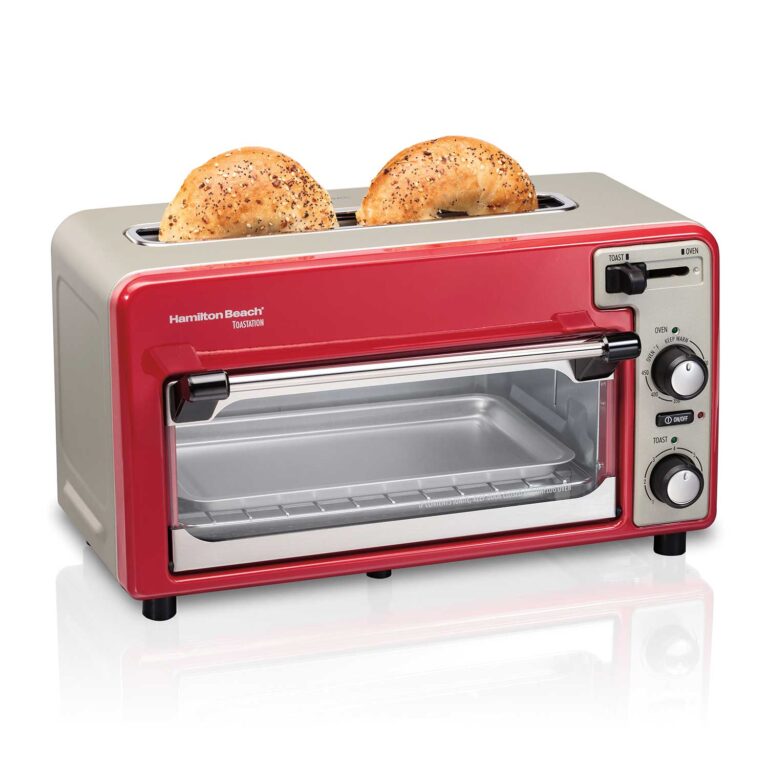
Best budget category: Small Hamilton Beach or Black+Decker toaster ovens
Small ovens from Hamilton Beach and Black+Decker are often suitable for basic toast, heating, and simple baking. Exact capacity and functions differ by model.
Best fit:
Buyers who want a low-cost appliance for simple tasks.
What to check:
- Actual interior dimensions
- Whether the model has convection
- Timer length
- Automatic shutoff
- Broil setting
- Crumb tray
- Warranty
- Whether the door and rack are easy to clean
Budget ovens can be useful, but do not judge them by exterior size alone. A very small cavity may limit what you can cook.

How to Choose the Best Mini Oven
1. Measure your counter first
Measure the width, depth, and height of the space. Then compare those measurements with the oven’s listed dimensions.
Leave room for airflow. The exact clearance depends on the model, so follow the manual rather than using a general rule. Do not place the oven directly under cabinets unless the manufacturer allows it.
Also check the door path. Some doors open downward and need space in front of the appliance. Others may make a nearby drawer hard to open.
2. Choose capacity based on your normal meals
Capacity is often more important than the number of cooking programs.
Use this simple guide:
- Very small: Toast, bagels, snacks, and one small serving
- Small: Two servings and small frozen foods
- Medium: Six slices of toast, a small pizza, or a modest baking dish
- Large: A 12-inch pizza, larger pan, or several servings
- Extra-large: Family meals, multiple racks, or larger roasting dishes
If you often cook for three or more people, a very small oven may become frustrating. You may need to cook in batches, which reduces the time and energy advantage.
3. Check the wattage
Most countertop ovens sold in the United States use a standard 120-volt household outlet. Many draw between about 1,200 and 1,800 watts, although the exact value varies.
Higher wattage can support faster heating and stronger cooking performance. It also places more demand on the electrical circuit.
Do not run a high-wattage oven on a circuit that already powers several heat-producing appliances. Avoid sharing the outlet with a microwave, coffee maker, or electric kettle if the circuit may overload.
Use a grounded wall outlet when required by the manual. Do not use an extension cord unless the manufacturer specifically permits it and the cord is rated for the appliance’s load.
4. Decide whether you need convection
Convection is worthwhile if you bake, roast, or cook frozen food often. It can help food brown and cook more evenly.
You may not need it if you mainly:
- Toast bread
- Warm leftovers
- Melt cheese
- Heat snacks
- Cook one small item at a time
A convection fan can add noise and may require changes to cooking time or temperature. Read the manual for the model’s recommended settings.
5. Look for useful controls
Useful controls include:
- Independent temperature selection
- A timer with automatic shutoff
- Toast shade control
- A clear display
- A lighted interior
- Separate bake, broil, toast, and convection settings
- A stop or cancel button
- A cool-touch handle
Smart features are optional. Wi-Fi control may be convenient, but it does not replace basic safety features or good temperature control.
6. Check cleaning and repair details
Food crumbs and grease can collect near the heating elements. A removable crumb tray makes regular cleaning easier.
Before buying, check:
- Whether the tray comes out fully
- Whether racks are dishwasher-safe
- Whether replacement trays are available
- Whether the door can be cleaned inside
- How the manufacturer handles warranty repairs
- Whether the heating elements are exposed
Do not cover the crumb tray with foil unless the manual allows it. Foil can affect airflow and may create a fire risk near heating elements.

Mini Oven Features That Matter Most
Temperature accuracy
A display that says 350°F does not guarantee that every part of the oven reaches exactly 350°F. Small ovens can have hot and cool areas.
For important recipes, use the manufacturer’s guidance and watch the food closely during the first few uses. An inexpensive oven thermometer can help you understand the oven’s behavior, but it cannot replace safe food-temperature checks.
Rack positions
Two or more rack positions give you more control. The top position is often useful for broiling, while a middle position suits baking. The correct position depends on the food and the manual.
A rack that sits too close to the top heating element can burn food before the center is done.
Automatic shutoff
An automatic shutoff timer can reduce the risk of an oven running unattended. It does not make unattended cooking safe in every situation.
Stay nearby while the oven operates. Keep towels, paper, plastic, and other combustible items away from the appliance.
Door and handle design
A wide glass door makes it easier to watch food without opening the oven. A sturdy handle helps reduce burns.
The outside may become hot during use. Keep children away and use care when removing hot trays.
Included accessories
Common accessories include:
- Baking pan
- Broiling rack
- Wire rack
- Air-fry basket
- Crumb tray
- Pizza pan
Do not assume that a pan included with the oven will fit another model. Replacement accessories should match the exact model number.

How to Use a Mini Oven Safely
A mini oven is still a high-heat electrical appliance. Use it on a stable, heat-resistant surface with the clearances listed in the manual.
Follow these basic steps:
- Read the model-specific instructions before first use.
- Remove all packaging, plastic film, cardboard, and shipping inserts.
- Place the oven on a stable surface away from water.
- Confirm that the plug, cord, and outlet are in good condition.
- Preheat when the recipe or manual requires it.
- Keep food and cookware away from the heating elements.
- Use oven mitts for racks, pans, and doors.
- Clean grease and crumbs after the oven cools.
- Unplug the appliance when the manual recommends it or when it will not be used for a long period.
- Stop using the oven if the cord, plug, controls, or housing shows damage.
For food safety, use a food thermometer when the internal temperature matters. The U.S. Department of Agriculture recommends checking safe internal temperatures rather than relying only on color or cooking time. Poultry, for example, should reach 165°F in the thickest part.
Never use a mini oven to heat a room. Do not put sealed containers inside it. Use only cookware rated for the selected temperature.
Common Mini Oven Problems and Fixes
The oven does not heat
Check whether:
- The plug is fully inserted
- The outlet works
- The timer is set
- The function knob is on a cooking mode
- The door is closed if the model has a door sensor
If the outlet or cord becomes hot, unplug the appliance and stop using it. Do not repair internal wiring yourself.
Food burns on top but stays raw inside
Possible causes include:
- The rack is too close to the top element
- The temperature is too high
- The pan is too small or too dark
- The oven cavity is crowded
- The food needs more time at a lower temperature
Move the rack down if the manual allows it. Lower the temperature and allow more time. For meat and poultry, verify doneness with a food thermometer.
The oven cooks unevenly
Small ovens often have uneven heat. Try:
- Leaving space around the food
- Turning the pan if the manual permits
- Using the recommended rack position
- Avoiding crowded air-fry baskets
- Checking whether convection is on or off
Do not block the fan or heating elements.
The fan makes noise
A convection fan normally makes some sound. Stop using the oven if the noise is accompanied by scraping, burning odors, smoke, or vibration.
Smoke appears during first use
Some new appliances may have a temporary manufacturing odor during initial heating. Follow the manual’s first-use instructions and ventilate the room.
Unplug the oven immediately if smoke continues, flames appear, or the smell resembles burning plastic or wiring.
Mini Oven Buying Mistakes to Avoid
Buying by exterior size alone
A wide exterior does not always mean a large cooking area. Compare the usable rack size and the largest pan the oven can hold.
Choosing too many functions
A long list of programs can sound useful, but basic controls may serve you better. Choose functions that match your meals.
Ignoring electrical load
A countertop oven can draw as much power as other kitchen heating appliances. Check the manual and avoid overloading a circuit.
Assuming air frying is the same as a basket fryer
An air-fryer oven may cook a larger batch, but it may also take longer to preheat and may produce less crisp food when the basket is crowded.
Forgetting ventilation space
Heat needs a safe path away from the oven. Cabinets, walls, curtains, and paper goods should not crowd the appliance.
Buying a model that is hard to clean
Grease and crumbs build up over time. A removable tray and accessible interior can matter more than an extra cooking mode.
Key Takeaways
- The best mini oven for most U.S. homes is a medium-size convection toaster oven.
- Choose capacity based on the pans and meals you use most.
- A compact model is best for toast, snacks, and small portions.
- A large model is better for baking, roasting, pizza, and family meals.
- Check wattage, outlet use, clearance, cleaning, and automatic shutoff.
- Convection and air-fry settings are useful but do not guarantee faster or better cooking.
- Follow the exact manual and use a food thermometer when safe internal temperature matters.
Frequently Asked Questions
Is a mini oven cheaper to run than a full-size oven?
It can be cheaper for small meals because it heats a smaller space. The actual cost depends on wattage, cooking time, electricity rates, and how efficiently the food cooks. A large mini oven used for a long time may not save much compared with a full-size oven.
Can I bake in a mini oven?
Yes. Many countertop ovens can bake cookies, bread, casseroles, and small cakes. Check the interior height and pan size first. Small cavities may brown the top quickly, so rack position and temperature control matter.
Can I put aluminum foil in a mini oven?
Only if the manufacturer’s manual allows it and provides instructions. Foil can block airflow, touch heating elements, or affect heat distribution. Never let foil contact an exposed heating element.
Do mini ovens need preheating?
Many recipes work best with preheating, especially baking and roasting. Some foods, such as toast or reheated leftovers, may not need a full preheat. Follow the recipe and appliance manual.
How long do countertop ovens last?
Service life varies with build quality, cleaning, frequency of use, and heat exposure. A model with available replacement parts and a clear warranty may be easier to keep over time. Replace an oven that has damaged wiring, a failing control, or unsafe heating behavior.
Final Recommendation
For the broadest use, buy a medium or large convection mini oven that fits your counter and your most-used pan. Prioritize interior size, safe controls, cleaning access, and steady temperature over a long list of preset modes.
Choose a compact oven if space is tight and your meals are small. Choose a large countertop oven if you want to bake, roast, air fry, or cook for several people. Before checkout, measure the space, confirm the pan fit, check the wattage, and read the current U.S. manual for clearance and electrical requirements.