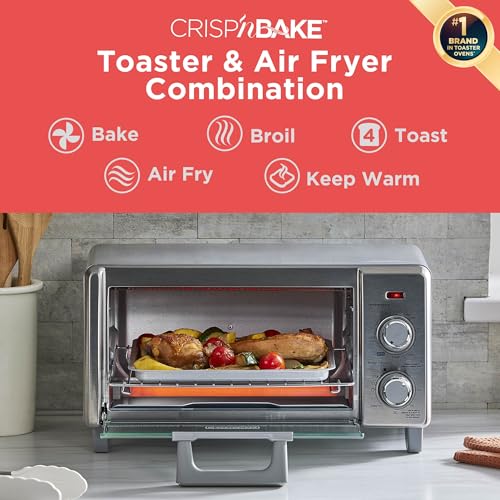
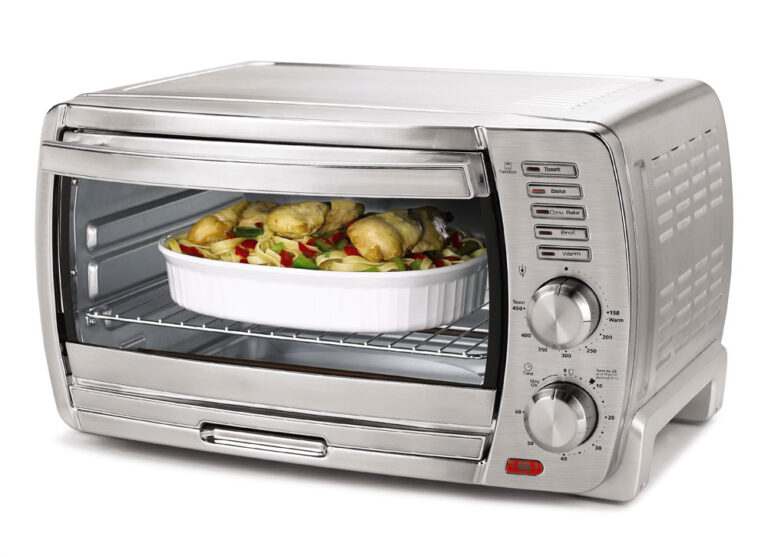
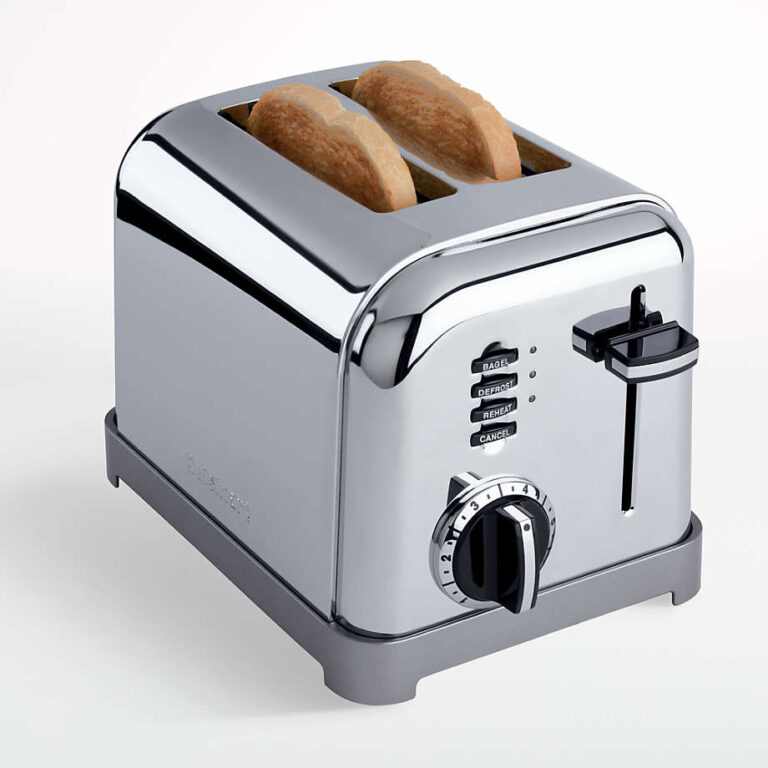
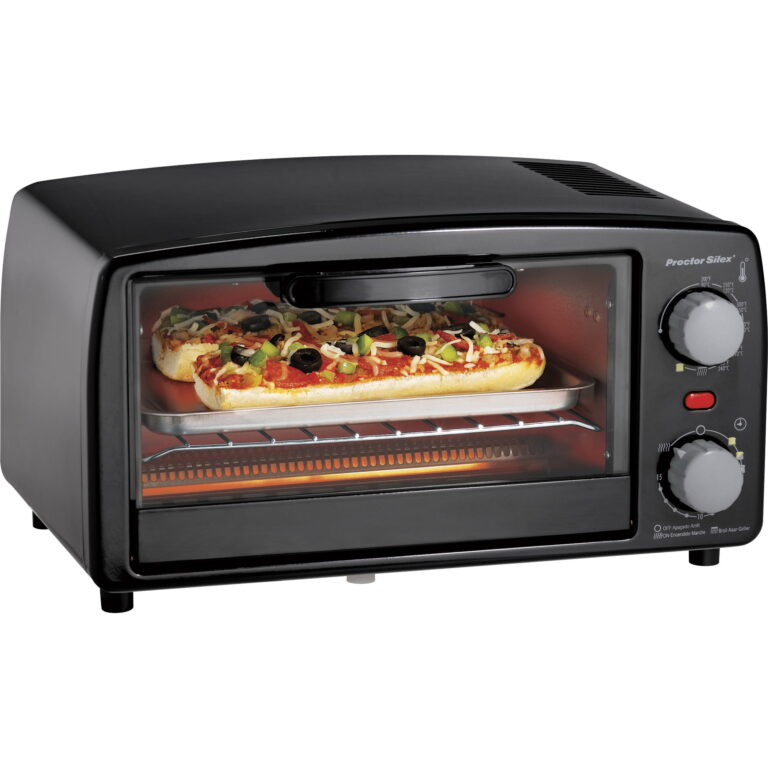
The best toaster oven in the United States depends on what you cook, how much counter space you have, and whether you need simple toast or a small second oven. For most U.S. homes, a mid-size convection toaster oven with a removable crumb tray, clear controls, and enough space for common cookware offers the best balance.
There is no single best model for every buyer. A compact toaster oven may suit one person, while a larger model with an air-fry setting may work better for a family. The right choice should match your cooking needs, kitchen space, electrical setup, cleaning habits, and budget.
This guide compares the main toaster oven types, explains which features matter, and identifies strong options for different uses. Recommendations are based on documented product features, manufacturer manuals, U.S. food-safety guidance, and practical buying criteria. Prices, model names, and availability can change.

Quick Answer: Which Toaster Oven Is Best?
For most U.S. households, the best overall choice is a medium or large convection toaster oven from a well-established brand.
Consider these categories:
| Buyer need | Best type to consider | Why it fits |
|---|---|---|
| Simple toast and reheating | Compact basic toaster oven | Easy to use and takes less space |
| Even baking | Convection toaster oven | A fan moves hot air around the food |
| Air frying and family meals | Large toaster oven air fryer | Offers more room than a small basket air fryer |
| Small kitchens | Compact toaster oven | Uses less counter space |
| Frozen snacks and quick meals | Basic or convection model | Fast preheating and simple controls |
| Frequent cooking | Digital convection oven | Better temperature and time control |
| Large pizzas or casseroles | Extra-wide or large-capacity oven | Fits larger dishes |
| Low-cost replacement | Manual countertop oven | Fewer parts and simpler controls |
A good general pick should have:
- A temperature range of at least about 200°F to 450°F.
- Toast, bake, broil, and warm settings.
- Convection if you bake or roast often.
- A removable crumb tray.
- A clear timer and automatic shutoff.
- Enough interior space for the food and pan sizes you use.
- A cord and plug rated for standard U.S. household outlets.
- A manual that explains rack positions, cookware, and cleaning.
The best toaster oven is not always the largest or most expensive one. A model that fits your daily tasks is usually more useful than a model with many settings you never use.
What Is a Toaster Oven?
A toaster oven is a small electric oven that sits on a countertop. It uses heating elements to cook, brown, toast, warm, or broil food.
Most models have heating elements at the top, bottom, or both. A thermostat helps control the temperature. Many newer models also use a fan. This is called convection cooking.
A toaster oven can handle tasks such as:
- Toasting bread and bagels.
- Reheating pizza.
- Baking cookies or small dishes.
- Broiling meat or vegetables.
- Cooking frozen foods.
- Roasting small portions.
- Air frying, when the oven includes that function.
- Warming food without using a full-size oven.
A toaster oven is different from a microwave. A microwave heats food with electromagnetic energy, while a toaster oven uses hot air and radiant heat. A toaster oven can brown and crisp food, but it often takes longer to reheat moist foods.
A toaster oven is also different from a pop-up toaster. A pop-up toaster is made mainly for bread. A toaster oven can hold food on a tray or rack and perform more cooking tasks.

The Main Types of Toaster Ovens
The best toaster oven type depends on the food you prepare most often. The main categories are simple, convection, air-fryer, and extra-large models.
Basic Toaster Ovens
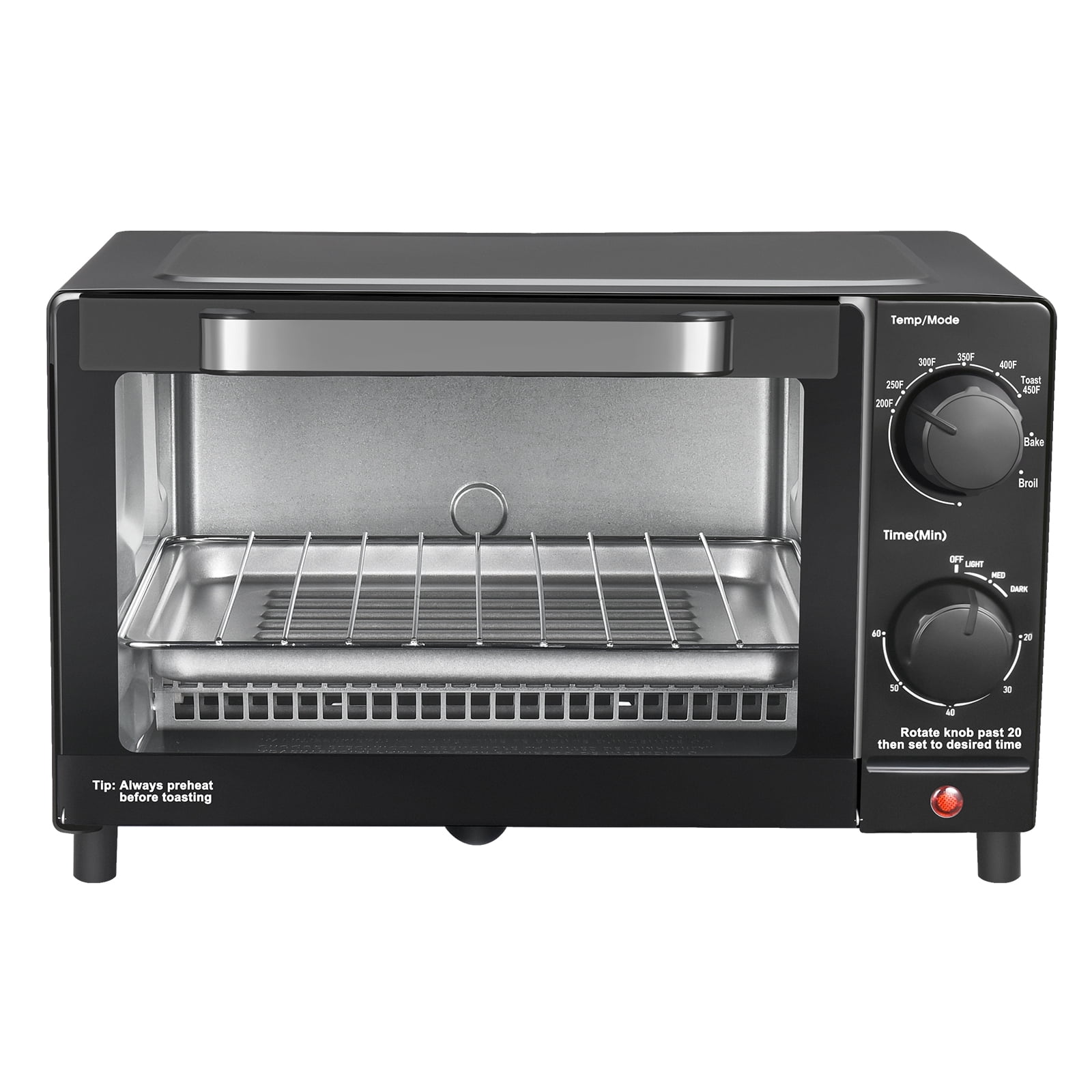
Basic toaster ovens use standard heating elements and simple controls. Many have knobs for temperature, cooking mode, and time.
They work well for:
- Toast.
- English muffins.
- Small frozen foods.
- Reheating slices of pizza.
- Small servings.
- Occasional baking.
Their main benefits are low cost and simple operation. They may heat less evenly than convection models. Manual dials can also be less precise than digital controls.
A basic toaster oven is a sensible choice if you want a replacement for a pop-up toaster but also need to warm or bake small foods.
Convection Toaster Ovens
A convection toaster oven uses a fan to move hot air around the food. This can improve browning and reduce uneven hot spots, although results still depend on the oven design, pan, rack position, and food.
Convection models are useful for:
- Cookies.
- Roasted vegetables.
- Chicken pieces.
- Fish.
- Frozen foods.
- Multiple servings.
- Small baking projects.
Convection cooking does not guarantee perfect results. You may still need to rotate the pan or adjust the temperature. Follow the food package directions first, then make small changes based on the result.
Toaster Oven Air Fryers
A toaster oven air fryer combines convection heat with a perforated basket or tray. The moving air helps food become crisp with less oil than deep frying.
These models are useful for:
- French fries.
- Chicken wings.
- Tater tots.
- Breaded vegetables.
- Reheating foods that become soggy in a microwave.
A toaster oven air fryer usually offers more cooking space than a small basket air fryer. However, it may preheat more slowly and use more counter space. The air-fry basket can also create more crumbs and grease, so cleaning matters.
Extra-Large Toaster Ovens
Large models may fit a 12-inch pizza, a small baking dish, or several servings of food. Some are marketed as countertop ovens rather than simple toaster ovens.
They suit:
- Families.
- Frequent bakers.
- People with small or unreliable full-size ovens.
- Users who cook several portions at once.
- Large frozen pizzas and casseroles.
The trade-off is size. Measure the counter, wall clearance, cabinet clearance, and storage space before buying.
Best Toaster Oven Features to Look For
The most useful toaster oven features improve control, capacity, cleaning, or safety. Extra cooking modes are less important if the oven cannot hold your usual food.
Interior Size
Interior size is one of the most important buying factors. A toaster oven may look large outside but have a smaller usable cooking area inside.
Check whether the oven can fit:
- Your usual pizza size.
- A quarter-sheet pan.
- A 9-by-13-inch baking dish.
- A standard loaf pan.
- A roasting pan.
- The air-fry basket supplied with the oven.
Do not assume that a toaster oven labeled “large” will fit a full-size 9-by-13-inch dish. Check the manufacturer’s interior dimensions and accessory limits.
Temperature Control
A useful oven should let you set the temperature for the food you cook. Digital controls may offer more precise settings, while knobs are often faster and simpler.
Look for:
- A clear temperature display.
- A timer with automatic shutoff.
- A separate control for cooking mode.
- A temperature range suited to baking and broiling.
- A light or signal that shows when the oven is heating.
The displayed temperature is not the same as the exact temperature at every point inside the oven. Small countertop ovens can have hot and cool areas.
Convection Fan
A convection fan can improve air movement and browning. It is especially useful for roasting and baking.
However, a fan adds noise and another part that can collect grease. Some models allow convection only on certain settings. Read the manual to learn when the fan operates and whether the temperature should be reduced.
Rack Positions
Two or more rack positions give you more control. The upper position is often useful for broiling. The middle position is often better for baking. The lower position may help prevent the top of food from browning too quickly.
Use the rack position listed in the manual or food instructions. Keep food away from the heating elements.
Cleaning Design
A removable crumb tray is nearly essential. It helps remove crumbs before they burn or collect near heating elements.
Useful cleaning features include:
- A removable crumb tray.
- A dishwasher-safe rack or basket, if the manual allows it.
- A smooth interior.
- A nonstick tray.
- Easy access to grease-prone areas.
Never cover the inside of a toaster oven with foil unless the manual clearly permits it. Foil can block airflow, reflect heat toward the elements, or create a fire risk.
Controls and Display
Choose controls that match your habits.
Manual knobs are good for:
- Fast operation.
- Simple tasks.
- Users who do not want menus.
- Lower-cost purchases.
Digital controls are good for:
- Exact time settings.
- Preset cooking modes.
- Temperature visibility.
- Repeatable cooking.
Smart features can be useful, but they are not necessary for good cooking. If a model uses an app, check whether basic cooking still works without a phone or internet connection.
Door and Handle
A sturdy door should open smoothly and remain stable. The handle should stay cool enough to use as intended, but every toaster oven becomes hot during operation.
Keep children away from the door, glass, racks, and exterior vents. Do not place objects on top of the oven unless the manual says the surface is designed for it.

Best Toaster Oven Options by Use Case
The right recommendation changes with the buyer. The following categories are more useful than calling one model the best for everyone.
Best for Most People: Mid-Size Convection Toaster Oven
A mid-size convection model is the strongest all-purpose choice for many U.S. kitchens. It can toast, bake, reheat, and roast without taking as much space as a full countertop oven.
Look for:
- At least two rack positions.
- A removable crumb tray.
- A visible timer.
- Bake, broil, toast, and convection settings.
- Room for the pans you already own.
This type is a good fit if you cook for one to four people and want more flexibility than a pop-up toaster.
Best for Air Frying: Large Convection Model with a Mesh Basket
Choose a large toaster oven air fryer if you often prepare crisp foods or want more capacity than a small basket air fryer.
Check:
- Whether the air-fry basket is included.
- How much food fits in one layer.
- Whether the basket is easy to clean.
- Whether grease can drip onto the heating elements.
- Whether the door and tray are easy to handle.
- Whether the oven needs extra clearance around its sides and rear.
A large basket does not always mean faster cooking. Overfilling the basket blocks airflow and can lead to soft or uneven food.
Best for Small Kitchens: Compact Toaster Oven
A compact toaster oven works well for apartments, dorms where permitted, offices, and small kitchens.
Prioritize:
- Exterior dimensions.
- Vent clearance.
- Cord length.
- Simple controls.
- Automatic shutoff.
- A crumb tray.
- The ability to fit your most common food.
Do not buy based only on the number of cooking presets. A compact oven with fewer modes may be easier to use and safer to place.
Best for Large Families: Extra-Wide or Large-Capacity Oven
A large model is useful when you need to cook several servings at once. It may fit a 12-inch pizza or a larger baking dish, depending on the model.
Before buying, measure:
- The available counter width.
- The depth from the wall to the counter edge.
- The vertical space below cabinets.
- The required ventilation clearance.
- The space needed to open the door.
- The storage area for racks and trays.
A large toaster oven can replace some full-size oven tasks, but it may still be too small for large roasting pans or holiday meals.
Best for Simple Operation: Manual-Dial Toaster Oven
A manual model is often the best choice when you want fast, direct control. Turn the dial, set the timer, and start cooking.
This type may suit older adults or anyone who dislikes digital menus. It may also be easier to replace if a control fails. The main limitation is less precise timing and temperature control.

Toaster Oven Comparison: Which Type Should You Buy?
Use this table to compare the main options.
| Type | Main strength | Main limit | Best for |
|---|---|---|---|
| Basic compact | Low cost and small size | Limited capacity and control | Toast and light reheating |
| Basic mid-size | Simple all-purpose use | May lack even heating | Small meals |
| Convection | Better air movement | Can require timing changes | Baking and roasting |
| Air-fryer toaster oven | Crisp food and larger capacity | More cleaning and counter space | Fries, wings, and snacks |
| Extra-large | More room for meals | High space and energy needs | Families and frequent cooking |
| Smart model | Remote control and presets | Higher complexity | Users who want connected features |
For most people, the best value sits in the middle. A mid-size convection oven usually provides useful flexibility without the cost and bulk of the largest smart models.
Well-Known U.S. Models to Compare
Product names and versions change, so confirm current specifications on the manufacturer’s U.S. website before buying. These models represent different approaches rather than a universal ranking.
Breville Smart Oven Series
Breville’s Smart Oven line is known for digital controls, preset cooking programs, and larger countertop designs. Some models include convection, air frying, or connected features.
Consider this line if you want:
- A polished digital interface.
- Multiple cooking modes.
- A larger interior.
- More control over repeat cooking.
The main concerns are price, counter space, and the need to compare the exact model. Features differ across the Smart Oven range.
Cuisinart Air Fryer Toaster Oven Series
Cuisinart offers toaster ovens that combine standard cooking with air frying. These models may suit users who want a broad set of cooking functions in one appliance.
Consider this line if you want:
- Toasting, baking, broiling, and air frying.
- A familiar countertop oven format.
- More room than a small air-fryer basket.
Check the supplied accessories and cleaning instructions. Air-fry performance depends on basket size, food load, and airflow.
Ninja Foodi Digital Air Fry Oven
Ninja’s Foodi Digital Air Fry Oven models focus on air frying and multi-function cooking. Some versions use a design that flips up for storage, which can help free counter space when the unit is not in use.
Consider this type if you want:
- Air frying.
- Fast countertop cooking.
- A space-saving storage design on compatible models.
Confirm the required clearance and storage position. A flip-up design does not mean the oven can operate directly against a wall or under a cabinet.
Panasonic FlashXpress
The Panasonic FlashXpress is a compact toaster oven designed for quick heating and simple cooking. Its smaller interior may appeal to people who value a small footprint.
Consider it if you mainly need:
- Toast.
- Small snacks.
- Frozen foods.
- Quick reheating.
- A compact appliance.
It may not be the best choice for large pizzas, family meals, or high-volume air frying.
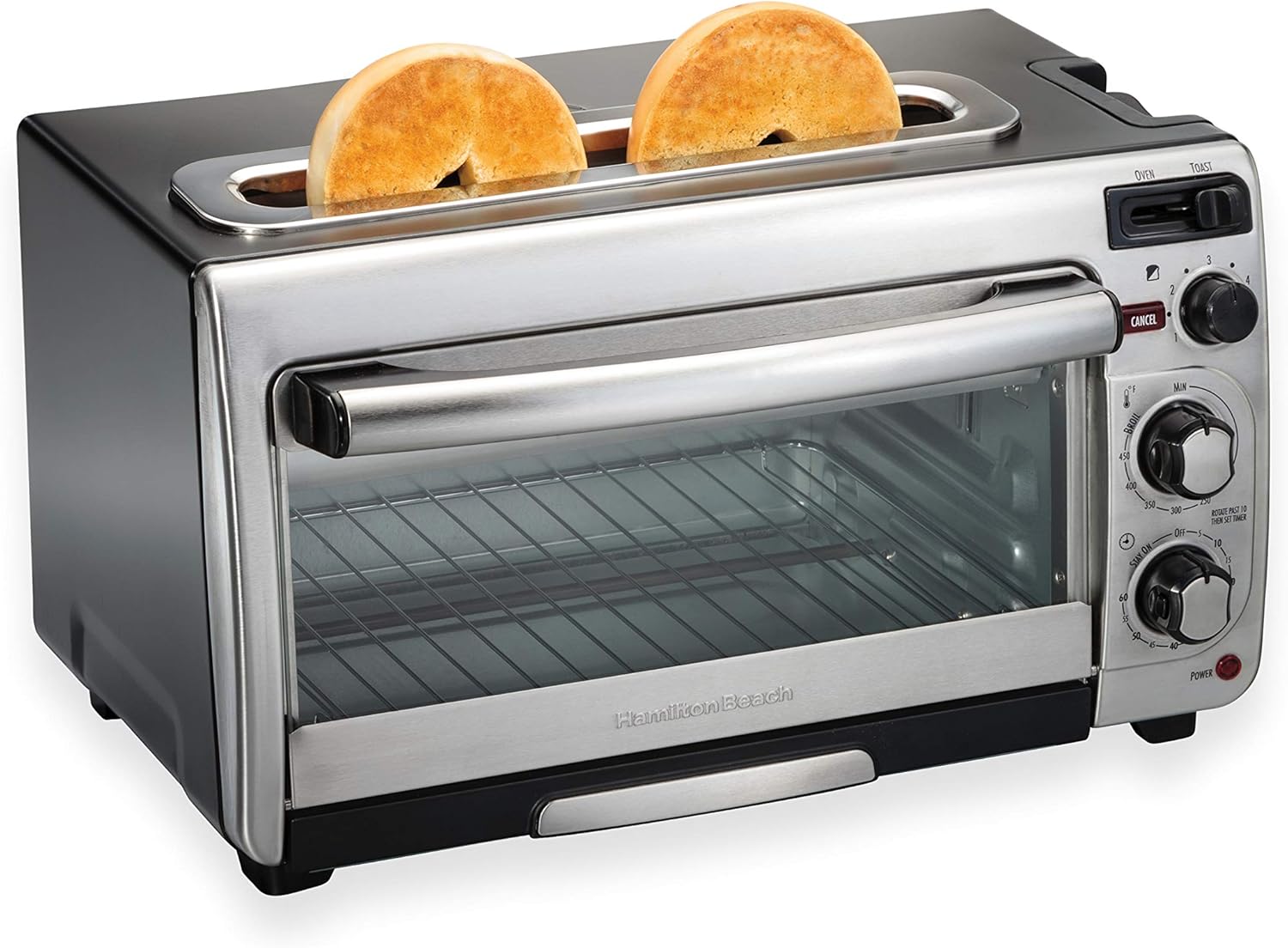
Hamilton Beach Countertop Ovens
Hamilton Beach sells a range of basic and larger countertop ovens. These models often target buyers who want simple operation at a lower price.
Consider this brand if you want:
- Manual controls.
- Basic cooking functions.
- A budget-focused option.
- A simple replacement for an older toaster oven.
Compare the exact dimensions, timer behavior, tray size, and warranty. The product line includes different designs and capacities.

How Much Should You Spend on a Toaster Oven?
A toaster oven can cost less than $50 or several hundred dollars in the United States. A higher price may reflect more capacity, stronger controls, added cooking modes, or better materials. It does not guarantee better results for every task.
Lower-Cost Models
Lower-cost models often have:
- Manual controls.
- Smaller interiors.
- Basic heating modes.
- Fewer accessories.
- Shorter or more limited warranties.
They can work well for toast and occasional reheating. They may be less suitable for frequent baking or large meals.
Mid-Range Models
Mid-range models often offer the best balance for many households. They may include:
- Convection.
- Digital timing.
- More rack positions.
- Larger trays.
- Air-fry functions.
- Better temperature control.
This range is often practical for people who use a toaster oven several times each week.
Premium Models
Premium models may include:
- Larger interiors.
- Advanced presets.
- Better displays.
- Multiple heating modes.
- Smart features.
- More accessories.
Buy a premium model only when you will use its capacity or controls. Extra presets have little value if you mainly toast bread.
Also consider the cost of replacement trays, air-fry baskets, and extended warranties. A missing or damaged accessory can make a specialized model less useful.
Toaster Oven vs. Air Fryer
A toaster oven air fryer and a basket air fryer use similar principles, but they suit different needs.
Choose a basket air fryer if you want:
- Fast cooking for small portions.
- A compact cooking chamber.
- Strong airflow around a small amount of food.
- Easy access to the basket.
Choose a toaster oven air fryer if you want:
- More horizontal cooking space.
- Toasting and baking in the same appliance.
- Room for pizza or a small baking dish.
- Multiple rack positions.
- A wider range of cooking tasks.
A basket air fryer may cook a small batch faster. A toaster oven air fryer may be more useful as an all-purpose appliance. The better choice depends on whether speed or flexibility matters more.
Toaster Oven vs. Microwave
These appliances solve different problems.
A microwave is usually better for:
- Heating liquids.
- Reheating rice and pasta.
- Warming leftovers quickly.
- Defrosting food under an appropriate setting.
- Heating moist foods.
A toaster oven is usually better for:
- Crisping food.
- Browning cheese.
- Toasting bread.
- Reheating pizza.
- Baking and broiling.
- Roasting small portions.
Many kitchens benefit from both. If you can buy only one, choose based on the foods you reheat most often.
How to Use a Toaster Oven Safely
A toaster oven can cause burns or fire if used incorrectly. Follow the product manual and local electrical guidance.
Place It Correctly
Set the oven on a stable, heat-resistant surface. Keep the required clearance from walls, cabinets, curtains, paper, and other items.
Do not use the oven:
- Inside a closed cabinet.
- Under a low cabinet without the required clearance.
- Near a sink where water may splash.
- On an unstable or covered surface.
- With blocked ventilation openings.
Use Suitable Cookware
Use pans and dishes rated for oven use. Avoid materials that can melt, crack, or ignite.
Do not place these items inside unless the manual specifically permits them:
- Plastic containers.
- Paper packaging.
- Wax paper.
- Non-oven-safe glass.
- Oversized dishes that touch the heating elements.
- Loose foil that can move into the elements.
Avoid Overfilling
Food should not touch the heating elements or block major airflow paths. Overfilling can cause uneven cooking and increase the chance of grease reaching hot surfaces.
Use the supplied tray or a pan that fits securely. Keep the door closed during cooking unless the recipe requires a brief check.
Clean Crumbs and Grease
Unplug the oven and let it cool before cleaning. Remove crumbs often. Grease buildup can smoke or ignite.
Never pour water into the oven. Do not clean heating elements while they are hot. Follow the manual for rack, tray, and interior cleaning.
Follow Food-Safety Rules
The U.S. Department of Agriculture recommends checking the internal temperature of foods with a food thermometer rather than judging doneness by color alone. Safe cooking temperatures vary by food.
A toaster oven can cook food safely when the oven reaches the required temperature and the food reaches its safe internal temperature. A cooking timer alone does not prove that meat, poultry, seafood, or leftovers are safe.

Common Toaster Oven Mistakes
Several mistakes cause poor results or shorten the appliance’s life.
Buying Without Measuring
A large toaster oven may not fit under your cabinets or leave enough room for ventilation. Measure before ordering.
Trusting Presets Without Checking the Food
Presets are starting points. Food size, moisture, starting temperature, pan type, and rack position all affect cooking.
Overcrowding the Rack
Crowded food blocks airflow. Leave space around items when you want browning or crisping.
Using the Wrong Rack Position
Food placed too close to the top element may burn before the center cooks. Use the manual’s rack guidance.
Ignoring Preheating
Some foods need a fully heated oven for proper texture. If a recipe gives a preheat instruction, follow it.
Covering the Tray With Loose Foil
Loose foil can move toward the heating elements. It can also change airflow and reflect heat. Use foil only as the manual allows.
Leaving the Oven Unattended
Do not leave cooking food unattended for long periods. Turn the oven off when finished and unplug it if the manual recommends unplugging after use.
Choosing Too Many Features
A model with many modes may be harder to use and clean. Buy the functions that match your real cooking habits.

How to Maintain a Toaster Oven
Simple care can improve performance and reduce fire risk.
- Unplug the oven and let it cool.
- Remove the rack, tray, and basket.
- Brush or wipe out crumbs.
- Wash removable parts as the manual permits.
- Wipe the interior with a damp cloth.
- Clean grease before it becomes baked on.
- Keep heating elements dry.
- Check the cord and plug for damage.
- Confirm that vents are not blocked.
- Replace damaged parts with approved parts when available.
Do not use harsh cleaners unless the manufacturer permits them. Avoid scraping coatings with sharp tools.
If the oven produces unusual smoke, sparks, burning odors, or repeated electrical trips, stop using it. Unplug it if safe to do so and contact the manufacturer or a qualified appliance technician.
How to Choose the Best Toaster Oven for Your Home
Use this short process before buying.
Step 1: List Your Main Foods
Write down the five foods you expect to cook most often. Include toast, pizza, vegetables, chicken, frozen snacks, or baked goods.
Step 2: Measure Your Space
Record width, depth, height, and the room needed to open the door. Include clearance around vents.
Step 3: Measure Your Cookware
Check the size of your pizza, baking dish, pan, and roasting tray. Compare those measurements with the oven’s usable interior.
Step 4: Pick the Necessary Functions
Choose convection if you bake or roast. Choose air frying if you often cook crisp foods. Skip smart features if you do not need app control.
Step 5: Check Cleaning and Safety Details
Look for a crumb tray, clear instructions, automatic shutoff, and easy access to grease-prone parts.
Step 6: Compare the Warranty and Parts
Check warranty length, replacement trays, basket availability, and customer support in the United States.
Step 7: Read the Manual Before Purchase
The manual can reveal limits that product pages may not highlight. Check cookware rules, clearance, cleaning, rack positions, and electrical requirements.
Frequently Asked Questions
What is the best toaster oven for everyday use?
A mid-size convection toaster oven is the best general choice for many households. It can toast, reheat, bake, and roast while using less space than a full-size oven. Choose a larger model if you cook for several people or use large pans.
Is a toaster oven better than a regular toaster?
A toaster oven is more versatile because it can hold pans and cook many types of food. A regular pop-up toaster is often faster and simpler for making several slices of toast. Choose a toaster oven when you need more than toast.
Are toaster ovens safe to use under kitchen cabinets?
They can be safe only when the manufacturer’s required clearance is met. Heat and steam can damage cabinets, and blocked vents can create a hazard. Check the manual and never operate the oven in a closed cabinet.
Can you put aluminum foil in a toaster oven?
Only use aluminum foil if the manual permits it and explains how to place it. Loose foil can touch heating elements, block airflow, or reflect heat. Never use foil as a full interior liner unless the manufacturer specifically approves that use.
Does a toaster oven use less electricity than a full-size oven?
A toaster oven may use less energy for small meals because it heats a smaller space. The actual difference depends on cooking time, temperature, food size, and appliance efficiency. A toaster oven is most useful when the full-size oven would be largely empty.
Can a toaster oven replace an air fryer?
A toaster oven with an air-fry mode can replace a small air fryer for some users. A dedicated basket air fryer may cook small portions faster because its chamber and airflow are more concentrated. The toaster oven offers more cooking functions and often more horizontal space.
Key Takeaways
- The best toaster oven depends on your food, space, budget, and cooking habits.
- A mid-size convection model is the strongest all-purpose choice for many U.S. homes.
- Choose an air-fryer toaster oven for crisp foods and larger cooking space.
- Measure the oven and your cookware before buying.
- A removable crumb tray, automatic shutoff, clear controls, and safe ventilation matter more than a long list of presets.
- Follow the manual for placement, foil use, cookware, cleaning, and rack position.
- Use a food thermometer for meat, poultry, seafood, and leftovers.
Conclusion
For most U.S. buyers, the best toaster oven is a mid-size convection model with a removable crumb tray, automatic shutoff, clear controls, and enough room for the pans you already use.
Choose a compact model for toast and light reheating. Choose a large air-fryer model for crisp food and family portions. Choose a premium digital oven only when its size, controls, or cooking modes solve a real need.
Before you buy, measure your counter, check the interior capacity, read the safety instructions, and compare the exact model number. A well-matched toaster oven can handle daily meals without taking over your kitchen.