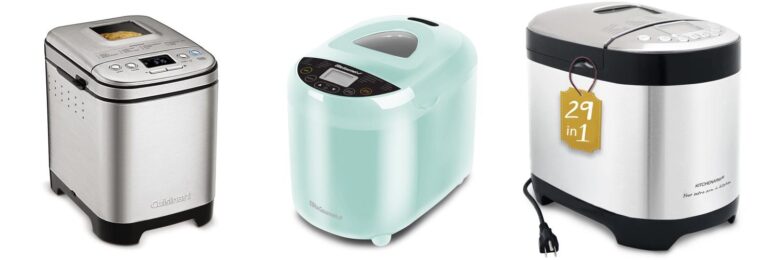
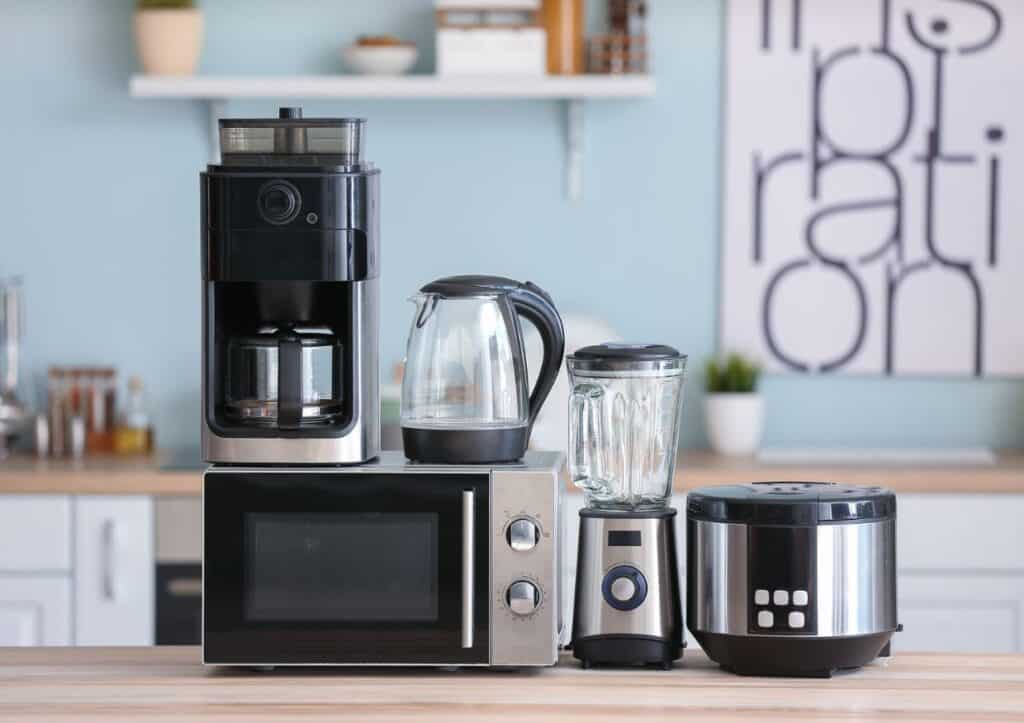
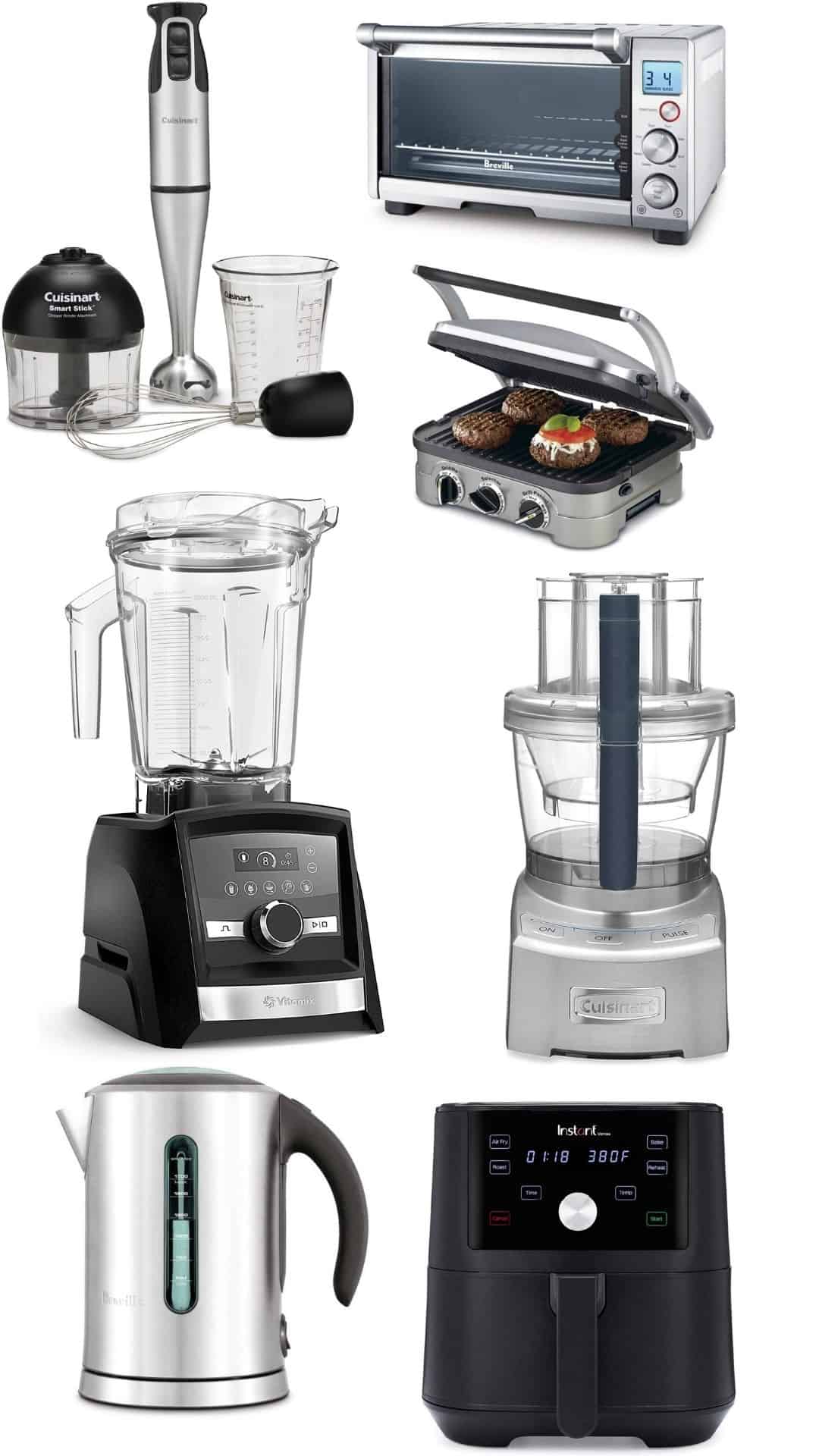
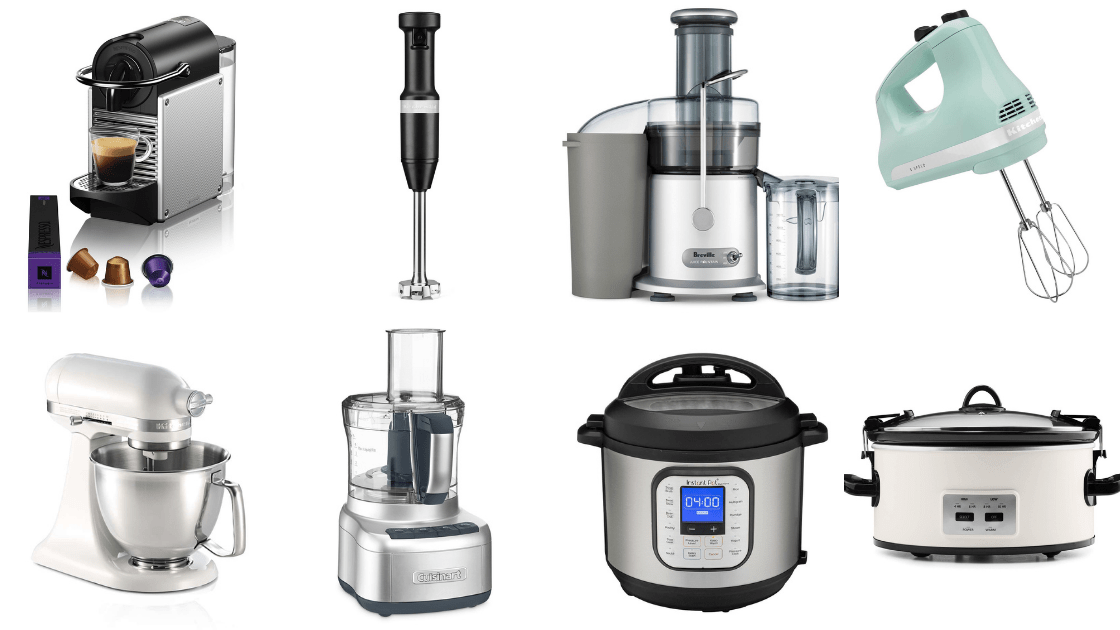
In U.S. homes, small kitchen appliances are compact, usually portable electric devices that help with cooking, food preparation, heating, or cleaning. They sit on a counter, shelf, or table rather than being built into the kitchen. Common examples include toasters, blenders, coffee makers, air fryers, slow cookers, rice cookers, electric kettles, and stand mixers.
Unlike major appliances such as refrigerators, ranges, dishwashers, and wall ovens, small kitchen appliances are easier to move, store, replace, and use for one specific task. Some plug into a standard U.S. household outlet, while others use rechargeable batteries.
What counts as a small kitchen appliance?
A small kitchen appliance usually has three traits: it is compact, movable, and designed for a focused kitchen task. The term describes a product category, not one exact size or power level.
Most small kitchen appliances are designed for countertop use. Some remain plugged in during use, while others may stay stored in a cabinet until needed.
Common small kitchen appliance examples
| Appliance type | Common examples | Main use |
|---|---|---|
| Beverage appliances | Coffee maker, espresso machine, electric kettle | Heating or making drinks |
| Cooking appliances | Toaster oven, air fryer, slow cooker, rice cooker | Cooking or reheating food |
| Food preparation appliances | Blender, food processor, mixer, chopper | Cutting, blending, mixing, or pureeing |
| Specialty appliances | Waffle maker, panini press, ice maker | Preparing a specific food |
| Preservation appliances | Vacuum sealer, dehydrator | Storing or drying food |
| Cleaning appliances | Compact countertop dishwasher | Washing dishes in limited spaces |
A hand mixer and a stand mixer are both small kitchen appliances, even though the stand mixer is heavier and takes up more counter space. A countertop microwave may also fit the broad category because it is portable and not built into the kitchen structure.
However, industry definitions can vary. A retailer may group countertop microwaves with major appliances, while another may list them under small appliances. When the category is unclear, the key question is whether the device is portable and countertop-based, rather than permanently installed.
Small appliances vs. major kitchen appliances
The main difference is installation and scale.
Major appliances are larger systems that often stay in one place. They may require a dedicated space, water line, gas line, drain, ventilation, or professional installation. Examples include:
- Refrigerators
- Freestanding or built-in ranges
- Wall ovens
- Dishwashers
- Range hoods
- Garbage disposals
Small appliances usually need only a countertop, storage space, and an electrical outlet. Many can be carried by one person and used without changing the kitchen structure.
The distinction is useful when planning a kitchen, moving into a rental, or choosing equipment for a small home. A renter may add an air fryer or coffee maker without changing the property. A built-in oven usually involves installation, measurements, and landlord or contractor approval.
Size alone does not settle the question. A large stand mixer can be heavier than a compact microwave, yet both may still be called small appliances because they are portable and not part of the kitchen’s fixed structure.
What do small kitchen appliances do?
Small kitchen appliances reduce the work needed for common food tasks. They do this by applying heat, motion, pressure, or controlled timing.
Heating and cooking
Toasters, toaster ovens, air fryers, slow cookers, rice cookers, and electric kettles use electric heating elements. Their designs differ based on how they transfer heat.
- A toaster heats bread with radiant heat.
- A toaster oven heats food in a small enclosed chamber.
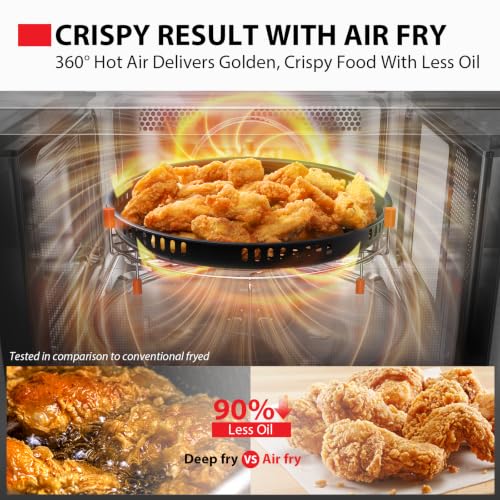
- An air fryer circulates hot air around food.
- A slow cooker applies low, steady heat over a longer period.
- A rice cooker uses heat and timing controls to cook rice.
- An electric kettle heats water in a dedicated container.
These appliances can make a task faster or more convenient, but they do not all replace a full oven or stovetop. Capacity, temperature range, cooking time, and food type affect the result.
Cutting, blending, and mixing
Blenders, food processors, choppers, and mixers use motor-driven parts.
- A blender is suited to liquids, smoothies, sauces, and purees.
- A food processor is useful for slicing, shredding, chopping, and mixing thicker foods.
- A chopper handles smaller amounts of food with less setup.
- A stand mixer mixes dough and batter with a fixed bowl.
- A hand mixer is lighter and easier to store but usually requires the user to guide it.
The motor does not determine every result. Blade shape, bowl design, speed control, liquid level, and batch size also matter. Overfilling a container can lead to uneven processing or place excess strain on the motor.
Brewing and beverage preparation
Coffee makers, espresso machines, electric kettles, and personal drink blenders are beverage appliances. Their features can differ greatly.
For example, a drip coffee maker uses heated water and a filter. An espresso machine forces hot water through finely ground coffee under pressure. An electric kettle is designed mainly to heat water and may include automatic shutoff features.
The best choice depends on the drink, serving size, preparation time, and cleaning work. A single-cup brewer may save time for one person but create more packaging waste if it uses disposable pods.
Food storage and preservation
Vacuum sealers and dehydrators support food storage. A vacuum sealer removes air from a specially designed bag before sealing it. A dehydrator removes moisture with controlled airflow and heat.
Neither device makes unsafe food safe. Perishable food still needs proper cooking, cooling, refrigeration, and handling. Follow guidance from the U.S. Department of Agriculture for storage times and temperature control.

Benefits and limits of small kitchen appliances
Small kitchen appliances can solve practical problems, but each one adds cost, storage needs, cleaning work, and another electrical device to manage.
Benefits
Small appliances may help you:
- Prepare food without using a full-size oven
- Cook small portions with less setup
- Save counter space compared with a full appliance
- Add a useful function to a rental kitchen
- Support special diets or cooking routines
- Prepare food with simple controls
- Move equipment between storage and the counter
- Cook while another appliance is in use
They can be helpful in apartments, dorms where permitted, offices, recreational vehicles, and homes with limited kitchen space.
Limits
Small appliances also have important limits:
- Small capacity may require several batches.
- Some appliances perform only one narrow task.
- Motors and heating parts can wear out.
- Removable parts may take time to wash and dry.
- Countertop clutter can become a daily problem.
- Multiple high-wattage appliances can overload a circuit.
- Some models are difficult or costly to repair.
- A device may use more energy than expected if it runs for a long time.
A simple appliance is not always the most practical appliance. A tool used every day may justify its counter space. A specialty device used twice a year may be better stored away or skipped.
How to choose small kitchen appliances
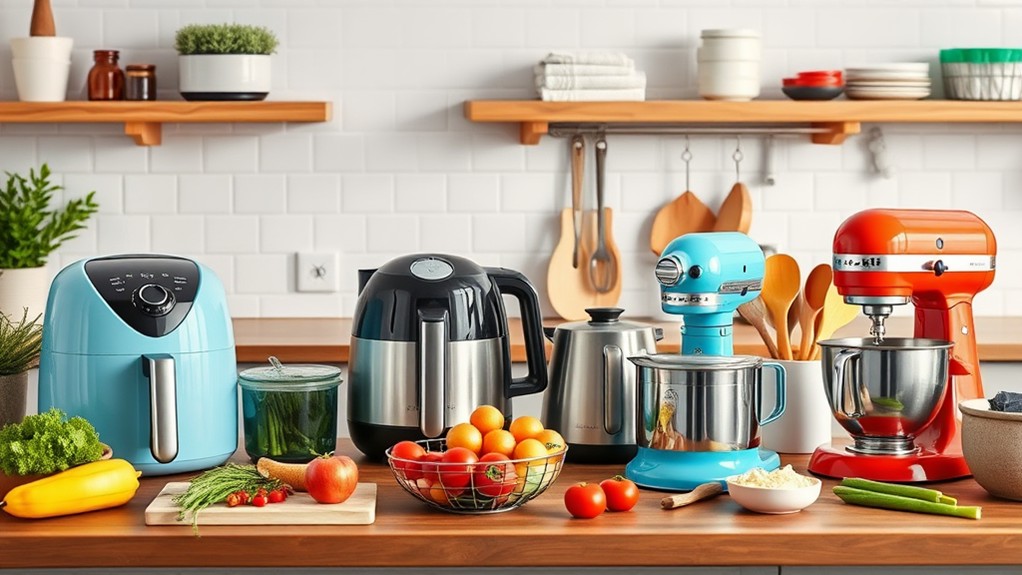
Choose an appliance based on the task you repeat, not the feature list alone. Start with your cooking habits and available space.
1. Identify the job
Write down the exact task. “Make breakfast” is broad. “Toast two slices every morning” points to a toaster. “Prepare soup, smoothies, and sauces” may point to a blender.
Ask:
- What food will it prepare?
- How often will you use it?
- How many people will it serve?
- Do you need speed, capacity, or portability?
- Can an appliance you already own do the same job?
2. Measure your space
Measure the counter area where the appliance will operate. Then measure the storage area where it will go when not in use.
Check more than width and depth. Also consider:
- Height under cabinets
- Lid or door clearance
- Space needed for ventilation
- Cord location
- Room to remove a bowl, basket, or container
- Weight if you plan to store it overhead
Never block required vents. Heat-producing appliances need the clearances stated in the manual.
3. Check electrical needs
Most U.S. countertop appliances use a standard household outlet, but their power demands vary. Look at the product label or manual for voltage, wattage, and other requirements.
A useful estimate is:
Energy used in kilowatt-hours = watts ÷ 1,000 × hours used
For a hypothetical 1,500-watt appliance used for 20 minutes:
1,500 ÷ 1,000 × 0.33 hours = about 0.5 kilowatt-hours
Your actual cost depends on the electricity rate from your utility. This calculation estimates energy use; it does not show total cooking cost or performance.
Avoid using a power strip or extension cord unless the manufacturer specifically permits it and the cord is rated for the appliance. Do not plug several high-power heating appliances into one overloaded circuit.
4. Review cleaning and maintenance
A device that is hard to clean may get used less. Check whether the parts that touch food are removable and whether the manual allows them in a dishwasher.
Look for:
- Crevices that trap food
- Seals and gaskets
- Blades that need careful handling
- Filters that need replacement
- Nonstick surfaces that may scratch
- Parts that must dry fully before storage
Never place the motor base of a blender, mixer, or food processor in water unless the manual clearly allows it. Unplug the appliance before cleaning.
5. Check safety information
For U.S. products, look for a recognized testing mark, such as UL, ETL, or another mark from an accredited testing organization. A testing mark is not the same as a government endorsement, but it can indicate that the product was evaluated to applicable safety standards.
Read the manual before first use. Confirm:
- The appliance is rated for your electrical supply.
- The cord and plug are undamaged.
- The appliance has room for airflow.
- Hot surfaces and steam will not contact people or materials.
- Children cannot easily reach the controls.
- The product has not been recalled.
The U.S. Consumer Product Safety Commission provides a searchable recall database. Search the exact brand and model before buying a used appliance.

Small kitchen appliance safety tips
Use small kitchen appliances on a stable, dry surface and follow the manufacturer’s instructions. Basic precautions prevent many common problems.
Prevent burns and fires
- Keep towels, paper, curtains, and packaging away from heating appliances.
- Do not touch hot surfaces without protection.
- Open lids away from your face to reduce steam burns.
- Let heated appliances cool before storing them.
- Do not leave an operating appliance unattended when the manual warns against it.
- Keep air vents clear.
- Stop using a device with a damaged cord, burning smell, smoke, sparks, or unusual noise.
Use electricity safely
Water and electricity create a serious shock risk. Keep plugs, cords, and motor bases dry. Do not handle an electrical plug with wet hands.
Do not remove the grounding pin from a three-prong plug. Do not use a damaged outlet, loose adapter, or cord that becomes hot during normal use. If a breaker trips repeatedly, unplug the appliance and have the circuit checked by a qualified electrician.
Handle blades and pressure
Unplug blenders, food processors, and mixers before reaching near blades or moving parts. Removing a blade does not make it harmless; sharp edges can still cause cuts.
Pressure cookers and other sealed cooking devices require special care. Do not force a lid open. Follow the manual’s instructions for filling, pressure release, and cleaning the steam path. Keep children away from hot steam.
Follow food safety rules
Small appliances do not replace safe food handling. Use a food thermometer when needed, refrigerate perishable food promptly, and avoid leaving foods at unsafe temperatures.
For detailed guidance, use the USDA Food Safety and Inspection Service and the instructions supplied with the appliance.
Common mistakes when buying or using small appliances
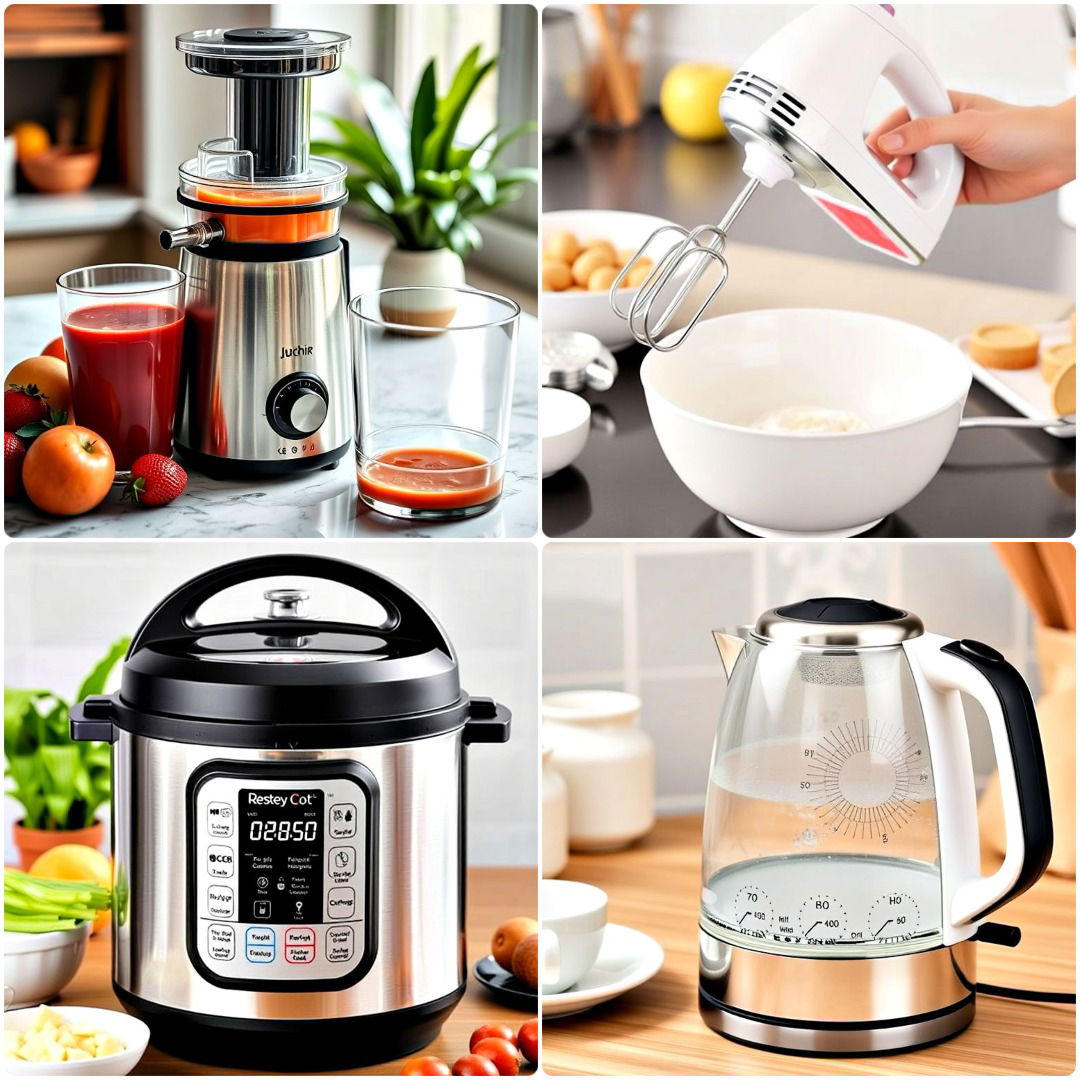
The most common mistake is buying for an imagined routine instead of a real one. A specialty appliance may look useful but sit unused if it creates extra cleaning or storage work.
Other mistakes include:
- Choosing capacity without checking cabinet or counter space
- Ignoring the appliance’s minimum and maximum batch size
- Assuming “dishwasher safe” applies to the whole product
- Using an extension cord with a high-wattage heater
- Placing a hot appliance under a cabinet
- Filling a blender or pressure cooker beyond its marked limit
- Storing an appliance before it is dry
- Buying a used device without checking recalls
- Treating an air fryer, toaster oven, or slow cooker as interchangeable
- Selecting features that add cost but do not solve a real problem
When an appliance performs poorly, check the simple causes first. Confirm that it has power, is assembled correctly, has the right amount of food or liquid, and is being used within the manual’s limits. If the cord, plug, housing, or controls show damage, stop troubleshooting and replace or professionally service the unit.

Frequently asked questions
Is a microwave a small kitchen appliance?
A countertop microwave is often treated as a small kitchen appliance because it is portable and sits on a counter. A built-in or over-the-range microwave is usually treated as a major or installed appliance because it is fixed in place and may connect to cabinetry or ventilation.
Are small kitchen appliances worth buying?
They can be worth buying when they solve a task you perform often and fit your space, budget, and cleaning routine. An appliance used daily may provide more value than a specialty appliance used only a few times each year.
What is the difference between a small appliance and a countertop appliance?
“Countertop appliance” describes where the product is used. “Small appliance” is a broader category that may include countertop devices and some portable tools, such as hand mixers or immersion blenders.
Can small kitchen appliances save energy?
Some may use less total energy than a larger oven for a small portion, but the result depends on the appliance, cooking time, batch size, and task. Compare actual wattage and operating time rather than assuming that every small appliance uses less energy.
How long do small kitchen appliances last?
Lifespan varies by design, use, maintenance, and repairability. A lightly used appliance may last for years, while a heavily used motor or heating element may wear sooner. Keep the manual, register the product if offered, and check warranty and recall information.
Key takeaways
- Small kitchen appliances are portable devices for cooking, preparation, beverages, storage, or cleaning.
- Common examples include toasters, blenders, coffee makers, air fryers, slow cookers, and mixers.
- The main difference from major appliances is that small appliances are usually countertop-based and do not require permanent installation.
- Choose by task, capacity, space, cleaning needs, electrical requirements, and safety features.
- Read the manual, keep hot appliances clear, and stop using any product with electrical or physical damage.
Conclusion
Small kitchen appliances make focused kitchen tasks easier without the installation and space demands of major appliances. The right choice depends on what you cook, how often you cook it, how much room you have, and how much cleaning you will accept.
Before buying, define the task, measure the space, check the electrical rating, review maintenance needs, and search for recalls. A practical appliance should fit your real routine—not just your wish list.