An electric skillet can cook far more than pancakes. In a U.S. kitchen, it can handle breakfast, burgers, stir-fry, pasta, chicken, fish, vegetables, and even dessert. Its wide pan and steady heat make it useful when you need extra cooking space or do not want to heat a full oven.
The best foods to cook in an electric skillet are meals that need even heat and one broad cooking surface. Start with eggs, grilled cheese, pancakes, bacon, burgers, chicken cutlets, fried rice, fajitas, and one-pan pasta. Adjust the heat to match the food, use a small amount of oil, and check meat with a food thermometer.

Why Use an Electric Skillet?
An electric skillet is a countertop pan with a built-in heating element and a temperature dial. It usually has straight sides, a large cooking area, and a lid. Unlike a stovetop pan, it does not need a burner.
This design gives you three useful benefits:
- More cooking space: A large skillet can cook several burgers, pancakes, or chicken pieces at once.
- Steady heat: The thermostat turns the heat on and off to hold the set temperature.
- One-pan cooking: You can brown, simmer, sauté, and sometimes bake in the same pan.
Electric skillets work well in small kitchens, RVs, dorms, and homes with limited stove space. They also help when the oven is full during a holiday meal.
Read the manual before use. Temperature marks, pan depth, lid design, and dishwasher instructions vary by model. Never place the heating base in water unless the manufacturer says it is safe.
The Best Foods to Cook in an Electric Skillet
The most useful electric skillet meals fall into four groups: quick breakfasts, browned foods, one-pan meals, and slow simmered dishes.
Breakfast Foods
An electric skillet gives breakfast food a broad, flat surface. Keep the heat moderate so food cooks without burning.
Good choices include:
- Scrambled eggs
- Fried eggs
- Omelets
- Bacon
- Sausage
- Hash browns
- Home fries
- French toast
- Pancakes
- Breakfast quesadillas
- Grilled breakfast sandwiches
For pancakes, set the skillet to about 350°F. Pour the batter only after the surface is hot. Flip when bubbles form and the edges look dry.
For bacon, start at a lower setting, around 300°F to 325°F. The fat will melt as the bacon warms. Turn the strips as needed, then drain them on paper towels. Keep grease away from the sink and let it cool before disposal.
Burgers, Sandwiches, and Other Griddle Foods
The wide surface works like a small indoor griddle. It is ideal for:
- Hamburgers
- Turkey burgers
- Cheesesteak sandwiches
- Grilled cheese
- Reuben sandwiches
- Chicken sandwiches
- Quesadillas
- Sloppy Joes
- Hot dogs
- Sausage and peppers
For burgers, preheat the skillet to about 350°F to 375°F. Add the patties once the surface is hot. Cook until the center reaches 160°F, the safe minimum temperature for ground meat, according to the USDA.
Do not press burgers again and again. Pressing pushes out moisture and can make the meat dry. Turn the patties once, if possible.
Chicken, Pork, and Fish
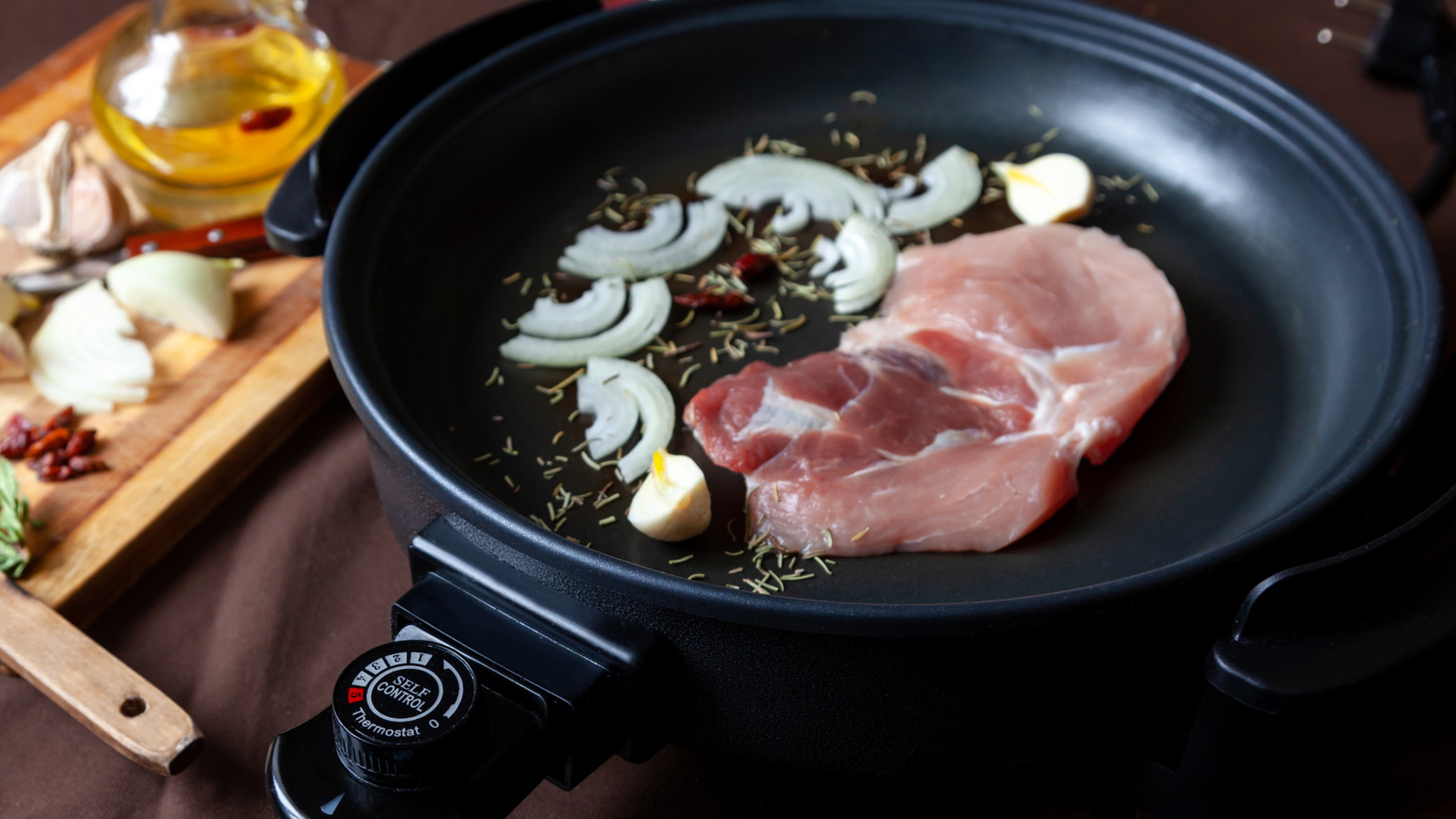
An electric skillet can brown and cook many smaller cuts of meat. Choose pieces of similar size so they finish at about the same time.
Try:
- Chicken breasts sliced into cutlets
– Boneless chicken thighs - Pork chops
- Pork tenderloin medallions
- Salmon fillets
- Tilapia
- Shrimp
- Scallops
- Breaded fish
- Chicken fajitas
For poultry, cook the thickest part to 165°F. For pork chops and whole cuts of beef, the USDA lists 145°F with a three-minute rest. Fish should reach 145°F, or the flesh should be opaque and separate easily with a fork. A food thermometer gives a more reliable result than color alone. See the USDA safe minimum internal temperature chart.
Vegetables and Side Dishes
The broad pan makes it easy to sauté vegetables without crowding them.
Good choices include:
- Green beans
- Zucchini
- Bell peppers
- Mushrooms
- Onions
- Broccoli
- Cabbage
- Corn
- Asparagus
- Brussels sprouts
- Potatoes
- Sweet potatoes
Use medium-high heat for browning. Add firm vegetables first and quick-cooking vegetables later. For example, cook potatoes and onions before adding zucchini or spinach.
One-Pan Meals
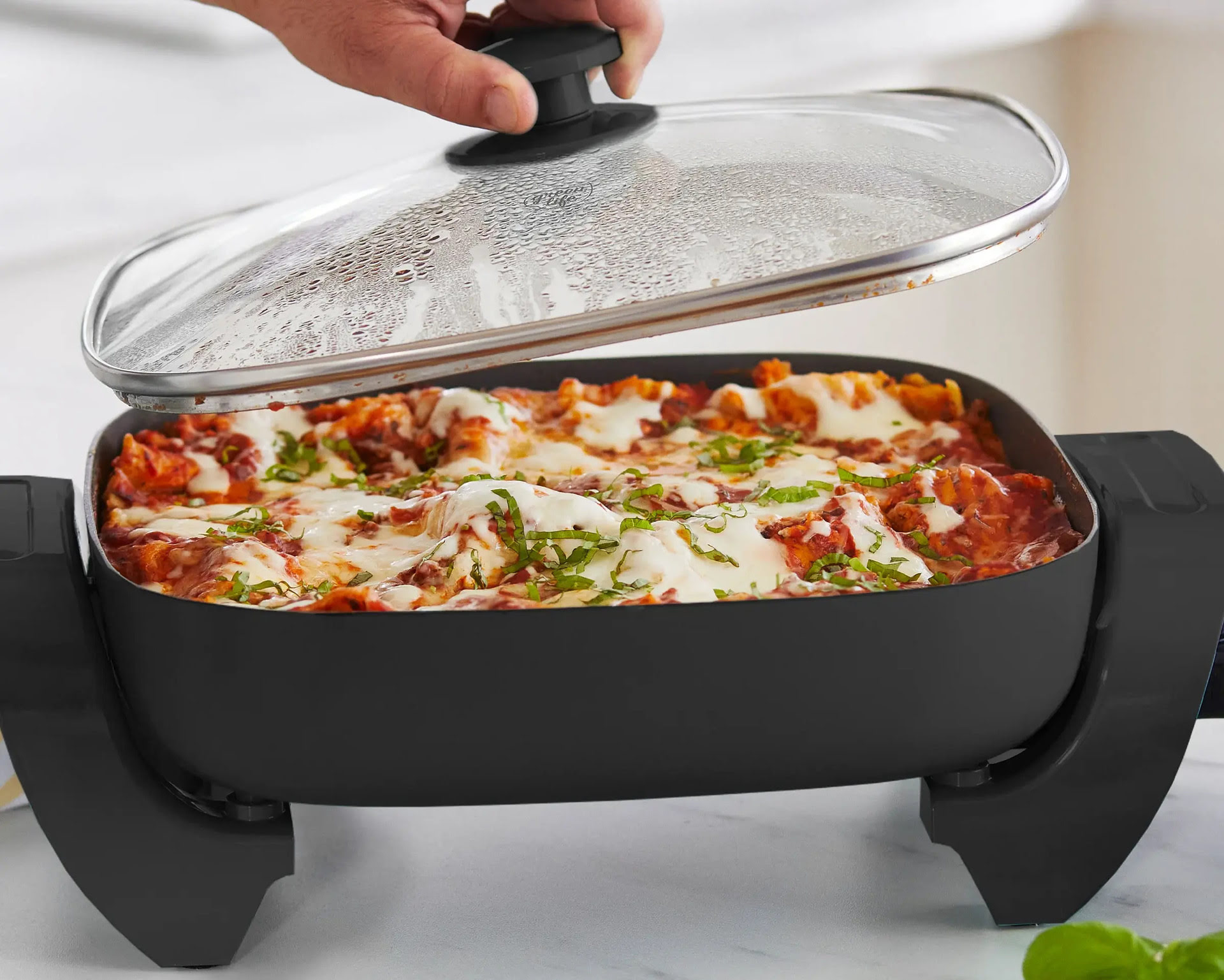
A deep electric skillet can replace a Dutch oven for many simple meals. Use the lid when the recipe needs trapped heat or steam.
Try:
- Chicken and rice
- Beef stroganoff
- Chili
- Goulash
- Taco pasta
- Sausage and cabbage
- Creamy chicken and noodles
- Shrimp and rice
- Vegetable curry
- Tuna noodle skillet
- Stuffed pepper skillet
- Lasagna-style pasta
Check the pan depth before adding liquid. A shallow skillet may not hold enough broth for a large batch.

Easy Electric Skillet Recipes
These recipes use common U.S. grocery store ingredients and basic skillet methods. Cooking times are estimates. The food thermometer, not the clock, decides when meat is done.
Chicken Fajita Skillet
Serves: 4
Heat: Medium-high, then medium
Ingredients
- 1 pound boneless, skinless chicken breasts, sliced thin
- 2 bell peppers, sliced
- 1 medium onion, sliced
- 1 tablespoon cooking oil
- 2 teaspoons chili powder
- 1 teaspoon ground cumin
- 1 teaspoon paprika
- 1/2 teaspoon garlic powder
- Salt and black pepper
- Flour or corn tortillas
- Lime wedges
Method
- Mix the chicken with the chili powder, cumin, paprika, garlic powder, salt, and pepper.
- Heat the electric skillet to about 375°F.
- Add the oil and cook the chicken in a single layer.
- Turn the chicken and cook until the thickest pieces reach 165°F.
- Move the chicken to a plate.
- Add the peppers and onion. Cook until tender and lightly browned.
- Return the chicken to the skillet and warm it with the vegetables.
- Serve in tortillas with lime.
Cook in batches if the pan looks crowded. Too much food at once can steam the chicken instead of browning it.
One-Pan Taco Pasta
Serves: 4 to 6
Heat: Medium
Ingredients
- 1 pound lean ground beef or turkey
- 1 small onion, chopped
- 2 tablespoons taco seasoning
- 1 can, 14 to 15 ounces, diced tomatoes
- 2 cups low-sodium broth
- 8 ounces short pasta
- 1 cup shredded cheddar cheese
- Optional: corn, black beans, sliced jalapeños, or salsa
Method
- Set the skillet to about 350°F.
- Brown the ground meat and onion. Break the meat into small pieces.
- Drain extra fat if needed.
- Stir in the taco seasoning, tomatoes, broth, and pasta.
- Bring the liquid to a gentle boil.
- Cover and reduce the heat to about 250°F to 300°F.
- Simmer until the pasta is tender. Stir every few minutes.
- Add more broth if the pan becomes dry before the pasta is done.
- Stir in the cheese and let it melt.
The meat should reach 160°F. The pasta should be tender, and little liquid should remain after the cheese is added.
Skillet Chicken and Rice
Serves: 4
Heat: Medium-high, then low
Ingredients
- 1 pound boneless chicken thighs or breast cutlets
- 1 tablespoon oil
- 1 small onion, chopped
- 1 cup long-grain white rice
- 2 cups chicken broth
- 1 cup frozen peas and carrots
- 1 teaspoon dried Italian seasoning
- Salt and pepper
Method
- Heat the skillet to about 375°F.
- Season the chicken and brown it in the oil.
- Remove the chicken.
- Cook the onion for 2 to 3 minutes.
- Stir in the rice, broth, vegetables, and seasoning.
- Place the chicken on top.
- Cover and reduce the heat to about 250°F.
- Cook until the rice is tender and the chicken reaches 165°F.
- Rest the dish for 5 minutes before serving.
Use long-grain white rice unless your recipe gives a different liquid amount. Brown rice needs more time and broth.
Electric Skillet Pancakes
Makes: About 12 pancakes
Heat: About 350°F
Ingredients
- 2 cups all-purpose flour
- 2 tablespoons sugar
- 1 tablespoon baking powder
- 1/2 teaspoon salt
- 2 large eggs
- 1 3/4 cups milk
- 1/4 cup melted butter or neutral oil
Method
- Mix the flour, sugar, baking powder, and salt.
- Whisk the eggs, milk, and melted butter in a second bowl.
- Stir the wet mix into the dry mix until just combined.
- Preheat the skillet to 350°F.
- Lightly grease the surface.
- Pour about 1/4 cup of batter for each pancake.
- Flip when bubbles form and the edges look set.
- Cook the second side until golden.
Do not flatten the pancakes with a spatula. This can make them dense.

Electric Skillet Temperature Guide
The correct setting depends on the food, the amount in the pan, and the skillet model. The numbers below are useful starting points, not exact rules for every appliance.
| Food or task | Starting temperature | What to look for |
|---|---|---|
| Melting butter or chocolate | 200°F to 250°F | Slow melting without scorching |
| Simmering sauce | 250°F to 300°F | Small bubbles, not a hard boil |
| Cooking eggs | 250°F to 300°F | Gentle setting without browning |
| Grilled cheese | 300°F to 325°F | Even golden bread |
| Pancakes | About 350°F | Bubbles and a set edge |
| Browning meat | 350°F to 400°F | Steady sizzling and browned surfaces |
| Stir-fry | 375°F to 400°F | Fast cooking with crisp edges |
| Deep-frying, if approved by the manual | Follow the recipe and manual | Stable oil temperature |
Use the thermostat as a guide, then watch the food. If oil smokes, the pan is too hot. Turn the heat down and move the pan from the base if needed.
A cold or crowded pan lowers the temperature. Add food in batches when you want browning. Cover the pan when you want food to soften or cook through.

How to Cook in an Electric Skillet
Follow this simple process for most electric skillet meals.
1. Read the manual
Check the maximum temperature, lid rules, oil limits, and cleaning instructions. Some models have removable pans. Others have a fixed heating base.
2. Place the skillet safely
Set it on a dry, level, heat-safe surface. Keep the cord away from the edge of the counter. Leave space around the appliance so heat can escape.
3. Preheat the pan
Allow the skillet to heat before adding food. Preheating helps meat brown and keeps pancakes from sticking. The time can range from a few minutes to longer, based on the model.
4. Add oil only when needed
Use enough oil to coat the surface lightly. Too much oil can make food greasy and may smoke at high heat.
5. Avoid crowding
Food needs room for moisture to escape. If pieces touch, they may steam instead of brown. Cook in batches when needed.
6. Adjust the heat
Lower the heat after browning if the food must simmer or cook through. Use the lid for rice, pasta, and thick meat cuts.
7. Check the center
Use an instant-read thermometer for meat, poultry, fish, and reheated dishes. Insert it into the thickest part without touching the pan.
8. Serve or cool food promptly
The USDA recommends keeping hot food at 140°F or above and refrigerating perishable leftovers within two hours, or within one hour when the air temperature is above 90°F. Review the USDA food safety basics for current guidance.

What Not to Cook in an Electric Skillet
An electric skillet is useful, but it has limits. Avoid foods and methods that exceed the pan's size, depth, or temperature rating.
Do not:
- Use a damaged cord or cracked pan.
- Operate the heating base near water.
- Submerge the electrical parts.
- Leave hot oil unattended.
- Fill the pan so high that liquid can spill into the controls.
- Use metal tools if the surface is nonstick.
- Cook frozen meat without allowing extra time and safe heat control.
- Assume the pan can deep-fry unless the manual allows it.
- Put the skillet in an oven unless the manufacturer clearly permits it.
- Use a lid that does not fit the pan.
For deep-frying, a dedicated fryer or heavy pot may provide better control. Never add water to hot oil. If oil catches fire, turn off the heat if you can do so safely, cover the pan with a metal lid, and never use water.
Common Electric Skillet Problems
Food sticks to the pan
Possible causes include a cold surface, too little fat, damaged coating, or turning food too soon.
Preheat the skillet, use a small amount of oil, and wait for food to release before turning it. Do not scrape a nonstick surface with a knife or metal spatula.
Food burns before it cooks through
The heat may be too high, the food may be too thick, or the pan may be crowded.
Brown the food first, then lower the heat and cover the pan. Cut thick pieces into smaller portions. Check the center with a thermometer.
Food looks pale and wet
The pan may be crowded or the food may contain too much moisture.
Cook smaller batches. Pat meat and vegetables dry before cooking. Remove the lid when you want moisture to escape.
Rice or pasta stays hard
The pan may not hold a steady simmer, or the liquid may have evaporated too soon.
Add a little hot broth or water, cover the skillet, and continue cooking at a gentle heat. If the bottom is burning, move the food to a clean pan and lower the setting.
The skillet shuts off
Many electric skillets cycle on and off to control temperature. That is normal. If the pan loses heat completely, check the plug, outlet, cord, and temperature control. Stop using the appliance if the cord is hot, damaged, or smells like burnt plastic.

Cleaning and Storage
Let the skillet cool before cleaning it. A sudden splash of cold water on a hot pan can damage the surface.
For most models:
- Unplug the skillet.
- Remove the temperature control if the manual says to do so.
- Wipe away grease with a paper towel.
- Wash the pan with warm water, mild dish soap, and a soft sponge.
- Dry the pan fully before storage.
- Store the cord and control where they will not bend or get wet.
Do not use steel wool on a nonstick coating. Do not pour grease down the drain. Let it cool, place it in a sealed container, and discard it according to local rules.
Frequently Asked Questions
Can I cook raw meat in an electric skillet?
Yes. An electric skillet can cook beef, pork, poultry, fish, and seafood. Brown the meat, control the heat, and use a thermometer to confirm the safe internal temperature.
Can I boil water in an electric skillet?
Many skillets can heat water, but a deep pot or saucepan is usually faster and safer for large amounts. Check the manual before boiling a large volume.
Can I bake in an electric skillet?
Some covered electric skillets can cook foods that are normally baked, such as cornbread, cobbler, or a frittata. Results depend on the lid, pan depth, and temperature range. Follow a recipe made for an electric skillet rather than assuming oven instructions will transfer exactly.
Can I use aluminum foil in an electric skillet?
Use foil only if the manufacturer allows it. Foil can block heat, scratch a nonstick surface, or touch electrical parts if used incorrectly.
What is the easiest meal to make in an electric skillet?
Pancakes, grilled cheese, burgers, fajitas, and taco pasta are among the easiest choices. They need few ingredients and do not require complex temperature control.
Final Takeaway
The best things to cook in an electric skillet are foods that benefit from a wide pan and steady heat. Start with pancakes, eggs, burgers, grilled sandwiches, chicken fajitas, stir-fried vegetables, taco pasta, and chicken with rice.
Use medium heat for eggs and sandwiches, higher heat for browning, and lower heat for covered meals. Keep food in a single layer when possible, avoid unsafe oil practices, and check meat with a thermometer. With those habits, an electric skillet can serve as a griddle, sauté pan, simmer pot, and practical backup cooker in a U.S. home kitchen.