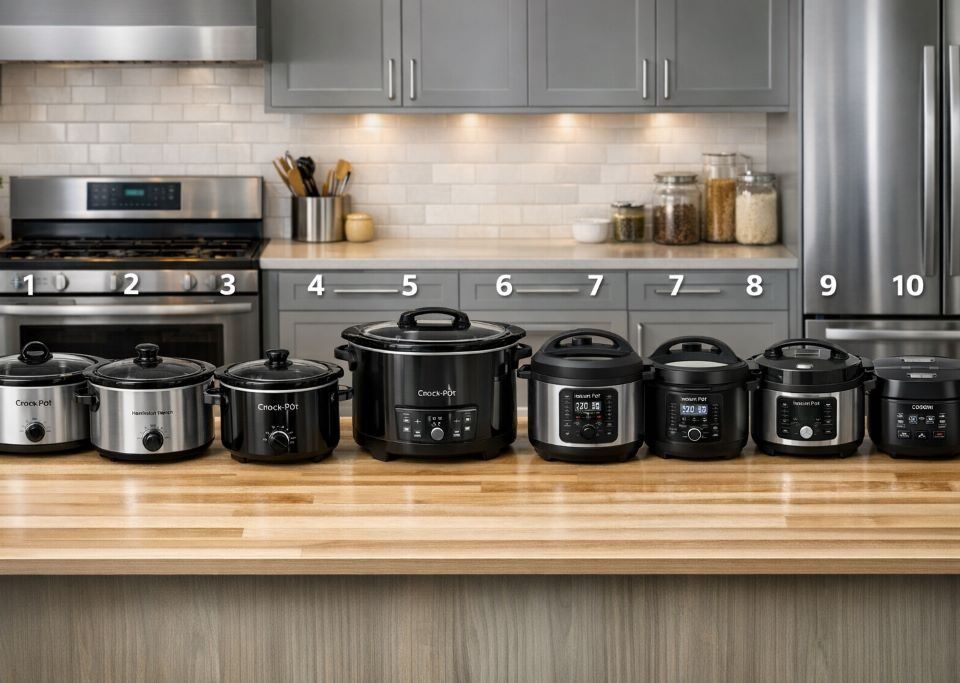
The average slow cooker size in the United States is about 6 quarts. A 6-quart slow cooker is a common household size because it can make a meal for about four to six people and still fit many popular recipes.
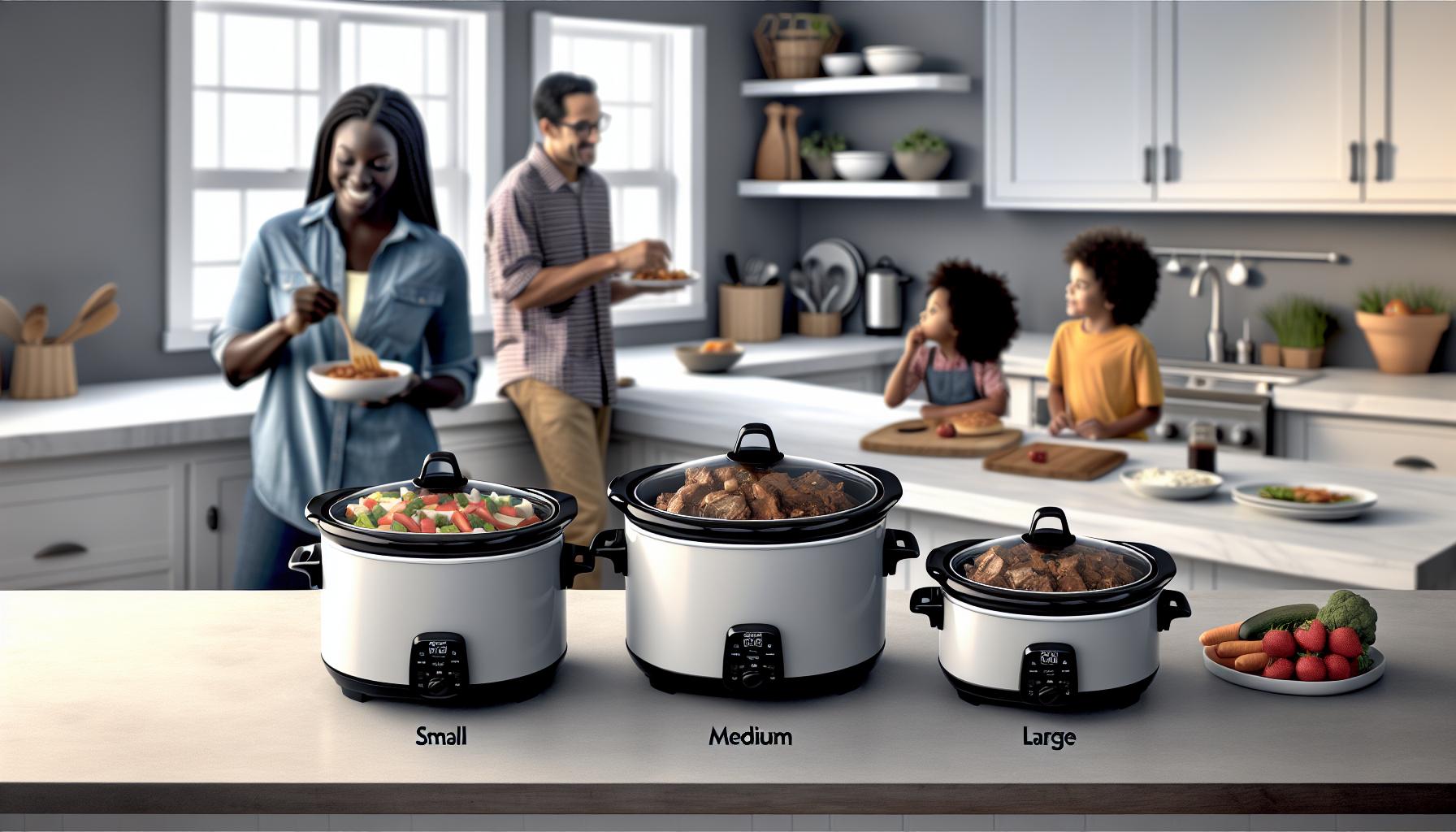
Slow cookers sold in the U.S. usually range from 1.5 to 10 quarts. Small models suit one or two people. Large models work better for families, meal prep, and parties.
The best size depends on more than the number on the box. You also need to consider serving size, food shape, storage space, and the cooker’s outside measurements.

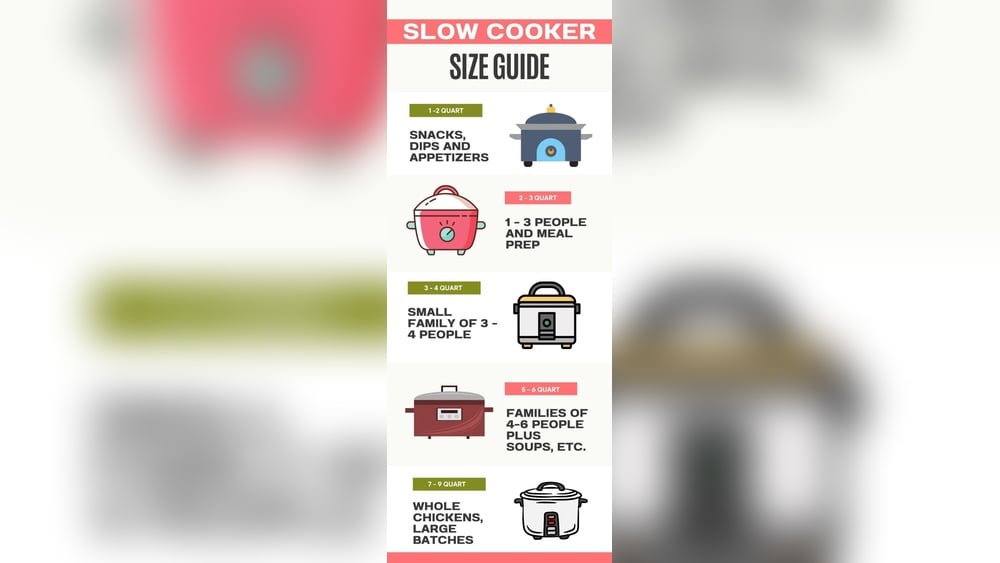
Slow Cooker Sizes at a Glance
Slow cooker capacity is measured in U.S. liquid quarts. One U.S. quart equals four U.S. cups, so a 6-quart cooker has a listed capacity of 24 cups.
That number describes the full inner pot. You should not fill a slow cooker to the rim. Most manufacturers advise filling the pot about one-half to two-thirds full for best cooking results. Follow the instructions for your exact model.
| Slow cooker size | Listed capacity | Typical use | Approximate servings |
|---|---|---|---|
| 1.5–2 quarts | 6–8 cups | Dips, sauces, one or two small servings | 1–2 people |
| 3–4 quarts | 12–16 cups | Couples, small meals, side dishes | 2–4 people |
| 5 quarts | 20 cups | Small families and modest roasts | 3–5 people |
| 6 quarts | 24 cups | General family cooking | 4–6 people |
| 7 quarts | 28 cups | Larger families and meal prep | 5–8 people |
| 8–10 quarts | 32–40 cups | Large roasts, batch cooking, gatherings | 8 or more people |
These serving estimates are guides, not fixed rules. A stew may provide more servings than a roast. A meal with rice, bread, or other sides may stretch farther.
Why 6 quarts is often called the average
“Average size” does not always mean a mathematical average of every slow cooker sold. Brands offer different product ranges, and sales data may not use the same size categories.
In everyday U.S. shopping, 6 quarts is the practical middle size. It is large enough for many family recipes but smaller than the extra-large models made for parties or batch cooking.
A 6-quart cooker is also common in recipes that call for:
- A whole chicken
- A medium pot roast
- Chili for a family
- Pulled pork
- Soup or stew
- Several portions for leftovers
How Big Is a 6-Quart Slow Cooker?
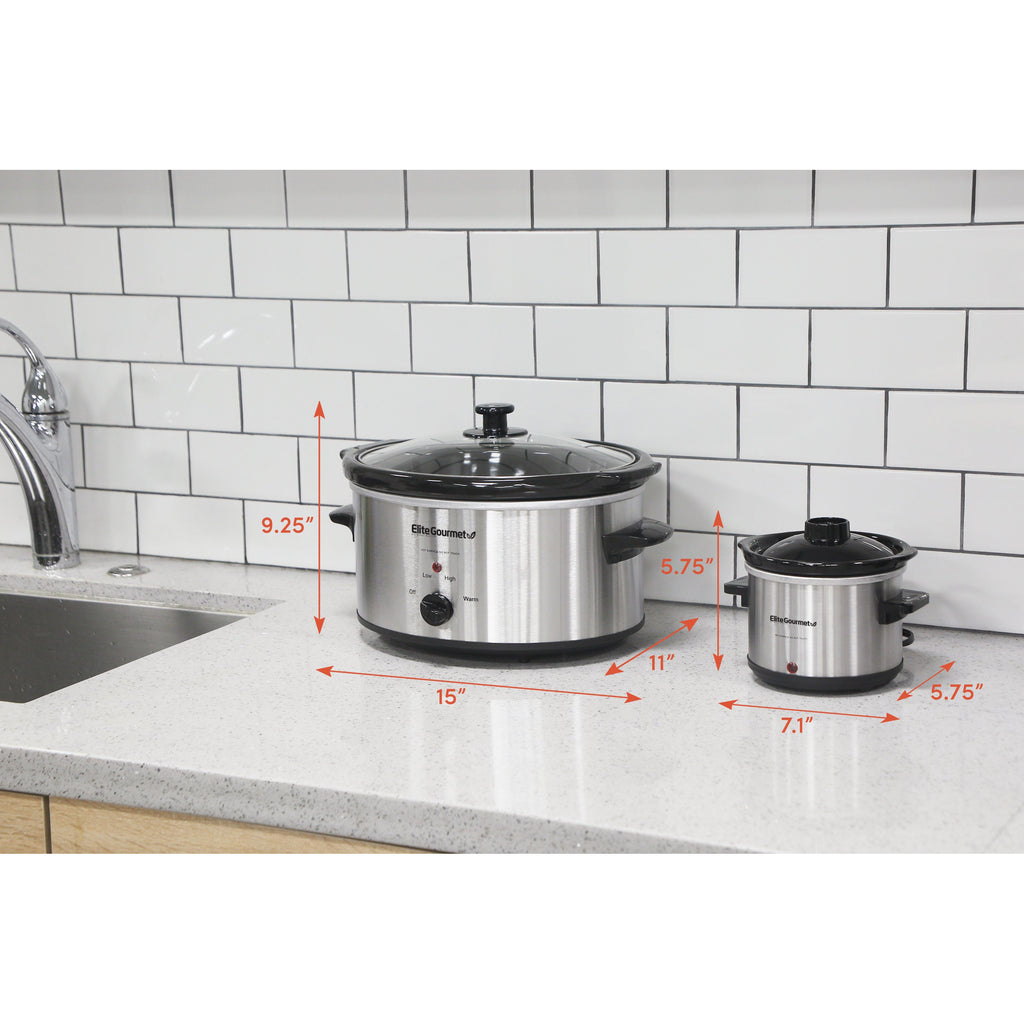
A 6-quart slow cooker usually has an outside footprint of roughly 12 to 16 inches wide and 10 to 14 inches deep. Height often falls near 10 to 14 inches, including the lid and handles.
These measurements vary by brand and shape. A round cooker may use less counter space from front to back. An oval cooker may be longer but better suited to roasts and whole poultry.
The inner pot is often smaller than the outside housing suggests. The housing contains the heating element, controls, handles, and insulation.
Nominal capacity versus usable capacity
A 6-quart label refers to the pot’s full volume. It does not mean you should add 6 quarts of food.
If you use a two-thirds fill level:
- 6 quarts × two-thirds = about 4 quarts of food
- 4 quarts × four cups = about 16 cups of food
this is a simple capacity estimate. Solid foods do not always stack neatly, and liquid expands or moves as ingredients cook.
Leave room for safe heat circulation. Overfilling can slow cooking and may cause liquid to spill. Underfilling can also affect cooking because the food may heat too quickly or dry out.
Why shape matters
Two slow cookers can have the same listed capacity but different cooking spaces.
An oval 6-quart model may hold a long roast more easily than a tall, round model. A round pot may work well for soups, beans, and sauces.
Consider the food you cook most often:
- Choose an oval shape for brisket, pork shoulder, chicken, or long cuts of meat.
- Choose a round shape for soups, dips, beans, and smaller portions.
- Check the inner pot’s length if you often cook large cuts.

What Slow Cooker Size Do You Need?
Choose a 6-quart slow cooker if you want one flexible cooker for typical U.S. family meals. Choose a smaller or larger model when your household or recipes call for it.
Use this guide as a starting point:
For one or two people
A 1.5- to 3-quart slow cooker may be enough. It works well for:
- Small batches of soup
- Dips
- Oatmeal
- Side dishes
- Two servings with limited leftovers
A small cooker takes up less space and may be easier to store. It may not fit a large roast or a full recipe written for a 6-quart model.
For three to four people
A 4- to 5-quart slow cooker often fits this household size. It can make a family meal without taking up as much room as a larger cooker.
This range is useful for smaller roasts, chili, chicken dishes, and stews. Check recipe instructions before reducing ingredient amounts.
For four to six people
A 6-quart slow cooker is usually the most versatile choice. It gives you room for a main dish and leftovers without moving into the bulk of an extra-large model.
It is also a common size for recipes found in U.S. cookbooks and food sites. Still, compare the recipe’s stated cooker size with your model.
For seven or more people
Consider a 7- to 10-quart slow cooker. These sizes suit large roasts, holiday meals, sports gatherings, and batch cooking.
Large models need more storage space and may be heavy when full. A large pot can also be inconvenient when you are cooking a small meal. Do not buy extra capacity unless you will use it.
How Many Quarts Do You Need for a Roast?
A 5- to 6-quart slow cooker is often suitable for a medium family roast. A larger roast may need a 7- to 8-quart cooker, but the roast must still fit with space around it.
The lid should close fully. Do not force a large cut into the pot or lift the lid with food pressing against it.
Use the shape of the roast as well as its weight. A long cut may fit better in an oval cooker. A tall cut may need more vertical space.
For reliable results:
- Check the recipe’s recommended slow cooker size.
- Make sure the meat sits below the lid.
- Keep the cooker within the manufacturer’s fill range.
- Use a food thermometer to check doneness.
- Follow USDA guidance for safe handling and cooking of meat.
Slow cookers cook at low heat over a long period. They are not a substitute for checking food safety by temperature.
Can You Use a Different-Size Slow Cooker for a Recipe?
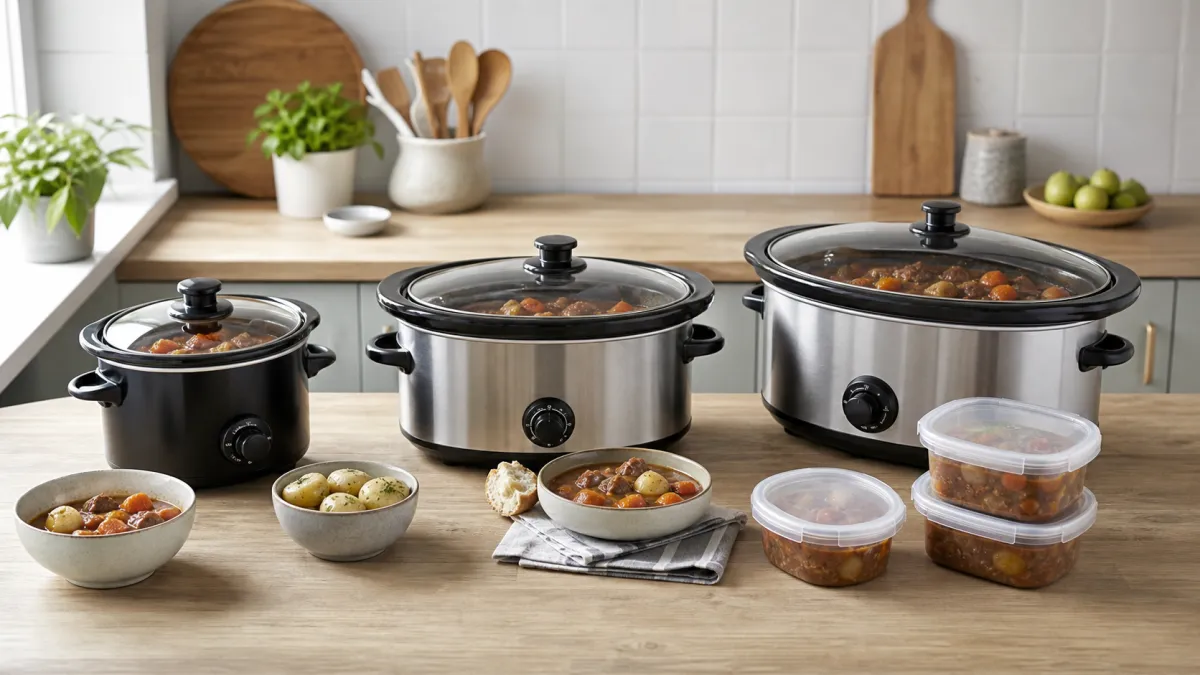
You can sometimes change slow cooker size, but the cooking result may change. A recipe designed for a 6-quart cooker may cook differently in a 3-quart or 8-quart model.
A smaller cooker creates a deeper layer of food. This may lengthen the time needed for the center to heat. A much larger cooker creates a shallow layer. That may cause food to cook faster or dry out.
When changing sizes:
- Keep the food within the recommended fill range.
- Avoid doubling a recipe unless the cooker has enough room.
- Avoid cutting liquid without checking the recipe.
- Watch the food during the first attempt.
- Use the manufacturer’s instructions as the final guide.
Do not assume that cutting every ingredient in half will cut cooking time in half. Heat moves through each recipe in a different way.
Slow Cooker Size and Counter Space
A slow cooker’s listed quart size tells you about capacity, not its full footprint. Measure the space where you plan to use and store it.
Record these measurements:
- Width from handle to handle
- Depth from the front control to the back
- Height with the lid in place
- Clearance around the appliance
- Cabinet or shelf height for storage
Keep the cooker on a stable, heat-resistant surface. Do not place it under cabinets if steam or heat could damage them. Keep the cord away from the edge of the counter.
The cooker may also weigh much more when filled. Make sure the surface can support it, and use both hands when moving a full insert.
Common Slow Cooker Size Mistakes
The most common mistake is choosing capacity based only on household size. The food itself matters just as much.
Buying by quart size alone
A 6-quart round cooker and a 6-quart oval cooker may not hold the same type of food well. Check the shape and inner-pot dimensions.
Filling the pot to the top
A full pot can cook poorly and may overflow. Use the fill range in the manual. Many models work best when filled between one-half and two-thirds full.
Using a very large cooker for a small meal
A shallow layer may overcook, dry out, or heat differently. Use a smaller model when the recipe does not fill the larger pot properly.
Ignoring the lid
A cracked or loose lid can release heat and moisture. Do not use a lid that does not sit correctly.
Treating capacity as serving size
One quart does not equal one person. Serving size depends on the recipe, ingredients, appetite, and side dishes.
Safety Tips for Any Slow Cooker
Use a slow cooker according to its manual and current food-safety guidance. The USDA advises safe handling of perishable foods and recommends using a food thermometer to check meat and poultry.
Keep these habits:
- Thaw meat safely before slow cooking unless the manufacturer gives different tested instructions.
- Start with clean hands, tools, and ingredients.
- Refrigerate leftovers within two hours, or within one hour when the room is above 90°F.
- Store leftovers in shallow containers so they cool faster.
- Do not use a slow cooker insert on a stovetop unless the manufacturer says it is designed for that use.
- Do not place a hot ceramic insert on a cold or wet surface.
- Unplug the appliance before cleaning the base.
The USDA Slow Cookers and Food Safety page provides general U.S. guidance. The National Center for Home Food Preservation also explains safe slow-cooking practices and food handling.
Frequently Asked Questions
Is a 6-quart slow cooker big enough for a family of four?
Usually, yes. A 6-quart model is a flexible choice for four people and can provide leftovers. The result depends on the recipe and the size of each serving.
Is a 4-quart or 6-quart slow cooker better?
A 4-quart model suits smaller meals and households. A 6-quart model offers more room for roasts, full recipes, and leftovers. Choose 6 quarts if you want the more flexible general-purpose size.
What is the smallest useful slow cooker?
A 1.5- to 2-quart slow cooker is useful for dips, sauces, side dishes, and one or two servings. It is not a good match for large roasts or family-size recipes.
Can a 6-quart slow cooker cook a whole chicken?
Often, yes. The chicken must fit below the lid, and the lid must close fully. Check the model’s shape and the chicken’s size before cooking.
Does a bigger slow cooker cook faster?
Not always. A larger cooker may cook a smaller amount of food differently because the food forms a shallower layer. Cooking time depends on the recipe, food volume, starting temperature, and appliance design.
Key Takeaways
- The practical average slow cooker size in the U.S. is about 6 quarts.
- A 6-quart cooker holds 24 cups at full capacity, but it should not be filled to the rim.
- Small 1.5- to 3-quart models suit one or two people.
- Four- to 5-quart models suit smaller households.
- Seven- to 10-quart models suit large meals, batch cooking, and gatherings.
- Check outside dimensions and pot shape, not just quart capacity.
- Follow the model manual and USDA food-safety guidance.
Final Answer
For most U.S. households, a 6-quart slow cooker is the average and most versatile size. It works well for family dinners, standard recipes, medium roasts, and leftovers.
Choose a 3- to 4-quart model for smaller meals, or a 7- to 10-quart model for large families and batch cooking. Before buying, measure your storage space and confirm that the inner pot matches the foods you cook most often.