Electric skillets are countertop cooking pans that use a built-in electric heating element to heat food. In U.S. kitchens, people use them to fry, sauté, sear, simmer, braise, bake, roast, and keep food warm without turning on a stovetop burner.
They are useful when you need extra cooking space, steady heat, or a portable pan for a holiday meal, apartment kitchen, RV, dorm, or buffet. They do not replace every pan, but they can handle many everyday meals in one vessel.

What Is an Electric Skillet?
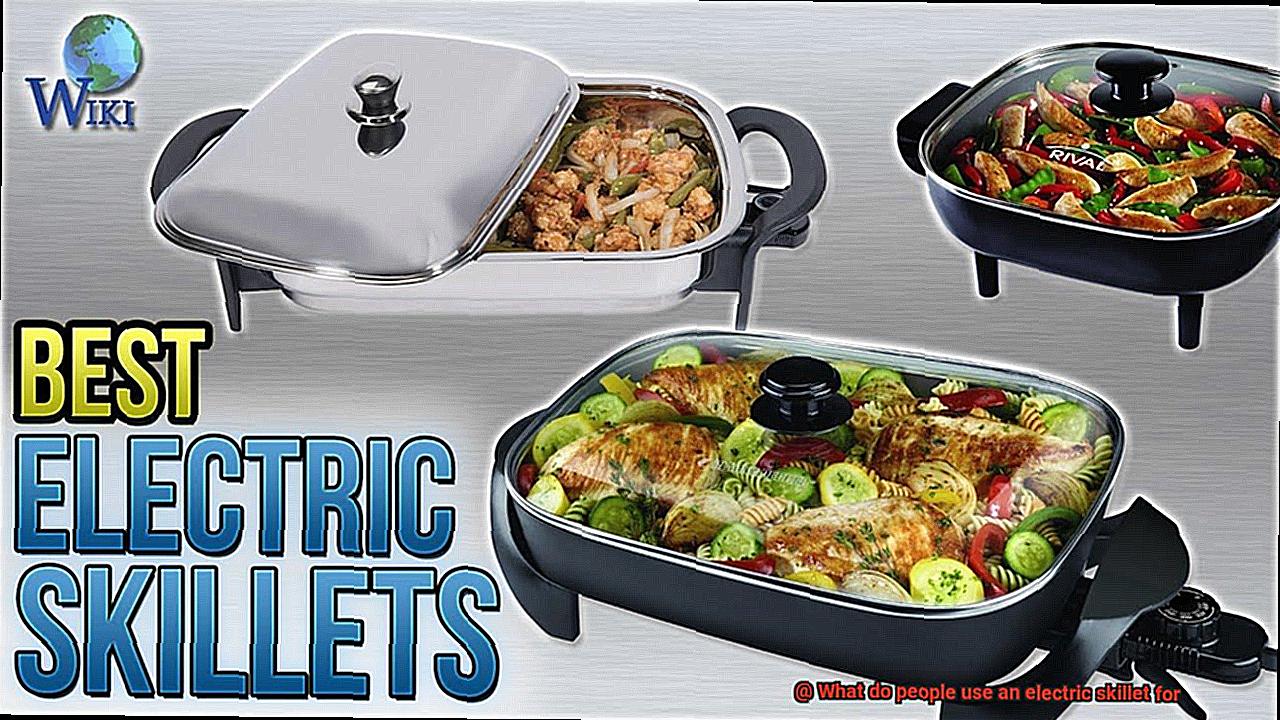
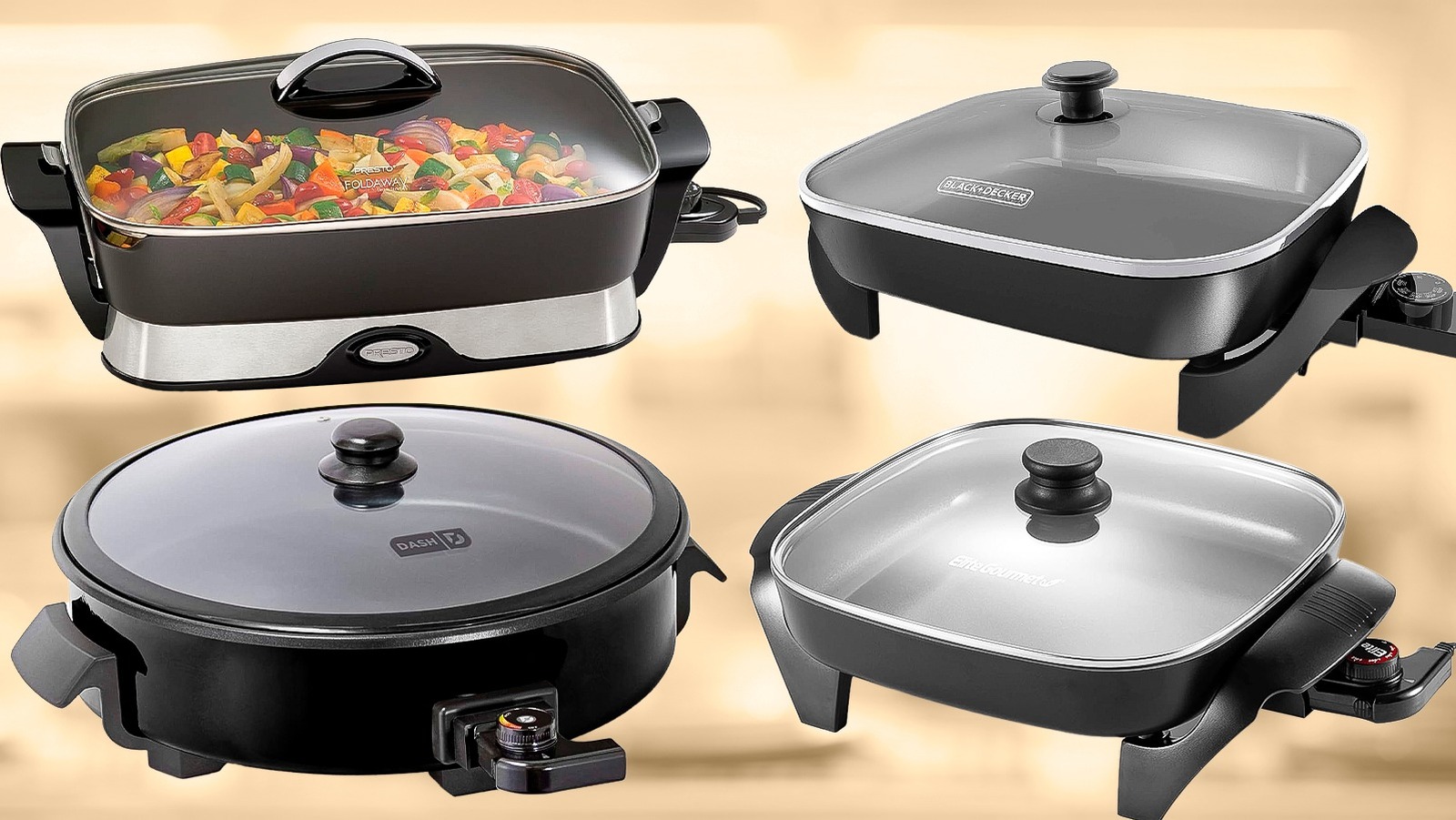
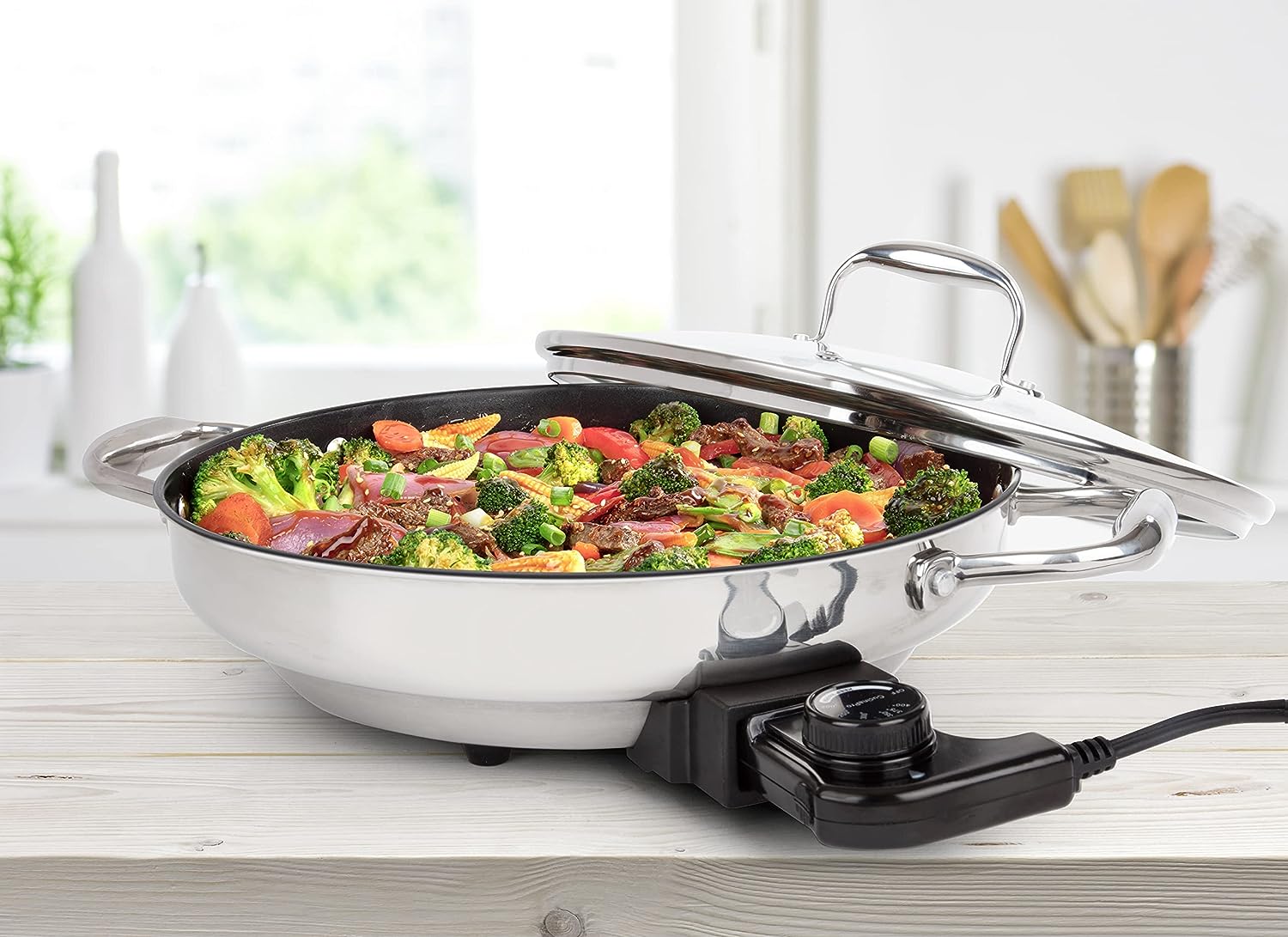
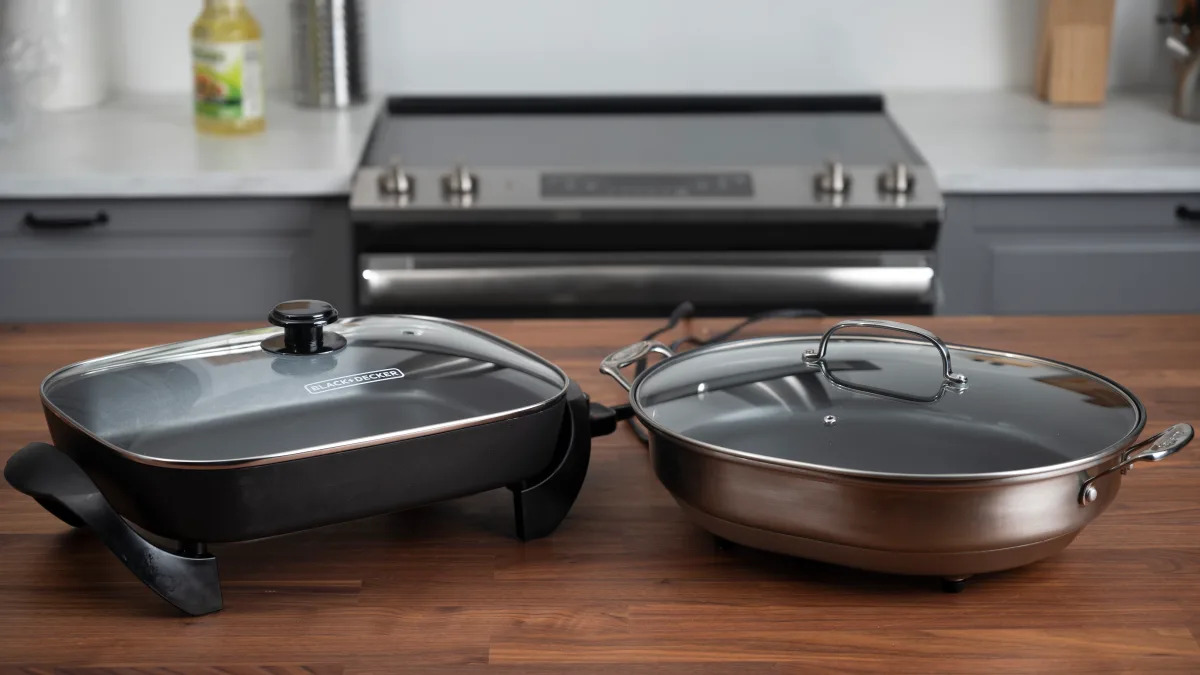
An electric skillet is a wide, shallow pan with an electric heating element and a temperature control. The control is usually a removable probe or dial. A lid often comes with the skillet.
Unlike a regular skillet, an electric skillet does not need a gas or electric stovetop burner. You plug it into a standard U.S. wall outlet, set the heat, and cook on a stable, heat-safe surface.
Most electric skillets include:
- A cooking pan
- A heating element
- A thermostat or temperature dial
- A power cord
- A fitted lid
- Heat-resistant handles
The thermostat turns the heating element on and off to maintain the selected temperature. Because of this, the surface may not heat in exactly the same way as a burner. The pan may cycle between slightly higher and lower temperatures during cooking.
Some models have a nonstick surface. Others use stainless steel or another coated material. Always follow the manual for the correct utensils, cleaning method, and temperature limits.

What Are Electric Skillets Used For?
Electric skillets are used for many cooking tasks, including frying, sautéing, browning, simmering, baking, roasting, and serving. Their large cooking surface makes them especially useful for meals that do not fit well in a standard skillet.
Frying and Pan-Frying
An electric skillet can fry eggs, bacon, sausage, hash browns, chicken cutlets, fish, and vegetables. The broad surface gives food room to spread out, which can help prevent crowding.
Use enough oil for the recipe, but do not fill the pan beyond the manufacturer’s limit. For shallow frying, keep the oil level low and watch the pan closely.
Sautéing and Browning
Electric skillets work well for onions, peppers, mushrooms, ground beef, diced chicken, and other ingredients that need frequent stirring. A temperature setting around medium heat is often a useful starting point, but the correct setting depends on the recipe and appliance.
Brown food in batches when needed. Too much food can lower the pan temperature and cause ingredients to steam instead of brown.
Simmering and Braising
The deep sides of an electric skillet make it useful for:
- Chili
- Stews
- Curries
- Meatballs in sauce
- Chicken and gravy
- Braised vegetables
- One-pan pasta dishes
After browning the food, add liquid and lower the heat. Keep the lid on when the recipe calls for gentle simmering, but check the pan from time to time so the food does not dry out.
Cooking Breakfast Foods
An electric skillet can cook a full breakfast in stages. You might prepare bacon first, remove it, then cook eggs, pancakes, potatoes, or French toast in the same pan.
Many electric skillets also help keep finished food warm while other dishes are prepared. Use the lowest safe setting rather than high heat for holding food.
Making Pancakes and French Toast
The flat cooking surface is helpful for pancakes, French toast, grilled sandwiches, and quesadillas. Unlike a round stovetop pan, a rectangular electric skillet may let you cook several items at once.
Let the pan preheat before adding batter. If the first pancake browns too fast, lower the heat rather than adding more oil.
Cooking Ground Meat
Electric skillets can brown ground beef, turkey, chicken, or pork for tacos, casseroles, pasta sauce, and rice dishes. Break the meat into small pieces as it cooks.
For food safety, the U.S. Department of Agriculture recommends cooking ground meats to 160°F, measured with a food thermometer. Ground poultry should reach 165°F.
Cooking Chicken, Fish, and Other Meats
You can sear, shallow-fry, or simmer many cuts of meat in an electric skillet. A lid helps cook thicker pieces after browning, but it can also trap steam and soften a crisp crust.
The USDA recommends these minimum internal temperatures:
- Poultry: 165°F
- Ground meat: 160°F
- Whole cuts of beef, pork, lamb, and veal: 145°F, followed by a three-minute rest
Measure the thickest part of the food with a food thermometer. Do not rely only on color or cooking time.
Baking and Roasting
Some electric skillets can bake or roast foods such as:
- Cornbread
- Biscuits
- Casseroles
- Meatloaf
- Small roasts
- Stuffed peppers
- Skillet cakes
The result depends on the skillet’s shape, lid, depth, and temperature range. An electric skillet does not circulate hot air like a conventional oven, so foods may brown differently.
Use a recipe designed for a covered skillet when possible. Check the manufacturer’s instructions before using glass, metal, or silicone bakeware inside the pan.
Keeping Food Warm
An electric skillet can keep pancakes, cooked vegetables, sausages, meatballs, and other foods warm for serving. This is useful for family breakfasts, potlucks, and holiday meals.
For safety, perishable food should remain at 140°F or above, according to USDA guidance. Use a food thermometer when holding food for a long period. Do not leave food at room temperature for extended periods.

How to Use an Electric Skillet
Use an electric skillet on a stable, dry, heat-safe surface with enough space around it for air to move. Keep the cord away from hot surfaces and areas where someone could pull it down.
Follow these basic steps:
- Read the manual. Check the allowed temperatures, cleaning instructions, and whether the pan or probe is dishwasher-safe.
- Place the skillet safely. Set it on a level surface away from the edge of the counter.
- Attach the temperature control. Make sure the probe or cord is fully connected if the model requires one.
- Preheat the pan. Allow the skillet to reach the selected temperature before adding food.
- Add oil or ingredients. Use the amount stated in the recipe.
- Cook and adjust the heat. Turn food as needed and lower the temperature if it browns too quickly.
- Check doneness. Use a thermometer for meat, poultry, seafood, and reheated foods.
- Turn off and unplug the skillet. Let it cool before cleaning.
The pan is ready when oil begins to shimmer, batter starts to set, or the food sizzles gently when added. If oil smokes heavily, the surface is too hot. Turn off the heat and let the skillet cool before continuing.
Electric Skillet Temperature Guide
The correct setting depends on the appliance, recipe, food quantity, and cooking method. Temperature numbers are not identical across all models, so use the table as a starting point rather than a guarantee.
| Cooking task | Common starting range | What to watch for |
|---|---|---|
| Keeping food warm | 140°F to 170°F | Food should stay hot without drying |
| Melting butter or chocolate | Low heat | Stir often; avoid scorching |
| Eggs and delicate foods | 250°F to 300°F | Gentle cooking and little browning |
| Pancakes and French toast | 300°F to 350°F | Even browning without burning |
| Sautéing vegetables | 300°F to 350°F | Food should sizzle but not smoke |
| Browning meat | 350°F to 400°F | Use batches to avoid steaming |
| Shallow frying | 325°F to 375°F | Watch oil temperature and splatter |
| Simmering sauces | About 250°F to 300°F | Maintain small bubbles, not a hard boil |
These ranges are general cooking guidance. The dial on one skillet may produce a different surface temperature than the dial on another. Recipe instructions, visual cues, and a food thermometer provide better control than the number alone.
Why Use an Electric Skillet Instead of a Regular Skillet?
An electric skillet is most useful when you need a wide cooking area, steady heat, or an additional cooking surface. It can reduce pressure on a busy stovetop and help prepare food in places without a full kitchen.
Benefits
- Extra cooking space: It can handle large batches of breakfast food, vegetables, or meat.
- Portable cooking: It works in many locations with a suitable electrical outlet.
- Consistent heat: The thermostat helps maintain a selected setting.
- Deep sides: The shape suits sauces, stews, and braised dishes.
- One-pan cooking: Many meals can be browned and finished in the same pan.
- Useful for serving: It can keep food warm during a meal.
Trade-Offs
An electric skillet also has limits. It takes counter space, needs an outlet, and may be harder to clean than a simple stovetop pan. Its heating pattern can vary, especially near the edges.
It also cannot provide the same direct flame or intense burner control as some stovetops. If you need very high heat, a wok-style sear, or quick temperature changes, a stovetop pan may work better.
Electric Skillet vs. Other Cookware
The best choice depends on the cooking task, available space, and desired heat control.
| Cookware | Best use | Main advantage | Main limitation |
|---|---|---|---|
| Electric skillet | Large one-pan meals | Wide area and built-in heat | Needs electricity and counter space |
| Stovetop skillet | Searing and everyday frying | Fast heat changes | Uses a burner |
| Electric griddle | Pancakes, bacon, sandwiches | Broad, mostly flat surface | Poor for liquid-heavy dishes |
| Slow cooker | Long, unattended cooking | Low-and-slow convenience | Does not brown food well |
| Dutch oven | Braising and oven cooking | Holds heat well | Heavy and often less convenient |
| Portable induction burner | Flexible stovetop cooking | Precise heat with compatible pans | Requires induction-ready cookware |
An electric skillet is a middle ground. It offers more depth than a griddle and more portability than a standard pan, but it does not perform every task as well as specialized cookware.

Electric Skillet Safety Tips
Use an electric skillet carefully because it combines hot surfaces, electricity, oil, and food that can cause burns or illness if mishandled.
Prevent Burns and Fires
- Keep the skillet away from curtains, paper towels, and other flammable items.
- Do not touch the hot pan, lid, or handles without protection.
- Lift the lid away from your face to let steam escape.
- Do not move a skillet filled with hot oil or liquid.
- Never leave hot oil unattended.
- Keep children and pets away from the cord and cooking surface.
- Unplug the appliance when it is not in use.
Never immerse the heating base, temperature probe, cord, or electrical connection in water unless the manual specifically allows that part to be submerged. Water and electricity can cause shock, damage, or fire.
Prevent Foodborne Illness
Use separate utensils for raw and cooked food. Refrigerate leftovers within two hours, or within one hour when the surrounding temperature is above 90°F, as advised by USDA food-safety guidance.
Use a thermometer to verify safe internal temperatures. Reheating food until it is warm to the touch is not a reliable safety test.
Avoid Overfilling
Overfilling can cause spills, uneven cooking, and dangerous splashes. Leave room for food and liquid to move, especially when simmering or cooking with a lid.
The maximum fill level differs by model. Check the instruction manual before making soup, sauce, or a large batch of food.

How to Clean an Electric Skillet
Clean the skillet after it has been unplugged and has cooled enough to handle safely. Remove the temperature probe if the manual directs you to do so.
A typical cleaning process is:
- Wipe away grease and loose food.
- Wash the pan with warm water and mild dish soap if the manufacturer permits it.
- Use a soft sponge or cloth on nonstick surfaces.
- Clean the lid and handles according to the manual.
- Dry every part completely before storage.
- Store the cord and probe without bending or damaging them.
Avoid steel wool, harsh scouring pads, and abrasive cleaners on nonstick coatings. Do not place the pan in a dishwasher unless the manufacturer says it is dishwasher-safe.
If the nonstick coating is peeling, flaking, or badly scratched, stop using the pan and check the manufacturer’s replacement guidance.

Common Electric Skillet Mistakes
Several simple errors can lead to uneven cooking or damaged cookware.
Adding Food Before Preheating
A cold pan can make food stick and prevent browning. Preheat it according to the recipe or manual, then add the ingredients.
Crowding the Surface
A crowded pan traps moisture. Cook in batches when you need browned meat or crisp vegetables.
Using Too Much Heat
High heat can burn oil, scorch sauces, and damage some nonstick surfaces. Start lower and raise the temperature only when needed.
Ignoring the Thermostat
The heating element may cycle on and off. This is normal for many electric skillets. Stir food and adjust the setting rather than assuming the appliance has failed.
Washing Electrical Parts
The cooking pan may be washable, but the control probe and electrical connector usually require special care. Read the manual before cleaning any part.
Treating It Like an Oven
A covered electric skillet can bake or roast some foods, but it does not behave like a conventional oven. Cooking times and browning may differ. Use a tested skillet recipe and verify the food’s internal temperature.

How to Choose an Electric Skillet
Choose an electric skillet based on cooking surface, depth, heat control, cleaning needs, and storage space.
Look for:
- Cooking area: A larger pan suits family meals but takes more storage space.
- Depth: Deeper sides help with stews, sauces, and braises.
- Temperature range: Confirm that it supports the recipes you plan to make.
- Lid design: A clear lid can help you monitor food without releasing steam.
- Surface material: Nonstick surfaces are easy to clean, while uncoated surfaces may tolerate different utensils.
- Removable controls: A removable probe can make washing easier, if the manual permits.
- Handles: Stay-cool or heat-resistant handles can make the pan easier to manage.
- Cord length: Make sure the cord reaches a suitable outlet without an extension cord running across a walkway.
- Storage: Measure your cabinet or shelf before buying a large rectangular model.
Do not choose only by the highest temperature number. A skillet that fits your recipes, cleaning habits, and available counter space is usually more useful than one with features you will not use.
Frequently Asked Questions
Can you cook anything in an electric skillet?
No single pan can cook everything well, but an electric skillet can prepare many foods. It is suitable for frying, sautéing, browning, simmering, braising, shallow frying, and some baking. It is less suitable for deep oven-style baking, very high-heat wok cooking, and recipes that require direct flame.
Can you use an electric skillet to deep-fry?
Some models and recipes allow limited deep-frying, but you must follow the manufacturer’s instructions. Hot oil creates a serious burn and fire risk. Never overfill the pan, leave the oil unattended, or add wet food that can cause splattering.
Can an electric skillet replace a slow cooker?
It can replace some slow-cooked recipes, but not all of them. An electric skillet may simmer food, yet it usually has a shallower shape and different heat pattern. A slow cooker is designed for long, low-temperature cooking with minimal evaporation.
Why does food stick to an electric skillet?
Food may stick because the pan was not preheated, too little fat was used, the food was moved too soon, or the cooking surface is damaged. Excessive heat can also cause sticking and burning. Follow the care instructions for the specific coating.
Can you put an electric skillet in the dishwasher?
Only if the manufacturer states that the pan is dishwasher-safe. Never place the electrical control, cord, or probe in water unless the manual clearly permits it. When the instructions are unclear, hand-wash the cooking pan and wipe the electrical parts with a damp cloth.
Conclusion
Electric skillets are used for much more than frying. They can cook breakfast foods, brown meat, sauté vegetables, simmer sauces, prepare one-pan meals, bake selected recipes, and keep food warm for serving.
They are a practical choice for U.S. homes that need extra cooking space or portable heat. Use the skillet on a stable surface, follow the model’s manual, avoid overfilling it, and verify food temperatures with a thermometer.
For the best results, treat an electric skillet as a flexible countertop pan—not as a complete replacement for an oven, stovetop, griddle, or slow cooker.