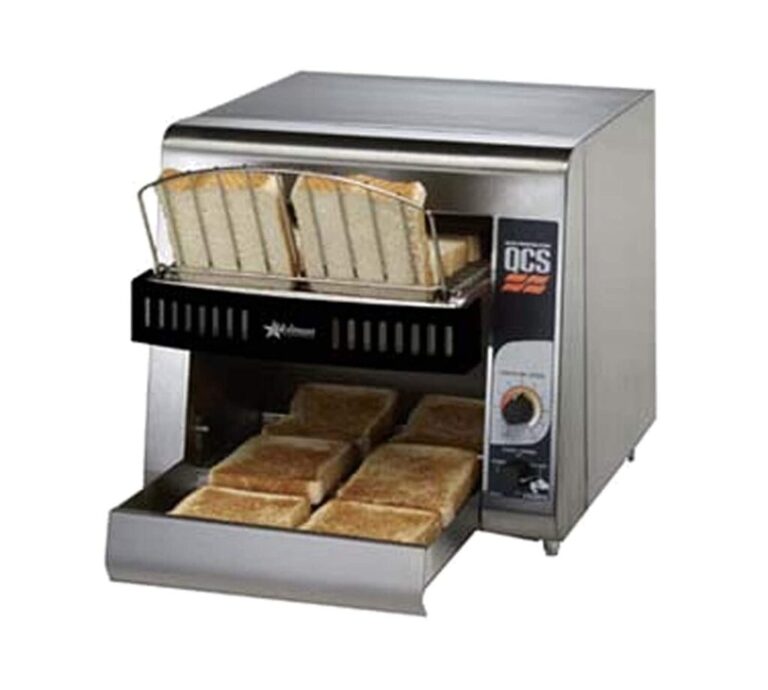
In U.S. kitchens, a toaster oven is a small electric countertop oven. It uses heating elements to cook, toast, bake, broil, and sometimes air-fry food. Most toaster ovens use conventional radiant heat, while newer models may also use a fan for convection cooking.
A toaster oven is not a microwave, a full-size range oven, or a pop-up toaster. It is best understood as a compact electric oven made for countertop use.
What category does a toaster oven belong to?
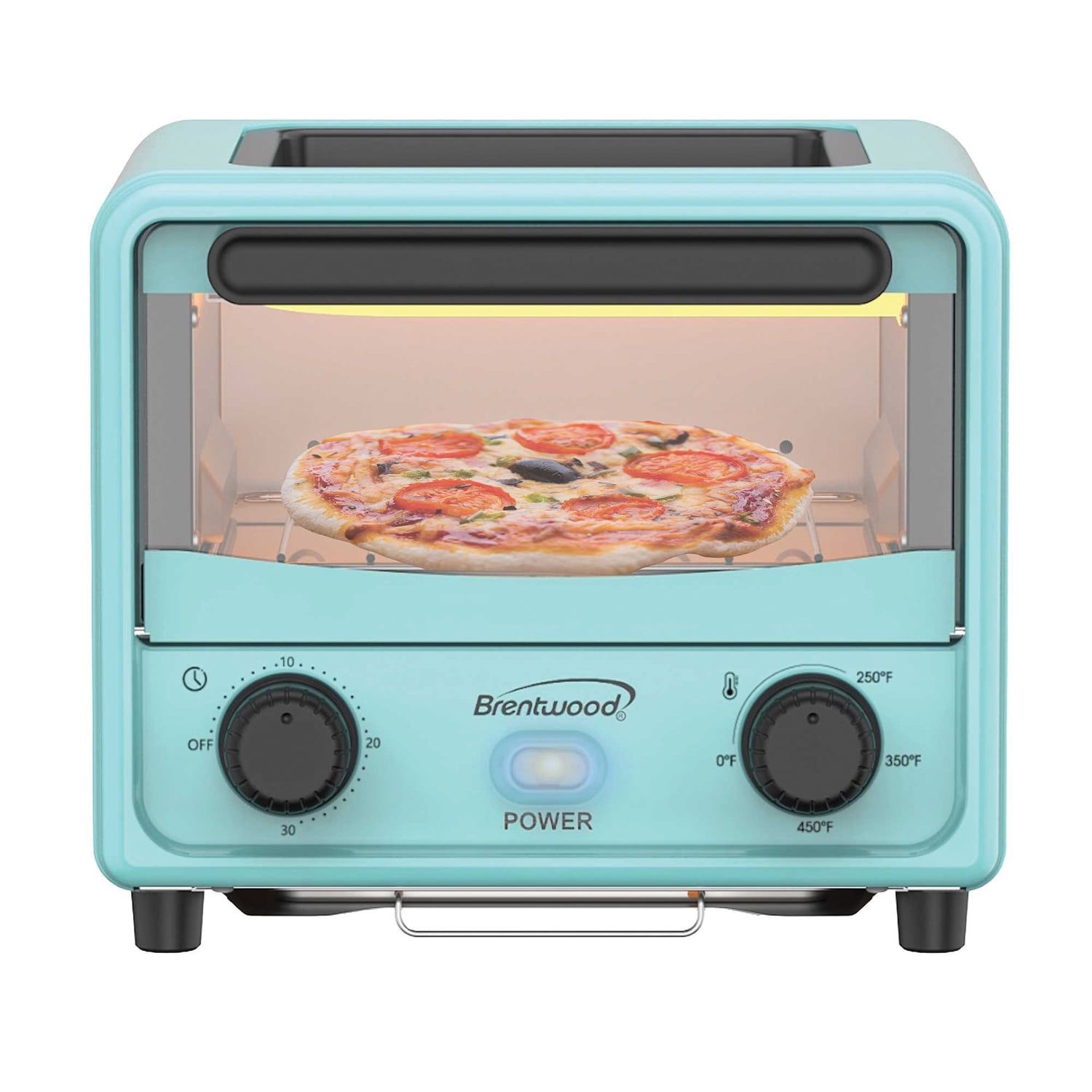
A toaster oven belongs to the countertop electric oven category. It has an enclosed cooking chamber, electric heating elements, a temperature control, and a timer.
The name can cause confusion. A toaster oven does more than toast bread, but it is still smaller and less powerful than a standard wall oven or range oven.
Its main features usually include:
- A small metal cooking chamber
- Upper and lower heating elements
- A thermostat or electronic temperature control
- A timer or automatic shutoff
- A wire rack
- A baking pan or crumb tray
- A glass door
- Several cooking settings
The appliance plugs into a standard household outlet in the United States. It does not use gas, propane, or an open flame.
The simplest classification
| Question | Answer |
|---|---|
| Is it electric? | Yes |
| Is it a countertop appliance? | Yes |
| Is it a full-size oven? | No |
| Does it use heating elements? | Yes |
| Can it bake and broil? | Usually |
| Does every model use convection? | No |
| Is it a microwave? | No |
The exact functions vary by model. A basic unit may only toast, bake, and broil. A larger model may include convection, air-fry, proof, warm, roast, dehydrate, or rotisserie settings.

How does a toaster oven heat food?
A toaster oven cooks with electric heating elements. These elements become hot when electricity passes through them. They then transfer heat to the food by radiation and by heating the air inside the chamber.
Most toaster ovens have two main element groups:
- Upper elements, which provide top heat for broiling and browning
- Lower elements, which provide bottom heat for baking and heating
Some models can use both sets at the same time. Others let you select the upper element, lower element, or both.
A thermostat measures the oven temperature and cycles the elements on and off. This process helps the appliance stay near the temperature selected on the control panel. The elements may glow red during part of the cooking cycle. That is normal.
Conventional toaster ovens
A conventional toaster oven uses still air. Heat moves from the elements into the cooking chamber without a fan actively circulating it.
This design works well for:
- Toast
- Frozen snacks
- Small casseroles
- Baked potatoes
- Open-faced sandwiches
- Small portions of vegetables
Cooking can be less even than in a convection model. The position of the rack and pan may affect browning.
Convection toaster ovens
A convection toaster oven adds a fan. The fan moves hot air around the food, which can improve browning and reduce hot and cold areas.
Convection cooking may also shorten cooking time or require a lower temperature. However, the correct adjustment depends on the recipe and the appliance manual. A common starting point is to reduce the temperature by 25°F, but this is not a universal rule.
A fan does not automatically make every toaster oven an air fryer. Air frying usually depends on a strong fan, a perforated basket or tray, and enough space for air to move around the food.

Is a toaster oven the same as a convection oven?
A toaster oven and a convection oven are not always the same. A toaster oven describes the appliance’s size and countertop design. Convection describes its heating method.
This means a toaster oven can be:
- A conventional electric toaster oven
- A convection toaster oven
- An air-fryer toaster oven
- A toaster oven with several cooking modes
A full-size wall oven can also be conventional or convection. The word “convection” does not describe the oven’s size. It describes the use of a fan to circulate heated air.
Conventional versus convection toaster ovens
| Feature | Conventional toaster oven | Convection toaster oven |
|---|---|---|
| Fan | Usually no | Yes |
| Air movement | Natural movement | Fan-assisted movement |
| Browning | Can be uneven | Often more even |
| Cooking time | Recipe time may apply | May need adjustment |
| Best for | Toast and simple heating | Roasting, baking, and crisping |
| Noise | Quiet | Fan noise is normal |
A convection fan can help, but it does not remove the need to preheat, place food correctly, or check it before the recipe’s stated finish time.
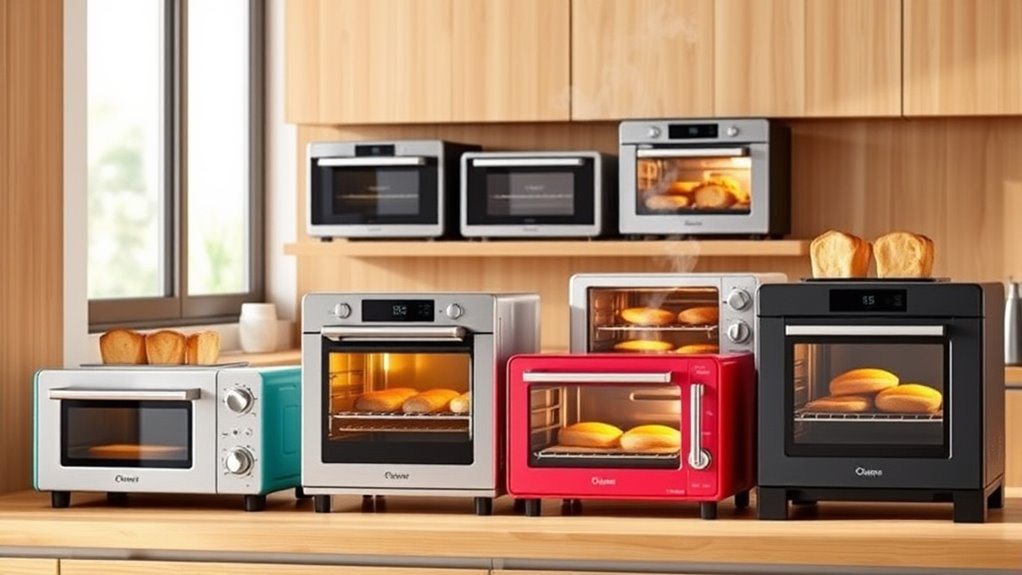
Is a toaster oven an air fryer?
An air-fryer toaster oven is a toaster oven with a high-speed convection setting and accessories designed for crisping food. However, not every toaster oven is an air fryer.
The term “air fryer” often refers to a compact convection cooking method. Hot air circulates around food placed in a basket or perforated tray. This can help moisture escape and improve surface browning.
A standard toaster oven may still cook frozen fries or chicken nuggets, but it may not produce the same results as a model designed for air frying.
Look for these features if air frying matters:
- A clearly labeled air-fry setting
- A mesh basket or perforated tray
- A strong convection fan
- Enough clearance around the basket
- Instructions for turning or shaking food
Do not cover the air-fry basket with foil unless the manufacturer permits it. Blocking airflow can reduce performance and may create a safety problem.

What can you cook in a toaster oven?
A toaster oven can cook many foods that fit inside its chamber and do not require special equipment. Its small size is useful when you want to heat a small portion without turning on a full-size oven.
Common uses include:
- Toast and bagels
- English muffins
- Pizza
- Frozen snacks
- Cookies
- Biscuits
- Small casseroles
- Roasted vegetables
- Baked potatoes
- Fish fillets
- Chicken pieces
- Open sandwiches
- Leftovers
A toaster oven is most useful for small meals and small batches. It may be less practical for large baking projects, tall dishes, or several trays of food.
Foods that need extra care
Some foods require special attention:
- Raw meat: Use a food thermometer. Color alone cannot confirm that meat is safe.
- Greasy foods: Use a tray and clean grease before it builds up.
- Parchment paper: Use it only as directed. It can move toward the heating elements.
- Foil: Keep it away from heating elements and follow the manual.
- Glass bakeware: Use only cookware labeled for the temperature and type of heating involved.
- Wet batter: Use a suitable pan. Do not place loose batter directly on the rack.
- Oversized food: Food must not touch the elements or prevent the door from closing.
The U.S. Department of Agriculture recommends using safe internal temperatures and a food thermometer for meat, poultry, seafood, and egg dishes. A toaster oven does not change those food-safety rules.
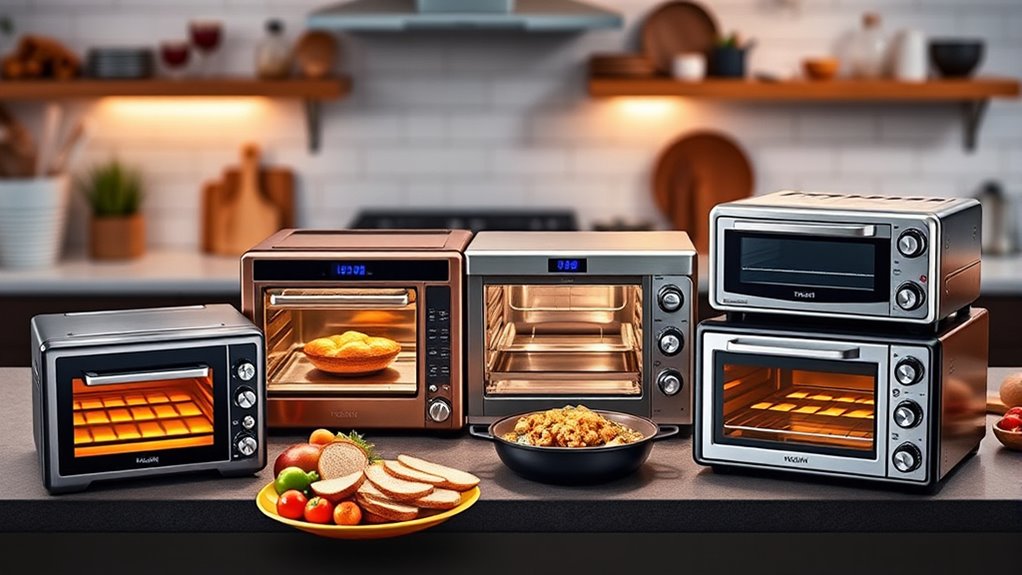
How is a toaster oven different from other ovens?
A toaster oven is smaller than most built-in or range ovens. It also differs from a microwave and a pop-up toaster because each appliance transfers energy to food in a different way.
| Appliance | Main energy or heat method | Typical use |
|---|---|---|
| Toaster oven | Electric heating elements | Toasting, baking, broiling, roasting |
| Full-size electric oven | Larger electric heating elements | Large meals and baking |
| Gas oven | Gas burner, with heated air | Baking and roasting |
| Microwave oven | Microwave energy | Fast reheating and cooking |
| Pop-up toaster | Exposed electric elements | Sliced bread and similar items |
| Air fryer | Fan-circulated electric heat | Small portions with a crisp surface |
A microwave heats food in a different way from a toaster oven. It is often faster for reheating liquids and soft foods, but it usually does not brown food like a toaster oven.
A pop-up toaster is designed mainly for bread. A toaster oven has a door, rack, pan, and temperature controls, so it can handle a wider range of foods.
Toaster oven versus full-size oven
A full-size oven offers more room and may maintain heat better for large dishes. A toaster oven uses less interior space and may be more convenient for one or two servings.
The better choice depends on the task:
- Use a toaster oven for small portions, toast, snacks, and quick reheating.
- Use a full-size oven for large pans, multiple racks, tall dishes, and holiday meals.
- Use a microwave when speed matters more than browning or crisping.
Do not assume that a toaster oven always costs less to operate. Energy use depends on the model, cooking time, temperature, food load, and local electricity rate. The U.S. Department of Energy explains that appliance energy use depends on both power and operating time.

What type of toaster oven should you choose?
The right type depends on the food you cook, the space available, and the features you will actually use.
Choose a basic conventional model if you need:
- Toast and bagels
- Simple reheating
- Small baked foods
- Straightforward controls
- A lower-cost appliance
Choose a convection model if you often cook:
- Roasted vegetables
- Cookies
- Chicken pieces
- Frozen foods
- Foods that benefit from more even browning
Choose an air-fryer toaster oven if you want:
- A larger cooking area than a small basket air fryer
- Crisping with a mesh tray
- Several cooking modes in one appliance
- The ability to cook food on a pan or rack
Choose a larger countertop oven if you need:
- Room for a 12-inch pizza
- A larger casserole dish
- Multiple servings
- Rotisserie or specialty functions
Before buying, check the interior dimensions rather than relying only on the outside size. Measure the cookware, baking pans, and plates you plan to use.
Also check:
- Maximum temperature
- Rack positions
- Interior height
- Door clearance
- Power requirements
- Cleaning method
- Automatic shutoff
- Whether the fan can be turned off
- Manufacturer instructions for foil and cookware
A feature has value only if it matches your routine. A rotisserie setting will not help if you never use it, while a removable crumb tray may matter every day.

How do you use a toaster oven safely?
Use a toaster oven on a stable, heat-resistant surface with clear space around the appliance. The manufacturer’s manual gives the exact clearance requirements, which can vary by model.
Basic safety steps include:
- Read the manual before the first use.
- Place the oven away from water and flammable items.
- Keep towels, paper, curtains, and packaging away from the hot appliance.
- Use the correct rack and pan.
- Keep food and cookware away from the heating elements.
- Do not leave high-fat foods unattended.
- Clean crumbs and grease after the appliance cools.
- Unplug the oven when the manual recommends it or when it is not in use.
- Stop using it if the cord, plug, controls, or housing is damaged.
- Keep children away from the hot door and exterior.
The U.S. Consumer Product Safety Commission has warned consumers about fire risks linked to cooking appliances and advises following product instructions and safe cooking practices.
Never use a toaster oven inside a cabinet, on a stovetop, or in another enclosed space unless the manufacturer specifically designed it for that location. Do not use an extension cord unless the manufacturer permits it and the cord is rated for the appliance’s electrical load.

Common mistakes with toaster ovens
The most common mistakes involve space, heat, and incorrect settings.
Treating it like a full-size oven
A small chamber heats quickly and has less room for air to circulate. Food can brown faster than expected, especially near the top element.
Start checking food early when using a new toaster oven.
Ignoring the fan setting
A convection fan can change cooking speed and browning. Follow the manual or the recipe guidance for convection settings.
Using the wrong pan
A pan that is too large can block airflow or touch the door. A pan that is too small can allow grease or batter to spill onto the elements.
Filling the chamber too tightly
Crowding prevents hot air from moving around food. This is especially important when air frying.
Leaving crumbs and grease inside
Crumbs can burn and create smoke. Grease can also produce odors and increase fire risk. Let the oven cool, then clean it according to the manual.
Using unsuitable containers
Not every glass, ceramic, plastic, or metal container is safe in a toaster oven. Plastic containers can melt. Some glass dishes can break from thermal shock. Use cookware that the manufacturer and cookware maker approve for the temperature.
Key takeaways
- A toaster oven is a small electric countertop oven.
- It uses heating elements rather than microwave energy or gas.
- A basic toaster oven uses conventional radiant heat.
- A convection toaster oven adds a fan to circulate hot air.
- An air-fryer toaster oven is a specialized convection model, but not every convection toaster oven is an air fryer.
- It can bake, broil, toast, roast, and reheat food that fits inside the chamber.
- Use the manual for clearance, cookware, foil, cleaning, and electrical instructions.
- Choose based on interior size and cooking modes, not the product name alone.
Frequently asked questions
Is a toaster oven considered a real oven?
Yes. A toaster oven is an electric oven with a smaller cooking chamber. It can bake, broil, roast, and toast, although its capacity and temperature control may differ from a full-size oven.
Does a toaster oven use convection heat?
Some do and some do not. A convection toaster oven has a fan that circulates hot air. A conventional toaster oven mainly relies on heat from its electric elements and natural air movement.
Is a toaster oven better than a microwave?
Neither is always better. A toaster oven is better for browning, crisping, and baking. A microwave is usually better for fast reheating and heating liquids.
Can a toaster oven replace a regular oven?
It can replace a regular oven for small meals and small portions. It may not replace one for large pans, multiple dishes, tall cookware, or large batches of food.
Does a toaster oven cook faster than a full-size oven?
It may heat a smaller space faster, but cooking time depends on the food, temperature, model, pan, and cooking mode. Check food early rather than assuming a fixed time.
Conclusion
A toaster oven is a compact electric countertop oven. Its heating elements let it toast, bake, broil, roast, and reheat food. Some models add convection fans, air-frying baskets, rotisserie functions, or other specialty modes.
For the best match, identify your main use first. Choose a basic model for toast and simple heating, convection for more even cooking, and an air-fryer model only if you will use its airflow and basket features. Then confirm the interior size, power needs, cookware limits, and safety instructions before using it.