Introduction
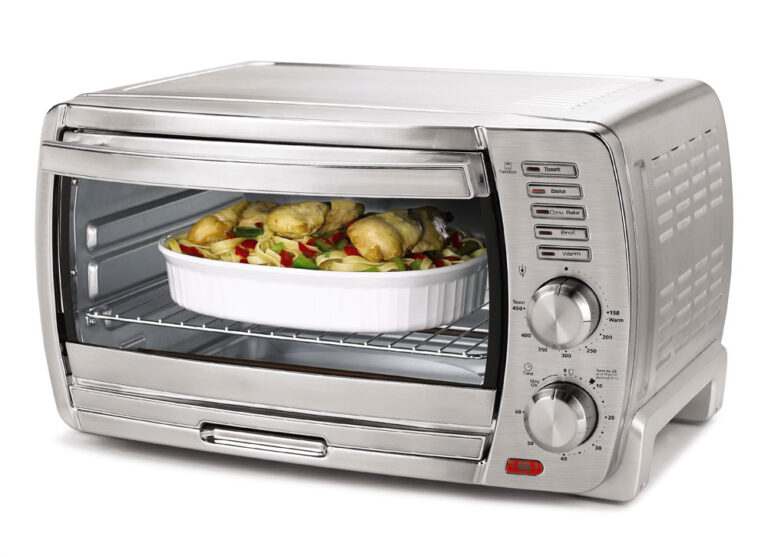
In U.S. kitchens, a toaster oven is a small electric countertop oven that cooks, reheats, broils, and toasts food. It uses heating elements, similar to those in a full-size oven, but its smaller chamber usually heats faster and takes up less space.
A toaster oven can handle foods such as toast, pizza, vegetables, baked potatoes, cookies, and small casseroles. Some models also use a fan to circulate hot air. These models are often called convection toaster ovens or air fryer toaster ovens.

What Is a Toaster Oven?
A toaster oven is a compact oven designed for countertop use. It has a heated cooking chamber, a rack, a baking pan, and controls for time and temperature.
Unlike a pop-up toaster, a toaster oven does more than brown bread. Unlike a microwave, it cooks food with dry heat. That means it can crisp the outside of food and brown cheese, bread, and baked goods.
Most toaster ovens in the United States plug into a standard household outlet. They commonly offer several cooking settings:
- Toast: Uses the upper and lower heating elements to brown bread.
- Bake: Uses steady heat to cook foods in a pan.
- Broil: Uses strong heat from the top element.
- Warm: Keeps cooked food hot at a low temperature.
- Convection: Uses a fan to move hot air around the food.
- Air fry: Uses strong air movement and high heat to crisp food.
- Roast: Uses dry heat for foods such as vegetables and chicken.
The exact settings vary by model. Always check the owner’s manual before using a special mode.
Main parts of a toaster oven
A typical toaster oven includes:
- Heating elements: Metal parts that produce heat when electricity passes through them.
- Thermostat or temperature sensor: Helps control the oven temperature.
- Timer: Turns the heating cycle off after a set period on many models.
- Cooking rack: Holds food at different heights.
- Baking tray: Catches crumbs and supports small foods.
- Glass door: Lets you see the food while it cooks.
- Control panel: May include knobs, buttons, or a digital display.
- Insulated body: Helps contain heat and protect nearby surfaces.
Some newer models also include a digital temperature sensor, preset programs, a removable crumb tray, or a rotisserie attachment.

How Does a Toaster Oven Work?
A toaster oven works by turning electrical energy into heat. When you select a cooking mode, electricity flows to one or more heating elements. These elements become hot and transfer heat to the food.
The cooking method depends on how the heat moves:
- Radiant heat travels directly from the heating elements to the food.
- Conductive heat moves from a hot pan into the food.
- Convective heat moves through circulating hot air.
A basic toaster oven mainly uses radiant and conductive heat. A convection model adds a fan. The fan moves hot air around the food, which may help food cook more evenly and brown more quickly.
Why the small size matters
A toaster oven has a smaller chamber than a full-size oven. It usually needs less time and energy to heat that space, especially when cooking a small meal.
The benefit depends on the food, cooking time, appliance design, and how often the oven is opened. A toaster oven is not automatically more efficient for every meal. For a large roast, several trays of food, or a full family-size dish, a regular oven may be more practical.
Does a toaster oven need to preheat?
Many recipes work best when the toaster oven is preheated. Preheating gives the food a stable starting temperature and can improve browning and cooking time.
Some foods do not need a long preheat. Toast and reheated leftovers may work well with a short warm-up. Follow the recipe and the manufacturer’s instructions.
If the toaster oven has a preheat alert, wait for the alert before placing food inside. If it does not, allow time for the heating elements and chamber to warm.

Types of Toaster Ovens
Toaster ovens come in several designs. The best type depends on the food you make, the space available, and the features you will use.
Standard toaster oven
A standard model offers basic toast, bake, and broil settings. It is often a good fit for:
- Toast and bagels
- Small frozen pizzas
- Open-faced sandwiches
- Reheated leftovers
- Small portions of vegetables
- Simple baked foods
This type usually has a lower purchase price and a simpler control panel.
Convection toaster oven
A convection toaster oven uses a fan to circulate hot air. This can improve browning and may reduce cooking time for some foods.
Recipes made for a full-size oven may need adjustments. You may need to lower the temperature, shorten the cooking time, or check the food early. The correct adjustment depends on the recipe and the appliance.
Do not assume that every convection oven cooks at the same rate. Fan strength, chamber size, rack position, and food placement all affect results.
Air fryer toaster oven
An air fryer toaster oven combines toaster oven functions with an air-fry setting. It often includes a perforated basket or mesh tray that lets hot air reach more of the food’s surface.
This design can make foods such as potatoes, chicken wings, and frozen snacks crisp. It may not match the speed or airflow of a small basket-style air fryer, especially when the toaster oven basket is full.
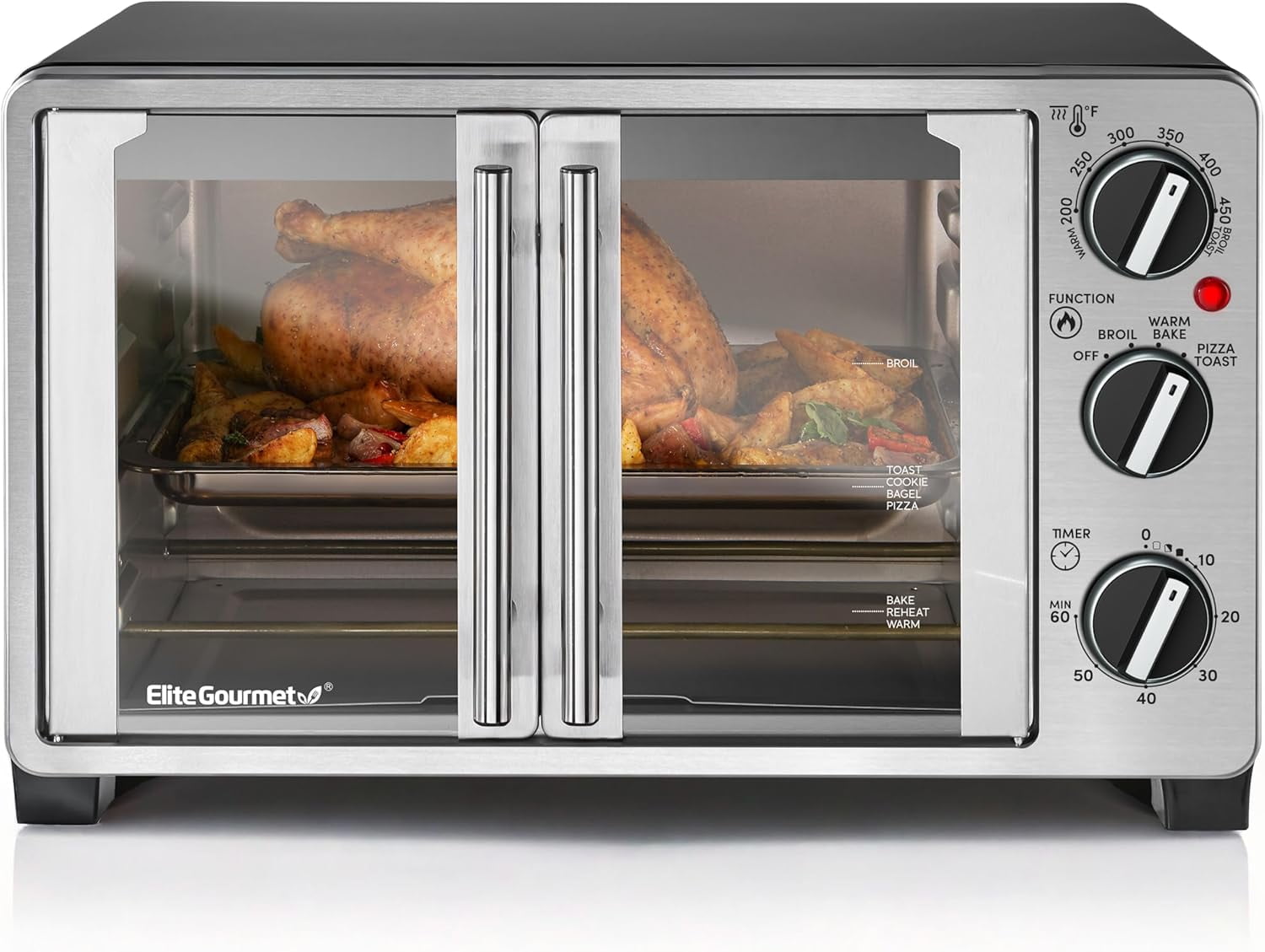
The larger chamber is useful when you want more cooking space. The trade-off is that a large chamber may take longer to heat.
Rotisserie toaster oven
Some larger toaster ovens include a rotisserie function. A motor turns food on a spit while heat cooks the surface.
Rotisserie cooking requires careful balance and enough clearance inside the oven. Use only the supplied parts and follow the manual. Never use a rotisserie attachment if the food can touch the heating elements or door.
Toaster oven with a hot plate
A few countertop units include a hot plate on top. These appliances can heat a pan as well as cook inside the oven chamber.
The hot plate adds versatility but also creates extra burn and fire risks. Keep the top surface clear when it is not in use, and follow the appliance’s limits for pan size and weight.

What Can You Cook in a Toaster Oven?
A toaster oven can cook many small meals and snacks. It works especially well when you want dry heat, browning, or crisp edges.
Common foods include:
- Bread, English muffins, and bagels
- Frozen pizza
- Toasted sandwiches
- Quesadillas
- Baked potatoes
- Roasted vegetables
- Fish fillets
- Small chicken portions
- Cookies and small baked goods
- Nachos
- Reheated pizza
- Leftovers that benefit from crisping
Use a pan that fits inside the appliance without touching the walls or heating elements. Leave space around the food so heat can move through the chamber.
A toaster oven may not be suitable for:
- Very large dishes
- Tall foods that touch the top element
- Foods that release a large amount of grease
- Covered dishes that the manual does not permit
- Recipes that need steam or a sealed pressure environment
- Foods that require a microwave’s rapid internal heating
For meat, poultry, seafood, and egg dishes, use a food thermometer. The USDA advises checking food with a thermometer rather than relying only on color or cooking time. Reheated leftovers should reach a safe internal temperature according to current USDA guidance.
Toaster Oven vs. Other Kitchen Appliances
The main difference between a toaster oven and other countertop appliances is the way each appliance transfers heat.
| Appliance | Main cooking method | Best for | Main limit |
|---|---|---|---|
| Toaster oven | Dry electric heat | Toasting, baking, broiling, and crisping | Smaller capacity than a full-size oven |
| Microwave oven | Electromagnetic energy | Fast reheating and heating liquids | Does not usually brown or crisp food |
| Pop-up toaster | Direct radiant heat | Slices of bread and similar items | Limited food options |
| Air fryer | Fast circulating hot air | Crisp foods in small batches | Smaller cooking area in many models |
| Full-size oven | Dry electric or gas heat | Large meals and multiple dishes | Takes more space and may need more time to heat |
A microwave heats food differently from a toaster oven. A microwave can heat the inside of many foods quickly, while a toaster oven mainly heats the food’s outer surface first. This is why pizza may become crisp in a toaster oven but soft in a microwave.
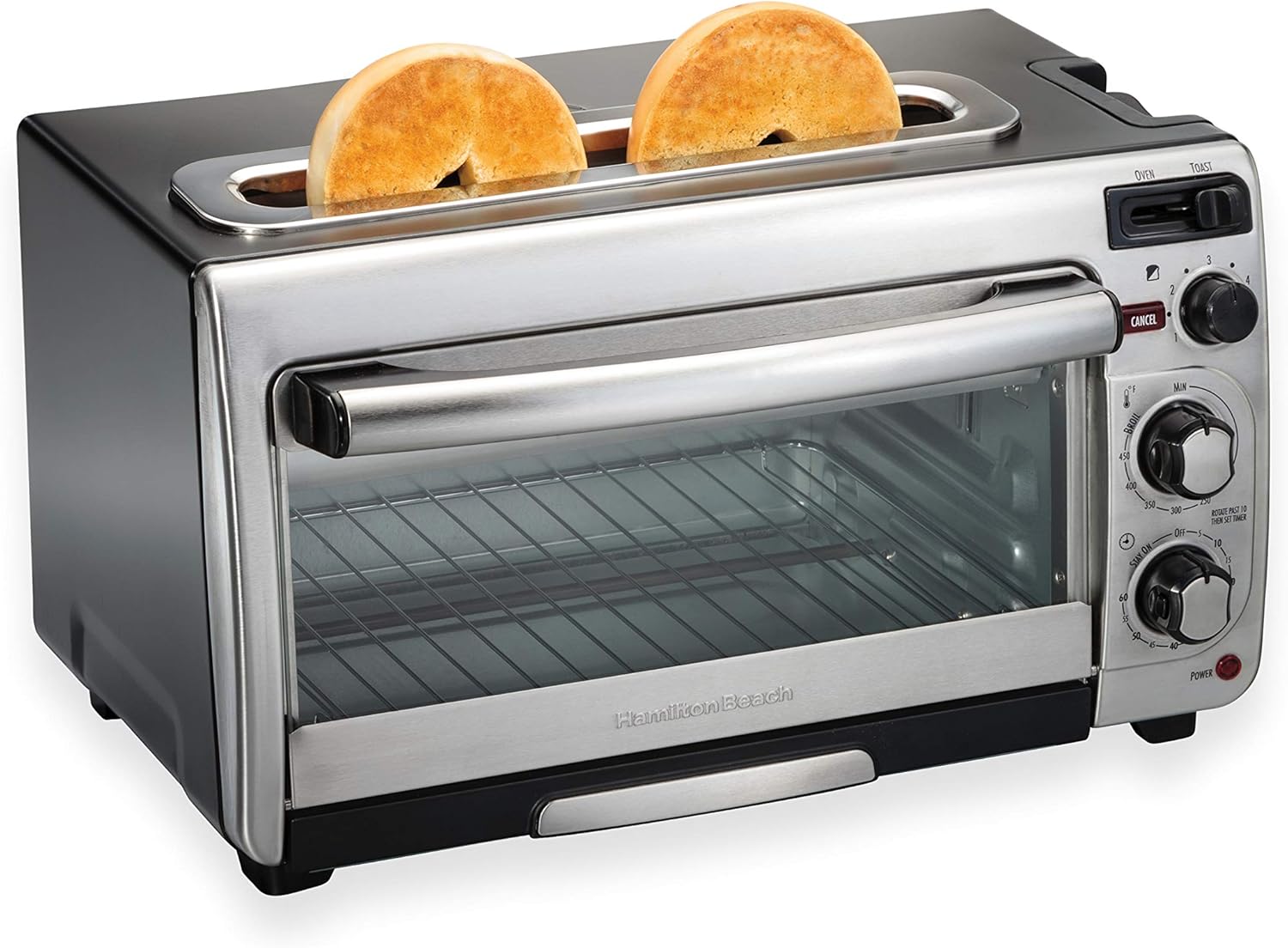
A pop-up toaster is faster for plain toast. A toaster oven is more flexible because it can hold food in a pan and provide several cooking modes.
An air fryer often cooks small, crisp foods quickly. A toaster oven with an air-fry mode may offer more room and more functions, but it can take up more counter space.

How to Choose a Toaster Oven
Choose a toaster oven based on the food you make, not only on the number of features.
1. Measure your counter space
Measure the area where the appliance will sit. Include:
- Width
- Depth
- Height
- Door clearance
- Space above the appliance
- Distance from walls and cabinets
Follow the manufacturer’s required clearance. Heat can damage nearby surfaces or create a fire risk if the appliance is placed too close to combustible materials.
2. Check the interior size
The outside size does not tell you how much food fits inside. Check whether the oven can hold the items you use most often, such as:
- A standard slice of bread
- A frozen pizza
- A small baking dish
- A quarter-sheet pan
- A 9-by-13-inch pan, if needed
A larger interior can be useful, but it also requires more counter space.
3. Decide whether convection matters
Convection is useful if you often roast vegetables, bake, or cook foods that need browning. It may be less important if you mainly make toast and reheat single servings.
4. Check temperature and timer controls
Look for controls that match your cooking habits. A digital display may make settings easier to repeat. Manual knobs can be simple and quick.
Check whether the timer shuts the heating elements off. Do not treat an automatic shutoff as a replacement for supervision.
5. Review the included accessories
Useful accessories may include:
- Wire rack
- Baking pan
- Broiling pan
- Air-fry basket
- Crumb tray
- Rotisserie parts
Make sure replacement trays and racks are available if you expect to use the appliance for many years.
6. Check safety information
Look for clear instructions, stable feet, a cool-touch handle, and a recognized electrical safety certification mark, such as UL, ETL, or another accepted testing mark. A certification mark indicates that the product was evaluated under a safety standard; it does not mean the appliance cannot cause burns or fires when misused.

How to Use a Toaster Oven Safely
Safe use starts with placement, correct cookware, and supervision. The U.S. Consumer Product Safety Commission warns that cooking appliances can create fire and burn hazards when used improperly.
Follow these steps:
- Place the oven on a stable, heat-resistant surface.
- Keep paper, towels, curtains, plastic, and other combustible items away.
- Check that the rack and tray are in the correct positions.
- Use cookware rated for the oven’s temperature.
- Keep food away from the heating elements.
- Do not cover the crumb tray with foil unless the manual specifically allows it.
- Watch foods that contain grease or cheese.
- Use oven mitts when removing hot trays.
- Turn the appliance off when cooking is complete.
- Unplug it only after it has cooled, if the manual recommends unplugging after use.
Never put plastic, paper, or other materials inside a hot toaster oven unless the manufacturer specifically states that the material is safe for that use.
Do not use a toaster oven with a damaged cord, cracked door, loose plug, or damaged heating element. Stop using it if it sparks, smells like burning plastic, repeatedly trips a circuit, or behaves in an unusual way.
A toaster oven should not be used as a storage shelf. Items placed on top can block ventilation, become hot, or catch fire.
Can you use aluminum foil in a toaster oven?
Aluminum foil can reflect heat and may block airflow. It can also touch a heating element and create a fire risk. Some manuals allow foil in limited ways, while others prohibit it.
Use the owner’s manual as the deciding source. Never let foil touch the heating elements, cover vents, or cover the entire rack unless the manual clearly permits it.
Can you use glass or ceramic dishes?
Only use glass or ceramic cookware labeled for oven use and suitable for the temperature. Avoid sudden temperature changes, such as placing a very cold dish into a hot oven, because some materials can break from thermal shock.
The dish must also fit without touching the walls, rack, door, or heating elements.

Cleaning and Maintaining a Toaster Oven
Unplug the toaster oven and let it cool before cleaning. Remove the rack, tray, and crumb tray according to the manual.
Brush or wipe away crumbs often. Built-up crumbs can smoke and may ignite. Wash removable parts with approved soap and water, then dry them fully before replacing them.
Do not pour water into the appliance. Do not spray cleaner into the heating elements, controls, vents, or electrical openings.
For baked-on grease, use a soft cloth or sponge and a cleaner approved by the manufacturer. Avoid abrasive tools that can damage the interior or door glass.
Check the power cord, plug, door, rack, and heating elements during cleaning. If a part is damaged, use the manufacturer’s replacement part or have the appliance assessed by a qualified service professional.
Common Toaster Oven Mistakes
Filling the oven too tightly
Crowding blocks airflow and can leave some food undercooked. Spread food in a single layer when possible.
Using the wrong rack position
Food placed too close to the top element may burn during broiling. Food placed too low may cook slowly or brown unevenly.
Ignoring recipe adjustments
A toaster oven may heat food differently from a full-size oven. Check food early and adjust the time only after observing how the appliance cooks.
Leaving the appliance unattended
A timer does not remove every risk. Grease, crumbs, and food that touches a heating element can smoke or catch fire.
Using cookware that is too large
A pan that touches the door or sides can block heat and create a safety problem. Measure the interior before buying bakeware.
Treating the air-fry setting as a guarantee
Air-fry performance depends on food size, moisture, basket position, and batch size. Overfilled baskets often produce less crisp food.

Frequently Asked Questions
Is a toaster oven the same as a regular oven?
No. Both use dry heat, but a toaster oven is smaller and sits on a countertop. A regular oven has more capacity and is better for large meals or several dishes at once.
Can a toaster oven replace a microwave?
Usually, no. A toaster oven is better for browning and crisping. A microwave is usually better for quickly heating liquids, soft foods, and many leftovers.
Is a toaster oven cheaper to run than a full-size oven?
It can use less energy for small meals because it heats a smaller space. The actual difference depends on the appliance, cooking time, food quantity, temperature, and local electricity rate. For large meals, a full-size oven may be more practical.
Can you cook raw chicken in a toaster oven?
Yes, if the appliance reaches and maintains a suitable cooking temperature and the food fits safely. Use a food thermometer and follow USDA safe-cooking guidance. Do not rely only on cooking time or appearance.
Why does my toaster oven smoke?
Common causes include grease, crumbs, food touching a heating element, residue from a new appliance, or a dirty tray. Turn it off if smoke is heavy or unusual. Let it cool, then clean it according to the manual. If the smoke continues or smells like burning plastic, stop using the appliance.
How long does a toaster oven last?
Lifespan varies with build quality, use, cleaning, and maintenance. Replace or repair the appliance when the cord, plug, door, controls, or heating elements become unsafe. The manufacturer’s warranty and replacement-part policy can help guide that decision.
Conclusion
A toaster oven is a compact electric oven for toasting, baking, broiling, roasting, warming, and reheating. It offers more flexibility than a pop-up toaster and can produce crisper results than a microwave.
For the best fit, measure your space, check the interior capacity, choose only the features you will use, and follow the manufacturer’s safety instructions. Keep the oven clean, supervise cooking, and use a food thermometer for meat, poultry, seafood, and egg dishes.