For most households in the United States, the Presto 16-Inch Ceramic Electric Skillet, model 06857, is the best electric frying pan overall. It offers a large cooking area, a removable heat control, a glass cover, and a ceramic nonstick surface. It is a strong fit for families, meal prep, frying, sautéing, simmering, and one-pan meals.
That said, the best electric skillet depends on your kitchen, storage space, cooking style, and budget. A smaller pan may suit one person better. A stainless steel pan may last longer than a coated pan. A deep skillet may be better for stews, while a wide pan works best for pancakes and fried food.
This guide compares the features that matter most and explains how to choose safely in the U.S. market.

Best electric frying pan at a glance
The best choice for most people is a large, 16-inch electric skillet with a removable temperature control, a clear lid, stable handles, and a durable nonstick surface.
Here are the main choices:
| Best for | Recommended type | What to look for |
|---|---|---|
| Most families | 16-inch ceramic electric skillet | Large surface, 1,500 watts, removable control |
| One or two people | 8- to 12-inch electric skillet | Smaller footprint and lower storage needs |
| Deep meals | Electric sauté pan or deep skillet | Tall sides and a tight-fitting lid |
| Long-term durability | Stainless steel electric skillet | Metal-safe surface and strong construction |
| Easy cleanup | Ceramic or nonstick skillet | Removable control and dishwasher-safe parts |
| Travel or small kitchens | Compact electric skillet | Light weight and simple temperature dial |
The Presto 06857 is a practical overall pick because it balances size, power, cooking area, and ease of use. It is not the right choice for every cook. Its 16-inch size takes up significant counter and cabinet space, and a coated surface requires careful use to reduce scratching.
No single electric frying pan is best for every American kitchen. The right model should match the food you cook and the space you have.
What is an electric frying pan?
An electric frying pan, also called an electric skillet, is a countertop cooking pan with a built-in heating element and thermostat. It plugs into a standard U.S. household outlet and does not need a stovetop burner.
Most models include:
- A metal cooking pan
- An electric heating element
- A temperature control probe or dial
- Side handles
- A lid
- A power cord
The thermostat cycles the heating element on and off to maintain the selected temperature. This makes an electric skillet useful for tasks that need steady heat, such as frying chicken, browning meat, simmering sauce, or keeping food warm.
An electric skillet is different from an induction pan. An induction pan sits on an induction cooktop and needs magnetic cookware. An electric skillet has its own heating system and works on a table or countertop near an outlet.
It is also different from a griddle. A griddle is usually flat and open. An electric skillet has raised sides and can hold liquid.
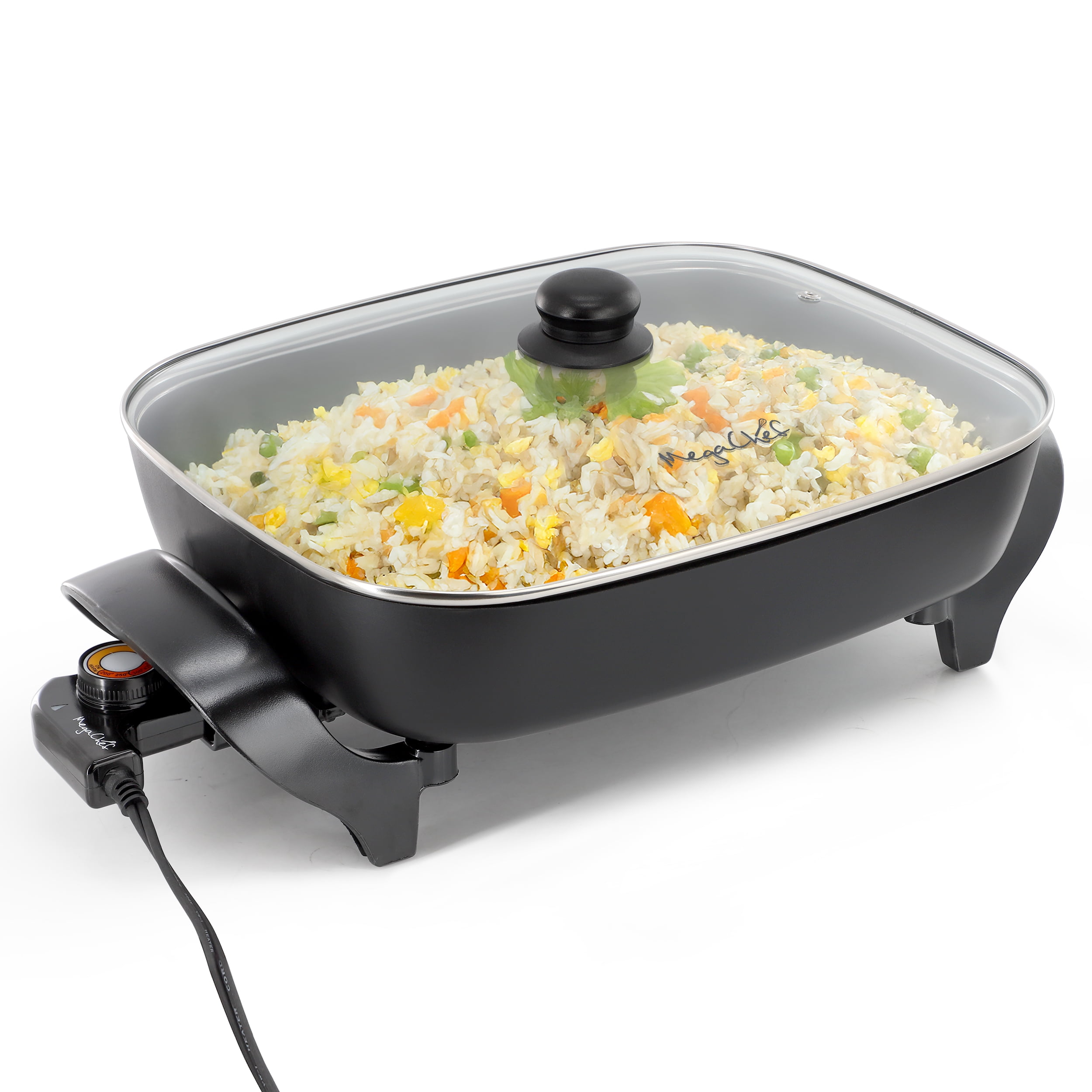
Why the Presto 06857 is the best overall choice
the Presto 06857 is a strong all-purpose choice because it covers several common cooking needs in one pan. Its large cooking area can handle family-size portions, and its high sides help contain oil, sauce, and liquid.
Strengths
- Large 16-inch cooking surface: Useful for several servings of meat, vegetables, pancakes, or fried food.
- Ceramic nonstick interior: Helps food release with less added oil.
- Removable heat control: Makes washing the pan easier and allows the pan to be separated from the electrical control.
- Glass cover: Lets you watch food without removing the lid.
- Temperature adjustment: Gives better control than a simple on-and-off hot plate.
- Countertop use: Useful when the stovetop is busy or when cooking in a small kitchen.
The large surface is the main reason to choose it. A wide pan gives food more room and can reduce crowding. Crowding can cause meat to steam instead of brown.
Limits to consider
A 16-inch skillet is large. It may be difficult to store in a small apartment kitchen. It also needs a flat, stable surface with room around the pan and a nearby outlet.
The ceramic coating is not indestructible. Use wood, silicone, or plastic utensils approved for nonstick cookware. Avoid metal tools, abrasive scrub pads, and sudden temperature changes.
The pan is also not a replacement for an oven, deep fryer, stockpot, or stovetop skillet. Its cooking area is broad but its depth is limited compared with a large Dutch oven.
Presto’s product page lists the model’s current features and care instructions. Check the manufacturer’s page before purchase because specifications, packaging, and availability can change.
How to choose the best electric frying pan
Choose an electric frying pan by checking six features: size, temperature control, surface, construction, lid design, and cleaning method.
1. Select the right size
Size affects both cooking capacity and storage.
- 8 to 10 inches: Best for one person, eggs, grilled sandwiches, or small portions.
- 12 inches: A good choice for two to four people.
- 14 inches: Useful for larger meals without the footprint of a 16-inch pan.
- 16 inches: Best for families, entertaining, and batch cooking.
A large pan is not always better. A one-person household may waste energy and storage space with a 16-inch skillet. A family may find a small pan frustrating because food must be cooked in batches.
2. Check the temperature range
A useful electric skillet should offer a broad temperature range. Many models use a dial marked with temperatures rather than vague settings such as low, medium, and high.
Temperature markings help with repeat cooking. For example:
- Lower heat is useful for warming and gentle simmering.
- Medium heat works for eggs, vegetables, and grilled sandwiches.
- Higher heat helps brown meat and fry food.
The dial does not mean that every part of the pan reaches the exact same temperature. Heating patterns vary by model. The center may cook differently from the edges, especially when the pan is full.
3. Compare cooking surfaces
Electric frying pans usually have one of three surfaces.
Ceramic nonstick
Ceramic-coated pans are easy to clean and often need little oil. They can be a good choice for eggs, fish, vegetables, and delicate food.
The coating may wear over time. Do not use metal utensils unless the manual specifically permits them.
Traditional nonstick
Traditional coated pans also release food well and are often affordable. They need gentle cleaning and careful heat control.
Do not preheat an empty coated pan for a long time. Follow the manual’s instructions.
Stainless steel
Stainless steel can provide a durable cooking surface and often tolerates more vigorous cleaning. Food may stick more easily, especially when the pan is too cool or when the cook uses too little oil.
Stainless steel is a better choice for people who value durability over easy release.
4. Look for a removable control
A removable temperature probe is one of the most useful electric skillet features. It allows the cooking pan to be washed without bringing the electrical parts near water.
Before cleaning, unplug the skillet and let it cool. Remove the control only as the manual directs. Never immerse the electrical control, cord, or plug in water.
5. Inspect the lid
A good lid should fit securely and have a handle that stays cool enough for normal use. A glass lid makes it easier to monitor food, but glass can break if dropped or exposed to sudden temperature changes.
A tight lid helps retain moisture. This matters when braising meat, simmering vegetables, or reheating leftovers.
6. Consider the handles and base
Look for handles that stay outside the main heat zone and a base that does not wobble. The pan should sit flat on a heat-safe, stable surface.
Avoid placing an electric skillet:
- Near the edge of a counter
- Under low cabinets if steam may damage them
- On a wet surface
- Where the cord can be pulled
- On a stovetop burner unless the manual clearly allows it
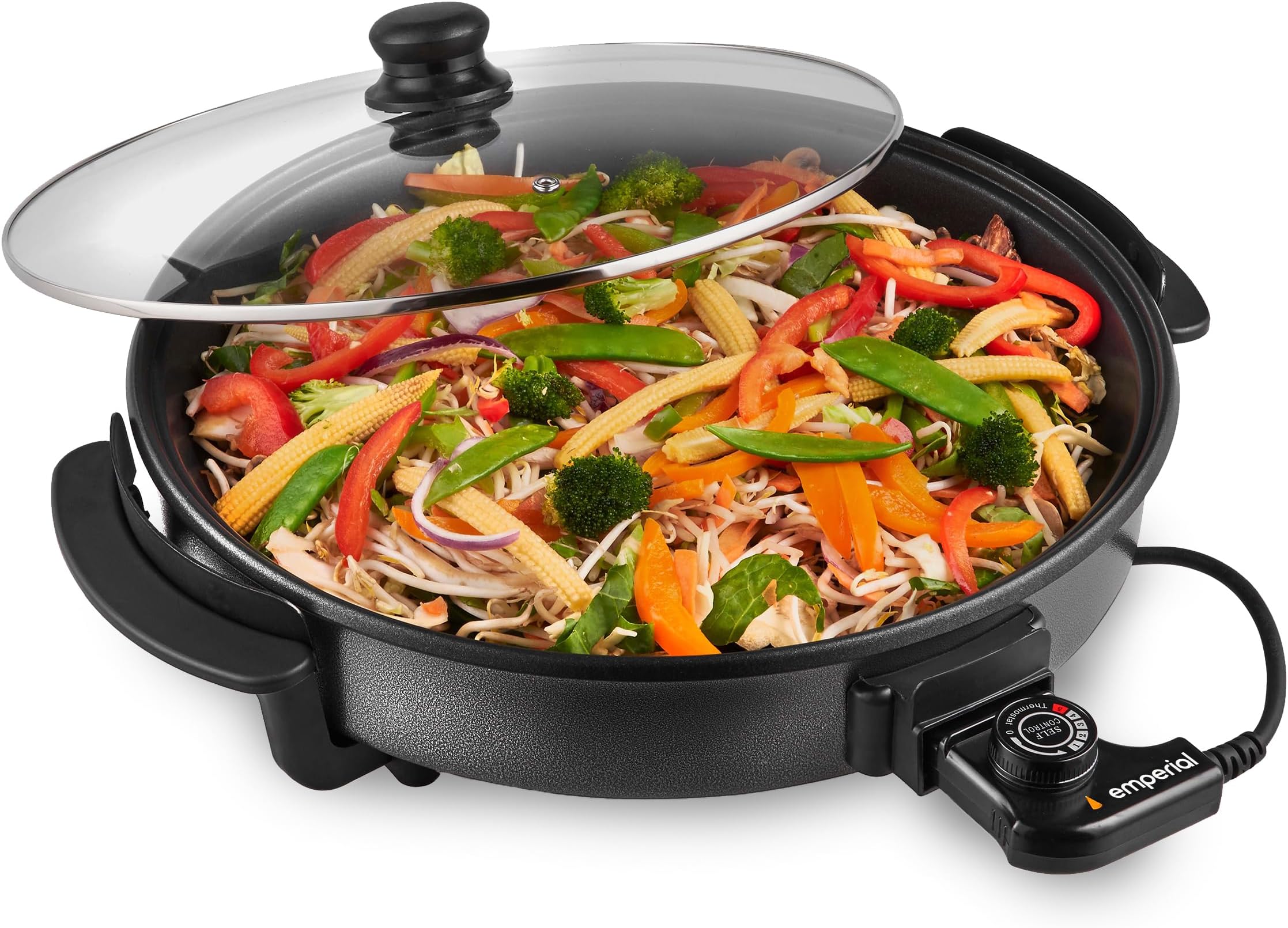
Electric frying pan comparison by cooking need
The best electric frying pan changes with the job. Use this comparison to narrow the field.
Best for families: a 14- or 16-inch skillet
Choose a large skillet if you cook for four or more people or prepare food in batches. A large surface works well for burgers, chicken pieces, pancakes, hash browns, and stir-fried vegetables.
The trade-off is storage. Measure your cabinet before buying. Include the handles and lid in your measurements.
Best for small kitchens: a 10- or 12-inch skillet
A smaller skillet uses less storage space and may be easier to lift and wash. It suits one or two people and handles common tasks such as frying eggs, cooking bacon, and making grilled cheese.
The cooking area may be too small for a family meal. Overfilling it can lead to uneven cooking.
Best for stews and braised meals: a deep electric skillet
Choose a deep pan when you often make chili, pasta dishes, braised chicken, or saucy meals. Tall sides reduce spills and hold more liquid.
Check the manual for maximum fill levels. A lid can trap steam, and hot liquid can splatter when the pan is moved.
Best for frequent use: a durable pan with simple controls
Frequent cooks should prioritize a sturdy base, firm handles, a reliable thermostat, and easy cleaning. A basic dial can be better than a complex control panel if it is easy to replace or understand.
A removable control is especially helpful for regular washing.
Best for people who dislike nonstick coatings: stainless steel
Stainless steel avoids the care limits of a nonstick coating. It can handle more aggressive utensils, but it requires better heat and oil control.
Preheat gradually. Add oil before adding food, and avoid moving food too soon if you want browning.
How to use an electric frying pan correctly
Use an electric skillet on a stable, dry, heat-safe surface. Keep the pan away from water and keep the cord away from hot surfaces.
Follow these steps:
- Read the manual before first use. Confirm the temperature settings, cleaning rules, and whether the pan or lid is dishwasher-safe.
- Set the pan on a stable surface. Leave space around the handles and lid.
- Insert the temperature control fully. A loose control can cause poor heating or create a safety risk.
- Add food only after preheating when the recipe calls for it. Do not leave a coated pan empty over high heat for a long time.
- Use a suitable utensil. Silicone, wood, or approved plastic is safest for coated surfaces.
- Keep the lid on when simmering. Remove it carefully because escaping steam can burn skin.
- Check food with a thermometer when needed. For meat and poultry, use the safe temperature guidance from the U.S. Department of Agriculture.
- Unplug the skillet after cooking. Let it cool before cleaning.
The USDA advises using a food thermometer rather than color alone to check doneness. For example, poultry should reach 165°F, while ground meats have different minimum temperatures. Always check the USDA’s current chart for the food being cooked.

Common electric skillet mistakes
Many problems come from using the wrong heat, overfilling the pan, or cleaning it incorrectly.
Food cooks unevenly
Possible causes include:
- Too much food in the pan
- Food placed in the pan before it heats
- A loose temperature probe
- Uneven food sizes
- A pan that does not sit flat
Cook in batches when food is crowded. Cut ingredients into similar sizes and allow the skillet to preheat as the manual recommends.
Food sticks to the surface
Food can stick when the pan is cold, when the surface is damaged, or when the cook tries to turn food too soon.
Use enough oil for the recipe. Let meat form a crust before turning it. If a nonstick surface is scratched, peeling, or flaking, stop using the pan and follow the manufacturer’s replacement guidance.
The pan gets too hot
A thermostat cycles during normal use. The heating element may turn on and off to maintain the selected setting.
If the pan continues to overheat, produces smoke during ordinary use, or shows damage to the cord or control, unplug it. Do not try to repair an electrical appliance yourself. Contact the manufacturer or replace the unit.
The coating wears out quickly
High heat, metal tools, abrasive cleaners, and stacking heavy cookware on the surface can shorten coating life.
Store the pan with a soft cloth or other protective layer if the manufacturer permits stacking. Do not use cooking spray unless the manual allows it. Some sprays can leave a sticky residue on coated cookware.
How to clean and maintain an electric frying pan
Cleaning rules vary by model, so the manual is the final authority. In general, unplug the skillet and let it cool before cleaning.
Use a soft sponge, mild dish soap, and warm water. Remove food residue without harsh scraping. Dry the pan fully before storage.
Never immerse the heating control, plug, or cord in water. Keep water away from the electrical connection. If the pan is dishwasher-safe, confirm whether that applies to the pan, lid, or both.
Do not place a hot glass lid under cold water. Sudden temperature changes can damage glass.
Regularly inspect the cord, plug, temperature control, handles, and cooking surface. Replace the skillet if electrical parts are damaged or if the cooking surface has severe wear.

Electric frying pan safety in the United States
An electric skillet should be treated like any other countertop heating appliance. Use it only as directed by the manufacturer and plug it into a properly installed U.S. outlet.
Basic safety rules include:
- Keep the appliance away from water.
- Do not use a damaged cord or plug.
- Do not leave hot oil unattended.
- Keep children away from hot handles and steam.
- Use oven mitts when handling the lid or pan.
- Do not move a full skillet unless necessary.
- Do not pour water onto a grease fire.
- Unplug the unit when it is not in use.
- Keep the cord away from the pan and other hot surfaces.
If oil catches fire, turn off the heat if it is safe to do so and cover the pan with a metal lid. Never use water on a grease fire. If the fire does not go out quickly, leave the area and call 911.
The U.S. Consumer Product Safety Commission and the National Fire Protection Association provide general appliance and cooking safety information. Product instructions remain essential because electric skillet designs differ.
Is an electric frying pan worth buying?
An electric frying pan is worth buying if you need extra cooking space, want steady countertop heat, or often prepare one-pan meals.
It is especially useful when:
- Your stovetop is small
- You cook for a group
- You want a pan for entertaining
- You need a portable cooking option near an outlet
- You prepare pancakes, fried chicken, or large breakfast meals
- You want to keep food warm while serving
It may not be worth buying if you already have a large skillet and enough stovetop space. It also may not suit people with very limited storage.
An electric skillet does not replace every pan. It is best viewed as a second cooking surface with its own thermostat.
What to check before buying
Use this short checklist before placing an order:
- Measure your available storage space.
- Choose a size that matches the number of servings you make.
- Confirm the wattage and plug requirements.
- Look for a removable temperature control.
- Check whether the surface is ceramic, traditional nonstick, or stainless steel.
- Read the cleaning instructions.
- Confirm the warranty and return policy.
- Check current availability and price from a U.S. retailer.
- Read the exact model manual, not only the product listing.
- Inspect the cord, handles, lid, and base when the pan arrives.
Prices and product availability change. A model that is a good value today may not be the best value after a price increase. Compare the current price with similarly sized pans before buying.

Frequently asked questions
What is the best size electric frying pan?
A 12-inch skillet is a useful middle ground for two to four people. Choose a 14- or 16-inch model for family meals or batch cooking. Choose an 8- to 10-inch pan for one person or small portions.
Can you use an electric skillet to deep-fry food?
Some electric skillets can hold a shallow layer of oil for frying, but they are not automatically safe for deep frying. Follow the manual’s oil limits and never leave hot oil unattended. A dedicated deep fryer may be safer for frequent deep-frying.
Can an electric skillet go in the dishwasher?
Some pans and lids are dishwasher-safe, but the electrical control and cord are not. Check the model manual. When the instructions are unclear, wash the pan by hand and keep all electrical parts dry.
What temperature should you use in an electric skillet?
The correct temperature depends on the food and recipe. Low heat suits warming and simmering. Medium heat works for eggs and vegetables. Higher heat helps brown meat. Use the manufacturer’s temperature markings and reduce the heat if food burns before it cooks through.
How long do electric frying pans last?
Service life depends on construction, frequency of use, cleaning, coating care, and electrical wear. A damaged cord, faulty thermostat, cracked lid, or badly worn cooking surface is a reason to stop using the pan, even if the appliance still heats.
Final recommendation
The Presto 16-Inch Ceramic Electric Skillet 06857 is the best electric frying pan for most U.S. households because it combines a large cooking area, adjustable heat, a removable control, a lid, and easy-release cooking.
Choose a smaller skillet if storage space is limited. Choose a deep model for stews and braised meals. Choose stainless steel if long-term surface durability matters more than easy food release.
Before buying, measure your storage space, read the exact product manual, and confirm the current model specifications. The best electric frying pan is the one that fits your meals, counter space, cleaning habits, and safety needs.