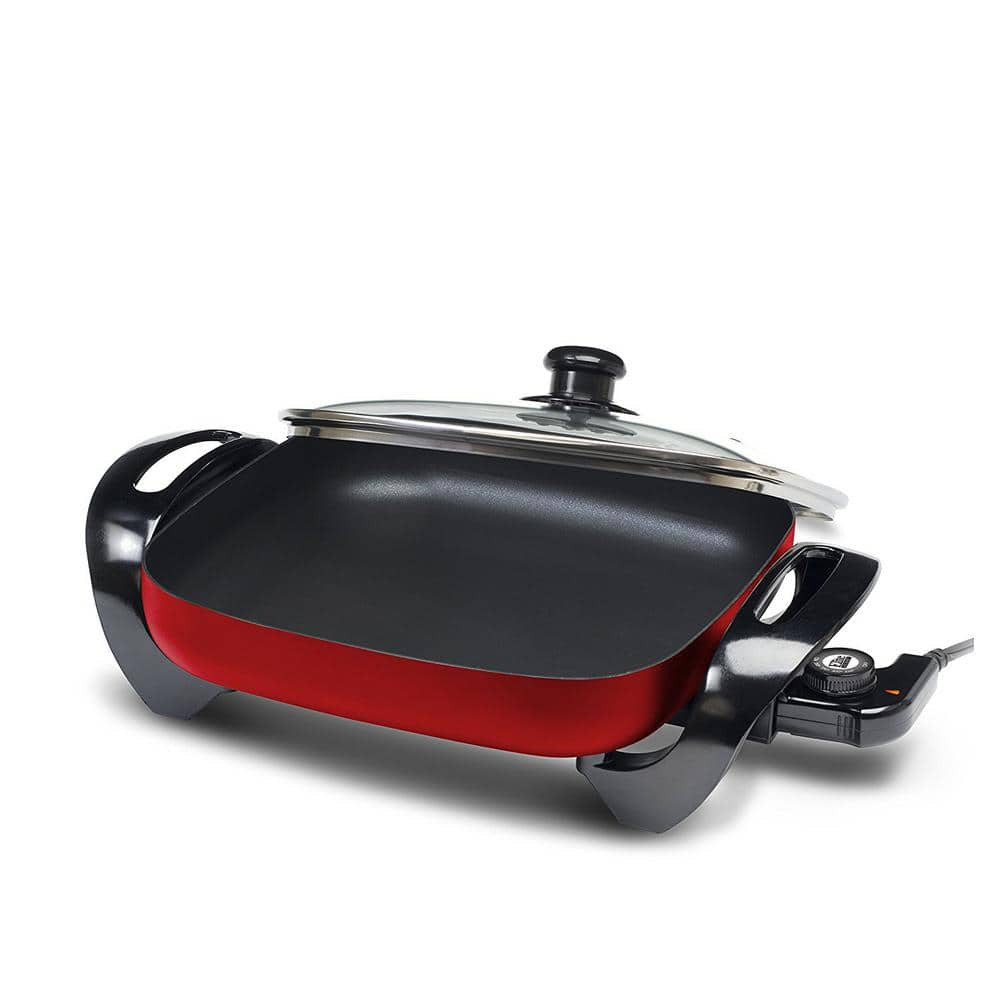
For most homes in the United States, the Presto 16-inch Foldaway Electric Skillet is the best nonstick electric skillet for general cooking. It offers a large cooking area, adjustable heat, a glass lid, removable controls, and a durable cast-aluminum body. Its 1,500-watt heater also gives it enough power for family meals.
The best choice changes if you want a ceramic coating, a smaller pan, or a premium model. The key is to match the skillet’s size, coating, temperature control, and cleaning method to the way you cook.
This guide explains what to look for, which models fit different needs, and how to use a nonstick electric skillet safely.

Quick Answer: Which Nonstick Electric Skillet Is Best?
The Presto 06857 16-Inch Foldaway Electric Skillet is the strongest all-around pick for many U.S. households.
It stands out because it has:
- A large 16-inch cooking surface
- Adjustable heat control
- A removable Control Master heat probe
- A tempered glass lid
- Foldaway handles for easier storage
- A nonstick cooking surface
- A cast-aluminum body
- A 1,500-watt heating element
The large surface works well for pancakes, fried chicken, stir-fry, bacon, grilled sandwiches, and one-pan family meals. The main drawback is its size. It may be too large for a small kitchen, dorm room, or one-person household.
If you prefer a ceramic nonstick surface, consider the Presto 06852 16-Inch Electric Skillet. If you need a compact pan, an 8-inch or 12-inch model may be easier to store, but it will cook less food at one time.
Best Nonstick Electric Skillets by Use
There is no single best model for every cook. The best nonstick electric skillet depends on the food you make, the number of people you serve, and the coating you prefer.
| Best for | Recommended type | Why it fits |
|---|---|---|
| Most families | 16-inch traditional nonstick skillet | Large surface and flexible cooking |
| Ceramic coating | 16-inch ceramic electric skillet | Good choice for shoppers who want ceramic |
| Small kitchens | 8- to 12-inch skillet | Easier to store and move |
| One-pan meals | Deep-sided electric skillet | Holds more food and sauce |
| Pancakes and sandwiches | Wide, shallow skillet | Gives food more room to spread |
| Easy cleaning | Removable-control skillet | Allows simpler washing |
| Frequent storage | Foldaway-handle model | Takes less cabinet space |
Best Overall: Presto 06857 16-Inch Foldaway
The Presto 06857 is a practical all-purpose choice. Its wide base gives food room to brown instead of forcing ingredients into a crowded pile.
The foldaway handles help with storage. The removable heat control also makes the skillet easier to wash than a pan with fixed electrical parts. According to the manufacturer, the skillet can be fully immersed in water after the heat control is removed.
Its limits are also clear. A 16-inch skillet needs a large counter or sink. It may be more pan than one person needs. The nonstick coating also requires careful use of heat and utensils.
Best Ceramic Option: Presto 06852 16-Inch Electric Skillet
The Presto 06852 uses a ceramic nonstick finish instead of a traditional coated surface. It is a useful choice for shoppers who specifically want ceramic cookware.
Ceramic coatings can lose their easy-release performance over time, especially when exposed to high heat, cooking spray residue, or abrasive cleaning. “Ceramic” also does not automatically mean that every part of the pan is free from every chemical of concern. Read the exact product statement before buying if this issue matters to you.
Best Compact Option: An 8- to 12-Inch Electric Skillet
A smaller electric skillet works well for one or two people. It also suits small apartments, RVs, office kitchens, and dorm-style rooms where cabinet space is limited.
The trade-off is cooking space. A small pan may struggle with a full batch of hash browns, several chicken breasts, or a large stir-fry. Crowding can also cause food to steam rather than brown.
Best Deep-Sided Option: A Family-Size Electric Skillet
A deep electric skillet is useful for stews, braises, pasta dishes, and saucy meals. The higher walls help reduce splatter and give food more room to move.
Depth does not replace cooking area. A narrow but deep pan may hold liquid well while still limiting browning. Check both the interior width and the wall height before you buy.

What Makes an Electric Skillet Nonstick?
A nonstick electric skillet has an electrically heated pan with a surface designed to reduce food sticking. The coating may be traditional PTFE-based nonstick, ceramic, or another release finish.
The electrical system and the coating do different jobs:
- The heating element warms the pan.
- The thermostat controls the cooking temperature.
- The nonstick surface reduces food adhesion.
- The lid helps retain heat and moisture.
- The body spreads heat across the cooking area.
A nonstick surface does not mean food can never stick. Protein-rich foods, sugary sauces, burned oil, and damaged coatings can all create sticking.
PTFE Nonstick
Many traditional nonstick pans use a PTFE-based coating. PTFE is valued for its low-friction surface and easy release.
Use a PTFE pan within the manufacturer’s instructions. Avoid heating it empty for long periods, and do not use it if the surface is peeling or badly damaged. The U.S. Food and Drug Administration regulates food-contact substances, but safe use still depends on following the product directions.
Ceramic Nonstick
Ceramic cookware usually uses a sol-gel coating rather than a PTFE coating. It can offer easy release when new and may appeal to shoppers who want a different surface.
Ceramic coatings often need gentle care. High heat, harsh cleaners, metal tools, and repeated use of aerosol cooking sprays can reduce performance. The surface may look intact even after its release ability has declined.
What “PFOA-Free” and “PFAS-Free” Mean
These terms are not interchangeable.
- PFOA-free refers to a specific chemical.
- PFAS-free is a broader claim, but its meaning depends on the manufacturer’s definition and testing.
- A ceramic coating is not automatically proven PFAS-free unless the maker clearly states it.
If chemical composition matters to your purchase, look for a clear statement from the manufacturer. Do not rely only on a marketplace title or a short product listing.
How to Choose the Best Nonstick Electric Skillet
The best skillet should match your cooking habits. Use the following features as a buying checklist.
1. Choose the Right Size
Size affects both meal capacity and storage.
| Skillet size | Practical use |
|---|---|
| 8 to 10 inches | Eggs, grilled cheese, small portions |
| 12 inches | Two-person meals and daily cooking |
| 14 inches | Small families and larger batches |
| 16 inches | Family meals, entertaining, and batch cooking |
A 16-inch skillet may have a large outside footprint, so measure your cabinet, counter, and sink first. Also measure the interior cooking surface. Some listed dimensions include the handles.
2. Look for Steady Temperature Control
A good electric skillet should maintain a fairly steady temperature instead of switching between very hot and cool.
Many models use a removable temperature probe. This is useful because it makes cleaning easier and lets the thermostat control the pan without placing electrical parts in water.
Look for:
- A wide temperature range
- Clear temperature markings
- A secure control connection
- A thermostat that cycles on and off
- A cord long enough for safe placement
A light that turns on and off usually shows that the heater is cycling. That behavior is normal in many thermostatically controlled skillets.
3. Check the Heating Area
A large pan does not always heat evenly from edge to edge. The heating element may cover only part of the base.
This matters when you cook pancakes, breaded cutlets, or several pieces of meat. Uneven heat can leave one part of the pan pale while another part browns too fast.
Product specifications rarely tell the whole story. If even browning is a top priority, look for independent testing with a stated method. Do not treat a manufacturer’s claim of “even heating” as a measured guarantee.
4. Consider the Lid
A lid helps with steaming, simmering, and moisture retention. A glass lid lets you check the food without lifting it.
A good lid should:
- Fit securely
- Have a heat-resistant handle
- Include a vent or a design that allows safe steam release
- Avoid excessive condensation dripping onto delicate food
Never seal a hot skillet in a way that traps pressure. An electric skillet is not a pressure cooker.
5. Inspect the Handles and Base
Cool-touch handles reduce the chance of burns, but they may still become warm during long cooking. Use care when moving a full skillet.
The base should sit firmly on a level, heat-safe surface. Do not place it near the edge of a counter where a cord or handle could catch.
6. Confirm the Cleaning Instructions
Cleaning is one of the most important differences between models.
A skillet with a removable heat control may be easier to wash. However, “dishwasher safe” applies only when the manual says so. Some parts may be dishwasher safe while the control, cord, or lid is not.
Before buying, confirm:
- Whether the pan can be immersed
- Whether the lid can go in a dishwasher
- Whether the heat control must be removed first
- Which cleaners are allowed
- Whether replacement parts are available

How to Use a Nonstick Electric Skillet Correctly
Correct use helps protect the coating and improves cooking results.
Before Cooking
- Place the skillet on a stable, dry, heat-safe surface.
- Attach the temperature control fully.
- Keep the cord away from hot surfaces and walkways.
- Add a small amount of oil if the recipe needs it.
- Preheat at the recipe’s suggested temperature.
- Add food only after the pan is hot enough.
Do not preheat an empty nonstick skillet for longer than the manual allows. If the pan becomes extremely hot or starts producing smoke, turn it off and let it cool.
During Cooking
Use wood, silicone, or plastic utensils approved for high heat. Metal tools can scratch or damage many nonstick surfaces.
Avoid cutting food inside the pan. Do not drag heavy cookware across the coating. Keep sugary sauces from burning onto the surface because burned sugar can be difficult to remove without scrubbing.
Do not overload the skillet. Food needs space for heat to reach its surface. A crowded pan traps steam and can lead to pale, soft results.
After Cooking
- Turn off and unplug the skillet.
- Let it cool before washing.
- Remove the temperature control if the design allows it.
- Wipe away loose food with a soft cloth or sponge.
- Wash with mild dish soap and warm water.
- Dry the pan fully before storing it.
- Store it so other cookware does not scrape the coating.
Never put the electrical control or cord in water. Follow the manual if its cleaning instructions differ from this general process.

Nonstick Electric Skillet Safety
An electric skillet is a countertop appliance, not just a frying pan. Use it with the same care you would use with other high-heat electrical equipment.
Keep these safety rules in mind:
- Do not use the skillet near water unless the instructions allow it.
- Do not operate it with a damaged cord or plug.
- Do not leave it unattended for long periods.
- Keep children away from hot surfaces and steam.
- Do not move a full skillet while it is hot.
- Keep the lid handle and side handles clear of burners and other heat sources.
- Unplug the unit before cleaning.
- Stop using the pan if the cord, plug, thermostat, or housing shows damage.
For meat, poultry, eggs, and seafood, use a food thermometer rather than judging safety by color alone. The USDA recommends cooking foods to specific internal temperatures, such as 165°F for poultry and 160°F for ground meats.
A nonstick coating that is scratched is not always an immediate emergency, but peeling, flaking, or badly damaged cookware should be replaced. Contact the manufacturer if you need a replacement part or want product-specific guidance.

Common Problems and Fixes
Food Sticks to the Surface
Possible causes include:
- The pan was not preheated
- The food was moved too soon
- The temperature was too high
- The coating is worn
- Burned oil or residue remains on the surface
- The pan is overcrowded
Clean the pan with mild soap and a soft sponge. Avoid abrasive pads. If food still sticks across most of the surface, the coating may have reached the end of its useful life.
The Pan Heats Unevenly
First, check that the temperature probe is inserted correctly. Then confirm that the skillet sits level and that the outlet supplies power.
Some variation is normal because thermostats cycle the heater. If one area remains cold or the unit cannot reach normal cooking heat, stop using it and contact the manufacturer.
The Food Takes Too Long to Cook
Check the amount of food in the pan. Large portions, frozen ingredients, and a loose-fitting lid can extend cooking time.
Also check whether the temperature control is set correctly. If the pan stays lukewarm even after proper preheating, the thermostat or heating element may have failed.
The Coating Looks Dull
A dull surface may result from cooking spray buildup, mineral deposits, or normal wear. Wash the pan gently and avoid harsh cleaners.
If the coating is blistered, peeling, or flaking, do not try to restore it with aggressive scrubbing. Replace the pan or ask the manufacturer about service.

Traditional Nonstick or Ceramic: Which Is Better?
Traditional nonstick is usually the better choice for long-term ease of release, while ceramic may suit shoppers who prefer that type of coating.
| Feature | Traditional nonstick | Ceramic nonstick |
|---|---|---|
| Easy release when new | Usually very good | Usually very good |
| High-heat tolerance | Still requires care | Also requires care |
| Metal utensil use | Usually discouraged | Usually discouraged |
| Coating life | Depends on use and care | May decline with high heat and wear |
| Chemical preference | Check the exact coating | Check the exact product claim |
| Cleaning | Usually easy | Usually easy |
Neither coating is a license for high heat or rough treatment. The pan’s construction, thermostat, care instructions, and warranty matter as much as the coating label.
Choose traditional nonstick if you want a familiar, low-friction surface and broad availability. Choose ceramic if you prefer that material and are willing to use gentle heat and cleaning methods.

Is an Electric Skillet Better Than a Frying Pan?
An electric skillet is better when you want a large, portable cooking surface with built-in temperature control. It is especially useful when the stovetop is full or when you need consistent countertop cooking.
A regular frying pan is better when you want fast heat changes, easy lifting, or use on a gas, electric, or induction cooktop. It also takes less space in many kitchens.
Choose an electric skillet for:
- Pancakes for several people
- Large batches of fried foods
- Breakfast cooking
- One-pan dinners
- Cooking where a stovetop burner is unavailable
Choose a regular pan for:
- Quick searing
- Small portions
- High-heat cooking
- Cooking over an induction burner
- Recipes that require frequent tossing or moving
An electric skillet does not replace every pan. It is a useful specialist tool for wide, controlled countertop cooking.

Key Takeaways
- The Presto 06857 16-Inch Foldaway Electric Skillet is a strong all-purpose choice for many U.S. households.
- A 16-inch model suits families but may be too large for small kitchens.
- Choose a ceramic model only after checking the maker’s exact coating claims.
- Removable temperature controls make cleaning easier.
- Use silicone or wood utensils and avoid empty high-heat preheating.
- Replace a skillet when the coating is peeling, badly scratched, or no longer releases food.
- Use a food thermometer for meat, poultry, seafood, and egg dishes.
Frequently Asked Questions
What is the best size electric skillet for a family of four?
A 14- to 16-inch skillet is usually the most useful range for a family of four. A 16-inch model gives more room for pancakes, chicken pieces, vegetables, and one-pan meals. Check the actual cooking surface and storage space before buying.
Can I put a nonstick electric skillet in the dishwasher?
Only if the product manual says it is dishwasher safe. Remove the temperature control first, and never put electrical parts in water. Hand washing with mild soap is often gentler on the nonstick surface.
Can I use metal utensils in a nonstick electric skillet?
Avoid metal utensils unless the manufacturer clearly approves them. Silicone, wood, and heat-safe plastic tools are safer choices for most nonstick coatings.
How long should a nonstick electric skillet last?
Service life depends on heat, cleaning, storage, and how often you use it. A skillet may still heat correctly while its nonstick performance declines. Replace it when the coating peels, flakes, or becomes difficult to clean.
Is ceramic nonstick safer than regular nonstick?
Neither label alone proves that one product is safer in every situation. Both types should be used within the manufacturer’s temperature and care instructions. If chemical composition is important, review the specific product’s materials statement rather than relying on the word “ceramic.”
Can I cook meat in an electric skillet?
Yes. An electric skillet can cook meat, poultry, and seafood when it reaches the needed cooking temperature. Use a food thermometer and follow USDA safe-temperature guidance instead of relying only on appearance.
Conclusion
For most shoppers, the Presto 06857 16-Inch Foldaway Electric Skillet offers the best balance of cooking space, temperature control, storage, and everyday usefulness. Its large surface is especially helpful for family breakfasts and one-pan meals.
Choose a smaller model if storage matters more than capacity. Choose a ceramic model if you specifically prefer that coating. In every case, confirm the cleaning instructions, use gentle utensils, avoid prolonged empty heating, and replace the skillet when its coating is badly damaged.