For most U.S. homes, a 2-pound bread maker is the best starting point. It makes enough bread for a family of three to five without taking up as much space as a larger machine.
Choose a 1-pound or 1.5-pound bread maker if you live alone, bake small amounts, or want fresh bread before it goes stale. Choose a 2.5-pound or larger model only if you have a large family, freeze extra bread, or bake often.
The right size depends on more than the loaf weight. You should also check the machine’s counter space, bread pan shape, recipe range, crust settings, and ability to make smaller loaves.

Bread Maker Sizes Explained
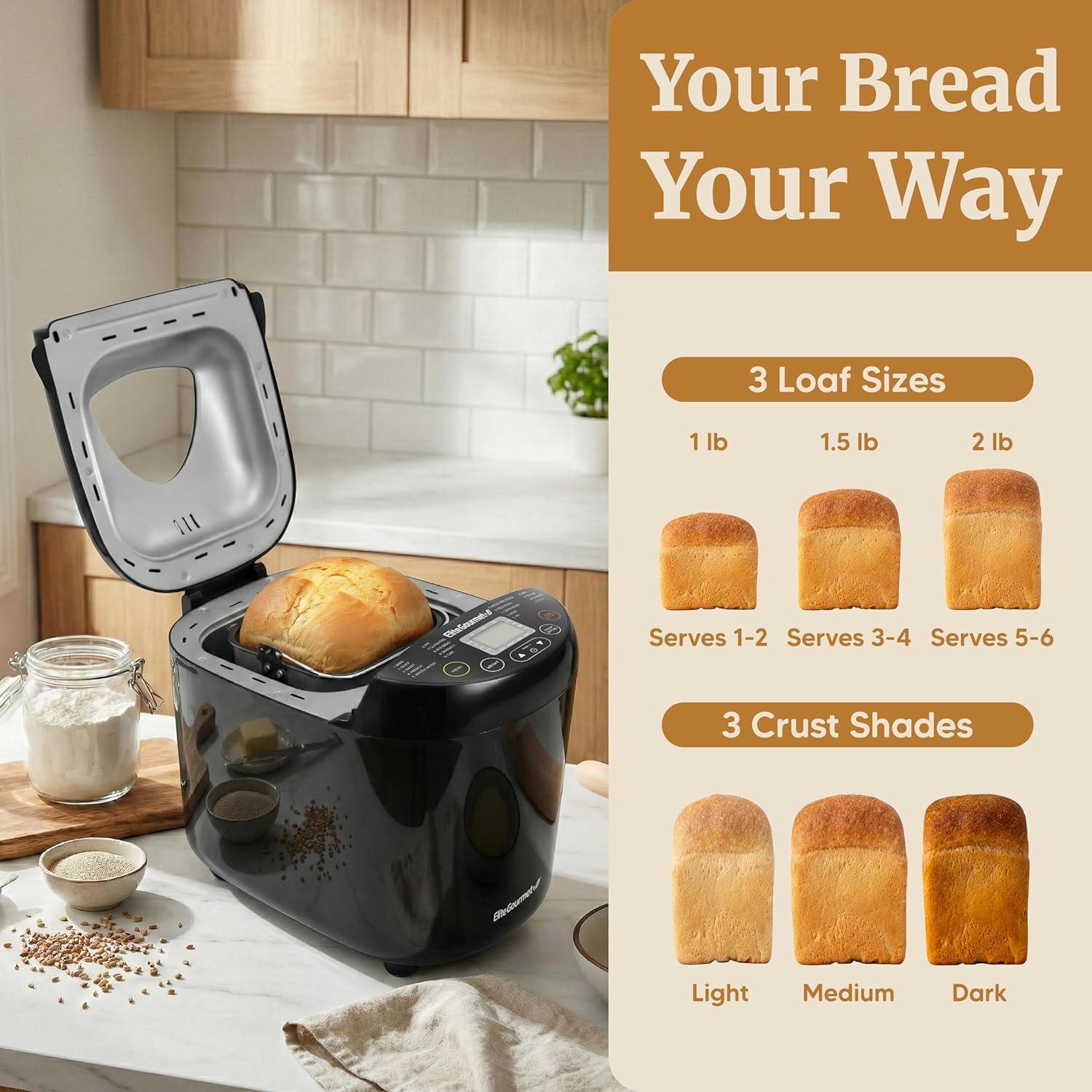
Bread makers are usually sold by the maximum loaf weight they can bake. In the United States, the common sizes are:
- 1 pound: Best for one person or very small households
- 1.5 pounds: Good for one to three people
- 2 pounds: Best for most couples and families
- 2.5 pounds or more: Useful for large households or frequent baking
The stated weight refers to the finished loaf. It does not mean the machine holds that much flour. A 2-pound loaf may contain flour, water, yeast, salt, sugar, oil, and other ingredients.
A larger bread maker does not always make better bread. If you place a small dough batch in a large pan, the loaf may spread out or rise unevenly. Some models handle small and large loaves well. Others are designed mainly for one size.
Always read the recipe chart in the owner’s manual. The manual tells you which loaf sizes the machine supports and how much flour each cycle needs.
Which Bread Maker Size Fits Your Household?
Use your household size as a starting point, then adjust for how often you eat bread.
| Household and use | Recommended bread maker size | Why |
|---|---|---|
| One person | 1 to 1.5 pounds | Less waste and smaller slices |
| Two people | 1.5 to 2 pounds | Enough for meals without too much leftover bread |
| Three to four people | 2 pounds | A practical size for daily use |
| Five or more people | 2 to 2.5 pounds | More servings per bake |
| Meal prep or freezing | 2 to 2.5 pounds | Makes larger batches |
| Occasional baking | 1.5 to 2 pounds | Balances capacity and storage |
These are useful guidelines, not strict rules. A couple who eats toast every morning may prefer a 2-pound model. A family that eats bread only once a week may prefer a smaller machine.
Think about your weekly bread use. If one loaf lasts five days, a large machine may create waste. If one loaf disappears in a day, a small machine may feel limiting.

Choose a 1-Pound Bread Maker If You Bake for One
A 1-pound bread maker suits a single adult who wants fresh bread in small batches. It can also work well for people who eat bread in small amounts or prefer to bake often.
Smaller loaves offer several benefits:
- Less food waste
- Shorter storage time
- Smaller slices
- Lower ingredient use per batch
- Easier fit in a small kitchen
The main trade-off is that many small bread makers have fewer settings. Some may not offer gluten-free, jam, pasta, or dough-only programs. Small loaves may also have a taller shape, depending on the pan design.
Before buying, check whether the machine can bake a loaf smaller than its maximum size. A 1-pound model may be a poor choice if the smallest supported recipe is 1.5 pounds.
Choose a 1.5-Pound Bread Maker for a Small Household
A 1.5-pound bread maker is a good middle option for one to three people. It provides more flexibility than a 1-pound model without the size of a large family machine.
This size often works well for:
- Two people who eat bread a few times per week
- Small sandwiches
- Breakfast toast
- Dough for a small pizza
- People with limited counter space
A 1.5-pound loaf may still be too much if you eat bread slowly. Homemade bread has no commercial preservatives, so it can stale or mold faster than packaged bread. You can slice and freeze part of the loaf to reduce waste.
Check the finished loaf dimensions before you buy. A 1.5-pound loaf may fit a standard toaster, but the exact shape depends on the pan.
Choose a 2-Pound Bread Maker for the Most Flexibility
A 2-pound bread maker is the safest choice for many U.S. households. It usually offers enough capacity for family meals while still supporting smaller recipes on some models.
A 2-pound machine is a strong fit if you:
- Have two to five people at home
- Want bread for sandwiches and toast
- Bake once or twice each week
- Want dough, jam, or cake settings
- Plan to freeze extra slices
- Need a common recipe size
Many published bread machine recipes use a 1.5-pound or 2-pound setting. That can make recipe matching easier. However, you should still compare the recipe’s flour amount with the machine’s manual.
A 2-pound machine may take more counter space than expected. Measure the width, depth, and height with the lid open. Leave space around air vents, and make sure you can remove the bread pan without hitting a cabinet.
Choose a Larger Bread Maker Only for a Clear Reason
A 2.5-pound or larger bread maker can help a large family or a baker who freezes bread. It is not automatically better for every home.
A larger model makes sense when:
- Several people eat bread each day
- You bake large sandwich loaves
- You make bread for gatherings
- You want to freeze several portions
- You regularly make large dough batches
Large bread makers often need more flour, water, and yeast. Their loaves may also be too large for some toasters or storage containers. If the machine cannot make smaller loaves, it may create waste in a small household.
Do not fill a large pan beyond the manual’s limit. Dough can rise into the lid, touch the heating element, or spill into the machine. Spilled dough can burn and may damage the appliance.
Compare Loaf Size With Flour Capacity
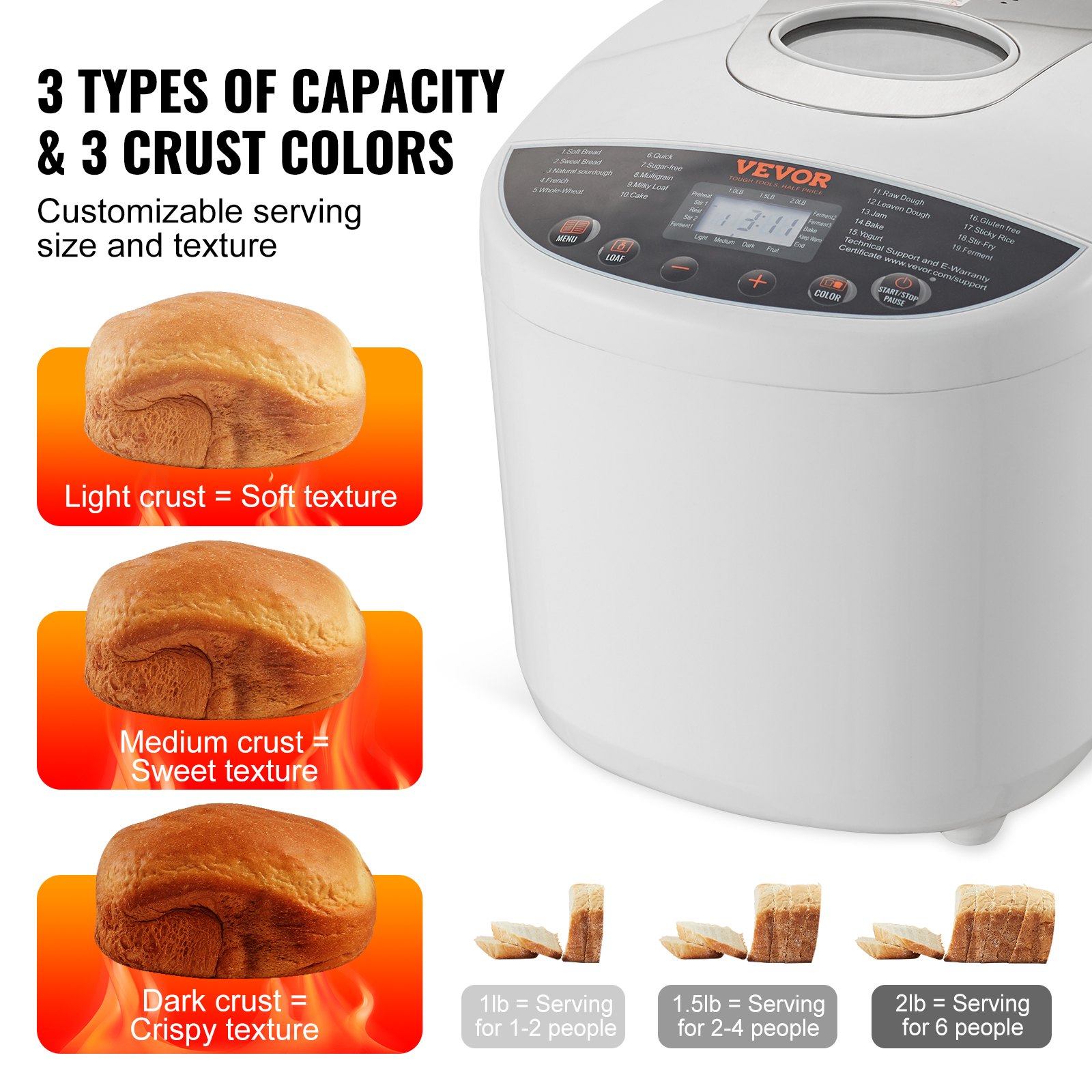
The best size guide is often the maximum flour amount, not the advertised loaf weight.
Bread recipes vary, but many machines use roughly these ranges:
| Finished loaf size | Common flour range | Use as |
|---|---|---|
| 1 pound | About 1.5 to 2 cups | A rough guide only |
| 1.5 pounds | About 2 to 3 cups | A small household loaf |
| 2 pounds | About 3 to 4 cups | A common family loaf |
| 2.5 pounds or more | More than 4 cups | Large batches |
These ranges are estimates. Flour type, hydration, sugar, fat, eggs, and added ingredients change the dough volume. The owner’s manual remains the controlling source.
Do not convert a regular oven recipe by simply multiplying every ingredient. Bread machines need the correct dough volume for the pan and kneading blade. A recipe that works in a loaf pan may overflow in a bread machine.
If a manual lists a maximum flour amount, stay below it. This is especially important for whole-wheat, rye, gluten-free, and enriched doughs. These doughs can rise or behave differently from basic white bread.
Consider the Shape of the Bread Pan
Bread pan shape affects how useful a size will be. A 2-pound machine may make a tall, narrow loaf or a wider, more traditional sandwich loaf.
A tall loaf can be useful for:
- Toast
- Small sandwiches
- Narrow slices
- Limited counter space
A wide loaf may work better for:
- Large sandwiches
- French toast
- Family meals
- Standard bread storage bags
Look at the pan dimensions in the product manual. Do not rely only on the stated loaf weight. Two machines with the same capacity can produce different loaf shapes.
Also check the kneading paddle. Some pans use one paddle, while others use two. A larger pan may leave a larger opening in the bottom of the loaf, although some machines have removable or collapsible paddles.
Make Sure the Machine Supports Smaller Loaves
A large bread maker is useful only if it can bake the amount you need. Look for machines with selectable loaf sizes, such as 1, 1.5, and 2 pounds.
A size setting can change more than the ingredient quantity. It may also adjust:
- Kneading time
- Rise time
- Bake time
- Crust color
- Cooling expectations
Do not assume that every size button supports every recipe. Read the manufacturer’s recipe chart.
If a machine supports only one large loaf, it may not suit a small household. You could bake less often and freeze slices, but that adds storage work. A smaller machine may be easier and less wasteful.
Check Your Counter and Storage Space
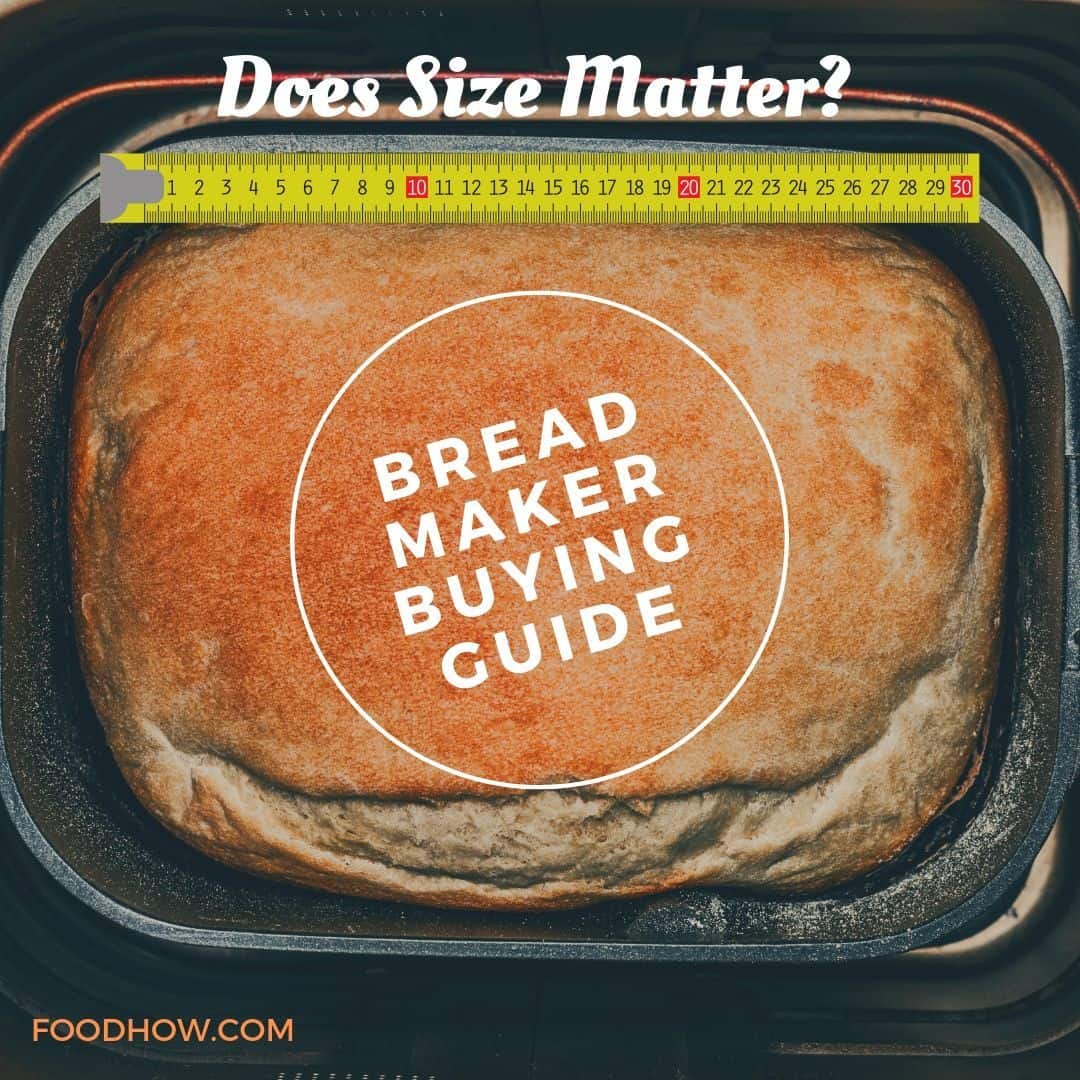
Measure your kitchen before choosing a bread maker size. Bread machines can be deeper and taller than their product photos suggest.
Record these measurements:
- Available counter width
- Available counter depth
- Height under cabinets
- Space needed to open the lid
- Clearance around vents
- Storage space for the bread pan and accessories
Bread makers produce heat and steam. Place the machine on a stable, heat-resistant surface. Keep it away from the edge of the counter, water, curtains, and other items that can be damaged by heat.
A larger bread maker may be hard to lift from a cabinet. If you plan to store it after each use, check its weight and shape. A machine that stays buried in a cabinet may not get used, even if its capacity is ideal.
Think About the Bread You Plan to Make
Your favorite bread types can change the best size.
White bread and basic sandwich bread
Most machines handle these recipes well. Choose based on household size and loaf shape.
Whole-wheat bread
Whole-wheat dough can be dense and may need a dedicated cycle. Check whether the machine provides a whole-wheat program and recipes for the loaf size you want.
Gluten-free bread
Gluten-free dough often needs a different mixing and rise process. If you need this feature, confirm that the manufacturer provides a gluten-free cycle. A large capacity alone does not make a machine suitable for gluten-free baking.
Sourdough
Many bread makers can mix or bake sourdough-style recipes, but they may not replace a long, flexible sourdough process. Check the available custom cycle times and whether the machine supports a dough-only or bake-only program.
Pizza and dinner rolls
For pizza, rolls, or buns, the dough setting may matter more than the finished loaf size. The machine can mix and knead the dough, while you shape and bake it in an oven.
A 1.5-pound or 2-pound machine often provides enough dough for a small household. For large batches, check the maximum flour limit.
Do Not Choose Size by Price Alone
A smaller bread maker is not always cheaper, and a larger model is not always a better value. Compare the features that affect your actual use.
Focus on:
- Supported loaf sizes
- Bread pan shape
- Dough capacity
- Available cycles
- Gluten-free support, if needed
- Delay timer
- Keep-warm function
- Replacement pan availability
- Replacement paddle availability
- Warranty terms
- Manual and recipe support
Replacement parts matter because the pan and paddle receive regular wear. A machine may appear affordable but become difficult to maintain if parts are unavailable.
Prices and product availability change. Check the manufacturer’s U.S. site and the current owner’s manual before buying. Retail listings may show incomplete or outdated specifications.
Common Bread Maker Size Mistakes
Buying the largest model “just in case”
A large machine can waste ingredients if you usually bake small loaves. It can also create bread that does not fit your toaster or storage container.
Ignoring the smallest supported loaf
A 2-pound label does not prove that the machine can bake a 1-pound loaf. Check the listed settings.
Confusing flour weight with loaf weight
A 2-pound loaf does not use 2 pounds of flour. The finished weight includes all ingredients and some retained moisture.
Using a standard recipe without checking capacity
A recipe made for an oven loaf may contain too much dough for a bread machine pan. Follow the machine’s maximum ingredient limits.
Measuring only the machine’s footprint
The lid must open, and the machine needs safe clearance. Measure the full working space, not just the base.
Forgetting about leftovers
Fresh bread tastes best when you can use it within a reasonable time. If your household eats slowly, choose a smaller machine or plan to freeze the extra bread.
A Simple Way to Pick the Right Size
Use this four-step method:
- Estimate weekly bread use. Count how many slices or loaves your household eats.
- Choose the smallest size that meets that need. Smaller batches often reduce waste.
- Check the smallest and largest supported recipes. Confirm that the machine fits your normal baking habits.
- Measure the machine and its open-lid space. Make sure it fits your kitchen safely.
For example, a two-person household that eats one loaf every five days could choose a 1.5-pound model. If both people eat bread daily or want to freeze extra slices, a 2-pound model may be more practical.
The best choice is the machine you can use often without wasting bread or counter space.
What Size Bread Maker Should I Buy for a Family of Four?
A 2-pound bread maker is usually the best fit for a family of four. It offers enough capacity for sandwiches, toast, and meals without the size of a commercial-style home machine.
Choose a larger model if your family eats more than one loaf every few days or if you plan to freeze bread. Check that the larger model can also make smaller loaves.
Is a 1-Pound Bread Maker Big Enough for Two People?
A 1-pound model can be enough for two people who eat little bread. It may not be enough if both people eat toast or sandwiches every day.
A 1.5-pound machine gives most couples more flexibility. A 2-pound model is better if you want leftovers, larger slices, or frozen bread.
Can I Make a Small Loaf in a 2-Pound Bread Maker?
You can make a small loaf in a 2-pound machine only if the manual supports that loaf size. Some machines have selectable settings. Others are designed for one capacity.
Using too little dough may produce a flat, wide, or uneven loaf. Follow the manufacturer’s recipe chart for the smallest safe batch.
How Many Cups of Flour Does a 2-Pound Bread Machine Use?
Many 2-pound bread machines use about 3 to 4 cups of flour in common recipes. This is only a general range.
The exact amount depends on the machine, recipe, flour type, and dough style. Use the owner’s manual instead of treating the range as a fixed rule.
Is a Bread Maker Worth It for One Person?
A bread maker can be worthwhile for one person if you value fresh bread, need control over ingredients, or enjoy making dough. A 1-pound or 1.5-pound machine can reduce waste.
It may not be worthwhile if you rarely eat bread or do not want to clean and store the machine. A dough-only use case can still justify a bread maker if you regularly make pizza or rolls.
Can I Bake Gluten-Free Bread in Any Bread Maker?
No. Some bread makers include a gluten-free cycle, while others do not. Gluten-free dough may need a shorter mix, a different rise, or a special bake program.
If you need gluten-free bread, confirm the feature in the current U.S. manual. Also avoid cross-contact if someone in your household has celiac disease or a medically diagnosed gluten-related condition.
Final Recommendation
For most U.S. buyers, choose a 2-pound bread maker with at least two loaf-size settings. It offers a useful balance of capacity, recipe flexibility, and household fit.
Choose 1 to 1.5 pounds for one person or a small household. Choose 2.5 pounds or more only when you regularly need large loaves or plan to freeze extra bread.
Before you buy, check the manual, flour limit, smallest supported loaf, bread shape, open-lid height, and replacement parts. Those details matter more than the largest number on the box.