For most homes in the United States, the largest commonly sold countertop oven is an extra-large 42-liter model, such as the Oster Extra-Large French Door Countertop Oven. A 42-liter oven holds about 1.48 cubic feet and may fit a 16-inch pizza, a 15-by-12-inch baking pan, or several smaller dishes at once.
The answer depends on what “largest” means:
- Largest cooking capacity: about 42 liters, or 1.5 cubic feet, among common residential countertop ovens.
- Largest baking area: a model that accepts a 16-inch pizza or 15-by-12-inch pan.
- Largest physical size: some commercial countertop convection ovens are much bigger.
- Largest practical home oven: usually a 30- to 42-liter unit that fits your counter, outlet, and ventilation needs.
A full-size built-in range oven still offers more space. However, a large countertop oven can provide much of the same function without permanent installation.

What is the largest countertop oven for home use?
The 42-liter Oster Extra-Large French Door Countertop Oven is one of the largest widely available residential countertop ovens in the United States. Oster lists the oven as large enough for a 16-inch pizza, a 15-by-12-inch baking pan, or two 12-inch pizzas, depending on the cooking setup and rack position. See the manufacturer’s product information for model-specific details.
A 42-liter capacity equals roughly 1.48 cubic feet:
42 liters ÷ 28.3168 = 1.48 cubic feet
That figure describes the oven’s stated internal volume. It does not mean every inch is usable for food. Heating elements, rack supports, door clearance, and airflow reduce the practical cooking area.
Large countertop oven comparison
| Oven type or example | Stated capacity | Typical large-item capacity | Best use |
|---|---|---|---|
| Oster Extra-Large French Door | 42 L, about 1.48 cu. ft. | Up to a 16-inch pizza, depending on setup | Maximum home countertop capacity |
| Breville Smart Oven Air Fryer Pro | 1 cu. ft. | 13-inch pizza, 9-by-13-inch pan, or a 14-pound turkey | Large baking and multi-function cooking |
| Cuisinart Chef’s Convection Toaster Oven | About 0.95 cu. ft. | 13-inch pizza or 9-by-13-inch pan | Baking and convection cooking |
| Typical 6-slice toaster oven | About 0.6 to 0.9 cu. ft. | 12-inch pizza or smaller pan | Daily meals and reheating |
| Commercial countertop convection oven | Varies widely | Larger pans may fit | Food-service or heavy-duty use |
The Breville Smart Oven Air Fryer Pro is listed by Breville as a 1-cubic-foot oven. Its design is smaller than a 42-liter unit by stated volume, but it has a useful interior layout and supports a 9-by-13-inch roasting pan, 13-inch pizza, and other large dishes.
Capacity alone does not determine which oven is best. A slightly smaller oven may be easier to use if its rack spacing, door opening, and pan shape match your cookware.

How large is a 42-liter countertop oven?
A 42-liter countertop oven is roughly the size of a compact microwave or a small secondary oven, but its exterior dimensions vary by model. Large units often measure about 22 to 24 inches wide, 13 to 16 inches high, and 18 to 20 inches deep.
The exact measurements matter more than the label. Before buying, measure:
- The full counter space.
- The clearance above the oven.
- The space behind the oven.
- The door’s swing or drop-down path.
- The distance to the electrical outlet.
- The room needed to remove hot pans.
A countertop oven needs open space around its vents. Follow the clearance instructions in the owner’s manual. Do not place it directly below low cabinets if the manufacturer warns against that setup.
Interior capacity versus usable capacity
Manufacturers may state capacity in liters or cubic feet, but these figures are not always measured in the same way. One model may count nearly all of the internal chamber. Another may emphasize the largest pan or pizza that fits.
For a fair comparison, check these details:
- Largest pizza size
- Largest rectangular pan
- Number of rack positions
- Interior width between the side walls
- Interior height above the lower rack
- Door clearance
- Whether the stated capacity includes accessories
A 15-by-12-inch pan needs more than 15 inches of open width. You also need space for the pan rim, rack rails, and air movement. A pan that technically fits may still be difficult to insert or remove.
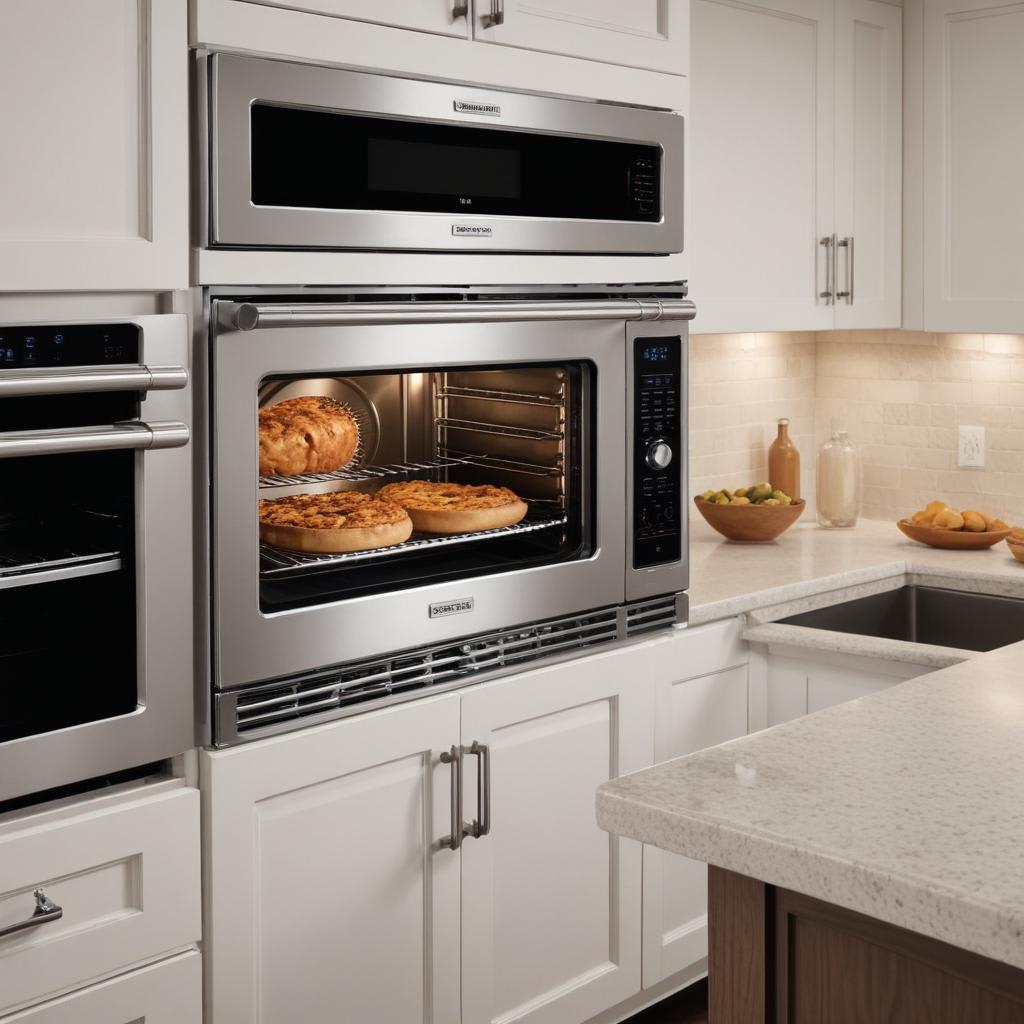
Which countertop oven fits the largest pan?
The largest residential countertop ovens generally fit either a 15-by-12-inch baking pan or a 16-inch pizza, but not always both at the same time. A pizza may fit directly on a rack, while a rectangular pan may need a different rack position.
The oven with the largest usable baking surface is not always the oven with the highest stated liter rating. For example, a 1-cubic-foot oven may offer better support for a standard 9-by-13-inch pan, while a wider 42-liter oven may favor pizza and broad roasting trays.
Use this guide:
- Choose a 42-liter extra-large oven for the widest home cooking chamber.
- Choose a 1-cubic-foot multi-function oven for large pans, roasting, baking, and air frying.
- Choose a 30-liter oven when you need large capacity but have limited counter space.
- Choose a small 20- to 25-liter oven for toast, reheating, and one- or two-person meals.
Check your cookware before you buy
Measure the cookware you use most often. Include the handles and rim.
For example, a standard 9-by-13-inch baking dish may have outside dimensions closer to 10 by 14 inches. A countertop oven must fit the outside dimensions, not the size printed on the dish.
Also check the height. A tall casserole may touch the upper heating element even when its width fits. This can cause uneven cooking or create a fire risk.

Are commercial countertop ovens larger than home models?
Yes. Commercial countertop convection ovens can be much larger than residential toaster ovens. Some are designed for half-size sheet pans, multiple racks, or continuous food-service use.
These ovens may offer:
- Higher cooking capacity
- Stronger heating systems
- More durable stainless-steel construction
- Longer duty cycles
- More precise commercial controls
They also need more counter space, may draw more electrical power, and can produce more heat. Some require a dedicated circuit or special installation. A commercial oven is not automatically suitable for a home kitchen.
Before using one in a residence, check:
- The voltage and amperage
- The plug type
- The circuit rating
- Required ventilation
- Manufacturer clearance rules
- Local electrical and building requirements
Do not use an adapter to force a high-power commercial appliance into an unsuitable outlet. If the electrical load is unclear, ask a licensed electrician.

What should you measure before buying the largest countertop oven?
Measure both the oven and the space around it. The oven’s listed width, height, and depth are only the starting point.
Countertop measurement checklist
| Measurement | Why it matters |
|---|---|
| Counter width | Confirms that the oven can sit flat without hanging over the edge |
| Counter depth | Allows the oven to sit safely and leaves room for the door |
| Height to cabinets | Prevents heat from collecting under overhead cabinets |
| Rear clearance | Protects vents and allows hot air to escape |
| Door path | Ensures the door can open fully |
| Outlet distance | Reduces the need for extension cords |
| Nearby wall space | Helps prevent heat damage and blocked airflow |
Place the oven on a level, heat-resistant surface. Keep towels, paper, plastic, curtains, and other flammable items away from the appliance.
A large countertop oven can weigh more than a small toaster oven. Confirm that the counter can support the oven and the food inside it.

Does a larger countertop oven cook better?
A larger countertop oven does not automatically cook better. It gives you more room, but it may also take longer to preheat and may use more electricity during a long cooking cycle.
Large ovens can help when you need to:
- Cook a family-size meal
- Bake a large casserole
- Roast a chicken or turkey
- Prepare two smaller dishes
- Use a 9-by-13-inch pan
- Cook a large pizza
They may be less efficient for a single piece of toast or a small portion. A smaller cavity can heat quickly for light tasks.
The best size depends on the amount of food you cook. For one or two people, a 25- to 30-liter oven may be enough. For families, frequent baking, or holiday cooking, a 35- to 42-liter oven offers more flexibility.
Airflow affects results
Do not fill every inch of a large oven. Convection fans need room to move hot air. Overcrowding can cause pale food, uneven browning, and longer cooking times.
Use the rack position recommended in the manual. Leave space between pans when the instructions call for it. If two pans block the fan or heating elements, cook in batches instead.

What features matter in a large countertop oven?
The most useful features depend on how you cook. Capacity should come first, but it should not be the only decision.
Convection heating
A convection fan moves hot air around the food. This can improve browning and may shorten cooking time, but you still need to follow the recipe or manual for temperature changes.
Air frying
Air-fry modes use strong airflow and a perforated basket. The basket takes up vertical space and may reduce the size of the food container you can use.
A large oven may advertise air frying but provide less air-fry surface than a dedicated basket-style air fryer. Check the basket dimensions before treating air-fry capacity as equal to oven capacity.
French doors
French doors open from the center. This design can reduce the reach needed to place food inside, but the doors still need space in front of the oven.
Rotisserie function
A rotisserie needs extra height and clearance. Check the maximum food size and keep the food balanced on the spit. A large oven with a rotisserie may have less usable height than its total volume suggests.
Temperature and timer controls
Look for a clear temperature range, a timer that suits your recipes, and controls that are easy to read. Digital controls can offer more settings, while simple dials may be easier to operate.
Interior light and viewing window
An interior light lets you check food without opening the door. This helps reduce heat loss and makes it easier to monitor browning.

What are the drawbacks of the largest countertop ovens?
The main drawback is the space they occupy. A 42-liter oven can take up most of a standard kitchen counter.
Other trade-offs include:
- Greater weight
- Longer preheat time
- More heat released into the kitchen
- Higher power demand
- More difficult storage
- More complicated cleaning
- Limited compatibility with small counters
- Possible difficulty fitting under cabinets
Large ovens can also have hot exterior surfaces. The door, top, and sides may become hot during use. Keep children and pets away from the appliance.
Do not put a large countertop oven inside a cabinet or enclosed shelf while operating. The appliance needs airflow, and trapped heat can damage the cabinet or create a fire hazard.

Can you use a countertop oven instead of a regular oven?
A large countertop oven can replace many everyday oven tasks, but it cannot always replace a full-size range oven.
It works well for:
- Toasting
- Baking small batches
- Roasting vegetables
- Cooking pizza
- Reheating leftovers
- Air frying
- Broiling
- Cooking casseroles
- Roasting smaller poultry
A full-size oven remains better for multiple large dishes, very tall cookware, large holiday meals, and recipes that require substantial vertical space.
Check the manual before using glass, ceramic, parchment paper, foil, or silicone cookware. Use only materials rated for the oven’s temperature and cooking mode. Keep foil away from heating elements and do not cover the crumb tray unless the manual permits it.
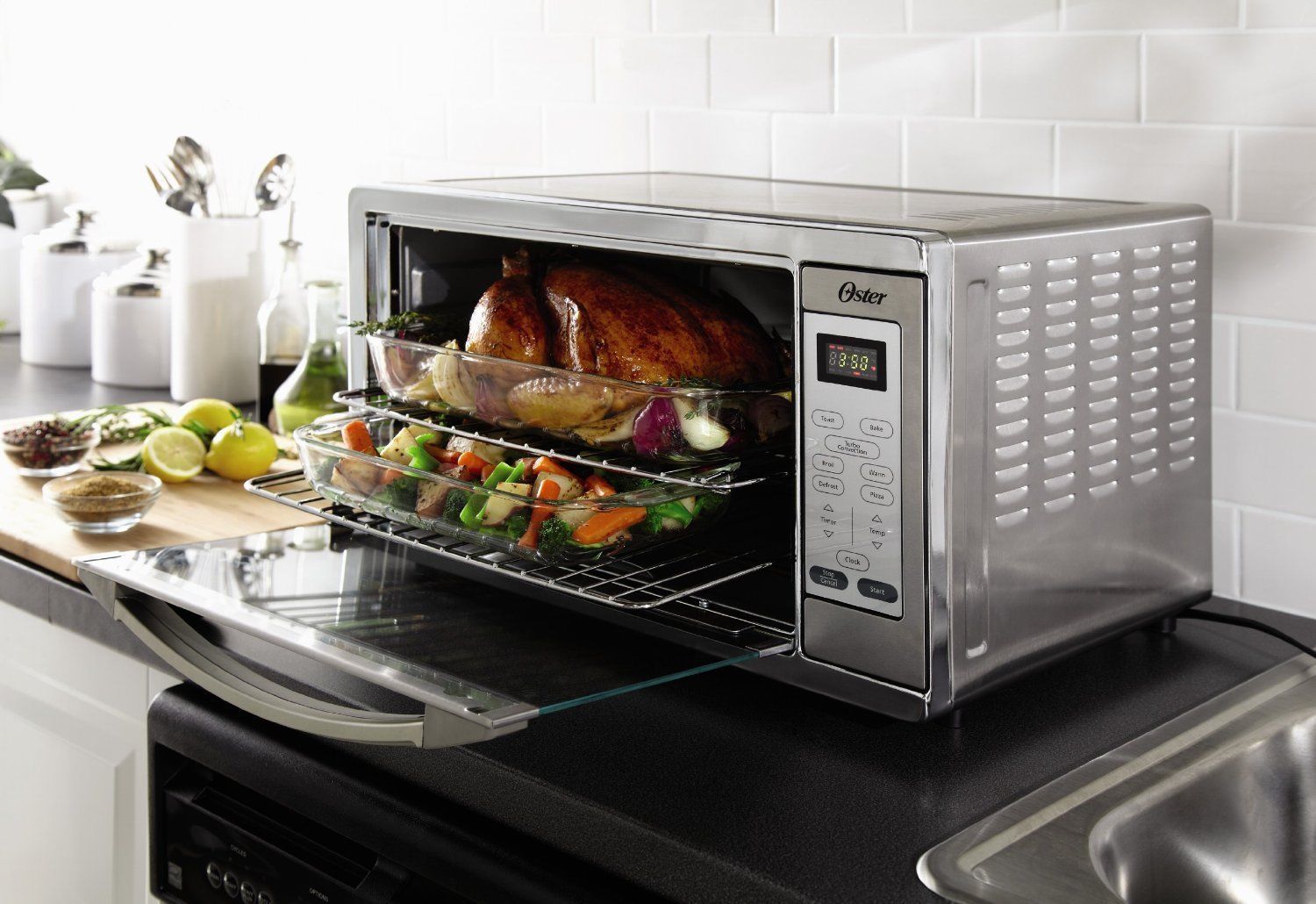
How to choose the largest countertop oven for your kitchen
Use this five-step process:
- Measure the counter. Record width, depth, height, and clearance.
- Measure your largest pan. Include handles and outside rims.
- Choose the needed capacity. Consider 30, 35, or 42 liters.
- Check the electrical requirements. Match the appliance to a suitable household outlet.
- Review the manual. Confirm clearances, cookware rules, cleaning instructions, and supported modes.
For the largest home cooking space, start with a 42-liter model. For a balanced mix of capacity and functions, compare it with a 1-cubic-foot oven such as the Breville Smart Oven Air Fryer Pro. For a smaller kitchen, a 30-liter model may offer a better balance.
The right choice is the largest oven that fits safely. Bigger is not better if the door cannot open, the vents are blocked, or the appliance overloads the available circuit.

Common mistakes when buying a large countertop oven
Confusing external size with cooking capacity
A wide oven may have a small interior if it has thick insulation or a large control panel. Compare internal measurements and pan capacity.
Ignoring rack height
A large pizza may fit on the lower rack but not under the broiler. A tall roasting dish may need the upper element removed or a different rack position.
Trusting the liter rating alone
Liters provide a useful comparison, but they do not show the usable cooking shape. Pan and pizza capacity often provide better practical information.
Blocking ventilation
Do not push the oven tightly against a wall or place objects on top of it. Follow the manufacturer’s clearance instructions.
Using an unsuitable extension cord
High-power heating appliances should plug directly into an appropriate wall outlet unless the manual specifically allows another setup. Never use a light-duty extension cord.
Overcrowding the oven
Food needs room for heat to circulate. A large cavity still needs proper spacing between pans and around the food.
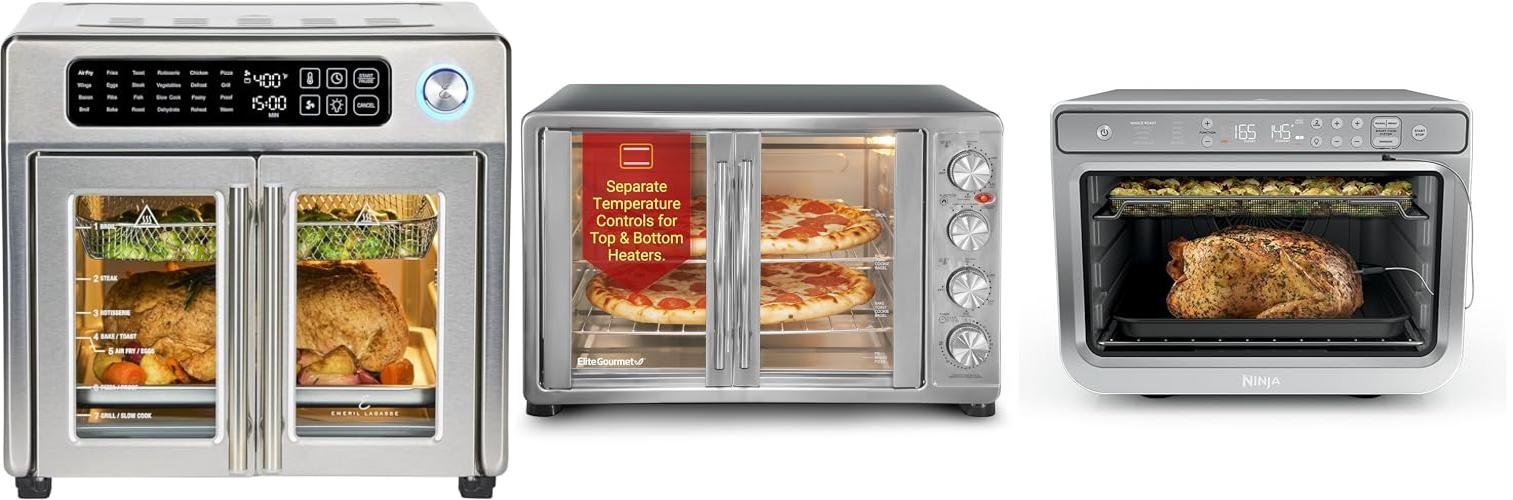
Frequently asked questions
What is the biggest countertop toaster oven available?
Among common residential models in the United States, ovens around 42 liters, or approximately 1.5 cubic feet, are among the largest. The Oster Extra-Large French Door Countertop Oven is a well-known example of this size class.
Is a 42-liter countertop oven big enough for a turkey?
Some large countertop ovens are designed to hold a small turkey, but the exact maximum weight varies by model. Check the owner’s manual for the approved turkey size, pan dimensions, rack position, and clearance from the heating elements.
Can a countertop oven fit a 9-by-13-inch pan?
Many large countertop ovens can fit a 9-by-13-inch pan, but the outside dimensions of the pan matter. A pan with wide handles or a large rim may not fit even when the label says “9 by 13 inches.”
Which is larger: a countertop oven or a toaster oven?
The terms often overlap. A large toaster oven is a type of countertop oven. The biggest models may have convection, air-fry, broil, roast, and rotisserie settings in addition to toast functions.
How much counter space does the largest countertop oven need?
Plan for about 22 to 24 inches of width and 18 to 20 inches of depth for many extra-large home models, plus the manufacturer’s required ventilation clearance. Always use the exact dimensions for the model you plan to buy.
Conclusion
The largest practical countertop oven for most US homes is a 42-liter model, equal to about 1.48 cubic feet. It can offer room for a 16-inch pizza, a large baking pan, or a family-size meal, depending on the model and rack arrangement.
Before choosing one, compare the internal pan capacity, exterior dimensions, ventilation space, electrical needs, and door clearance. A large oven is useful only when it fits your kitchen safely and matches the cookware you already use.