Introduction
The best countertop oven for most U.S. homes is a large convection toaster oven with air-fry capability, steady temperature control, and enough space for a 9-by-13-inch pan. The Breville Smart Oven Air Fryer Pro is a strong all-around choice, but it is not the best fit for every kitchen. A smaller Breville, Panasonic, or basic convection oven may suit you better if you have limited counter space or a lower budget.
Countertop ovens vary in size, heat control, cooking modes, cleanup, and power use. The right choice depends on what you cook, how many people you serve, and whether the oven must replace a full-size range for some meals.
This guide compares the main types of countertop ovens sold in the United States. It also explains which features matter, which claims need caution, and how to choose a safe model for your kitchen.

Quick Answer: Which Countertop Oven Is Best?
For many U.S. households, the Breville Smart Oven Air Fryer Pro offers the best balance of capacity, cooking modes, and control. Its large interior can handle common baking dishes, several slices of toast, and many family-size meals.
However, the best countertop oven changes by need:
| Best for | Recommended type or model | Why it may fit |
|---|---|---|
| Best overall | Breville Smart Oven Air Fryer Pro | Large capacity and many cooking modes |
| Small kitchen | Breville Mini Smart Oven or Panasonic FlashXpress | Compact size and simple controls |
| Air frying | A large air-fryer toaster oven | More room than a basket air fryer |
| Baking and roasting | Breville Smart Oven Air Fryer Pro or a similar convection model | Better space and even heat circulation |
| Smart cooking features | Anova Precision Oven | Steam, probe, and app-based controls |
| Lower cost | A basic convection toaster oven | Useful core functions without premium features |
| Large family meals | An extra-large convection oven | More room for pans, pizza, and multiple servings |
These are category recommendations, not independent lab rankings. Product features, prices, warranties, and model numbers can change. Check the current U.S. manufacturer page and manual before purchase.
What Is a Countertop Oven?
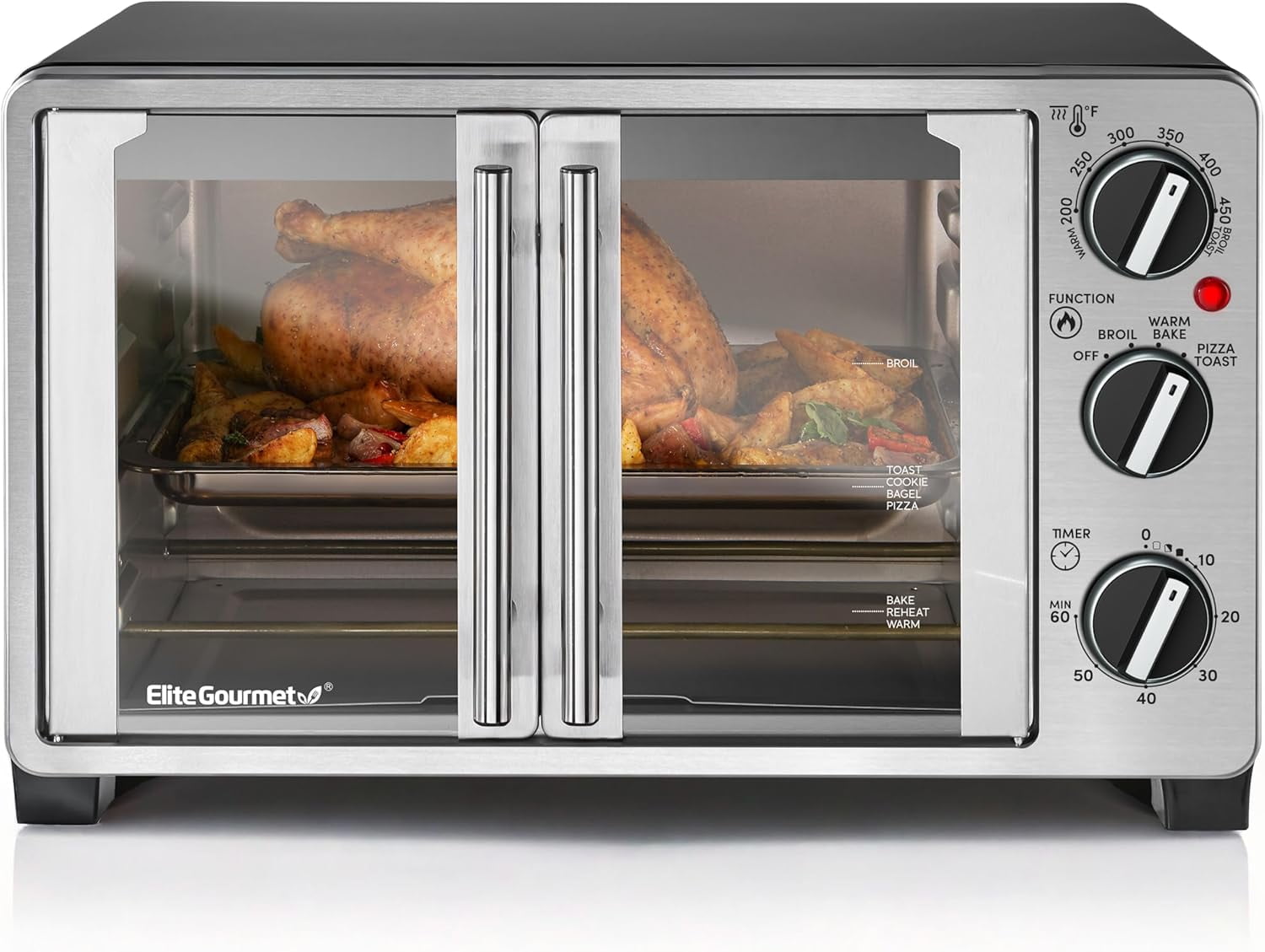
A countertop oven is a small electric oven designed to sit on a kitchen counter. It usually plugs into a standard U.S. 120-volt outlet and uses heating elements above and below the food.
Most models fall into four groups:
- Toaster ovens: Best for toast, reheating, small baked goods, and simple meals.
- Convection toaster ovens: Use a fan to move hot air around the food.
- Air-fryer toaster ovens: Add a high-airflow setting and often include a mesh basket.
- Steam or combi ovens: Add steam to dry heat for foods such as bread, vegetables, fish, and meat.
A countertop oven does not always cook exactly like a full-size oven. Its smaller cavity may heat faster, but the heating elements sit closer to the food. This can cause browning on the top or edges before the center is done.
Convection also changes cooking. Moving air can brown food faster and may shorten cooking time. Start with the recipe’s temperature and check the food early until you learn how your oven behaves.
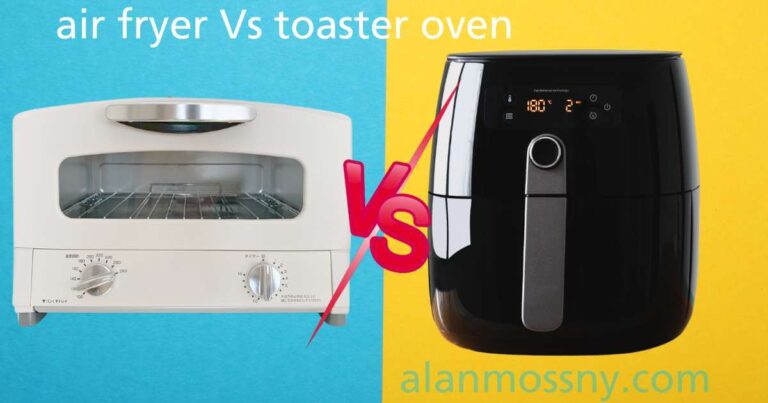
Countertop oven vs. air fryer
A basket air fryer is usually better for a small batch of crisp food. A countertop air-fryer oven is better when you need more space or want to use pans.
Choose a basket air fryer when you mainly cook:
- French fries
- Chicken wings
- Small portions of vegetables
- Frozen snacks
Choose an air-fryer toaster oven when you also want to:
- Bake cookies
- Toast bread
- Roast a chicken
- Cook a pizza
- Use a standard baking pan
- Prepare food for several people
The trade-off is simple: a basket air fryer often moves air more forcefully in a smaller space, while a countertop oven offers more cooking flexibility.
Countertop oven vs. microwave
A countertop oven uses dry heat to brown and crisp food. A microwave heats food mainly through electromagnetic energy and is usually faster for reheating liquids, rice, and leftovers.
A countertop oven is better for:
- Crisp pizza
- Toasted sandwiches
- Roasted vegetables
- Baked foods
- Browning and crust
A microwave is better for:
- Heating soup
- Reheating drinks
- Softening butter
- Fast warming
- Defrosting when the manual allows it
Many kitchens benefit from both because they solve different problems.

The Best Countertop Ovens for Different Needs
The best model depends on the job you expect it to do most often. A large oven may be wasteful for one person, while a compact model may feel cramped for a family.
Best overall: Breville Smart Oven Air Fryer Pro
The Breville Smart Oven Air Fryer Pro is a strong overall option for shoppers who want one countertop appliance to handle many tasks. Published specifications for the U.S. model list a large interior, multiple cooking functions, convection, and air frying.
It may suit you if you need to:
- Bake or roast family-size meals
- Cook food in a 9-by-13-inch pan
- Toast several slices of bread
- Air fry without using a small basket
- Replace some uses of a full-size oven
Its main limits are its large footprint, higher price than a basic toaster oven, and more complex controls. It also needs open space around the appliance and a sturdy counter.
The large interior is useful, but it also means more counter space and more metal to clean. If you only make toast or heat small meals, this model may offer more capacity than you need.
Best for a small kitchen: Breville Mini Smart Oven
The Breville Mini Smart Oven is a better fit for a small apartment, office kitchen, or household that cooks small portions. It provides more control than a simple pop-up toaster while taking up less space than a large air-fryer oven.
It may be a good choice for:
- Toast
- Bagels
- Small pizzas
- Frozen foods
- Single-serving meals
- Small baking tasks
Its smaller cavity limits the size of pans and dishes you can use. It is not the best choice if you often cook a whole chicken, a large casserole, or food for several people.
Best for simple, fast heating: Panasonic FlashXpress
The Panasonic FlashXpress is known for a compact design and infrared heating system. It can suit people who want straightforward controls and quick everyday cooking without a large collection of modes.
It may fit a buyer who values:
- Small size
- Simple operation
- Toast and reheating
- Small frozen foods
- A short learning curve
Its compact interior is also its main limitation. It does not provide the same pan space as a large convection or air-fryer toaster oven.
Best for steam cooking: Anova Precision Oven
A steam countertop oven offers a different cooking method from a standard toaster oven. The Anova Precision Oven, for example, is designed to combine dry heat, steam, and precise temperature control.
Steam can help with:
- Bread crust
- Moist fish
- Tender meat
- Reheating food without drying it as quickly
- Low-temperature cooking
This type of oven is usually more expensive and may require more cleaning. Water tanks, drainage, descaling, and app features can add work. It makes the most sense for a serious home cook who will use steam often.
Best lower-cost option: Basic convection toaster oven
A basic convection toaster oven can be the best value when you mainly need toast, reheating, baking, and light roasting. It may lack smart programs, a temperature probe, or a large air-fry basket, but those features are not essential for every household.
Before buying, check whether it includes:
- A real convection fan
- A usable timer
- A temperature range suited to your recipes
- A removable crumb tray
- A baking pan and rack
- A clear warranty
- Enough interior height for your dishes
A lower price is useful only if the oven has enough space and stable controls for your cooking habits.

How to Choose the Best Countertop Oven
Start with the largest dish you use often. Then compare the oven’s interior dimensions, not just its exterior size.
1. Measure your counter and storage space
Measure the width, depth, and height of the space where the oven will sit. Leave the clearance required by the manual. Many countertop ovens vent heat from the back, top, or sides.
Do not place the oven:
- Directly under low cabinets unless the manual permits it
- Against a wall if the vents need open space
- Near curtains, paper, or other flammable items
- On an unstable or heat-sensitive surface
- Where the door could be blocked
Also measure the path from the store or delivery area to your counter. Large countertop ovens can be heavy and awkward to lift.
2. Compare interior dimensions
A model may advertise that it fits a 12-inch pizza, but that does not always mean it fits a 9-by-13-inch baking dish. Interior height matters too.
Check the manual for:
- Maximum pan width
- Maximum pan depth
- Rack positions
- Door clearance
- Interior height
- Air-fry basket size
- Whether the listed capacity includes the rack area
A useful rule is to choose an oven that is slightly larger than your most common pan. Crowding food can reduce browning and airflow.
3. Decide whether convection matters
Convection uses a fan to circulate hot air. It can improve browning and may cook food faster, but results depend on the fan, cavity shape, food load, and pan position.
Convection is most useful for:
- Roasting vegetables
- Baking several items
- Browning meat
- Air frying
- Cooking food on more than one rack
It is less important if you mainly make toast or reheat leftovers.
When adapting a conventional oven recipe, begin by checking the food early. Some recipes work well with a temperature reduction of about 25°F, but this is not a universal rule. Follow the countertop oven manual and watch the first batch closely.
4. Check the heating elements and controls
A good countertop oven should make it easy to set:
- Cooking mode
- Temperature
- Time
- Rack position
- Convection or air-fry setting
Digital controls can offer more precise settings, while dials are often faster and easier to use. Neither control type guarantees better cooking.
Look for independent control of the top and bottom elements when available. This can help with tasks such as broiling, baking, and browning. It is less important for basic toast and reheating.
5. Choose useful cooking modes
Do not pay for modes you will not use. Common settings include:
- Toast
- Bagel
- Bake
- Broil
- Roast
- Reheat
- Pizza
- Cookies
- Air fry
- Dehydrate
- Warm
- Slow cook
- Proof
- Steam
Preset names are not a guarantee of performance. They are usually programmed time and temperature combinations. You can often get similar results by selecting the correct manual setting.
6. Consider power and circuit limits
Many countertop ovens use about 1,200 to 1,800 watts. A high-wattage oven can heat well, but it also uses more electrical power while running.
In a U.S. home, avoid overloading the same circuit with another high-wattage appliance. Do not use a damaged cord. Use a grounded outlet when required by the manufacturer.
The manual should control decisions about:
- Extension cords
- Power strips
- Outlet requirements
- Grounding
- Required clearance
- Cleaning products
- Safe cookware
If an outlet, cord, or circuit becomes hot, stop using the oven and ask a qualified electrician to inspect the setup.

Countertop Oven Features That Matter Most
The most valuable features improve cooking space, control, cleanup, or safety. Extra modes matter less than a well-designed cavity and stable heat.
Large usable capacity
Usable capacity is more important than the advertised cubic-foot figure. A large cavity is helpful only if the rack positions and opening fit your dishes.
For a family, look for space for:
- A 9-by-13-inch pan
- A large pizza
- Several servings of vegetables
- A roasting pan that fits the door and rack
- The cookware you already own
Accurate temperature control
A countertop oven with poor temperature control can brown food too fast or leave the center undercooked. Manufacturer temperature ranges are not the same as independent accuracy tests.
You can check your oven with a separate oven thermometer. Place it in the center of the rack and compare its reading with the display after the oven preheats. Repeat the check at more than one temperature because accuracy can vary.
Do not rely on a thermometer touching the heating element or oven wall. That reading will not represent the food area.
Easy cleaning
Look for a removable crumb tray and a smooth interior. Air-fry baskets can collect grease, so they may need frequent washing.
Clean the oven only when it is unplugged and fully cool. Avoid spraying cleaner into heating elements, fans, controls, or vents. Follow the manual for the door glass and interior coating.
Heavy grease can smoke during later use. Remove crumbs and grease before they build up.
Useful accessories
Common accessories include:
- Wire rack
- Baking pan
- Broil pan
- Air-fry basket
- Crumb tray
- Pizza pan
- Temperature probe
Treat included pans as part of the oven’s value. A model may have a large interior, but the included pan may be too small for your recipes.
Clear warranty and support
A warranty does not prove that an oven cooks better, but it matters if the display, fan, door, or heating element fails.
Before buying, check:
- Warranty length
- Who provides service
- Availability of replacement trays
- Manual and support access
- Return period
- Whether the warranty applies to U.S. buyers

How to Test a New Countertop Oven at Home
A simple first-use check can reveal setup or control problems before you depend on the oven for a large meal.
Step 1: Read the manual
Confirm the required clearance, cookware limits, rack positions, and first-use instructions. Remove all packaging, stickers, and protective film.
Some ovens may produce an odor during the first heating cycle. Follow the manufacturer’s instructions for handling this. Stop using the oven if you see smoke that does not match the stated first-use guidance, smell melting plastic, or notice electrical problems.
Step 2: Check the empty preheat cycle
Set the oven to a normal baking temperature and allow it to preheat. Check that:
- The display works
- The fan operates when selected
- The heating elements cycle
- The door closes fully
- The timer counts down
- No warning light or error appears
Use ventilation if the manual recommends it.
Step 3: Test a simple food
Toast bread or bake a small batch of biscuits. Look for:
- Uneven browning
- Burned edges
- A pale center
- Fan noise
- Door leaks
- A strong unusual odor
- Food touching the heating elements
Move the rack or turn the pan if the manual allows it. Small ovens often have hot spots.
Step 4: Check temperature with an oven thermometer
An oven thermometer can show whether the actual cavity temperature differs from the display. It is not a full performance test, but it can identify a large problem.
Allow the oven to cycle for a while. Heating elements commonly turn on and off rather than holding one exact temperature every second.
Step 5: Stop if the oven behaves unsafely
Stop using the oven if:
- The cord or plug becomes hot
- The outlet sparks
- The door will not close
- The fan strikes something
- Smoke continues during normal use
- The housing becomes damaged
- The oven repeatedly shuts off without explanation
Contact the manufacturer or a qualified professional. Do not open the appliance yourself unless you are trained and the manual permits the work.
Common Countertop Oven Mistakes
Many poor results come from setup or loading rather than from the oven itself.
Overcrowding the food
Air needs room to move. If food covers the whole air-fry basket or touches the oven walls, it may cook unevenly.
Use a second batch when needed. A smaller amount of food often browns better than a crowded basket.
Blocking airflow
Do not cover ventilation openings. Do not line the entire oven floor with foil unless the manual specifically allows it. Foil can block airflow, reflect heat, or touch heating elements.
Use only cookware rated for the selected temperature.
Ignoring rack position
Food placed too close to the top element may burn during broiling or air frying. Food placed too low may brown slowly.
Use the rack position listed in the manual. When no position is given, begin near the center and adjust after observing the first batch.
Trusting preset buttons without checking food
A “pizza” or “cookie” button may not match every brand, pan, or portion size. Presets are starting points, not promises.
Use a food thermometer when safety depends on internal temperature. The U.S. Department of Agriculture recommends checking meat and poultry with a food thermometer rather than relying on color alone.
Using the wrong outlet setup
High-wattage appliances can place a large load on a circuit. Avoid sharing the outlet with another heating appliance when the circuit may not support both.
Never use a damaged cord or plug. If you are unsure about your home’s electrical capacity, contact a qualified electrician.
Failing to clean grease and crumbs
Grease and crumbs can smoke or burn during later cycles. Let the oven cool, unplug it, and clean it as directed after heavy use.
Never immerse the oven body in water.

Is a Countertop Oven Cheaper to Run Than a Full-Size Oven?
A countertop oven may use less total energy for a small meal because it heats a smaller chamber. That does not mean it is always cheaper.
The result depends on:
- Wattage
- Cooking time
- Preheat time
- Food quantity
- Electricity rate
- Whether the full-size oven is already hot
- How often the countertop oven runs
A simple estimate is:
Energy use in kilowatt-hours = watts ÷ 1,000 × hours used
Example calculation
Suppose a 1,500-watt countertop oven runs for 30 minutes:
- 1,500 watts ÷ 1,000 = 1.5 kilowatts
- 1.5 kilowatts × 0.5 hours = 0.75 kilowatt-hours
If electricity costs $0.20 per kilowatt-hour, the estimated energy cost is:
- 0.75 × $0.20 = $0.15
This is a hypothetical calculation. Actual use changes as the heating elements cycle on and off, and local electricity prices vary.
For one small meal, a countertop oven may avoid heating a large oven. For a full turkey or several large dishes, the full-size oven may be more practical.
Countertop Oven Safety for U.S. Kitchens
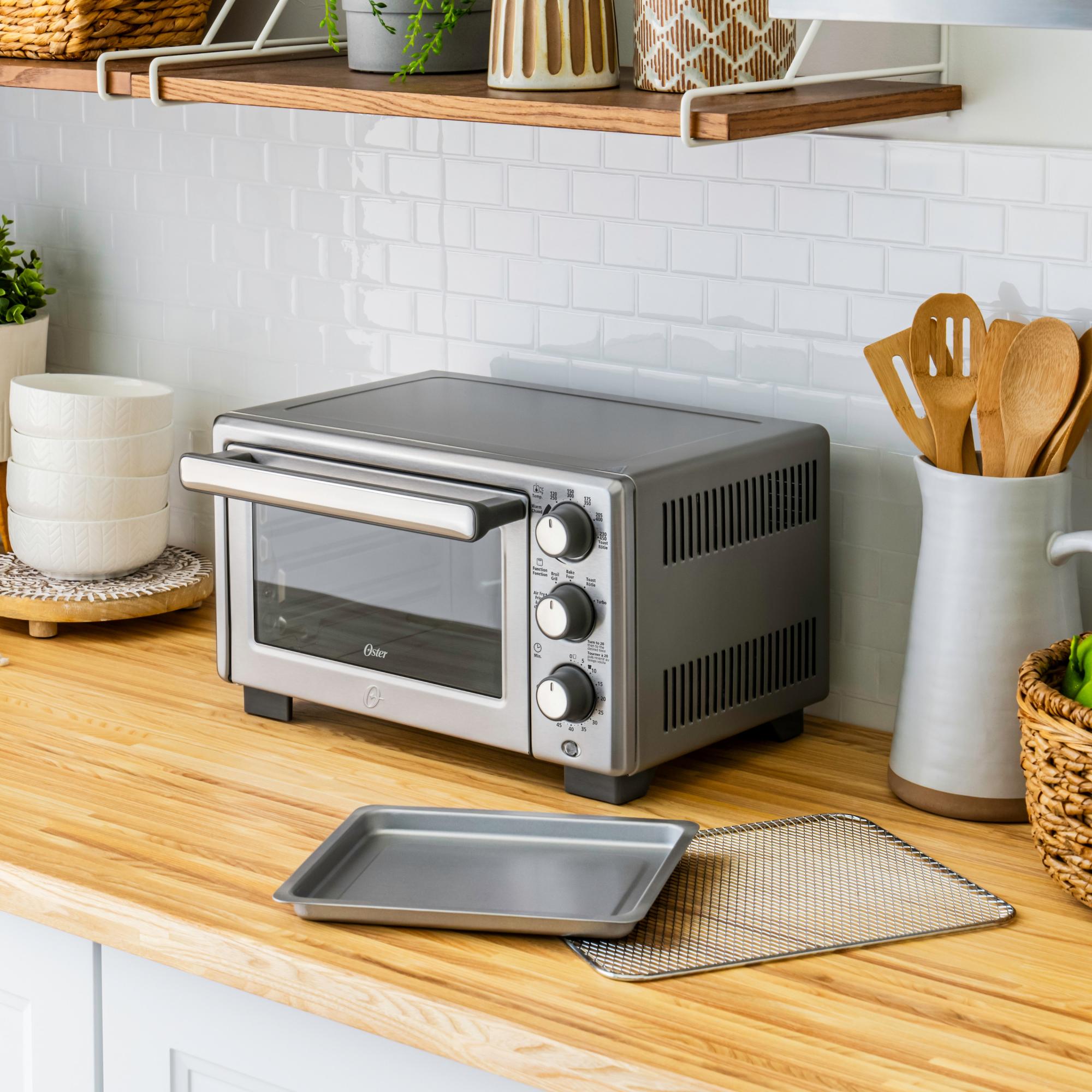
A countertop oven can cause burns, fire, or electrical hazards when used incorrectly. Follow the manual for the exact model.
Keep children away from the hot door, racks, and exterior. Use dry oven mitts when handling pans. Wet fabric can transfer heat more quickly.
Do not leave cooking food unattended when the recipe contains grease or when the oven is set to broil. Keep flammable items away from the appliance.
Use a food thermometer for meat, poultry, seafood, and egg dishes. The USDA’s FoodSafety.gov guidance provides current safe-temperature information for common foods.
If grease catches fire inside the oven, turn the appliance off if you can do so safely and keep the door closed. Do not use water on a grease fire. Leave the area and call 911 if the fire does not stop quickly or if you are in danger.

Frequently Asked Questions
What size countertop oven should I buy?
Buy a model that fits your most-used pan with room for airflow. A small model may be enough for toast and single servings. A larger model is more useful for 9-by-13-inch dishes, family meals, pizza, and roasting.
Measure both the interior and the counter. Do not rely only on the advertised capacity.
Can a countertop oven replace a regular oven?
It can replace some uses, but not all. A large countertop oven can bake, roast, toast, and air fry many foods. It may not fit a large roasting pan, several dishes, or a full holiday meal.
It also needs counter space and may require separate batches.
Are countertop ovens safe to leave on the counter?
They are designed for countertop use when installed according to the manual. Keep the required clearance around vents and remove nearby flammable items.
Do not cover the oven while it is hot. Unplug it when the manual recommends or when the appliance is not in use.
Is an air-fryer oven better than a basket air fryer?
Neither is always better. A basket air fryer often suits small batches of crisp food. An air-fryer toaster oven offers more cooking space and can bake, toast, roast, and broil.
Choose based on batch size and the cooking modes you will use.
Do countertop ovens need preheating?
Many recipes work best with preheating, especially baking, roasting, and foods that need a crisp surface. Some reheating tasks may not require it.
Follow the recipe and the oven manual. If the food browns too fast, lower the temperature or check it sooner rather than assuming the oven is defective.
Final Recommendation
For most U.S. households, choose a large convection countertop oven with air-fry capability if you want one appliance for toast, baking, roasting, reheating, and crisp foods. The Breville Smart Oven Air Fryer Pro is a well-rounded premium option based on its published capacity and range of functions.
Choose a compact model if counter space matters more than capacity. Choose a basic convection toaster oven if you want the best value. Choose a steam oven only if you will regularly use steam cooking and accept the extra cost and cleaning.
Before buying, measure your counter, compare the interior with your pans, check the power requirements, read the safety instructions, and confirm the current warranty and accessories for the U.S. model.