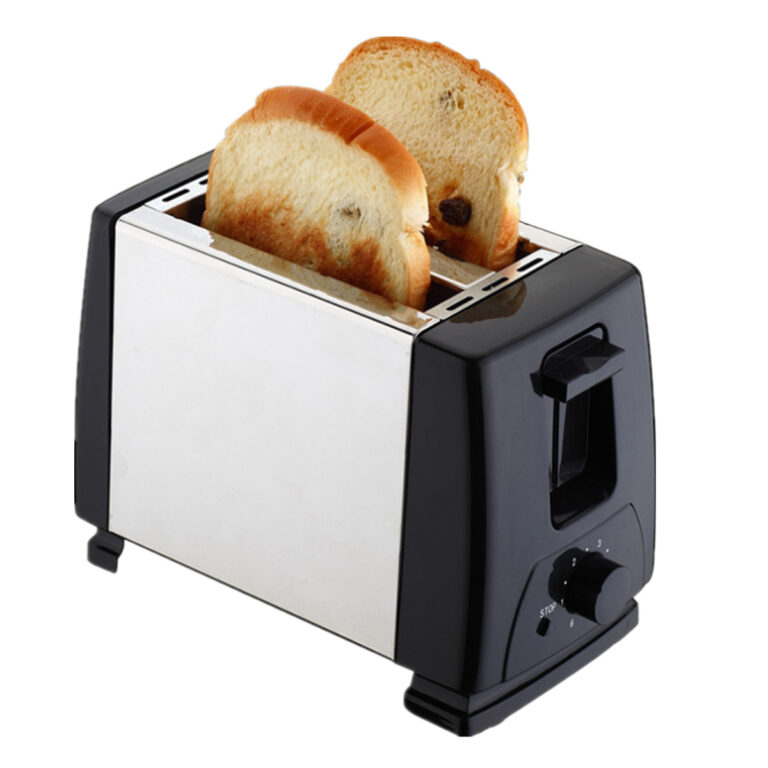
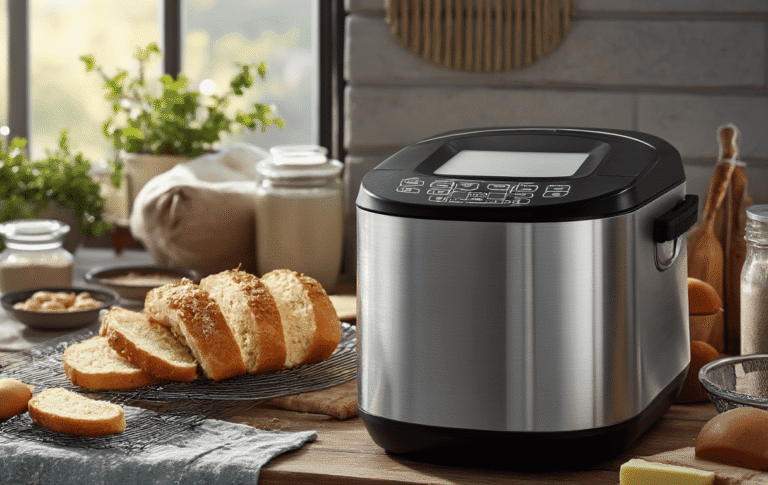
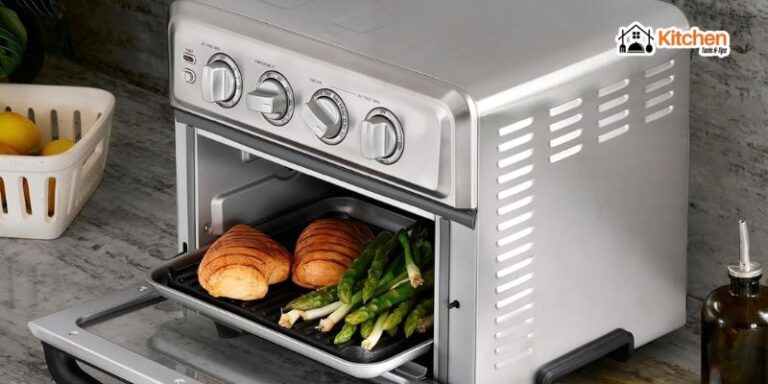
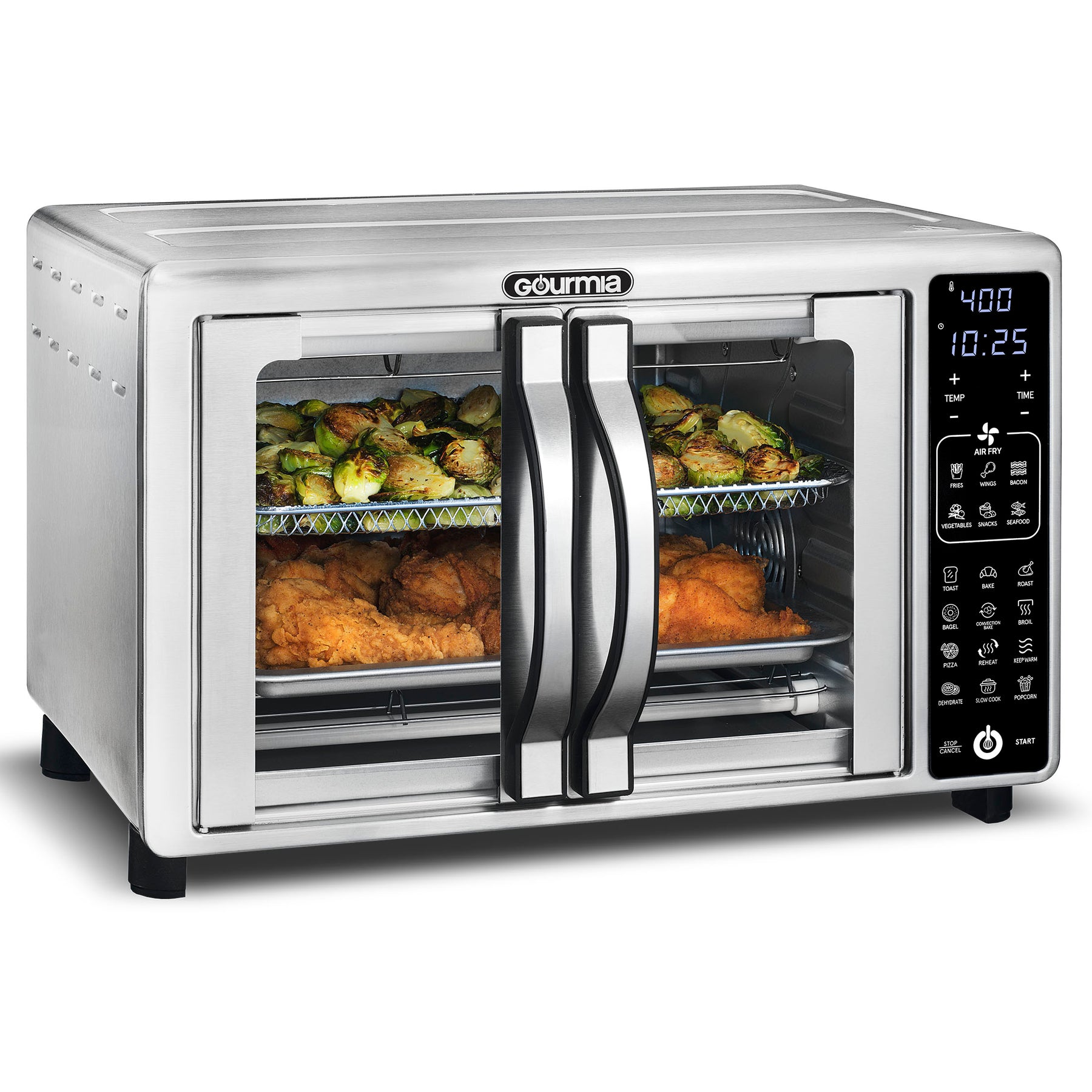
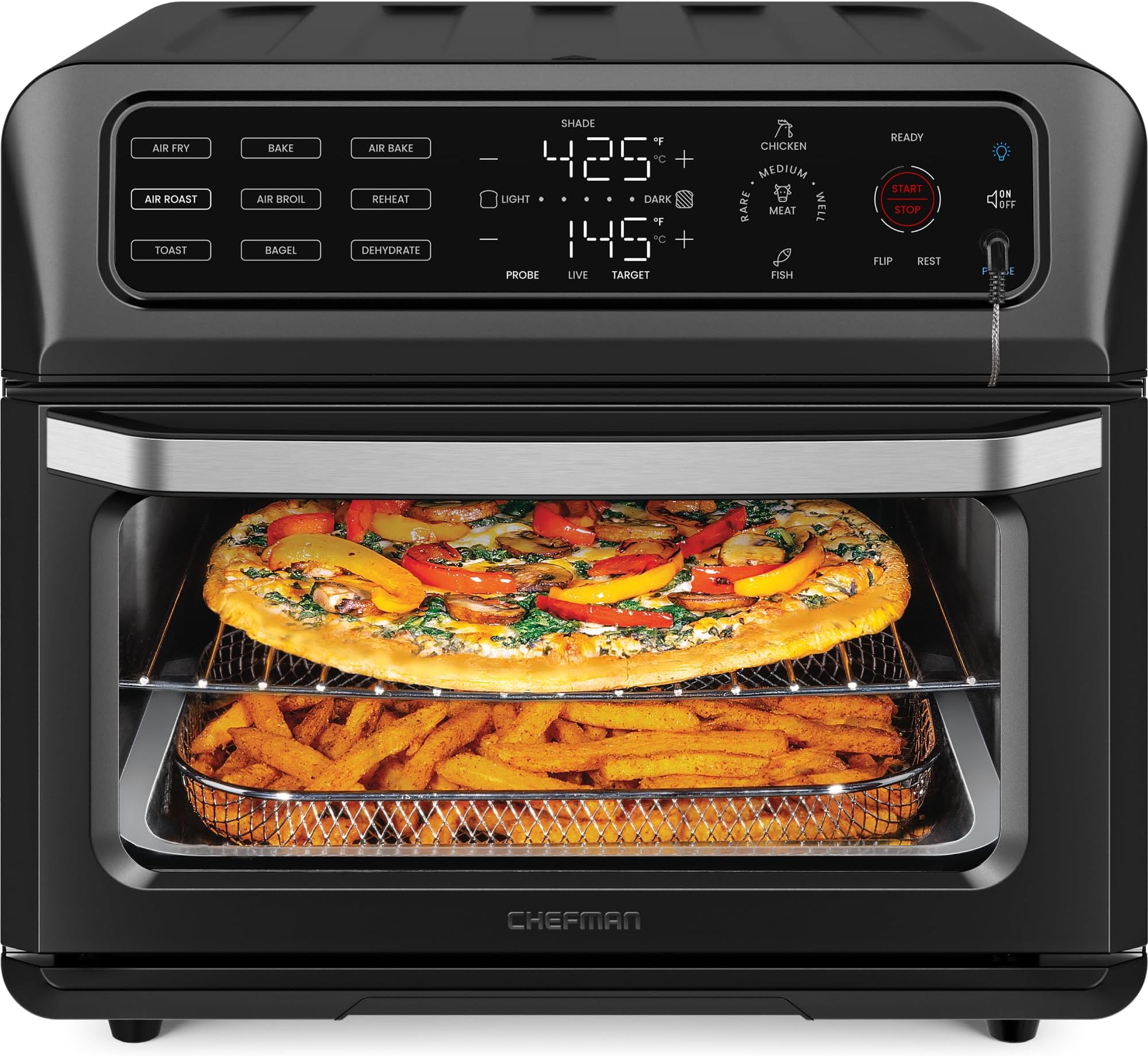
An air fryer toaster oven is a countertop oven that can toast bread, bake food, broil, roast meat, and cook with fast-moving hot air. In the United States, many models also include settings for air frying, dehydrating, reheating, and convection cooking.
It works much like a small convection oven. Heating elements create heat, while a fan moves hot air around the food. This can help food brown and crisp with less oil than traditional deep frying.
An air fryer toaster oven does not truly fry food in oil. It uses dry heat. The result is closer to oven-fried food than food cooked in a deep fryer.
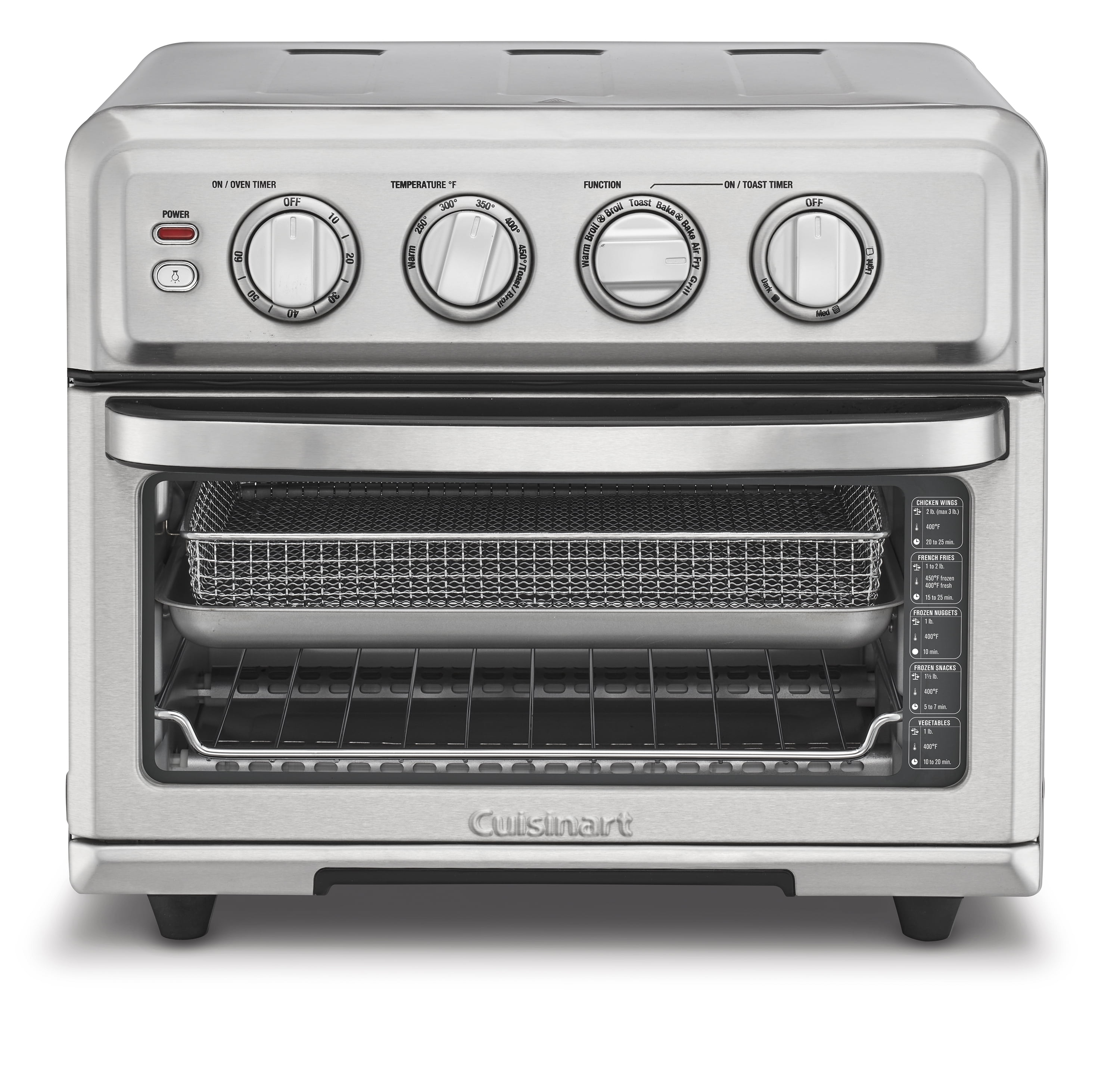
What Is an Air Fryer Toaster Oven?
An air fryer toaster oven combines two countertop appliances:
- A toaster oven for baking, broiling, toasting, and reheating
- An air fryer for circulating hot air around food
The cooking chamber is usually larger than the basket in a basic air fryer. It may hold a pizza, baking pan, chicken pieces, vegetables, or several slices of toast. The exact capacity depends on the model.
Most units have a door, wire racks, a baking tray, and an air-fry basket. Some also include a crumb tray, rotisserie spit, or temperature probe.
The name can be confusing. An air fryer toaster oven does not always use the same design as a basket-style air fryer. A basket air fryer has a small chamber that surrounds the food closely. A toaster-oven air fryer has a wider chamber and usually needs more space around the food for air to move.
How Does an Air Fryer Toaster Oven Work?
An air fryer toaster oven uses electric heating elements and a fan to cook food. The top and bottom heating elements raise the temperature inside the oven. A fan then pushes hot air around the food.
This moving air helps remove moisture from the surface of food. As the surface dries and heats, the food can brown and become crisp. A light coating of oil can improve browning, but you usually do not need a large amount.
The main cooking steps are:
- The oven heats to the selected temperature.
- The fan moves hot air through the cooking chamber.
- Heat reaches the food by hot air, direct contact with the pan, and radiant heat from the elements.
- Moisture leaves the outer surface.
- The food browns as it cooks.
This process is called convection cooking. The “air fry” setting often uses stronger air movement or a different fan and heating pattern than the standard bake setting. However, designs vary. Check the manual for the exact behavior of your model.

What Can an Air Fryer Toaster Oven Do?
An air fryer toaster oven can perform several cooking tasks in one appliance. The controls and results vary by model, so use the owner’s manual for specific settings.
Air fry
The air-fry setting cooks food with fast-moving hot air. It works well for foods such as:
- French fries
- Chicken wings
- Breaded vegetables
- Fish fillets
- Frozen snacks
- Tater tots
- Small portions of roasted vegetables
Use an air-fry basket when the manual recommends one. The holes allow hot air to reach more of the food. Place a solid tray below the basket if the design calls for one. It can catch grease and crumbs.
toast
the toast setting heats bread from both sides. It may use a timer rather than a precise temperature.
Toast results can change based on:
- Bread thickness
- Bread moisture
- Slice count
- Rack position
- Shade setting
- Starting temperature
A toaster oven may toast more slowly than a pop-up toaster. It can, however, handle items that do not fit well in a standard toaster.
Bake
The bake function works like a small oven. It can cook:
- Cookies
- Muffins
- Small casseroles
- Potatoes
- Frozen meals
- Quick breads
- Small cakes
A small oven can heat faster than a full-size oven, but it also has less room. Do not crowd the pan. Crowding blocks air and can cause uneven cooking.
Broil
Broiling uses strong heat from the upper element. It can brown the top of food or cook thin cuts of meat.
Stay near the oven while broiling. Food can burn quickly under a broiler. Use only cookware approved for broiling and follow the manual’s rack-position instructions.
Roast
Roasting uses dry heat to cook food with a browned exterior. It can work well for:
- Chicken pieces
- Vegetables
- Sausages
- Small roasts
- Fish
- Potatoes
Food may cook faster than expected in a small convection oven. Use a food thermometer rather than color alone to check doneness.
Reheat
The reheat setting warms food without using a microwave. It may preserve crispness better than a microwave for pizza, fries, and fried foods.
Reheating is not the same as safely cooking leftovers from a cold state. The USDA recommends reheating leftovers to 165°F. Use a thermometer when the food’s safety depends on its internal temperature.
Dehydrate
Some models use low heat and a fan to remove moisture from food. This can work for fruit slices, herbs, and some vegetables.
Dehydrating takes much longer than air frying. Follow the manual for rack spacing, temperature, and timing. Food must be prepared and stored correctly to reduce spoilage risks.

Air Fryer Toaster Oven vs. Basket Air Fryer
Both appliances circulate hot air, but their shape and cooking behavior differ.
| Feature | Air fryer toaster oven | Basket-style air fryer |
|---|---|---|
| Cooking space | Wide and shallow or medium-sized | Small and compact |
| Best for | Toast, pizza, baking, roasting, and larger foods | Small batches of crisp foods |
| Air movement | May be less direct around food | Often surrounds the food closely |
| Accessories | Racks, trays, baskets, pans | Removable basket or drawer |
| Counter space | Usually needs more width | Usually needs less width |
| Batch size | Can be larger, depending on the model | Often smaller |
| Cleaning | More parts and larger interior | Smaller cooking area |
A basket air fryer may crisp a small batch faster because food sits closer to the fan and heating system. An air fryer toaster oven may be more useful if you want one appliance for toast, baking, roasting, and air frying.
Neither type is automatically better. The right choice depends on the foods you cook, available counter space, and the size of your usual meals.
What Are the Benefits?
The main benefit is flexibility. One countertop appliance can handle several jobs that might otherwise require a toaster, oven, broiler, and air fryer.
Other potential benefits include:
- Faster preheating than a full-size oven
- Less oil than deep frying
- A larger cooking area than many basket air fryers
- Easy access through a front door
- Useful settings for reheating and roasting
- Less need to heat the entire kitchen
- More even browning than a basic oven for some foods
These benefits are not guaranteed for every model or recipe. Cooking speed depends on wattage, food quantity, pan type, starting temperature, and how often the door opens.
An air fryer toaster oven may also reduce the need to use a full-size oven for small meals. That can be useful in a small kitchen, apartment, or warm climate. It does not always use less energy; the result depends on cooking time and the size of the full-size oven it replaces.
What Are the Limitations?
An air fryer toaster oven has limits that shoppers often overlook.
First, it may take up substantial counter space. Measure the width, depth, height, and door clearance before buying. Leave the ventilation space required by the manufacturer.
Second, it may cook differently from a basket air fryer. Food can take longer to crisp, especially when the cooking chamber is large or crowded.
Third, the outside and interior can become very hot. The appliance needs a heat-safe surface and clear space around vents.
Fourth, cleanup may take more work than expected. Grease and crumbs can collect on the air-fry basket, baking pan, rack, fan area, and crumb tray.
Finally, some foods are poor candidates. Wet batter can drip through a perforated basket. Lightweight foods can move in the fan. Very large items may block airflow or touch the heating elements.

How to Use an Air Fryer Toaster Oven
Use these general steps, then follow the instructions for your model.
1. Read the manual first
Look for the approved cookware, rack positions, maximum temperature, ventilation rules, and cleaning directions. Manuals differ, even among similar appliances.
2. Place the oven safely
Set it on a level, heat-resistant surface. Keep it away from curtains, paper, cabinets, and other items that can burn. Do not cover the vents.
3. Choose the correct accessory
Use the air-fry basket for foods that need airflow. Use a solid pan for liquids, sauces, and foods that may drip. Do not use foil in a way that blocks air or touches a heating element.
4. Preheat when the recipe needs it
Preheating can improve browning and help food cook more evenly. Some models preheat automatically. Others start cooking at once.
5. Keep food in a single layer when possible
A single layer gives hot air more access to the surface. If food overlaps, shake or turn it during cooking when the manual or recipe allows it.
6. Check food early
Small countertop ovens can cook quickly. Begin checking before the recipe’s full time has passed. Use a food thermometer for meat, poultry, fish, and reheated leftovers.
7. Let the appliance cool before cleaning
Unplug the unit if the manual directs you to do so. Remove crumbs and grease only after the oven is cool.
Signs of good results include even browning, a crisp surface where expected, and a safe internal temperature. If food stays pale or soft, reduce crowding, use the correct rack, or allow more cooking time.

Air Fryer Toaster Oven Cooking Tips
A few simple habits can improve results.
Do not overcrowd the basket
Air needs room to move. Too much food traps steam and can make food soft instead of crisp.
Use a small amount of oil when useful
A light spray or thin coating can help dry foods brown. Too much oil can create smoke and excess grease.
Dry wet foods before cooking
Pat meat, vegetables, or thawed foods dry when appropriate. A dry surface browns more easily than a wet one.
Turn food when needed
The top side may brown more quickly. Turning or shaking can help both sides cook more evenly.
Adjust recipes from a full-size oven
A toaster oven may cook food faster because the chamber is smaller and convection moves heat around the food. Start by checking the food early rather than making a large temperature change.
Use the right pan
Dark pans often brown food more than light pans. Glass, metal, silicone, and ceramic cookware may perform differently. Use only cookware rated for the selected temperature and function.
Avoid blocking the fan
Do not line the entire rack or basket with material that stops airflow. A blocked fan can reduce performance and may create a safety problem.

Is an Air Fryer Toaster Oven Safe?
An air fryer toaster oven is generally safe when used as directed, but it contains hot surfaces, electrical parts, and heating elements.
Follow these safety rules:
- Keep the appliance on a stable, heat-resistant surface.
- Do not operate it near water.
- Do not put your hand near the heating elements while the unit is hot.
- Use oven mitts to remove trays and baskets.
- Keep children away from the door and hot exterior.
- Never leave broiling food unattended.
- Remove excess grease before it can smoke or flare.
- Do not use damaged cords, plugs, trays, or baskets.
- Do not use metal foil unless the manual permits it and explains how.
- Do not place plastic, paper, or non-heat-safe containers inside.
- Do not cover vents or use the oven inside a closed cabinet.
- Unplug it when the manual says to do so during cleaning or maintenance.
If smoke appears, turn off and unplug the appliance if it is safe to do so. Keep the door closed if grease ignites. Do not use water on an electrical or grease fire. Leave the area and call 911 if the fire does not stop quickly or you cannot safely control it.
For meat and poultry, use the USDA’s safe minimum internal temperature guidance rather than relying only on cooking time or appearance.
How to Clean an Air Fryer Toaster Oven
Clean the oven after it cools. Frequent cleaning helps reduce smoke, odors, and grease buildup.
- Remove the rack, tray, basket, and crumb tray.
- Wash removable parts as the manual allows.
- Wipe the interior with a damp cloth or soft sponge.
- Remove crumbs from the crumb tray.
- Wipe the door glass without soaking the controls.
- Clean grease before it hardens.
- Dry all parts before putting them back.
Do not immerse the main oven body in water. Avoid abrasive cleaners unless the manufacturer approves them. Do not scrape heating elements or fan covers with sharp tools.
If the oven begins to smoke during normal cooking, turn it off and let it cool. Check for grease, crumbs, excess oil, or food touching a heating element. Persistent smoke, burning odors, sparks, or electrical faults require the appliance to remain unplugged until it is inspected or replaced.

Should You Buy an Air Fryer Toaster Oven?
An air fryer toaster oven may suit you if you want one appliance for several tasks and have enough counter space. It is especially useful for people who often cook small meals, reheat crisp foods, toast bread, or roast vegetables.
A basket air fryer may be a better fit if your main goal is fast cooking for small batches of wings, fries, or frozen snacks. A regular toaster oven may be enough if you rarely air fry and mainly toast or bake.
Before buying, compare:
- Interior dimensions
- External dimensions and required clearance
- Air-fry basket size
- Rack and pan positions
- Temperature range
- Automatic shutoff
- Cleaning instructions
- Replacement accessories
- Warranty terms
- Electrical requirements
- Whether the door and controls fit your kitchen
Do not judge capacity by the advertised quart number alone. Interior shape matters. A wide oven may hold a pizza well, while a tall oven may better fit a roast or multiple racks.
Common Mistakes to Avoid
The most common mistake is treating an air fryer toaster oven exactly like a deep fryer. It uses air, not a bath of oil, so wet batter and heavily coated foods may not behave the same way.
Other mistakes include:
- Filling the basket to the top
- Ignoring the recommended rack position
- Adding too much oil
- Blocking vents with foil
- Using a pan that is too large
- Opening the door every minute
- Leaving grease in the bottom
- Cooking meat without checking its internal temperature
- Placing the oven under a cabinet with no clearance
- Assuming every preset works the same way
When results fail, check the simplest causes first: crowding, wrong accessory, poor airflow, incorrect rack position, and an inaccurate cooking time.

Frequently Asked Questions
Does an air fryer toaster oven replace a regular oven?
It can replace some uses of a regular oven, such as baking small dishes, roasting vegetables, reheating food, and cooking frozen meals. It cannot match the capacity of a full-size oven for large family meals, multiple large pans, or oversized cookware.
Is air-fried food healthier than deep-fried food?
Air frying can reduce the amount of added oil compared with deep frying. That does not automatically make every air-fried food healthy. The ingredients, portion size, salt, sugar, and cooking method still matter.
Can you put aluminum foil in an air fryer toaster oven?
Only use aluminum foil if the manufacturer’s manual allows it and gives instructions. Foil can block airflow, contact a heating element, or create a fire risk if used incorrectly.
Can you cook raw chicken in an air fryer toaster oven?
Yes, many models can cook raw chicken. Use the correct temperature and cooking time for the cut and size. Check the thickest part with a food thermometer and follow USDA guidance for safe internal temperature.
Does an air fryer toaster oven need to preheat?
Some recipes benefit from preheating, especially recipes that depend on quick browning or a fixed cooking time. Some models preheat automatically. Follow the appliance manual and recipe instructions.
Conclusion
An air fryer toaster oven is a small convection oven with extra functions. It can toast, bake, broil, roast, reheat, dehydrate, and air fry food with circulating hot air.
Its main advantage is flexibility. Its main trade-offs are counter space, cleaning, limited capacity, and results that may differ from a basket-style air fryer.
To use one well, choose the right accessory, keep food from crowding, protect airflow, check food early, and follow the model’s safety instructions. For meat, poultry, fish, and leftovers, verify the internal temperature instead of relying on appearance alone.