Introduction
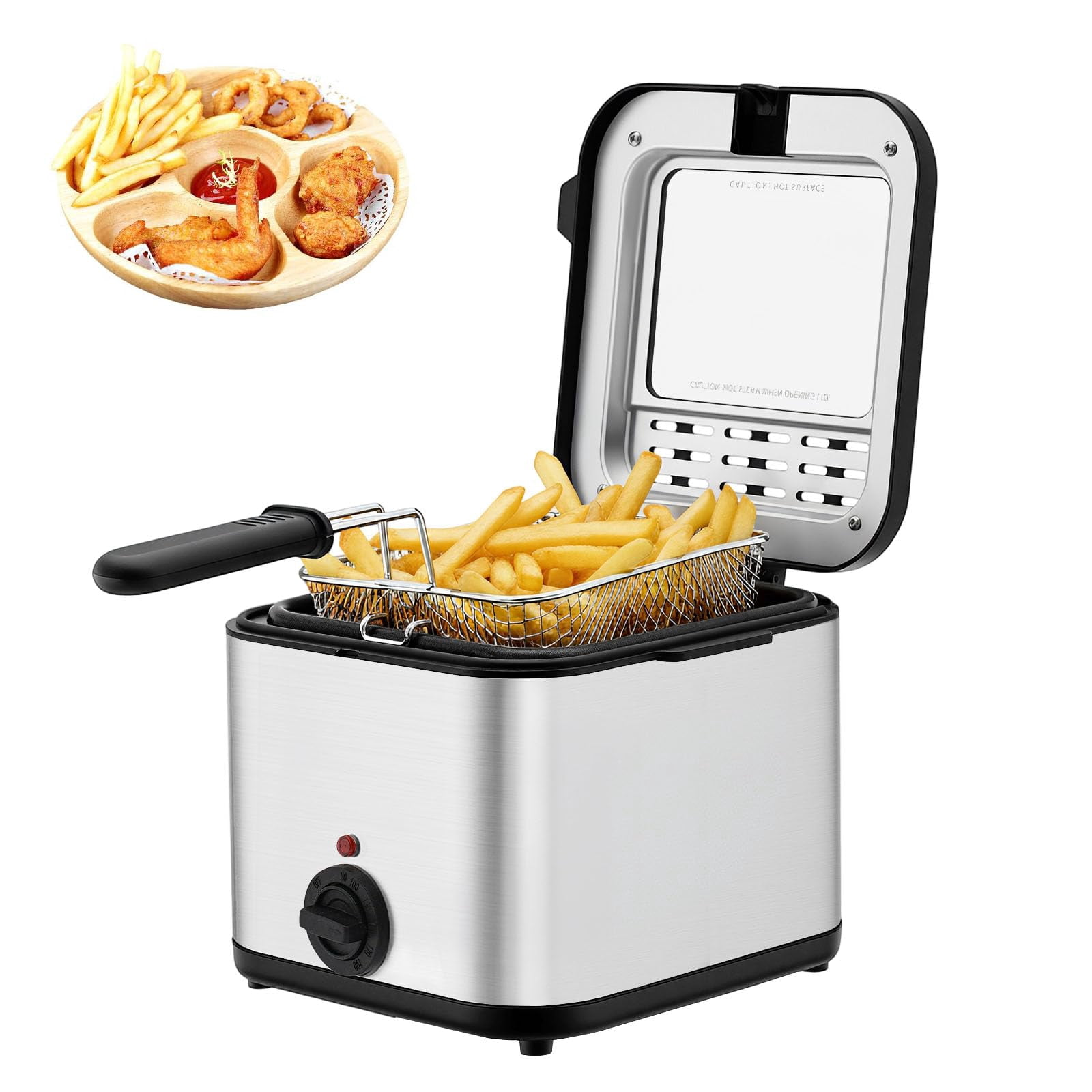
The smallest practical deep fryer sold for home use in the United States usually holds about 1 quart of oil, or 0.95 liters. Some mini fryers hold close to 1 liter. Smaller units may exist, but they are less common, may lack clear U.S. safety listings, and often cook only one small serving at a time.
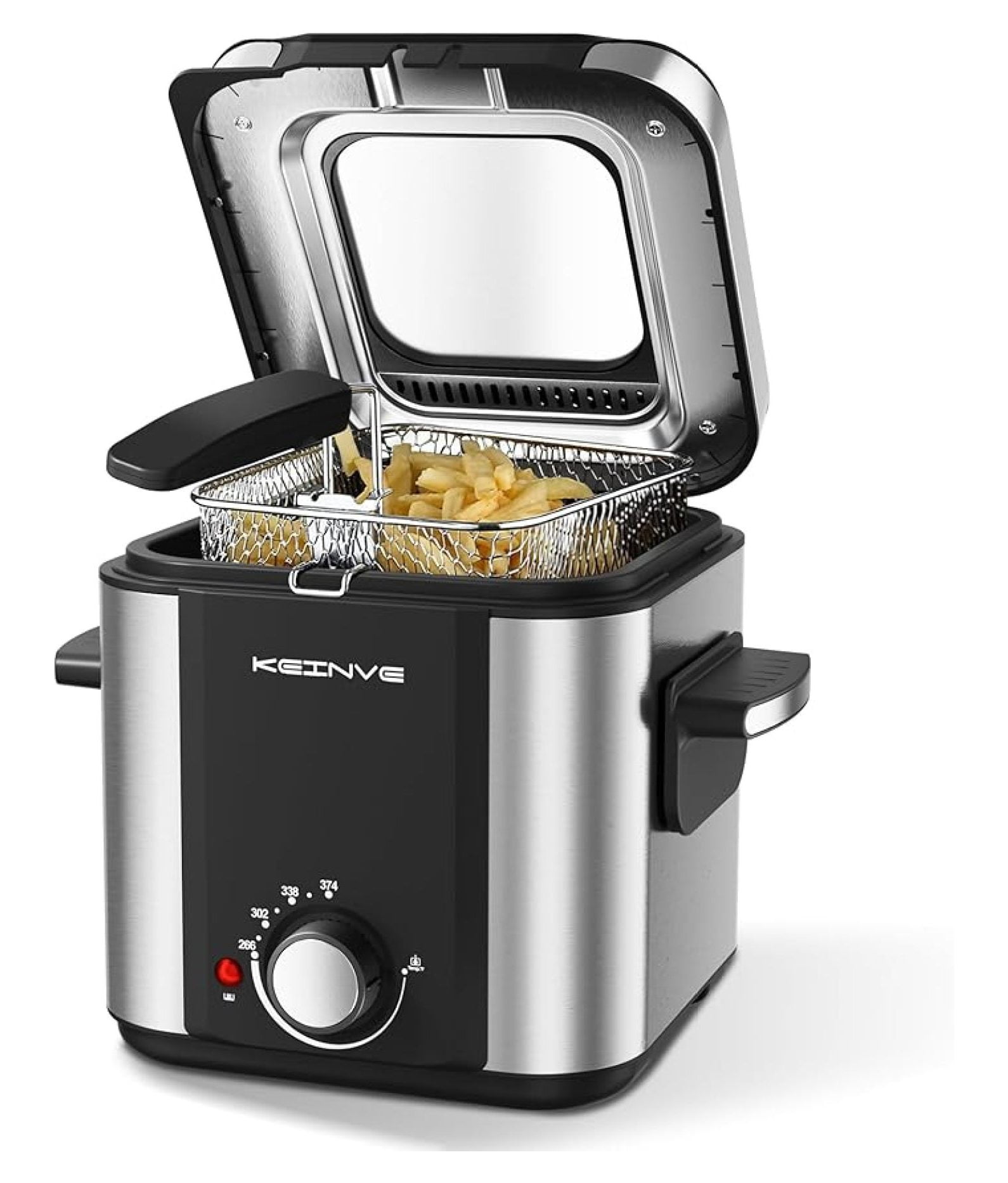
For most U.S. kitchens, a 1-quart electric fryer is the best balance of size, heat control, and safe use. Examples include compact fryers such as the Presto FryDaddy and other 1-quart models. A small saucepan can take up less space, but it is not a deep fryer and may not offer the same heat control or stability.
The key point is this: the smallest deep fryer is not always the best deep fryer. Oil capacity, food capacity, outside size, power, cleanup, and safety all matter.
What Counts as the Smallest Deep Fryer?
A small deep fryer is a countertop electric appliance that uses heated oil to cook food. Manufacturers usually list size by oil capacity, not by the amount of food it can cook.
The smallest common U.S. models hold about:
- 1 quart of oil: about 0.95 liters
- 1.1 liters: slightly more than 1 quart
- 1.5 quarts: a small but more useful size
- 2 quarts or more: better for families or larger batches
A fryer that holds 1 quart of oil may cook only one or two small servings. The food displaces some oil, so the usable food load is much smaller than the fryer’s listed oil capacity.
Oil capacity is not the same as food capacity
A 1-quart fryer does not mean you can add 1 quart of food. The food must have room to move. Too much food lowers the oil temperature and can cause greasy, uneven results.
As a simple rule, a tiny fryer is best for:
- A small portion of french fries
- A few chicken wings
- Onion rings
- Shrimp
- Cheese curds
- Small batches of doughnuts or fritters
It is not well suited to a full meal for several people.
Smallest by oil capacity versus smallest by footprint
These are two different measurements.
| Type of fryer | Typical oil capacity | Best use |
|---|---|---|
| Mini fryer | About 1 quart | One or two small servings |
| Compact fryer | 1.1 to 1.5 quarts | Small households |
| Family-size fryer | 2 to 4 quarts | Several servings |
| Deep pot or Dutch oven | Varies | Flexible cooking, but needs more care |
A fryer may hold less oil but still take up more counter space because of its handle, control panel, or fixed bowl. Check the full dimensions, including the handle and power cord.

What Is the Smallest Deep Fryer Commonly Available in the U.S.?
The smallest widely available countertop deep fryers in the U.S. usually hold 1 quart of oil. The Presto FryDaddy is a well-known example. Other compact models from brands such as Elite Gourmet and similar appliance makers may also list a 1-quart capacity.
Some products use a metric label, such as 1 liter or 1.1 liters. These are close in size to a 1-quart fryer:
- 1 U.S. quart = about 0.95 liters
- 1 liter = about 1.06 U.S. quarts
- 1.1 liters = about 1.16 U.S. quarts
a claimed capacity below 1 quart should be checked carefully. The listing may describe the bowl size, not the recommended oil level. It may also be an imported product with a plug or electrical rating that is not suitable for U.S. use.
A practical smallest-size answer
If you want the smallest practical and common U.S. deep fryer, look for:
- About 1 quart of oil capacity
- A 120-volt U.S. plug
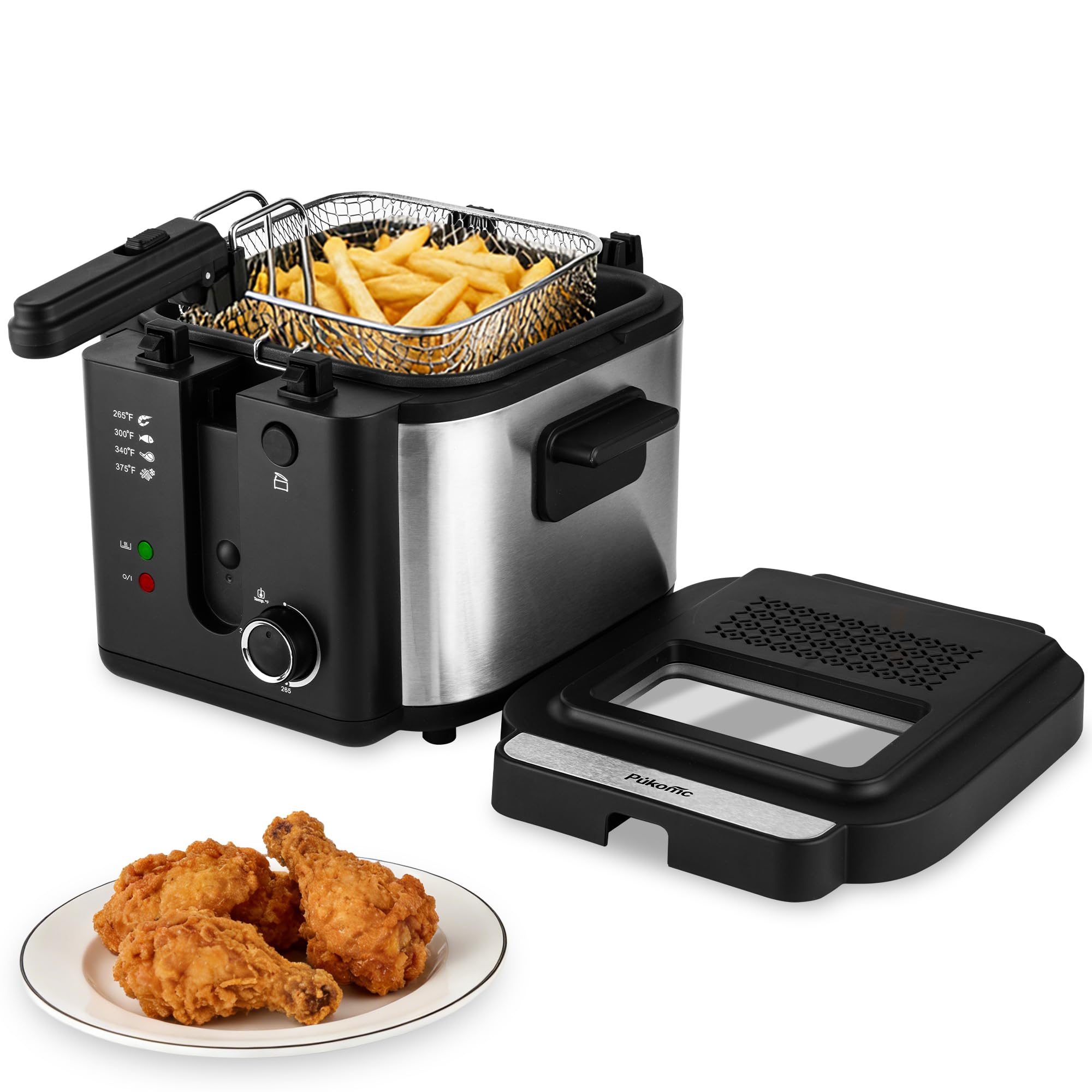
- Clear minimum and maximum oil lines
- A stable base
- An adjustable thermostat, if available
- A removable or easy-to-clean cooking bowl
- Safety instructions from the manufacturer
Do not choose a fryer based only on the smallest advertised number. A slightly larger 1.5-quart fryer may be easier to use because it gives food more room and holds its temperature better.

Smallest Deep Fryer Options Compared
The following table shows the main size classes rather than ranking individual products. Exact dimensions and features vary by model and production year.
| Fryer size | Oil capacity | Approximate cooking role | Main advantage | Main drawback |
|---|---|---|---|---|
| Ultra-mini | Under 1 quart | Very small snack portions | Uses less oil | Limited space and less common |
| Mini | About 1 quart | One or two servings | Small storage footprint | Small batches only |
| Compact | 1.1 to 1.5 quarts | One to three servings | Better room for food | Uses more oil |
| Small family fryer | 2 quarts | Several portions | More even cooking | Larger and harder to store |
The best size for one person
A 1-quart fryer is often enough for one person. It works well when you cook small portions and do not mind making more than one batch.
A 1-quart model may be less useful if you often cook frozen fries, large chicken pieces, or foods that expand during cooking. In that case, a 1.5- to 2-quart fryer may save time.
The best size for two people
For two people, a 1.5- to 2-quart fryer is usually more comfortable. A 1-quart unit can still work, but you may need several batches.
Cooking in small batches helps keep the oil hot. It also reduces the chance that food will stick together or cook unevenly.
The smallest fryer for an apartment or dorm
A compact 1-quart fryer may fit a small kitchen, but check the rules first. Some dorms, shared housing units, and rental properties restrict appliances with exposed heating elements or hot oil.
An air fryer is not a deep fryer. It uses hot air and little or no oil. It may be a better choice where open hot oil is not allowed.
How to Choose the Smallest Deep Fryer Safely
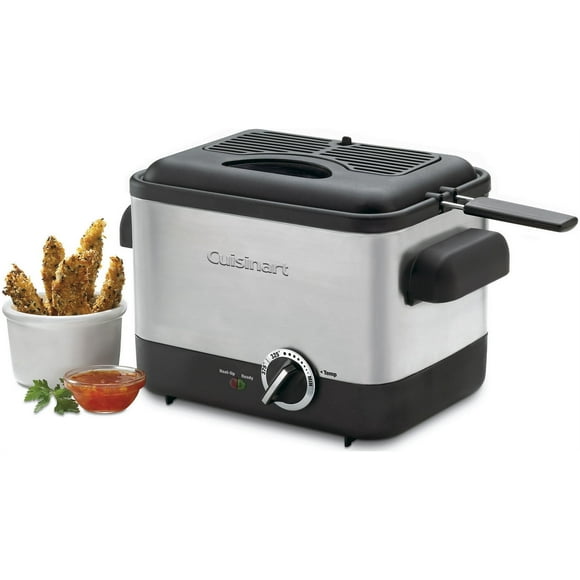
Choose the smallest fryer that still gives the food enough room to cook without crowding. A tiny appliance saves storage space, but it also leaves less margin for error.
Check these features before buying:
1. U.S. electrical rating
Look for a model made for the U.S. market. The label should match household power in the United States, normally 120 volts.
Avoid using a travel adapter to run a high-wattage fryer. An adapter may change the plug shape without making the appliance safe for the electrical system.
2. Stable construction
The fryer should sit flat and resist tipping. A short, stable body is safer than a narrow unit with a high center of gravity.
Keep the fryer well away from the edge of the counter. Do not place it under cabinets if rising heat could damage the surface.
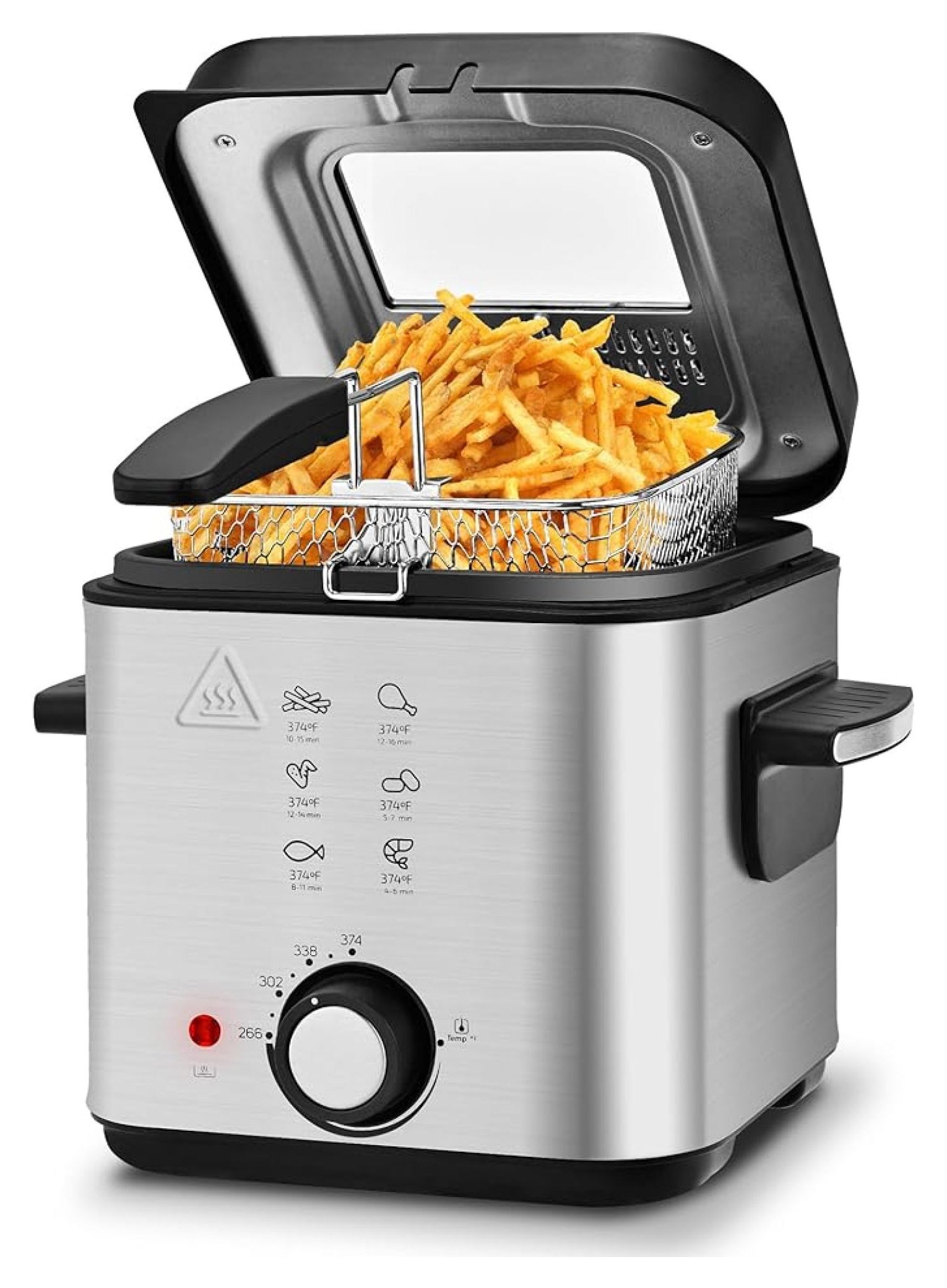
3. Thermostat or temperature control
A thermostat helps keep oil near the cooking temperature. Many fried foods cook at about 350°F to 375°F, but follow the food recipe and appliance manual.
A unit with no temperature control can still work, but it requires closer attention. Oil that becomes too hot can smoke and ignite.
4. Oil-level markings
Clear minimum and maximum lines make filling easier. Never guess the oil level if the manual gives a specific range.
Too little oil can expose food to the heating area. Too much oil can overflow when food is added.
5. Lid and basket design
A lid can help protect the oil when the fryer is stored. It is not a substitute for safe cooking, and it should not be used to trap steam during operation unless the manual allows it.
A basket makes it easier to lower and lift food. Some very small fryers use a simple scoop or removable bowl instead.
6. Cleaning access
Oil residue can turn sticky and rancid. A removable bowl or dishwasher-safe part may make cleaning easier, but always follow the manual.
Do not immerse an electrical base, cord, or plug in water.
How Much Food Can a 1-Quart Deep Fryer Cook?
A 1-quart fryer is designed for small batches. The exact amount depends on the food, its shape, whether it is frozen, and the manufacturer’s instructions.
As a practical guide, begin with a small load:
- A handful of french fries
- Two or three small chicken wings
- A small serving of shrimp
- A few onion rings
- One or two small doughnuts
These amounts are examples, not universal limits. The appliance manual takes priority.
Why small batches work better
Cold food pulls heat from the oil. If you add too much food at once, the oil temperature drops quickly. The food may then absorb more oil before the surface becomes crisp.
Small batches also:
- Reduce crowding
- Improve browning
- Make timing easier
- Lower the chance of overflow
- Help frozen food cook more evenly
Dry wet food before frying. Water can cause hot oil to splatter.

Smallest Deep Fryer Versus a Small Saucepan
A small saucepan may be cheaper and take up less storage space, but it requires more attention. It usually has no temperature control and may be easier to tip.
A compact electric fryer can offer:
- A built-in heating system
- A thermostat
- A stable base
- Oil-level markings
- A basket or cooking insert
A saucepan can offer:
- Lower purchase cost
- More flexible cooking
- Easier storage
- Use on a standard stovetop
For occasional frying, a heavy saucepan or Dutch oven may be suitable when used carefully. For repeated frying, a small electric fryer may provide more consistent control.
Do not fill a saucepan more than the safe level recommended by a trusted recipe or cookware guide. Hot oil expands and can overflow when food is added.
How to Use a Mini Deep Fryer
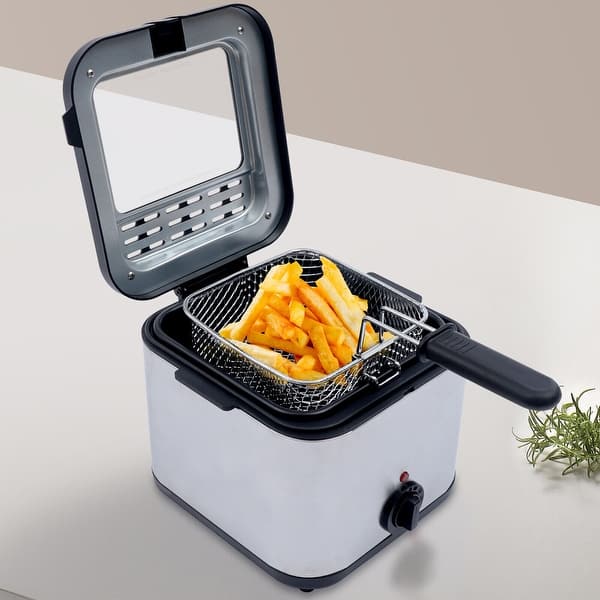
Follow the model’s manual first because controls and oil limits differ. This general process applies to many small electric fryers.
- Place the fryer on a level, heat-safe surface. Keep it away from water, paper, towels, and the counter edge.
- Add the correct amount of oil. Stay between the marked minimum and maximum levels.
- Set the temperature. Use the recipe temperature or the appliance setting.
- Prepare the food. Pat wet food dry. Remove excess ice from frozen food.
- Lower the food slowly. Do not drop food into hot oil.
- Cook a small batch. Leave space around the pieces.
- Watch the oil. Stop if it smokes, foams heavily, or rises toward the rim.
- Lift the food carefully. Let excess oil drain before serving.
- Turn off and unplug the fryer. Let the oil cool fully before moving or cleaning it.
Signs that the fryer is working well
The oil should heat without heavy smoke. Food should begin to sizzle when added. The finished surface should be crisp and evenly colored.
If the food is pale and greasy, the batch may be too large or the oil may be too cool. If the food burns quickly, the temperature may be too high.

Safety Rules for a Small Deep Fryer
Hot oil can cause severe burns and can start a kitchen fire. The U.S. Fire Administration advises never using water on a grease fire. Water can spread burning oil.
Use these safety rules:
- Never leave hot oil unattended.
- Keep children and pets away.
- Do not add wet food to hot oil.
- Do not move the fryer while the oil is hot.
- Keep the cord away from hot surfaces.
- Do not use the fryer near a sink or water source.
- Stop using the fryer if the cord or plug is damaged.
- Let oil cool completely before filtering or storing it.
- Follow the manual’s cleaning and storage instructions.
What to do if oil catches fire
If it is safe to do so, turn off the heat and cover the fryer with its lid. Do not carry the fryer. Do not use water.
If the fire does not stop at once, leave the area and call 911. Use a fire extinguisher only if you have the correct type, know how to use it, and have a clear exit behind you. The U.S. Fire Administration recommends having a properly rated fire extinguisher available for kitchen fires.

Common Mistakes When Buying the Smallest Deep Fryer
The most common mistake is choosing the lowest capacity without checking how the fryer must be used.
Mistake 1: Confusing bowl size with oil capacity
A listing may give the size of the inner bowl, not the amount of oil the fryer should hold. Look for the manufacturer’s stated oil capacity and fill lines.
Mistake 2: Expecting a full meal from a mini fryer
A 1-quart fryer is not a family-size appliance. It may require several batches for a meal.
Mistake 3: Ignoring the outside dimensions
Measure the storage shelf and counter space. Include the handle, lid, and cord.
Mistake 4: Buying an imported model without checking the plug
A fryer made for another voltage may be unsafe in a U.S. outlet. Confirm the voltage, plug, listing information, and manual.
Mistake 5: Using too much food
Crowding lowers the oil temperature. Start with less food than you think you need, then adjust after one batch.
Mistake 6: Treating a fryer like an air fryer
A deep fryer uses a large amount of hot oil. An air fryer uses heated air and works by a different method. Recipes and cooking times are not interchangeable.

Is the Smallest Deep Fryer Worth Buying?
A 1-quart deep fryer is worth considering if you:
- Live alone or cook for one or two people
- Fry food only now and then
- Have limited storage space
- Want a small oil volume
- Prefer an electric thermostat to stovetop heating
A larger fryer may be better if you:
- Cook for three or more people
- Fry large foods
- Want fewer batches
- Cook frozen foods often
- Need more room to maintain oil temperature
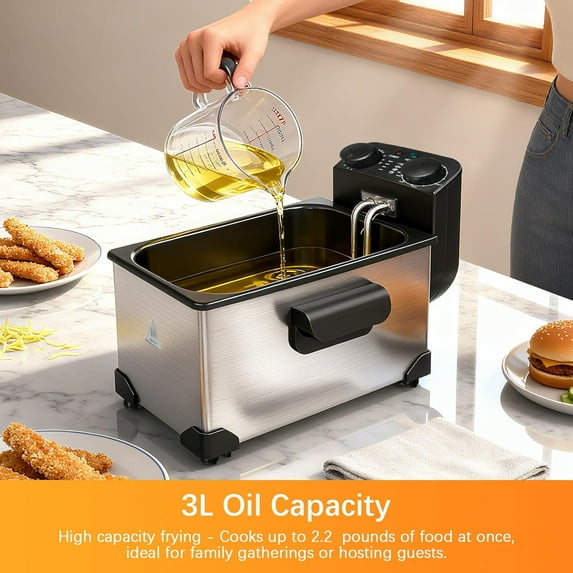
The smallest model saves space and may use less oil per fill. Its trade-off is slower cooking when you need several portions.
Frequently Asked Questions
What is the smallest deep fryer you can buy?
The smallest practical U.S. deep fryers usually hold about 1 quart of oil. Some models are close to 1 liter. Smaller products may be available, but check their U.S. voltage, safety information, oil limits, and manufacturer support before buying.
Is a 1-quart deep fryer big enough for one person?
Yes. A 1-quart fryer can work well for one person when cooking small batches. It may not be large enough for a full serving of large foods, such as many chicken wings or a large portion of fries.
Does a mini deep fryer use less oil?
Usually, yes. A smaller fryer needs less oil to reach its operating level. However, you should not reduce the oil below the manufacturer’s minimum line. The heating system may not work correctly with too little oil.
What oil is best for a small deep fryer?
Use a cooking oil with a suitable smoke point, such as peanut, canola, vegetable, or sunflower oil, unless you have an allergy or the appliance manual says otherwise. Keep the oil below its smoke point and replace it when it becomes dark, thick, foamy, or strongly scented.
Can I leave oil in a mini deep fryer?
Only if the manufacturer allows it and the fryer has been turned off, unplugged, covered, and cooled. Store used oil in a cool, dark place and discard it if it smells bad or shows signs of breakdown.
Is a mini deep fryer safer than a pan?
A mini electric fryer may offer a stable base and temperature control, but it still contains very hot oil. Those features can reduce some risks, not remove them. Safe handling remains essential.
Recommended Answer for Most U.S. Buyers
If you want the smallest useful deep fryer, choose a 1-quart electric model made for the U.S. market. Check the oil markings, temperature control, stability, cleaning method, and full dimensions before buying.
Choose a 1-quart unit for one or two small servings. Choose a 1.5- to 2-quart model if you want fewer batches or cook for more than one or two people.
The next step is to measure your storage space and compare that measurement with the fryer’s complete dimensions. Then confirm the listed oil capacity, U.S. voltage, and minimum and maximum fill lines.
Sources and Evidence
The size and feature descriptions in this guide are based on manufacturer product information and U.S. fire-safety guidance. Product specifications can change, so check the current manual and product label before purchase.
- Presto FryDaddy product information
- Cuisinart compact deep fryer information
- [U.S. Fire Administration: Cooking Fire Safety](https://www.usfa.fema.gov/prevention/home-fires/ cooking/)
- U.S. Consumer Product Safety Commission: Cooking safety resources
Conclusion
The smallest common deep fryer for U.S. home use holds about 1 quart of oil. It is compact and useful for small portions, but it cannot replace a larger fryer when you need to cook for a family.
For the best balance, start with a 1-quart model for one person or a 1.5- to 2-quart model for two or more people. Always follow the manual, keep water away from hot oil, and never use water on a grease fire.