Most dressers are 16 to 20 inches deep, but wide and specialty models may reach 24 inches.
Knowing how deep is a dresser helps you choose the right piece, plan a safe layout, and avoid blocked doors or tight walkways. The answer depends on the dresser type, drawer size, back panel, and room purpose. This guide explains standard dresser depth, how to measure it, how much space to leave, and which size works best for your home.
How Deep Is a Dresser?
A typical dresser is about 16 to 20 inches deep from the front edge to the back panel. Some compact dressers measure only 12 to 15 inches deep, while large double dressers can measure 21 to 24 inches.
The depth usually includes the cabinet body, drawer fronts, and back panel. It may not include knobs or handles, which can add 1 to 2 inches to the total space needed.
Here are common dresser depths:
• Small dresser: 12 to 16 inches deep
• Standard dresser: 16 to 20 inches deep
• Wide double dresser: 18 to 24 inches deep
• Tall chest of drawers: 16 to 20 inches deep
• Nursery dresser: 16 to 20 inches deep
• Extra-wide bedroom dresser: 20 to 24 inches deep
When asking how deep is a dresser, remember that there is no single fixed size. Furniture makers design dressers for different rooms, storage needs, and clothing types.
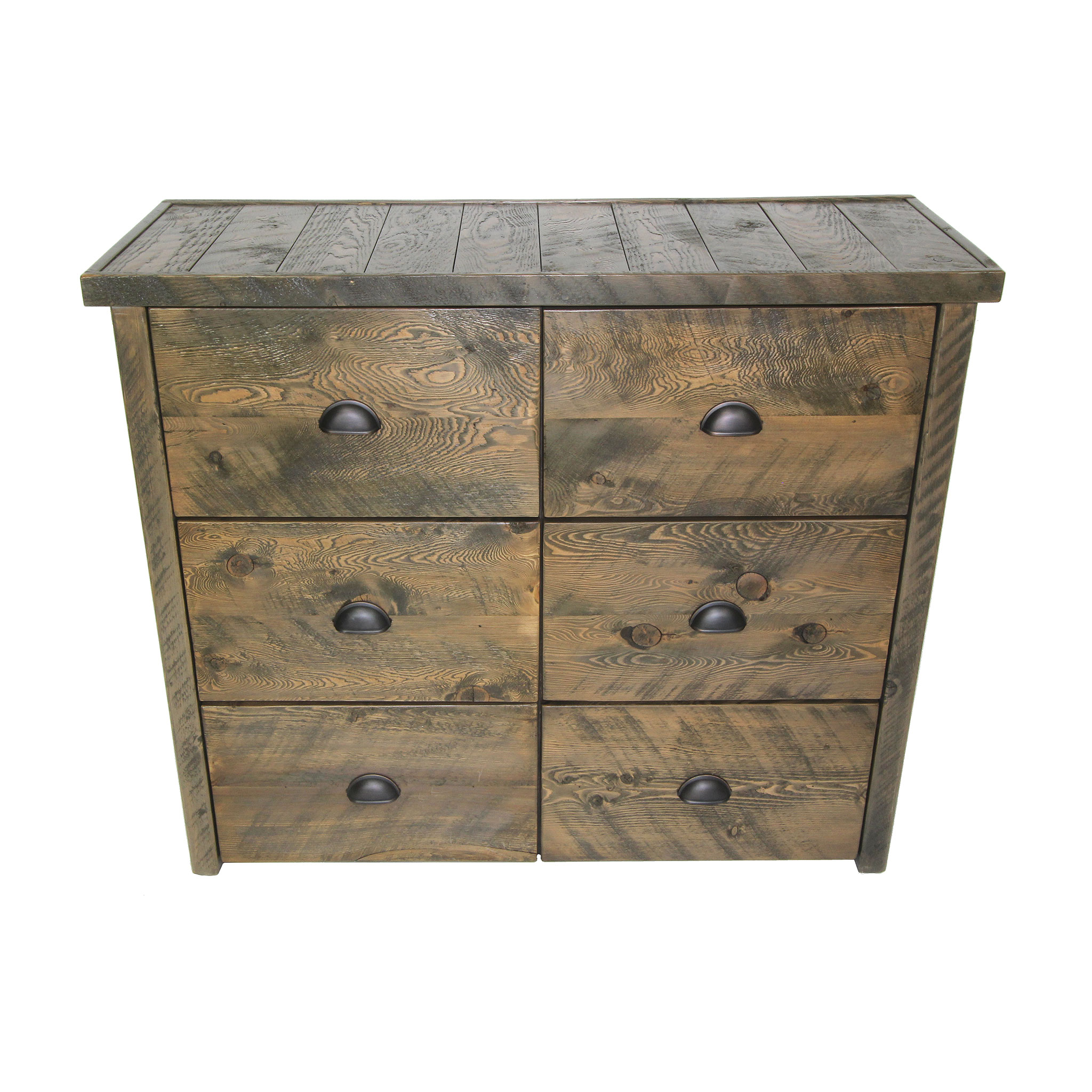
Standard Dresser Dimensions
Standard dresser dimensions often fall within a useful range of 30 to 36 inches high, 50 to form? 72 inches wide, and 16 to 20 inches deep. These measurements describe many bedroom dressers sold in the United States.
A six-drawer dresser is often wider than a three-drawer chest. However, a tall chest may use the same depth while taking up less floor space.
Typical measurements include:
• Three-drawer dresser: 30 to 36 inches wide, 30 to 36 inches high, and 16 to 20 inches deep
• Six-drawer dresser: 50 to 72 inches wide, 30 to 36 inches high, and 16 to 20 inches deep
• Tall chest: 30 to 40 inches wide, 45 to 60 inches high, and 16 to 20 inches deep
• Low dresser: 60 to 72 inches wide, 24 to 30 inches high, and 18 to 24 inches deep
• Small apartment dresser: 24 to 40 inches wide, 28 to 36 inches high, and 12 to 16 inches deep
These are general ranges, not strict rules. Always check the manufacturer’s product details before buying, especially when the dresser must fit into a narrow room.

Dresser Depth by Type
The type of dresser affects its depth. A small chest for a guest room needs less space than a large dresser designed to hold bulky sweaters and linens.
Standard Bedroom Dresser
A standard bedroom dresser is usually 16 to 20 inches deep. This depth gives drawers enough room for shirts, pants, socks, and folded bedding without taking over the room.
A 18-inch-deep dresser often offers a good balance between storage and walking space. It is deep enough for most clothes but shallow enough for many bedrooms.
Wide Double Dresser
A wide double dresser commonly measures 18 to 24 inches deep. Its extra width gives you more drawers, but the increased depth may make the room feel crowded.
Before choosing one, measure the wall and the space in front of it. Wide dressers are useful, but they need careful placement.
Tall Chest of Drawers
A tall chest often measures 16 to 20 inches deep. Its narrow footprint makes it useful in small bedrooms, apartments, and rooms with limited wall space.
Because it is tall, anchor it securely to the wall. The U.S. Consumer Product Safety Commission warns that unsecured furniture can tip, especially when drawers are opened or children climb on it.
Nursery Dresser
A nursery dresser is often 16 to 20 inches deep. It may also support a changing pad, so the height and top depth matter as much as the drawer space.
Leave enough room to stand safely in front of the dresser. If you use a changing table attachment, follow the product instructions and secure the unit properly.
Mid-Century and Modern Dressers
Modern and mid-century dressers may be 15 to 19 inches deep. Many have slim legs and a shallow cabinet, which can make them look smaller than they really are.
Measure the deepest part of the cabinet, not only the legs. Also measure drawer pulls if the dresser will sit near a door or walkway.

Why Dresser Depth Matters
Dresser depth affects storage, movement, safety, and visual balance. A dresser that looks perfect online may feel too large once it enters your room.
Here are the main reasons depth matters:
• It controls how much floor space the dresser uses.
• It affects the size of clothing that fits inside.
• It changes how far drawers extend into the room.
• It determines whether nearby doors and closets can open.
• It affects walking clearance and daily comfort.
• It can influence whether the furniture feels balanced against the wall.
For example, a 24-inch-deep dresser may store thick blankets well. Yet it may leave too little space in a narrow bedroom. A 14-inch-deep dresser may fit the room better, but its drawers may not hold bulky clothing as easily.
Think of dresser depth as a room’s breathing space. More depth gives more storage, but less open floor area.

How to Measure a Dresser Correctly
Measuring a dresser takes only a few minutes, but small mistakes can cause large problems during delivery or installation.
Follow these steps:
-
Place the dresser on a flat surface.
-
Measure from the front-most point to the back-most point.
-
Include the drawer fronts and back panel.
-
Measure the handles or knobs if they extend beyond the front.
-
Measure the open drawer depth if storage space matters.
-
Record the height, width, and depth separately.
-
Measure doorways, stairways, hallways, and corners along the delivery path.
Use a firm tape measure and keep it straight. Do not measure only the drawer box because the cabinet may be deeper.
For a room plan, measure the dresser with all drawers closed. Then check how far the largest drawer extends when open. This gives you the real working space, not just the furniture footprint.
A useful example is a 20-inch-deep dresser with drawers that extend 15 inches. The dresser uses 20 inches of floor depth when closed, but it may need about 35 inches of clear space when a drawer is open.

How Much Space Should You Leave in Front of a Dresser?
Most bedrooms need at least 36 inches of clear space in front of a dresser. This allows a person to stand comfortably and open drawers.
For easier movement, aim for 42 to 48 inches. This is especially helpful when the dresser faces a bed, closet, or doorway.
Use these planning ranges:
• Minimum usable clearance: about 30 to 36 inches
• Comfortable drawer clearance: about 36 to 42 inches
• Easy walking and changing space: about 42 to 48 inches
• Space between dresser and bed: often 36 inches or more
The best amount depends on the room and the people using it. A child’s room may work with less space, while a primary bedroom benefits from a wider path.
Do not forget nearby furniture. A dresser may fit against a wall, but an open drawer could hit a bed, nightstand, door, or radiator.
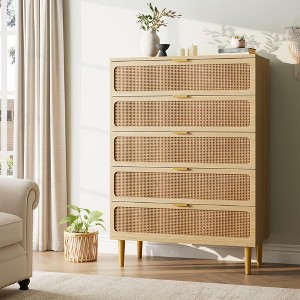
How Deep Should a Dresser Be for Different Rooms?
The right depth depends on the room’s size and function. A dresser for a large primary bedroom can be deeper than one for a hallway or small guest room.
Small Bedroom
Choose a dresser that is about 12 to 16 inches deep. A tall chest can provide storage without using much floor space.
Avoid very wide models if they make the room hard to cross. Light colors, raised legs, and simple fronts can also make a small room feel more open.
Primary Bedroom
A depth of 18 to 22 inches often works well in a primary bedroom. It gives you useful storage for clothing, linens, and accessories.
Measure the wall before buying a wide model. Leave space for drawers to open fully and for people to walk around the bed.
Guest Bedroom
A 14 to 18-inch-deep dresser is often enough for guests. Smaller furniture leaves more room for luggage, seating, and movement.
A narrow dresser can also serve as a bedside storage piece if its height is suitable.
Nursery
A 16 to 20-inch depth is common for a nursery dresser. Check the height carefully if the dresser will hold a changing pad.
Secure the dresser to a wall stud or use the supplied anti-tip hardware. Never rely on weight alone to keep tall furniture stable.
Hallway or Entry Area
A shallow dresser or console-style unit may work best in a hallway. Look for a depth of 10 to 15 inches if people must pass by often.
Keep the walkway clear and avoid placing furniture where it blocks an exit or door swing.

How Deep Should Dresser Drawers Be?
Dresser drawers are often 12 to 18 inches deep inside, even when the full dresser depth is 16 to 20 inches. The drawer box cannot use every inch because the dresser needs a back panel, frame, hardware, and clearance.
A drawer that is 14 inches deep can hold most folded shirts, jeans, pajamas, and underwear. Deeper drawers may work better for blankets, towels, and sweaters.
Drawer depth is not the same as drawer height. A short, deep drawer may hold more than a tall but shallow drawer, depending on how you fold and stack items.
For daily use, look for:
• Smooth drawer slides
• Full-extension runners
• Strong drawer bottoms
• Even spacing between drawers
• Drawers that open without rubbing
• A built-in stop to prevent accidental removal
When shopping online, read both the outside dimensions and the interior drawer dimensions. Product listings sometimes show only the overall size.
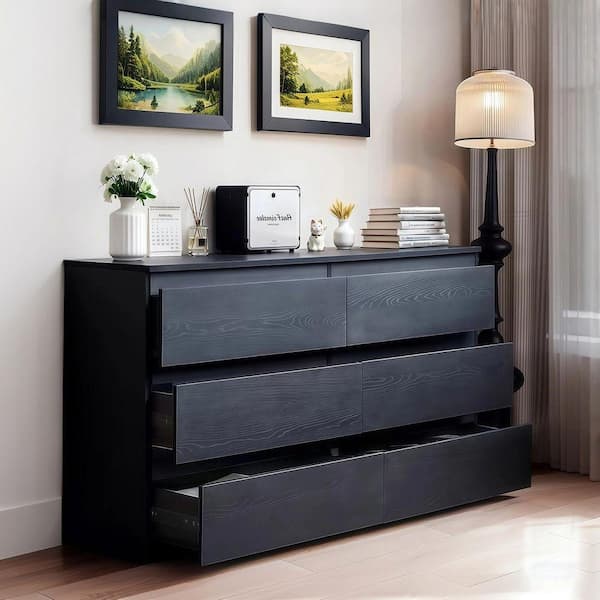
How to Choose the Right Dresser Depth
Start with the room, not the dresser. Measure the wall, nearby furniture, door swings, and walking paths before browsing styles.
Use this simple process:
-
Measure the available wall width.
-
Measure the maximum depth the room can handle.
-
Mark the footprint with painter’s tape.
-
Walk around the marked area.
-
Pretend to open each drawer.
-
Check the path from the entrance to the bed or closet.
-
Compare the measurements with the product listing.
Painter’s tape is a simple but useful test. It shows how a dresser will affect the room before you carry a heavy piece inside.
One common mistake is measuring the wall but ignoring the baseboard. A thick baseboard can create a small gap behind the dresser. That gap may add an inch or more to the total depth.
Another mistake is forgetting drawer pulls. Long pulls can turn a 20-inch-deep dresser into a 22-inch-deep obstacle in a tight room.
Common Dresser Measuring Mistakes
Many furniture problems come from measuring only one part of the room. A dresser can fit on the wall and still fail at the doorway.
Avoid these errors:
• Measuring the furniture without measuring the delivery path
• Ignoring door frames and stair railings
• Forgetting baseboards, trim, and wall outlets
• Measuring the cabinet but not the handles
• Failing to allow space for open drawers
• Assuming all six-drawer dressers have the same depth
• Placing a tall dresser without wall anchoring
• Choosing storage volume without considering room flow
I have seen this issue often in room planning: a dresser fits on paper but feels too large in daily use. The lesson is simple. Design for the open drawer, not only the closed cabinet.
If you are unsure, choose a slightly shallower dresser and use drawer organizers. A tidy 16-inch-deep dresser can be more useful than a bulky 24-inch model that blocks movement.
Dresser Depth Compared With Other Bedroom Furniture
Comparing dresser depth with nearby furniture helps you create a balanced layout. A dresser should support the room, not become the main obstacle.
Common furniture depths include:
• Nightstand: about 14 to 20 inches
• Desk: about 20 to 30 inches
• Bookshelf: about 10 to 14 inches
• Wardrobe: about 20 to 26 inches
• Standard dresser: about 16 to 20 inches
• Closet organizer: about 12 to 24 inches
A dresser that is much deeper than a nightstand may look heavy in a small room. On the other hand, a deep wardrobe may make a standard dresser look proportionate.
Keep the main walking paths open. Furniture does not need to match perfectly, but its size should feel intentional.
When a Deep Dresser Is a Good Choice
A deep dresser can be useful when you have enough room and need extra storage. It may hold thick clothing, large blankets, towels, or seasonal items.
Choose a deeper dresser when:
• The room has at least 42 inches of open space in front
• You store bulky items
• You prefer fewer, larger drawers
• The wall is wide and free from doors
• The dresser will not block outlets or vents
• You can safely move it into the room
Deep furniture can also reduce clutter because it gives each item a place. Still, depth is not always better. Overfilled drawers become hard to open and can place stress on the slides.
When a Shallow Dresser Is Better
A shallow dresser is often the smarter choice for apartments, guest rooms, hallways, and narrow bedrooms. It keeps paths open and makes the room easier to move through.
Choose a shallow dresser when:
• The room is less than 12 feet wide
• The dresser faces a bed or door
• You need space for a wheelchair or walker
• The furniture sits in a hallway
• You have limited delivery access
• You store mostly light clothing
A shallow dresser may have smaller drawers, but baskets and dividers can improve its storage. Good organization often matters more than a few extra inches of depth.
Frequently Asked Questions About How Deep Is a Dresser
How deep is a standard dresser?
A standard dresser is usually 16 to 20 inches deep. Some compact models measure 12 to 15 inches, while large dressers may reach 24 inches.
Is a 24-inch-deep dresser too deep for a bedroom?
Not always. A 24-inch-deep dresser can work well in a large room, but you should leave enough space for open drawers and comfortable walking.
How much space do I need in front of a dresser?
Aim for at least 36 inches of clear space in front of a dresser. About 42 to 48 inches feels more comfortable when the dresser faces a bed or busy walkway.
Does dresser depth include the handles?
Product measurements may or may not include handles. Measure the cabinet and the hardware separately when the dresser will sit near a door or narrow passage.
How deep are dresser drawers inside?
Many dresser drawers are about 12 to 18 inches deep inside. The interior size is smaller than the outside depth because of the back panel, frame, and drawer hardware.
Are tall dressers usually less deep?
Many tall dressers are 16 to 20 inches deep, which helps them save floor space. Because tall furniture can tip, secure it to the wall with anti-tip hardware.
What is the best dresser depth for a small room?
A dresser about 12 to 16 inches deep often works best in a small room. Measure the open drawer area as well as the closed furniture footprint.
Conclusion
Most dressers are 16 to 20 inches deep, but the best size depends on your room, storage needs, and walking space. Compact dressers save floor area, while deeper models hold more bulky items.
Measure the dresser, drawers, handles, delivery path, and open space in front before you buy. Use painter’s tape to test the footprint, and always secure tall furniture to the wall. Take a few careful measurements now, then explore dressers that fit your space with confidence.