Most fire extinguishers need a monthly visual check, yearly professional service, and periodic hydrostatic testing.
Knowing how often should fire extinguishers be inspected can prevent a small problem from becoming a serious safety risk. An extinguisher may look fine while its pressure, hose, valve, or internal powder has failed. This guide explains the inspection schedule used across the United States, what each check includes, and when an extinguisher needs repair or replacement.
How Often Should Fire Extinguishers Be Inspected?
For most workplaces, fire extinguishers should receive:
• A visual inspection every month
• Professional maintenance at least once every 12 months
• Hydrostatic testing at intervals based on the extinguisher type
• Immediate inspection after use, damage, discharge, or exposure to harsh conditions
The monthly check is usually done by the business owner, manager, or a trained employee. The annual service should be completed by a qualified fire protection professional.
These time frames reflect common requirements from OSHA and NFPA 10. However, your local fire code, insurance company, manufacturer, or authority having jurisdiction may require stricter rules.
When people ask how often should fire extinguishers be inspected, they often mean one single inspection. In reality, fire extinguisher care is a schedule of simple checks, expert service, and periodic testing.
Monthly Fire Extinguisher Inspection
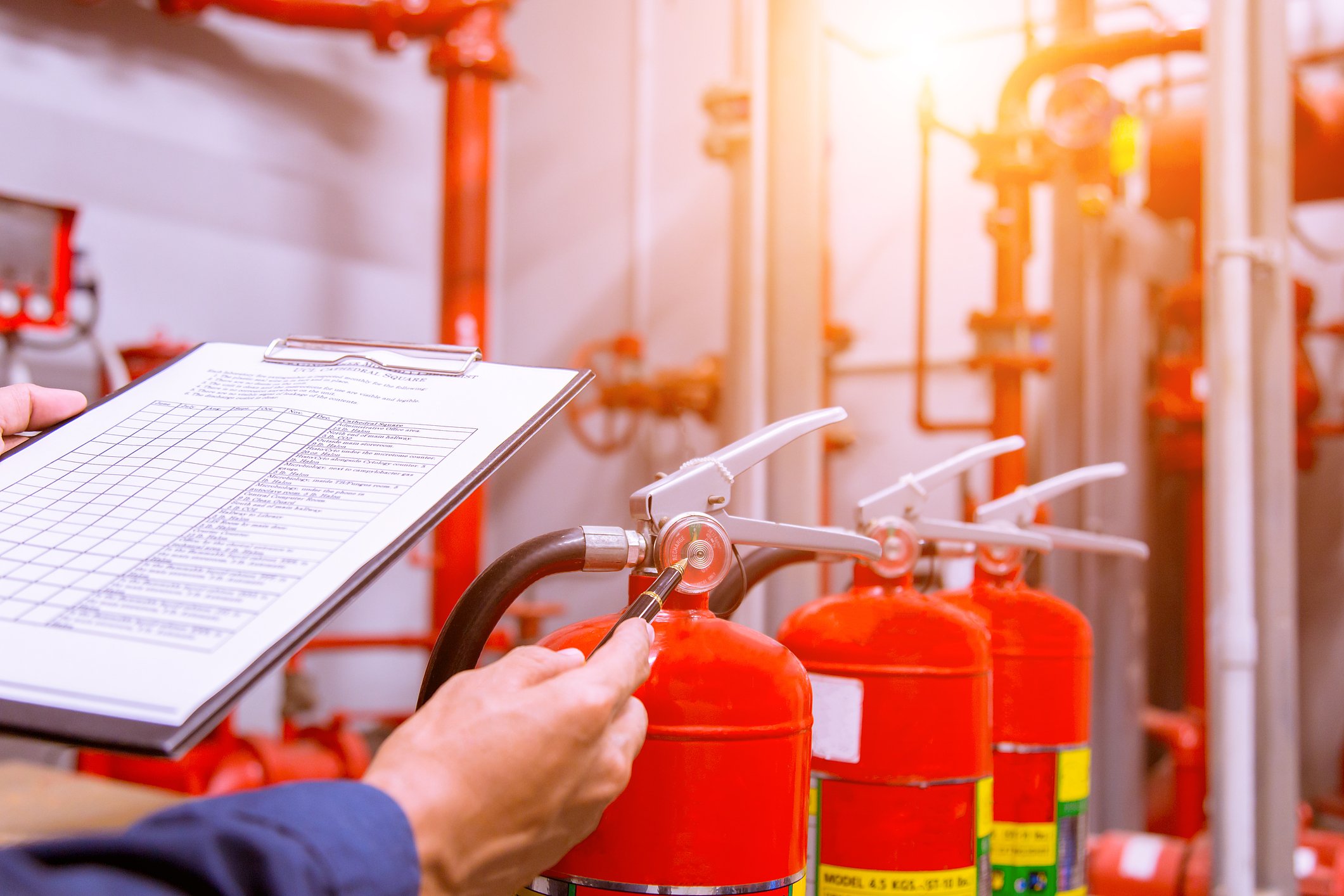
A monthly inspection is a quick visual check. It does not usually require special tools, but it should be done carefully and documented.
Walk around each extinguisher and check the following:
• The extinguisher is in its assigned location
• The access path is clear
• The unit is mounted correctly or stored in its cabinet
• The safety pin and tamper seal are intact
• The pressure gauge is in the green zone, if a gauge is present
• The hose and nozzle are clear
• The cylinder has no dents, cracks, rust, or leaks
• The label is readable
• The extinguisher has no signs of discharge
• The inspection tag or record is current
A blocked extinguisher is not ready for use. Boxes, decorations, inventory, furniture, or seasonal displays should never hide it.
The monthly check also helps answer how often should fire extinguishers be inspected in a practical way. You are not opening the unit or servicing its chemical contents. You are confirming that it is present, accessible, intact, and ready for an emergency.
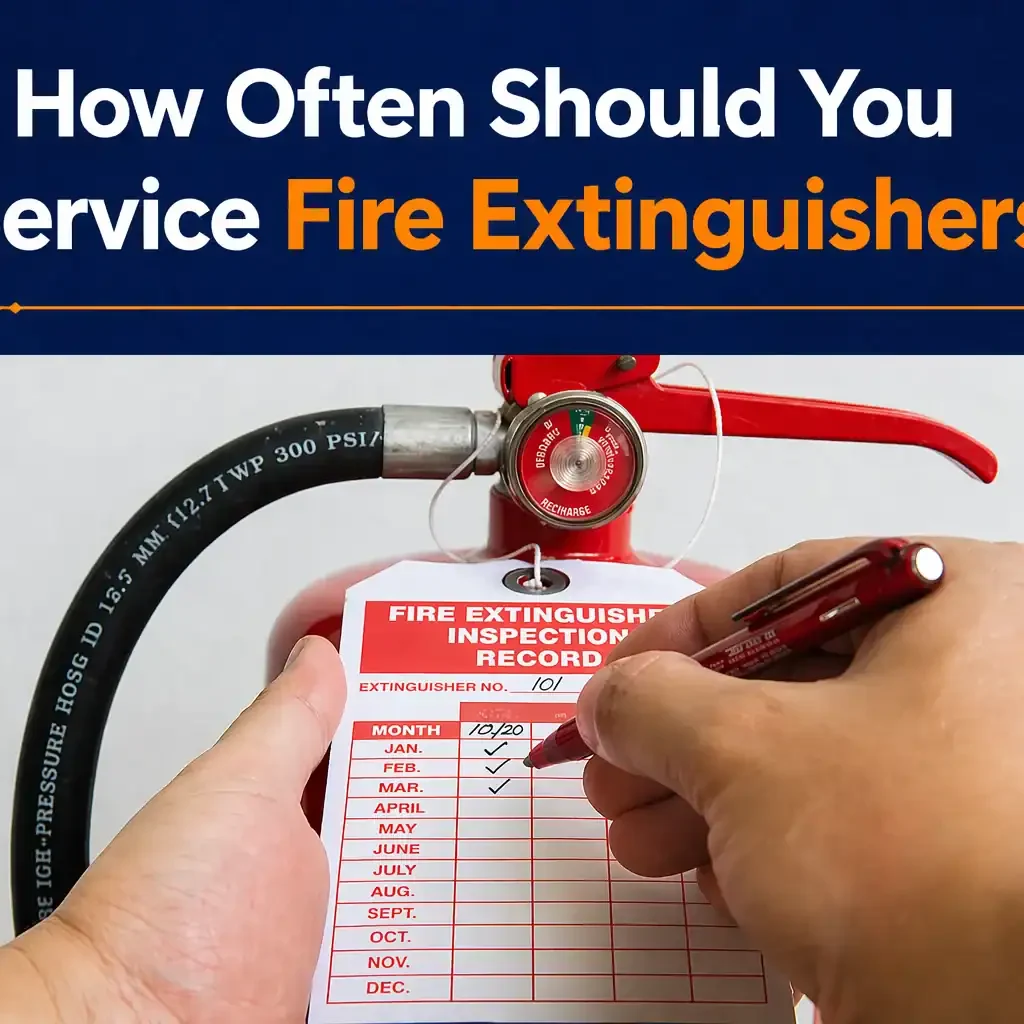
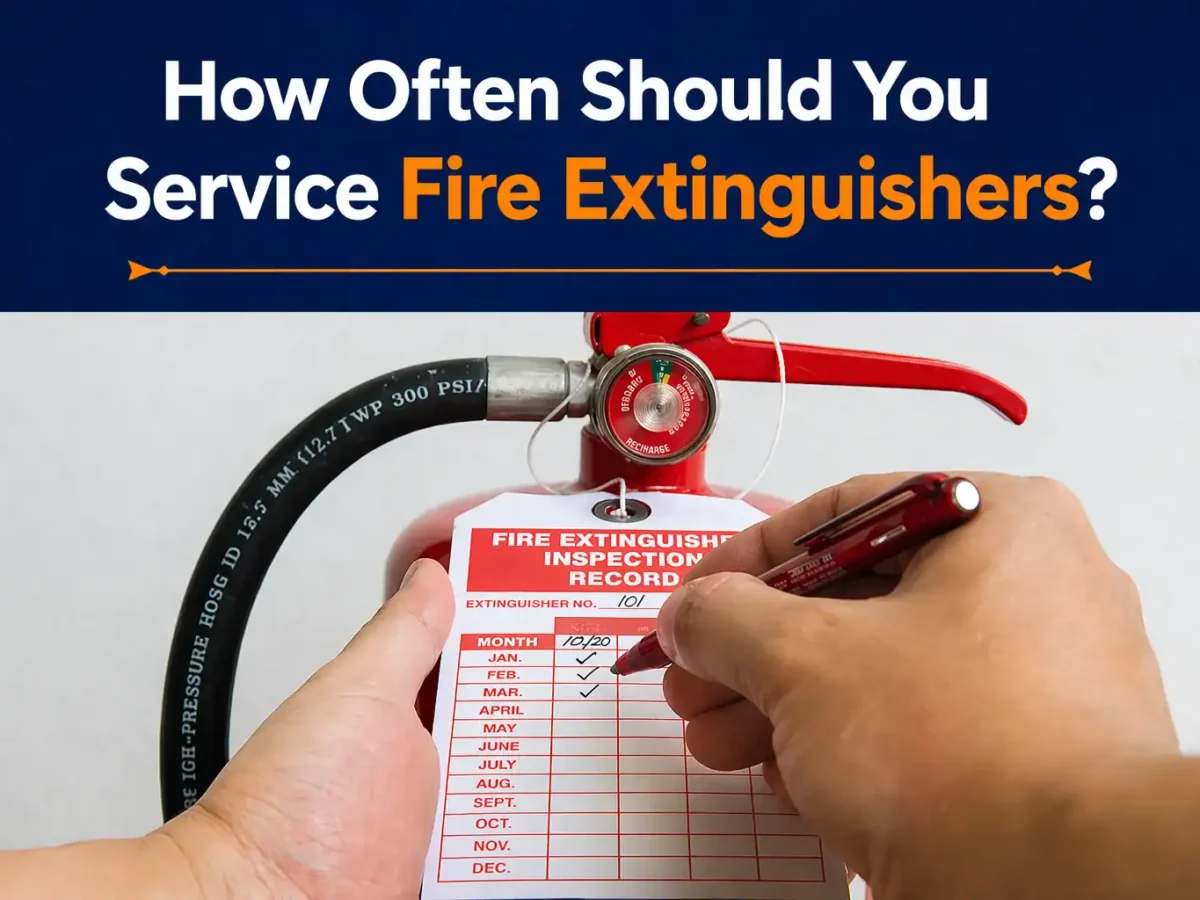
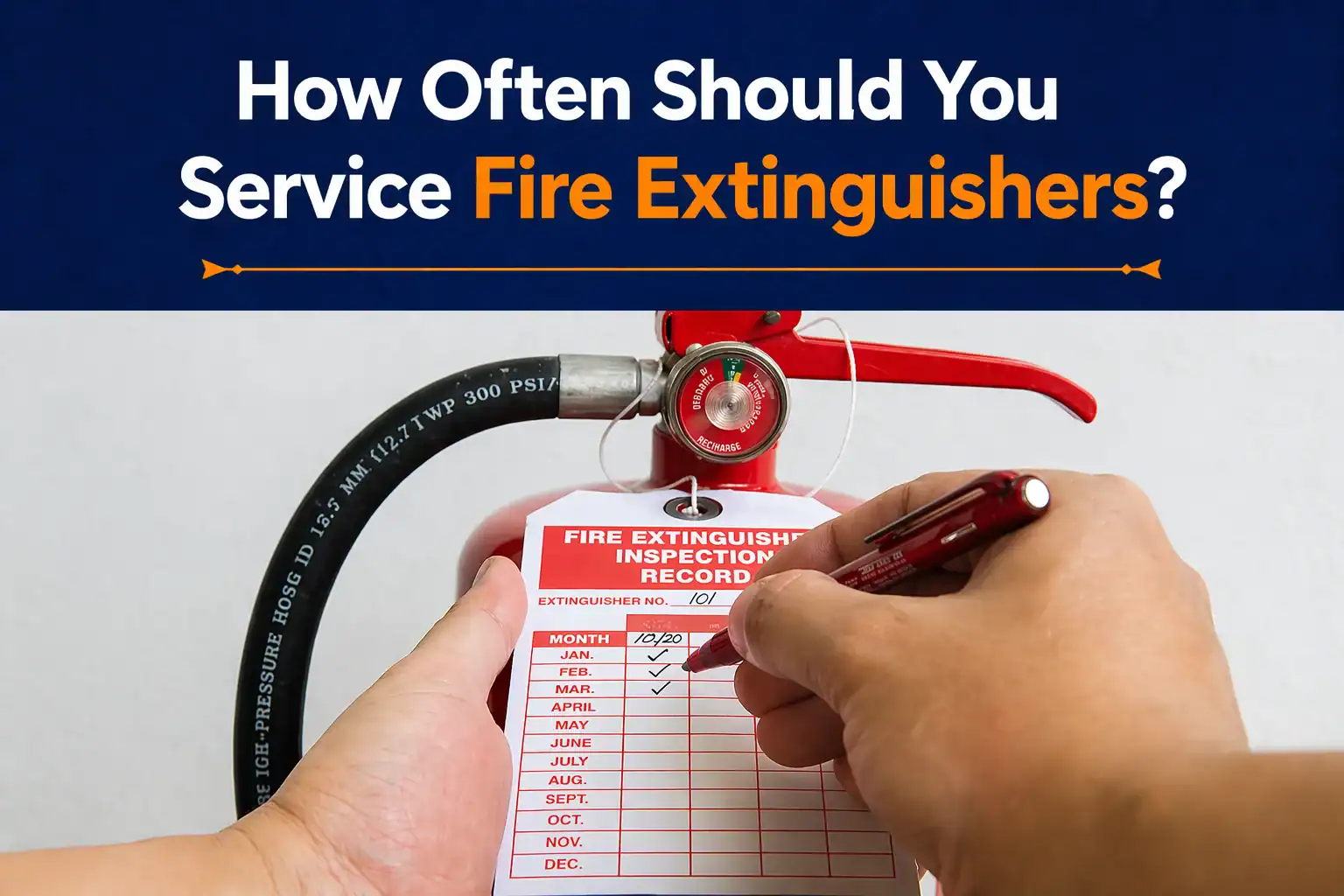
Record the date, the name or initials of the person who checked it, and any problem found. A simple inspection log can help prove that checks were completed and can reveal repeated issues.
Source: impactfireservices.com
Annual Fire Extinguisher Maintenance
A yearly inspection is more detailed than a monthly visual check. It should be completed by a trained and qualified fire extinguisher service professional.
During annual maintenance, the technician may:
• Inspect the cylinder, valve, hose, and nozzle
• Check the pressure and operating parts
• Confirm the extinguisher is the correct type and size
• Look for corrosion, leakage, damage, or tampering
• Clean the unit
• Replace damaged parts
• Weigh certain extinguishers
• Check the condition of the extinguishing agent
• Apply a service tag or update the maintenance record
Some extinguishers must be emptied and internally examined during scheduled maintenance. The exact process depends on the extinguisher type, age, condition, and manufacturer instructions.
If you are still wondering how often should fire extinguishers be inspected, remember this simple rule: check them monthly, and have them professionally serviced every year.
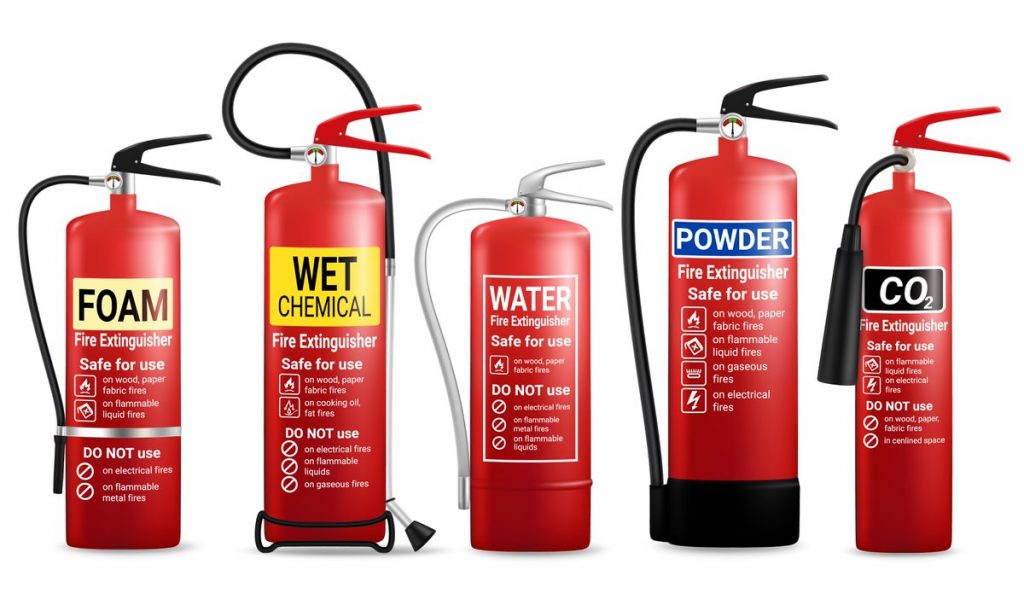
A yearly service visit is also a good time to review extinguisher placement. A kitchen may need a Class K extinguisher for commercial cooking oils. An office may need multipurpose Class ABC extinguishers. A workshop with flammable liquids may need a different arrangement.
Source: co.uk
Hydrostatic Testing Schedule
Hydrostatic testing checks whether an extinguisher cylinder can safely hold pressure. A technician removes the pressure, examines the cylinder, and tests it with water or another approved method.
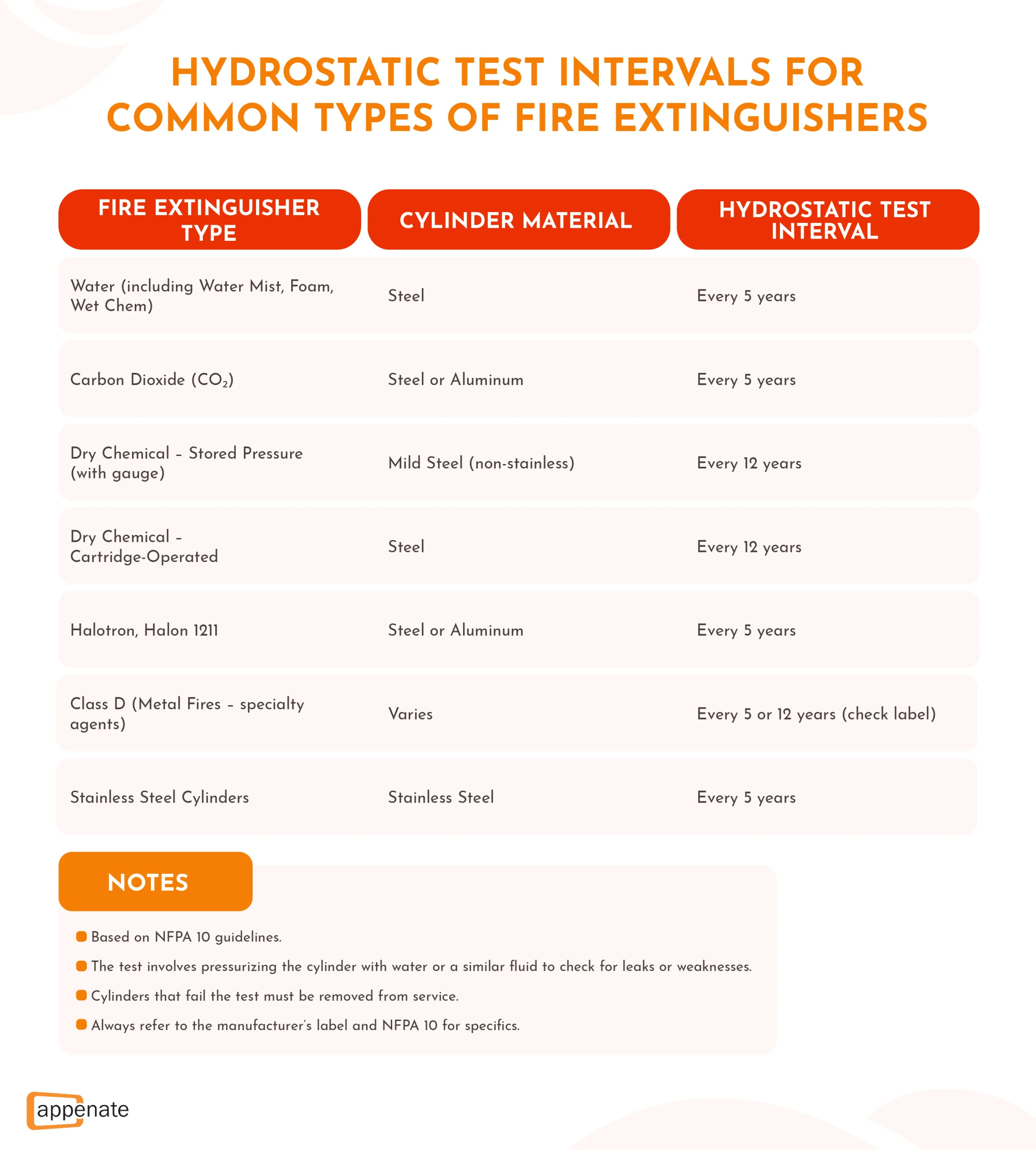
The test schedule varies by extinguisher type. Common intervals under NFPA guidance include:
• Water, foam, and wet chemical extinguishers: generally every five years
• Carbon dioxide extinguishers: generally every five years
• Dry chemical extinguishers: often every 12 years
• Clean agent extinguishers: commonly every 12 years
Some stored pressure dry chemical extinguishers also require internal maintenance at six years. This is different from hydrostatic testing.
The exact schedule can change based on the model, cylinder material, agent, manufacturer instructions, and current code edition. Always check the service label and ask a qualified technician before relying on a general interval.
Hydrostatic testing is not a do-it-yourself task. A damaged cylinder can fail violently if it is pressurized incorrectly. Never attempt to test, refill, repair, or modify an extinguisher at home.
Source: co.uk
What Is the Difference Between Inspection, Maintenance, and Testing?
These terms are related, but they do not mean the same thing.
Inspection
An inspection is a visual check. It confirms that the extinguisher is in place, accessible, undamaged, charged, and ready for use.
Maintenance
Maintenance is a detailed service procedure. It can include cleaning, replacing parts, opening the extinguisher, checking the agent, and restoring the unit to working condition.
Hydrostatic testing
Hydrostatic testing checks the strength of the cylinder. It looks for leaks or weakness that may not be visible during a normal inspection.
This difference matters when deciding how often should fire extinguishers be inspected. A monthly visual inspection cannot replace annual maintenance, and annual maintenance cannot replace required hydrostatic testing.
Think of it like a car. You may look at the tires each week, get regular service each year, and complete larger repairs when the vehicle reaches a set mileage. Each action protects against a different type of failure.

Source: fire-alert.ca
Signs a Fire Extinguisher Needs Immediate Service
Do not wait for the next monthly or annual date if an extinguisher shows a problem. Remove it from service and contact a qualified professional.
Watch for these warning signs:
• The pressure gauge is below or above the safe range
• The safety pin is missing
• The tamper seal is broken without a clear reason
• The hose or nozzle is cracked, blocked, or loose
• The cylinder has rust, dents, bulges, or chemical residue
• The extinguisher feels unusually light
• The handle is bent or damaged
• The label cannot be read
• The extinguisher has been used, even briefly
• The unit has leaked powder, foam, water, or another agent
• The service tag is missing or overdue
An extinguisher that has been discharged must be serviced or replaced. Pressing the handle for one second can reduce pressure and allow moisture into the unit.
In my experience reviewing safety setups, the most common mistake is treating a damaged extinguisher as “good enough.” A small rust spot or broken seal may seem harmless, but it can signal a larger problem inside the cylinder.
Source: co.uk
Who Should Inspect Fire Extinguishers?
A business may assign monthly visual checks to a trained employee. That person should understand the inspection points and know how to report defects.
Annual maintenance, internal servicing, recharging, and hydrostatic testing should be handled by a qualified fire extinguisher technician. Many jurisdictions require service companies to hold specific licenses or certifications.
Homeowners can perform a basic monthly check, but professional service is still wise. This is especially true for extinguishers in garages, workshops, boats, kitchens, or areas with heat, moisture, dust, or chemicals.
Do not confuse a sales representative with a trained service technician. Ask whether the company is licensed in your state, follows current fire code requirements, and provides written service records.
The answer to how often should fire extinguishers be inspected also depends on who performs the work. A quick glance by an untrained person is not equal to documented professional maintenance.

Source: firechiefglobal.com
Fire Extinguisher Inspection Requirements for Businesses
Workplaces should maintain a written inspection and maintenance program. The program should identify each extinguisher, its location, inspection date, service date, and condition.
A basic workplace process can look like this:
- Create a list of every extinguisher.
- Assign each unit a location or identification number.
- Complete and record a monthly visual inspection.
- Schedule annual professional maintenance.
- Track hydrostatic testing and six-year maintenance dates.
- Replace or repair defective equipment without delay.
- Keep service records available for inspections and audits.
- Train workers on extinguisher locations and emergency procedures.
OSHA rules generally require portable fire extinguishers in covered workplaces to receive visual inspections each month and maintenance at least once a year. Other rules may apply to specific industries, buildings, construction sites, healthcare facilities, schools, and high-risk operations.
Your local fire marshal or authority having jurisdiction has the final say on code enforcement. Building use, occupancy level, fire hazards, and local amendments can affect the required schedule.
Source: co.uk
How to Inspect a Fire Extinguisher in Five Minutes
A short inspection can fit into a normal monthly safety routine.
Step 1: Find the extinguisher
Confirm that it is in its assigned location. Make sure nothing blocks it, even temporarily.
Step 2: Check the cylinder
Look for rust, dents, cracks, bulges, leaks, or chemical residue. Do not use an extinguisher with serious physical damage.
Step 3: Check the gauge
If the extinguisher has a gauge, the needle should normally be in the green area. A gauge is not present on every model, so do not assume that all extinguishers should have one.
Step 4: Check the pin, seal, hose, and nozzle
The pin should be present, and the tamper seal should be intact. The hose or nozzle must be clear and securely attached.
Step 5: Check the label and record
Make sure the operating instructions are readable. Record the date and report anything unusual.
Never shake, turn upside down, or discharge an extinguisher as part of a routine inspection. Those actions can damage the unit or waste its contents.
Source: appenate.com
Common Mistakes to Avoid
Several simple mistakes can make an inspection program weak.
• Checking only the pressure gauge
• Ignoring corrosion on the bottom of the cylinder
• Storing an extinguisher behind a locked door
• Letting boxes block access
• Failing to replace a unit after use
• Assuming a new extinguisher never needs inspection
• Forgetting about hydrostatic testing
• Hiring an unqualified person for internal service
• Keeping expired or unreadable labels
• Treating an inspection sticker as proof that the unit is currently safe
The gauge only shows pressure. It does not prove that the agent is usable, the hose is open, or the cylinder is free from internal corrosion.
Another common mistake is buying the wrong extinguisher. A Class A extinguisher is designed for ordinary materials such as paper and wood. Class B extinguishers address flammable liquids. Class C ratings apply to energized electrical equipment, while Class K extinguishers are intended for commercial cooking oils and fats.
Does the Inspection Schedule Change by Location?
Yes. A clean, dry office may have fewer environmental concerns than a salty coastal property, busy restaurant, auto shop, or construction site.
Inspect extinguishers more often when they are exposed to:
• High heat or freezing temperatures
• Water, humidity, or salt air
• Dust, chemicals, or grease
• Frequent movement or vibration
• Public access and possible tampering
• Heavy equipment or vehicle traffic
• Outdoor storage
An extinguisher in a commercial kitchen may collect grease and need close attention. One in a warehouse may be struck by forklifts. One near a beach may corrode faster than one in a dry inland office.
This is why the question of how often should fire extinguishers be inspected cannot be answered by a calendar alone. The standard schedule is a starting point, but risk and environment matter too.
Why Regular Fire Extinguisher Inspections Matter
A working extinguisher can help control a small fire before it grows. It may protect people, reduce property damage, and give occupants more time to exit.
Inspections also reveal problems with placement. An extinguisher may be fully charged but useless if it is too far away, hidden, or not suitable for the hazard.
Regular checks support workplace safety, insurance documentation, fire code compliance, and employee confidence. They also encourage people to report blocked exits, damaged equipment, and other hazards.
Still, a fire extinguisher is not a substitute for evacuation. If a fire is spreading, producing heavy smoke, blocking an exit, or too large to fight safely, leave immediately and call 911.
Frequently Asked Questions
How often should fire extinguishers be inspected in a home?
A homeowner should visually check each extinguisher at least once a month. Professional maintenance is commonly recommended once a year, especially for units in garages, kitchens, workshops, or damp areas.
How often should fire extinguishers be inspected at work?
Most workplaces need monthly visual inspections and professional maintenance at least annually. Additional testing, such as hydrostatic testing, follows the extinguisher type and applicable fire code.
Can I inspect my own fire extinguisher?
You can perform a basic visual inspection if you know what to check and keep a record. Internal maintenance, recharging, repairs, and hydrostatic testing should be completed by a qualified technician.
Does a fire extinguisher need inspection after one use?
Yes. Any discharge, even a short burst, requires professional inspection and likely recharging or replacement. The unit may have lost pressure or allowed moisture into the cylinder.
How long do fire extinguishers last?
There is no single expiration date for every extinguisher. Service history, corrosion, cylinder condition, manufacturer instructions, and required testing determine whether a unit can remain in use.
What happens if a fire extinguisher fails inspection?
A qualified technician may repair, recharge, retest, or replace it. Do not return a failed extinguisher to service until the problem has been corrected and documented.
Conclusion
The best answer to how often should fire extinguishers be inspected is simple: check them visually every month, arrange professional maintenance every year, and follow the required schedule for hydrostatic testing and internal service.
Keep extinguishers visible, accessible, correctly rated, and free from damage. Use a written log, respond quickly to defects, and confirm local requirements with your fire marshal or a qualified service company. A few minutes of care today can make a vital difference during an emergency.
Review your extinguishers this month, update your inspection records, and explore trusted fire safety resources to keep your home or workplace ready.