A good toaster browns bread evenly, gives you useful control, fits your kitchen, and feels safe to use every day. For most U.S. homes, the best choice is a simple two- or four-slice toaster with wide slots, clear shade settings, a cancel button, and a removable crumb tray.
Price alone does not prove quality. A costly toaster may still brown unevenly or leave small slices hard to reach. The right toaster matches your bread, counter space, family size, and daily habits.
This guide explains what makes a toaster good, which features matter, what to skip, and how to choose with confidence.
What Makes a Toaster Good?
A good toaster does five basic jobs well:
- It browns bread evenly.
- It gives you repeatable results.
- It fits the food you eat.
- It is easy to clean.
- It has sensible safety features.
The heating elements should toast both sides at a similar rate. The bread should rise high enough to remove without burning your fingers. The controls should be easy to read and use.
A toaster does not need dozens of settings. It needs settings that work in a clear and useful way.
Even browning
Even browning is the main sign of a good toaster. The bread should not be pale on one side and dark on the other. Some variation is normal because bread thickness, moisture, and starting temperature can change the result.
A toaster with poor heat balance may create dark strips near the heating elements. It may also leave the center of the bread pale. This can waste food and make each batch harder to predict.
Useful shade control
Most toasters use a dial or buttons to control toast time. The numbers do not mean the same level across all brands. A “4” on one toaster may produce lighter toast than a “4” on another.
Look for controls that are:
- Easy to see
- Easy to turn or press
- Firm enough not to move by accident
- Consistent from one use to the next
A cancel button is also useful. It lets you stop the cycle without unplugging the toaster.
Good bread lift
The lever should raise the bread high enough for safe removal. This matters most with English muffins, small slices, and children’s snacks.
A high-lift feature is helpful, but the exact lift height can differ by model. Check the toaster in person when possible, or review the manual before buying.
Easy cleaning
Crumbs collect inside every toaster. A removable crumb tray makes routine cleaning much easier. The tray should slide out smoothly and stay closed during normal use.
Avoid shaking a toaster over the sink. Loose crumbs can enter other parts of the appliance. The U.S. Consumer Product Safety Commission advises consumers to follow appliance instructions and keep heating appliances away from unsafe conditions.
Which Toaster Size Is Best?
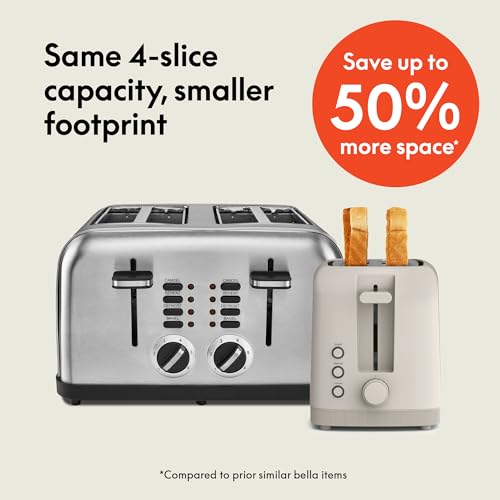
The best toaster size depends on how many people you serve and how much counter space you have. A two-slice toaster suits one or two people. A four-slice toaster saves time in a larger household.
| Toaster type | Best for | Main benefit | Main drawback |
|---|---|---|---|
| Two-slice | One or two people | Uses less space | Slower for several servings |
| Four-slice | Families or shared homes | Toasts more at once | Takes more counter space |
| Long-slot | Artisan bread and long slices | Fits larger pieces | May be harder to store |
| Compact travel model | Limited use or travel | Small footprint | Often has fewer controls |
A four-slice toaster can have two separate control sets. This lets one person toast light bread while another toasts a darker slice. A model with one shared control may be less flexible.
Measure your counter before buying. Include space above the toaster if you plan to store it in a cabinet. Never use a toaster inside a closed cabinet or under a low shelf while it is operating.
Two-slice toaster
Choose a two-slice toaster if:
- You have limited counter space.
- You usually make one or two slices.
- You live alone or with one other person.
- You want a lighter appliance that is easier to store.
A two-slice model can also offer more room around each slot. This may make it easier to insert thick bread.
Four-slice toaster
Choose a four-slice toaster if:
- Several people eat breakfast at once.
- You toast bread often.
- You want two batches at the same time.
- You have enough space near an outlet.
A four-slice model is not always twice as fast. Its speed depends on its heating design and whether all slots can toast at the same time.
Long-slot toaster
A long-slot toaster can suit large slices of sourdough, rye, or homemade bread. It may also handle two small slices in one long slot, but results can vary.
Check the slot length and width. “Long slot” does not always mean “wide slot.” Thick bagels and Texas toast need enough width as well as length.
What Features Should You Look For?
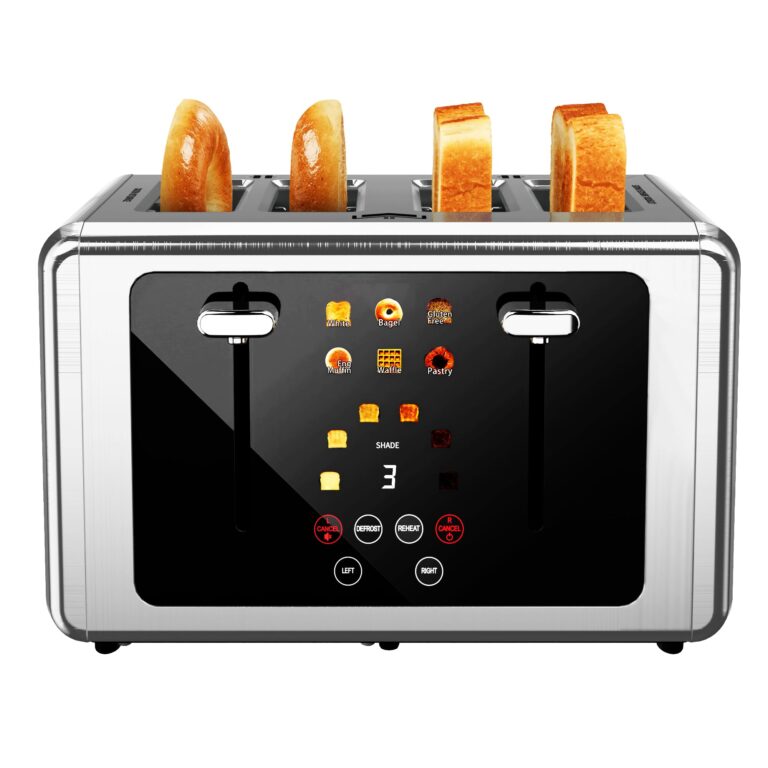
The most useful toaster features are wide slots, separate controls, a cancel button, a high-lift lever, and a removable crumb tray. Extra functions matter only when they solve a real need.
Wide slots
Wide slots help with bagels, thick bread, English muffins, and frozen waffles. A narrow slot can squeeze thick food and cause uneven browning.
Check the manufacturer’s listed slot width. Do not assume that a toaster with a large body has wide slots.
Bagel mode
Bagel mode usually changes how the toaster heats the food. Many designs heat one side more than the other. This can warm the cut side while lightly heating the outer side.
Bagel mode is useful only if the toaster supports the bagel size you buy. Place the cut side according to the instructions. The correct direction can vary by model.
Frozen mode
Frozen mode often adds time to the cycle. It may help thaw and toast frozen bread without requiring a separate defrost step.
It does not guarantee even results for every frozen food. Follow the food package directions when they call for a toaster oven or another appliance.
Reheat mode
Reheat mode warms toast without adding as much browning as a new cycle. It can help when toast cools while you prepare the rest of breakfast.
The result depends on how long the toast has cooled and how much moisture it has lost. Very dry toast may not improve much.
Separate controls
Separate controls are valuable on four-slice models. They allow different shade settings on each side.
This feature can matter more than a digital display. A simple control that works well is often more useful than a screen with extra settings.
Digital timers and displays
A countdown display can show how much time remains. It may help you plan breakfast, but it does not prove that a toaster browns better.
Buttons can also be harder to use if they are small or poorly labeled. Choose the control style that is easiest for you to read.
Automatic shutoff
A toaster should stop heating at the end of its cycle. Look for clear instructions about automatic shutoff and what happens if bread becomes stuck.
Do not treat automatic shutoff as permission to leave a toaster running without attention. The National Fire Protection Association recommends safe use of cooking and heating equipment, including keeping flammable items away from heat.
Does a Higher Wattage Mean a Better Toaster?
Higher wattage does not automatically mean a better toaster. Wattage shows how much electrical power the appliance uses while operating. It does not fully show how evenly that power reaches the bread.
A high-wattage toaster may heat quickly. It may also brown food too fast if the controls are poor. A lower-wattage toaster may take longer but still produce even toast.
For a fair comparison, look at:
- Browning consistency
- Slot size
- Control accuracy
- Toasting speed
- Safety instructions
- Warranty terms
- Ease of cleaning
The electrical rating matters for your outlet and circuit. Use the toaster only with the voltage and electrical system listed by the manufacturer. Standard U.S. household outlets provide about 120 volts, but the product label and manual remain the final guide.
Do not use an extension cord unless the manufacturer permits it and the cord is rated for the appliance. Keep the power cord away from hot surfaces and water.
How Should You Choose a Toaster for Your Bread?
Choose a toaster based on the bread and food you use most. The “best toaster” for thin sandwich bread may be a poor fit for bagels or thick bakery bread.
For sandwich bread
Look for:
- Even heating
- Medium-width slots
- A clear shade dial
- A high-lift lever
- A removable crumb tray
You do not need a large toaster if standard bread is your main food.
For bagels
Look for:
- Wide slots
- Bagel mode
- Clear food-direction instructions
- Enough lift to remove half a bagel safely
Never force a bagel into a slot. If it sticks, unplug the toaster and let it cool before trying to remove it.
For thick artisan bread
Look for:
- Long or extra-wide slots
- A deep enough opening
- A high-lift feature
- A manual that lists supported food sizes
Very thick bread may still brown unevenly if it touches the heating elements. A toaster oven may be a better choice for oversized slices.
For frozen bread and waffles
Confirm that the product manual allows the food you plan to use. Some frozen foods contain fillings, coatings, or oils that can drip or melt.
A pop-up toaster is not a substitute for a toaster oven when the package gives different instructions. Never put food with loose toppings, wet fillings, or packaging into a standard toaster.
Toaster or Toaster Oven: Which Is Better?
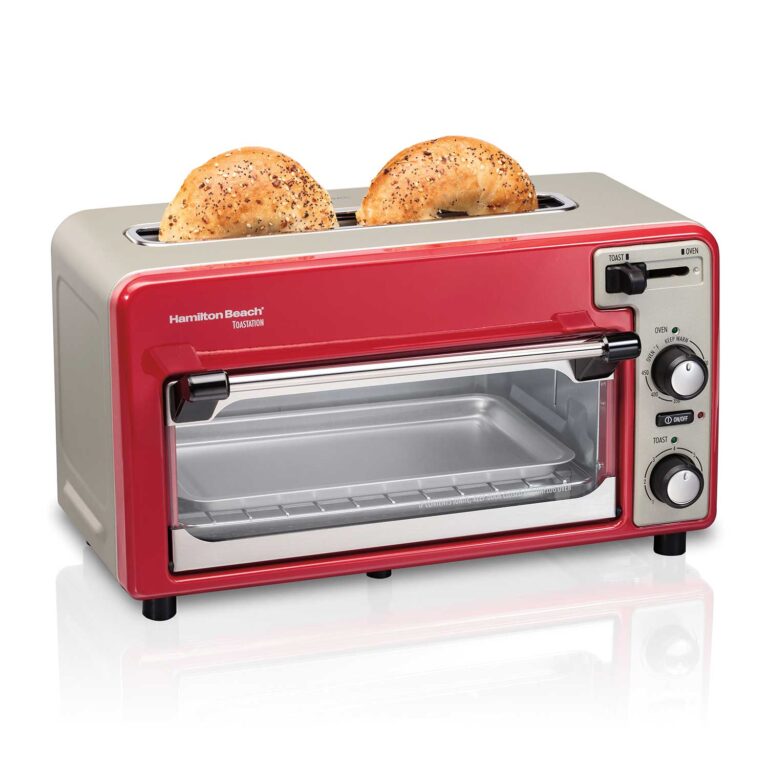
A pop-up toaster is better for fast, simple toast. A toaster oven is more flexible but uses more counter space and usually takes longer to heat.
| Need | Better choice |
|---|---|
| Two slices of bread each morning | Pop-up toaster |
| Bagels and English muffins | Pop-up toaster with wide slots |
| Open-faced melts | Toaster oven |
| Thick or irregular food | Toaster oven |
| Small baked foods | Toaster oven |
| Fast, repeatable toast | Pop-up toaster |
| One appliance for many tasks | Toaster oven |
A toaster oven may be the better choice for people who often heat pizza, roast small portions, or make open sandwiches. A pop-up toaster is usually easier when toast is the main task.
Do not confuse the two appliances when reading safety instructions. Their heating surfaces, food limits, and cleaning needs differ.
What Should You Avoid in a Toaster?
Avoid any toaster that has unclear controls, poor bread lift, narrow slots for your food, or no practical way to remove crumbs.
Be cautious with these warning signs:
- The cord or plug feels hot during normal use.
- The toaster produces smoke during ordinary bread toasting.
- The lever does not stay down.
- The heating elements glow in an unusual way.
- The housing becomes damaged.
- Bread stays trapped after the appliance cools.
- The product lacks clear U.S. instructions or safety information.
A small amount of smoke can occur when a new appliance burns off manufacturing residue. Follow the manual. If smoke continues, the smell is strong, or the toaster sparks, unplug it if safe and stop using it.
Do not insert a knife, fork, metal tool, or other object into a plugged-in toaster. Unplug the toaster and let it cool first. The lever does not remove electrical risk.
Do not toast food covered in butter, cheese, frosting, or loose toppings unless the appliance instructions specifically allow it. These foods can drip, burn, or create smoke.
How Do You Clean and Maintain a Toaster?
Unplug the toaster and let it cool before cleaning. Empty the crumb tray often, especially if you use the toaster every day.
Follow these steps:
- Unplug the toaster.
- Let it cool fully.
- Remove and empty the crumb tray.
- Wipe the tray with a dry or slightly damp cloth.
- Wipe the outside with a soft cloth.
- Return the tray only when it is dry.
- Store the cord away from heat and water.
Never immerse a toaster in water. Do not pour water into the slots. Do not use a wet cloth near the openings.
If food is stuck, unplug the appliance and allow it to cool. Turn it upside down only if the manual permits it. Never shake it over a sink or use a tool to pry food from the slots.
A clean toaster may work more consistently because crumbs are less likely to interfere with the heating area. Cleaning does not repair damaged wiring, a broken lever, or a faulty control.
A Simple Toaster Buying Checklist
Use this checklist before you buy:
- Does it fit your bread?
- Do the slots fit bagels or thick slices?
- Do you need two or four slices?
- Can you see and use the shade control?
- Does it have a cancel button?
- Does the lever lift small food high enough?
- Is the crumb tray removable?
- Can you store it safely near an outlet?
- Does the manual explain frozen and bagel settings?
- Does the warranty cover defects for a reasonable period?
- Are the return terms clear?
If you buy online, check the product dimensions, slot dimensions, electrical rating, manual, warranty, and return policy. Customer reviews can reveal repeated problems, but they are not a controlled test of toaster performance.
A manufacturer’s feature list confirms what the product is designed to include. It does not independently prove even browning or long-term durability.
Common Toaster Mistakes
The most common mistake is choosing by appearance or price instead of by bread size and daily use.
Other frequent mistakes include:
- Setting the shade too high after switching to a new toaster
- Putting oversized food into narrow slots
- Leaving the toaster near towels or paper
- Cleaning it while it is plugged in
- Using metal tools to remove stuck bread
- Ignoring repeated smoke or burning smells
- Blocking the toaster’s ventilation area
- Using it inside a cabinet
- Assuming all “bagel” modes work the same way
- Treating a toaster as a cooking appliance for wet or filled foods
Start with a low or medium setting on a new toaster. Adjust in small steps. The correct setting depends on bread type, moisture, thickness, and whether the bread is frozen.
Frequently Asked Questions
How many watts should a good toaster have?
There is no single wattage that makes a toaster good. Wattage can affect heating speed, but even browning, slot design, controls, and safety features matter more for most buyers.
Is a four-slice toaster better than a two-slice toaster?
A four-slice toaster is better for families or people who make several slices at once. A two-slice toaster is better for small kitchens, light use, and lower counter space needs.
Are expensive toasters worth the money?
Sometimes, but price alone is not proof of better performance. Pay for useful features, stronger controls, suitable slots, easy cleaning, and clear warranty support—not decoration or extra settings you will not use.
Why does my toaster burn one side of the bread?
Possible causes include uneven heating, bread that is not centered, crumbs near the heating area, or a setting that is too high. Clean the crumb tray, try a lower setting, and stop using the toaster if the problem continues with different bread.
Is it safe to leave a toaster plugged in?
A toaster should be unplugged when it is not in use, especially if the manufacturer advises this. Keep it away from water and flammable materials, and never leave it operating without normal supervision.
Final Answer: What Is a Good Toaster?
A good toaster is one that gives you even, repeatable browning and fits the food you eat. For most U.S. households, choose a two- or four-slice model with suitable slot width, clear shade controls, a cancel button, high lift, a removable crumb tray, and documented safety instructions.
Before buying, measure your counter and your bread. Then compare the features that affect daily use—not just wattage, color, or price.
The best next step is simple: write down your usual bread, the number of slices you make, and the counter space you have. Those three details will narrow the choice faster than a long list of extra features.