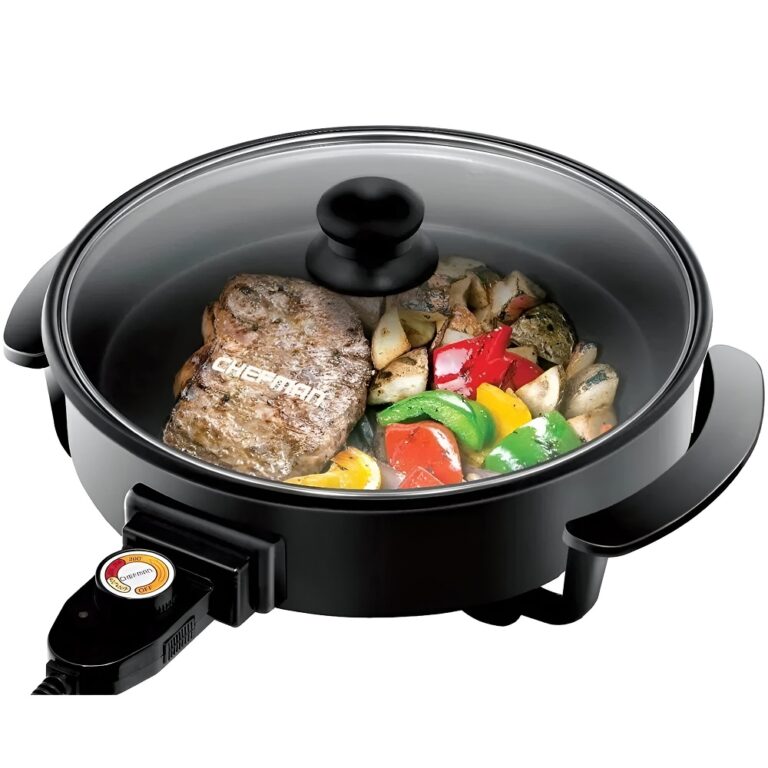
In a U.S. kitchen, medium heat on an electric skillet usually means about 300°F to 350°F. Many recipes use 325°F as a good starting point. The exact setting varies by brand, model, food, and pan load, so use the dial as a guide—not as a perfect temperature gauge.
For pancakes, eggs, grilled cheese, vegetables, and many one-pan meals, start near 325°F. For browning meat, you may need 350°F to 375°F. For slow cooking or keeping food warm, use a much lower setting.
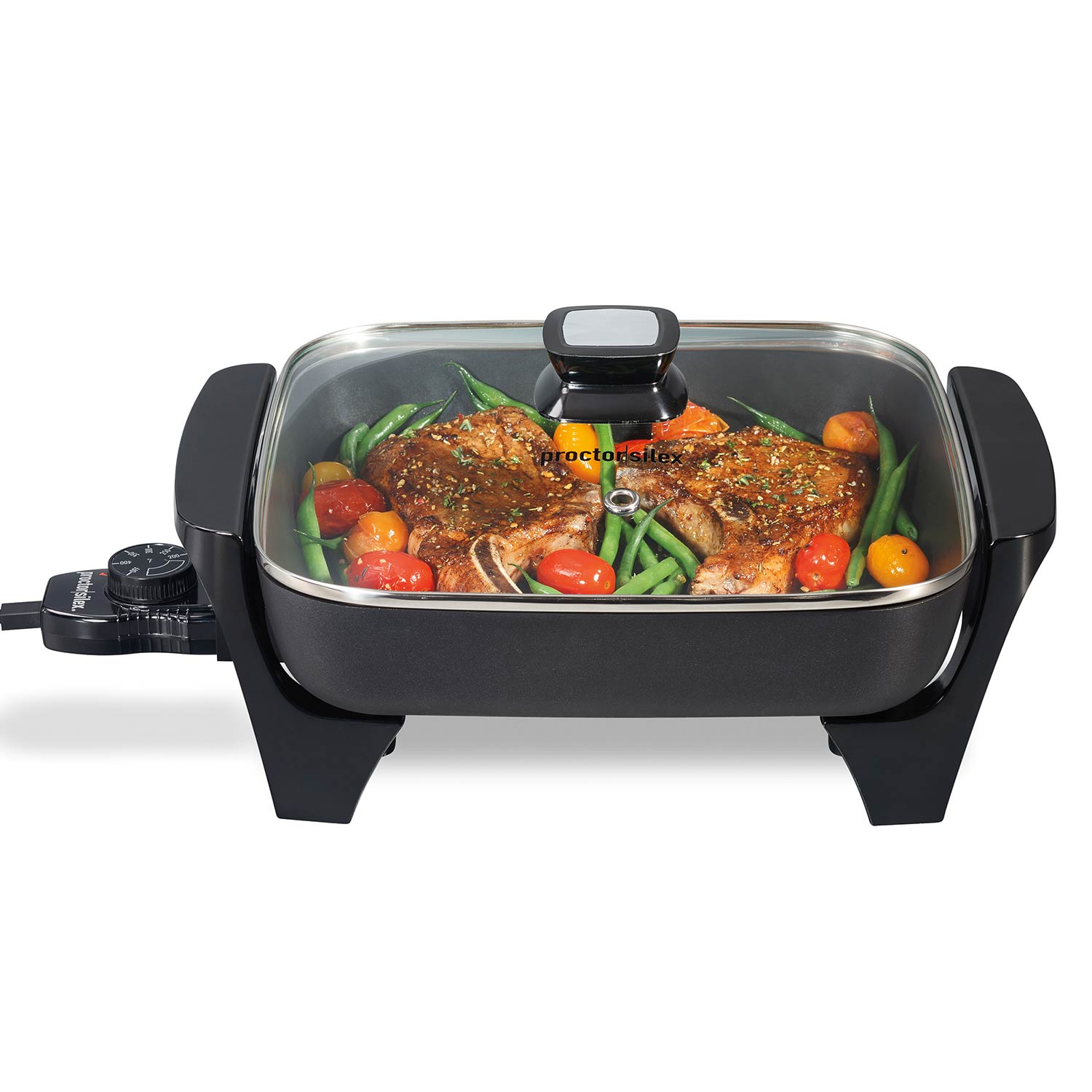
What “medium heat” means on an electric skillet
Medium heat is a moderate cooking temperature. It is hot enough to cook food and create light browning, but it should not cause fast smoking or burning.
On a stovetop, “medium” depends on the burner and pan. On an electric skillet, the heat setting is usually tied to a temperature dial. This makes the term more useful, but the dial can still vary between models.
| Heat level | Approximate skillet setting | Common uses |
|---|---|---|
| Low | 200°F–275°F | Keeping food warm, melting, slow cooking |
| Medium-low | 275°F–300°F | Eggs, gentle sautéing, reheating |
| Medium | 300°F–350°F | Pancakes, grilled cheese, vegetables |
| Medium-high | 350°F–400°F | Browning meat, stir-frying |
| High | 400°F–450°F or more | Fast searing, boiling liquids |
These ranges are general. Always check the instructions for your electric skillet. Some models show exact temperatures. Others use words such as low, medium, and high.
Why 325°F is a useful starting point
A setting of 325°F gives you room to cook without scorching many foods. It works well for:
- Pancakes and French toast
- Grilled cheese sandwiches
- Hash browns
- Bacon
- Sausage
- Chicken pieces
- Sautéed onions and peppers
- Frozen foods that need steady heat
You may need to raise the heat when the skillet holds a large amount of cold food. A crowded pan loses heat fast. You may need to lower the heat when food browns too quickly or when the pan is empty.
The dial is not always exact
Electric skillets use a thermostat. The thermostat turns the heating element on and off to maintain a target range. You may hear a click or see the indicator light cycle during cooking. This is normal.
The surface temperature can also differ from the dial setting. Food near the heating element may cook faster than food at the far edge. The reading may change when you add cold meat, vegetables, or batter.
For this reason, medium heat is best understood as a cooking zone, not one exact number.
How to set medium heat on an electric skillet
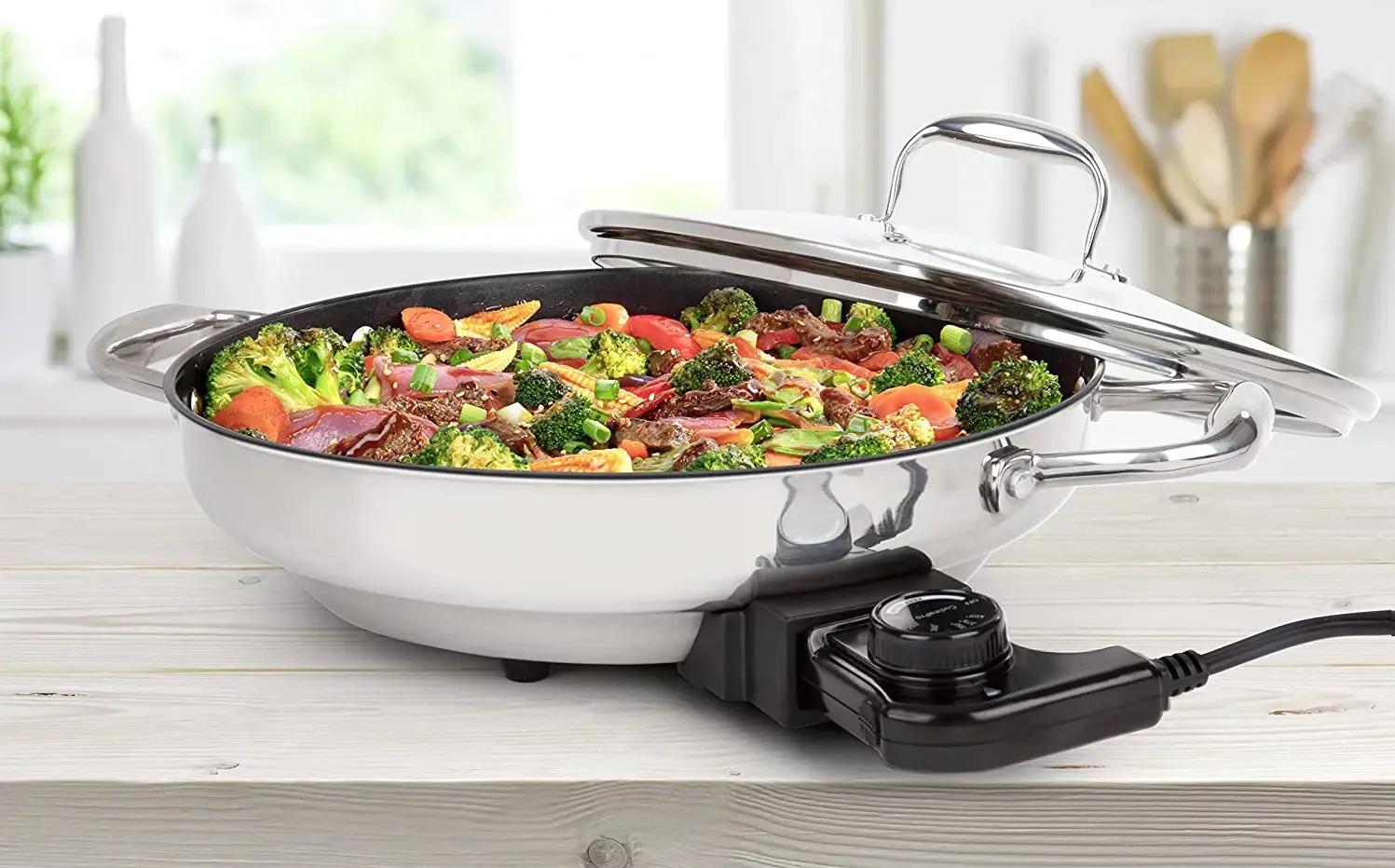
Set the skillet to 325°F if it has a temperature dial, then allow it to preheat before adding food. If the control only says low, medium, and high, choose the center setting and watch the food closely.
Follow these steps:
-
Place the skillet on a dry, level surface.
Keep it away from the edge of the counter and away from water. -
Attach the temperature control before plugging in the skillet.
Many electric skillets require the control probe to connect fully before use. -
Set the dial to about 325°F.
If the skillet has only numbered settings, use the middle range. -
Preheat for several minutes.
The indicator light may turn off when the skillet reaches its target temperature. Follow the manual if it gives a specific preheat time. -
Add a small amount of oil if needed.
Use an oil suited to the cooking temperature. Do not leave an empty skillet heating for a long time. -
Add the food and adjust as needed.
A gentle sizzle usually means the heat is in a useful range. -
Check the food, not only the dial.
Turn food when the cooked side has the right color and texture. Lower the heat if the outside darkens before the center cooks.
Signs that medium heat is correct
Medium heat is likely working when:
- Food sizzles gently when it touches the surface
- Pancake bubbles form before the edges dry out
- Bread turns golden rather than dark brown
- Vegetables soften without burning
- Meat browns at a steady pace
- Oil looks fluid but does not smoke
Signs that the heat is too high
Lower the temperature when:
- Oil smokes
- Butter turns dark brown almost at once
- Bread burns before the cheese melts
- Food splatters or pops hard
- Meat becomes dark outside while raw inside
- The skillet smells scorched
Smoke is not a normal sign of good medium heat. Turn off the skillet if oil or food begins to smoke heavily. Let it cool before cleaning or moving it.
Signs that the heat is too low
Raise the temperature slightly when:
- Food sits in oil without a sizzle
- Meat releases liquid and steams for a long time
- Hash browns stay pale and soft
- Pancakes take too long to set
- The pan cools sharply after each batch
Make small changes. A jump from 300°F to 400°F can burn food before you can react.

Medium heat settings for common foods
The best medium setting depends on the food’s size, moisture, and cooking time. The table below gives useful starting points for a typical electric skillet.
| Food | Starting temperature | What to watch for |
|---|---|---|
| Pancakes | 325°F | Bubbles form and edges look set |
| French toast | 325°F | Bread turns golden without burning |
| Grilled cheese | 300°F–325°F | Bread browns before cheese scorches |
| Eggs | 250°F–300°F | Whites set slowly without hard edges |
| Bacon | 300°F–325°F | Fat renders without heavy smoke |
| Sausage | 325°F–350°F | Brown outside and cook through |
| Hash browns | 350°F–375°F | Crisp crust with a cooked center |
| Chicken breast pieces | 325°F–350°F | Brown outside, then cook through |
| Burgers | 350°F–375°F | Brown crust and safe internal temperature |
| Vegetables | 325°F–350°F | Tender with some color |
| Reheating leftovers | 250°F–300°F | Food heats without drying or burning |
These are starting points, not strict rules. Food thickness matters. A thin burger cooks faster than a thick one. Frozen food also needs more time than fresh food.
Pancakes
Set the skillet to about 325°F. Add batter after the surface heats. Turn the pancakes when bubbles form across the surface and the edges look dry.
If the pancakes become dark before the center sets, lower the heat. If they stay pale and spread without cooking, raise it slightly.
Bacon
Start near 300°F to 325°F. Bacon releases its own fat, so extra oil is often not needed. Turn the strips as they brown.
A lower setting can reduce splatter and help the fat render. A higher setting may cook the edges too fast and produce smoke.
Burgers and ground meat
For burgers, 350°F to 375°F often gives better browning than ordinary medium heat. Cook until the center reaches a safe temperature.
The U.S. Department of Agriculture recommends cooking ground meats to 160°F, measured with a food thermometer. Do not judge safety by color alone. See the USDA safe minimum internal temperature chart.
Chicken
Use about 325°F to 350°F for many chicken pieces. Lower heat can help thick pieces cook more evenly after browning.
Chicken should reach 165°F in the thickest part. Insert the thermometer into the center without touching the skillet surface or bone. The USDA lists 165°F as the safe minimum internal temperature for poultry.
Grilled cheese
A setting near 300°F to 325°F works well. The goal is slow browning. This gives the cheese time to melt before the bread becomes too dark.
If the bread browns in less than a minute, the skillet is likely too hot. Lower the heat and give the pan time to settle.
How to know the actual heat of your electric skillet
You can estimate medium heat by observing the food, but an infrared thermometer can give a closer surface reading. Use it with care because readings can change with the pan’s finish and angle.
A cooking thermometer is more useful for checking the food’s internal temperature than for checking the skillet. The skillet dial tells you the target setting. The food thermometer tells you whether meat is cooked safely.
The water-drop test
A small water drop can show whether a hot surface is ready, but this test is not a precise temperature measurement.
Place one small drop of water on the dry surface:
- If it barely reacts, the skillet may be cool.
- If it sizzles and slowly evaporates, the pan may be in a moderate range.
- If it flashes away at once, the surface may be very hot.
Do not use a large amount of water on a hot electric skillet. Water can splatter and may reach the electrical control or plug.
The bread test
A small piece of bread can help judge browning. At moderate heat, it should turn golden over several minutes. If it blackens quickly, lower the heat.
This test is only a rough guide. Bread type, moisture, oil, and skillet surface all affect the result.
Why external thermometer readings may differ
An infrared thermometer may read the surface rather than the food-contact temperature. A shiny surface can also affect the reading. Use the result as a guide, not as a laboratory measurement.
The most useful test remains the food itself: steady sizzling, even browning, and safe internal temperature.
Medium heat versus medium-high heat
Medium heat is slower and gentler than medium-high heat. Use medium heat when the food must cook through without fast browning. Use medium-high heat when you need a stronger crust or faster moisture loss.
Choose medium heat for:
- Pancakes
- Grilled cheese
- Eggs
- Bacon
- Delicate vegetables
- Reheating food
Choose medium-high heat for:
- Searing burgers
- Browning beef
- Crisping potatoes
- Stir-frying firm vegetables
- Cooking food in small batches
A common mistake is to use high heat because the pan takes time to warm. Electric skillets can store heat in the cooking surface. Once the pan becomes hot, it may continue to brown food quickly even after you lower the dial.
Give the thermostat time to respond before making another adjustment. Frequent large changes can make cooking less even.

Why your electric skillet may cook too hot or too cold
A temperature difference does not always mean the skillet is broken. Several normal factors can change the cooking result.
The pan is crowded
Cold food lowers the surface temperature. If you fill the skillet with meat or frozen food, the first side may brown slowly. Cook in batches when you need even browning.
The lid is on
A lid traps steam and heat. It can help cook thick food, but it also changes the surface environment. Food may soften instead of brown.
Remove the lid when you want crisp edges. Use it when you need the center to cook through.
The food is wet
Wet food steams before it browns. Pat meat and vegetables dry when appropriate. Do not rinse raw poultry or meat, because splashing water can spread germs around the kitchen.
The thermostat cycles
The heating element may switch on and off. This is normal for many electric skillets. The surface temperature moves within a range rather than staying at one exact number.
The skillet is old or damaged
Stop using the skillet if the cord, plug, housing, or temperature control is damaged. Do not use a skillet that sparks, gives off a burning electrical smell, or heats in an uncontrolled way.
Check the owner’s manual for cleaning and repair instructions. Do not immerse the electrical control or cord in water unless the manufacturer clearly says that part is safe to immerse.

Safety tips for cooking with an electric skillet
Use the skillet on a stable, heat-safe surface. Keep the cord away from hot surfaces, water, and the counter edge.
Do not move a hot skillet by pulling the cord. Unplug it when cooking is complete, and let the pan cool before washing it.
For meat, poultry, eggs, and leftovers, use a food thermometer. The USDA lists these safe minimum internal temperatures:
- 145°F for whole cuts of beef, pork, lamb, and veal, followed by a three-minute rest
- 160°F for ground meats
- 165°F for poultry
- 165°F for leftovers and casseroles
Keep raw meat separate from ready-to-eat food. Wash hands, utensils, and work areas after contact with raw meat.
Never leave hot oil unattended. If oil catches fire, turn off the heat if it is safe to do so and cover the pan with a metal lid. Do not pour water on a grease fire. Leave the area and call 911 if the fire does not go out quickly.

Common mistakes when using medium heat
Treating “medium” as the same on every skillet
A medium mark on one skillet may run warmer than the same mark on another. Start with the manual’s temperature guide, then adjust based on the food.
Adding food before preheating
Cold food can cool the pan and lead to pale, greasy results. Preheat first unless the recipe specifically calls for a cold-pan start.
Overfilling the skillet
A crowded pan traps moisture. Food then steams instead of browning. Leave space between pieces or cook in batches.
Using too much oil
Oil can hide the signs of overheating and make food greasy. Use only enough to coat the surface unless the recipe calls for more.
Turning food too soon
Food often releases more easily after a crust forms. If a burger or pancake sticks, give it more time unless it is burning.
Relying on color to judge meat safety
Brown meat may still be unsafe inside. Use a thermometer in the thickest part.

Frequently asked questions
Is 350°F medium heat on an electric skillet?
Often, yes. Many cooks treat 300°F to 350°F as medium heat. However, 350°F may act more like medium-high on some skillets. Use the food’s browning and cooking speed to guide adjustments.
What temperature should I use for pancakes in an electric skillet?
Start at 325°F. Cook until bubbles form and the edges look set, then turn the pancake. Lower the heat if the outside browns before the center cooks.
Is medium heat the same as 300°F?
Not always. On many electric skillets, 300°F is at the low-to-medium end of the range. The dial, thermostat, and food load all affect the result.
Should I preheat an electric skillet?
Yes, in most cases. Preheating helps food cook evenly and brown well. Follow the manufacturer’s instructions because preheat times differ by model.
How can I tell if an electric skillet is hot enough without a thermometer?
Look for a gentle, steady sizzle. A small water drop should react without violently snapping away. These tests are rough, so watch the food closely and use a food thermometer for meat.
Final answer: the best medium setting to use
For most U.S. electric skillet recipes, set the temperature to 325°F to begin. Treat 300°F to 350°F as the practical medium-heat range.
Use 300°F for delicate food and slow browning. Move toward 350°F when you need more color or when a full pan loses heat. Lower the setting if food smokes, burns, or browns before it cooks through.
The best setting is the one that gives steady cooking, even browning, and safe internal temperatures—not simply the number printed on the dial.