An air fryer toaster oven is a countertop electric oven that combines a toaster oven with an air-fry setting. It uses heating elements and a fan to move hot air around food. This can help food brown and crisp with less oil than deep frying.
In the United States, these appliances are often used to toast bread, bake food, broil meat, roast vegetables, reheat leftovers, and air fry foods such as chicken wings or frozen fries. Some models also include settings for convection baking, dehydrating, slow cooking, or warming.
The short answer is simple: an air fryer toaster oven is a small convection oven with air-frying features and toaster oven functions in one appliance.
How Does an Air Fryer Toaster Oven Work?
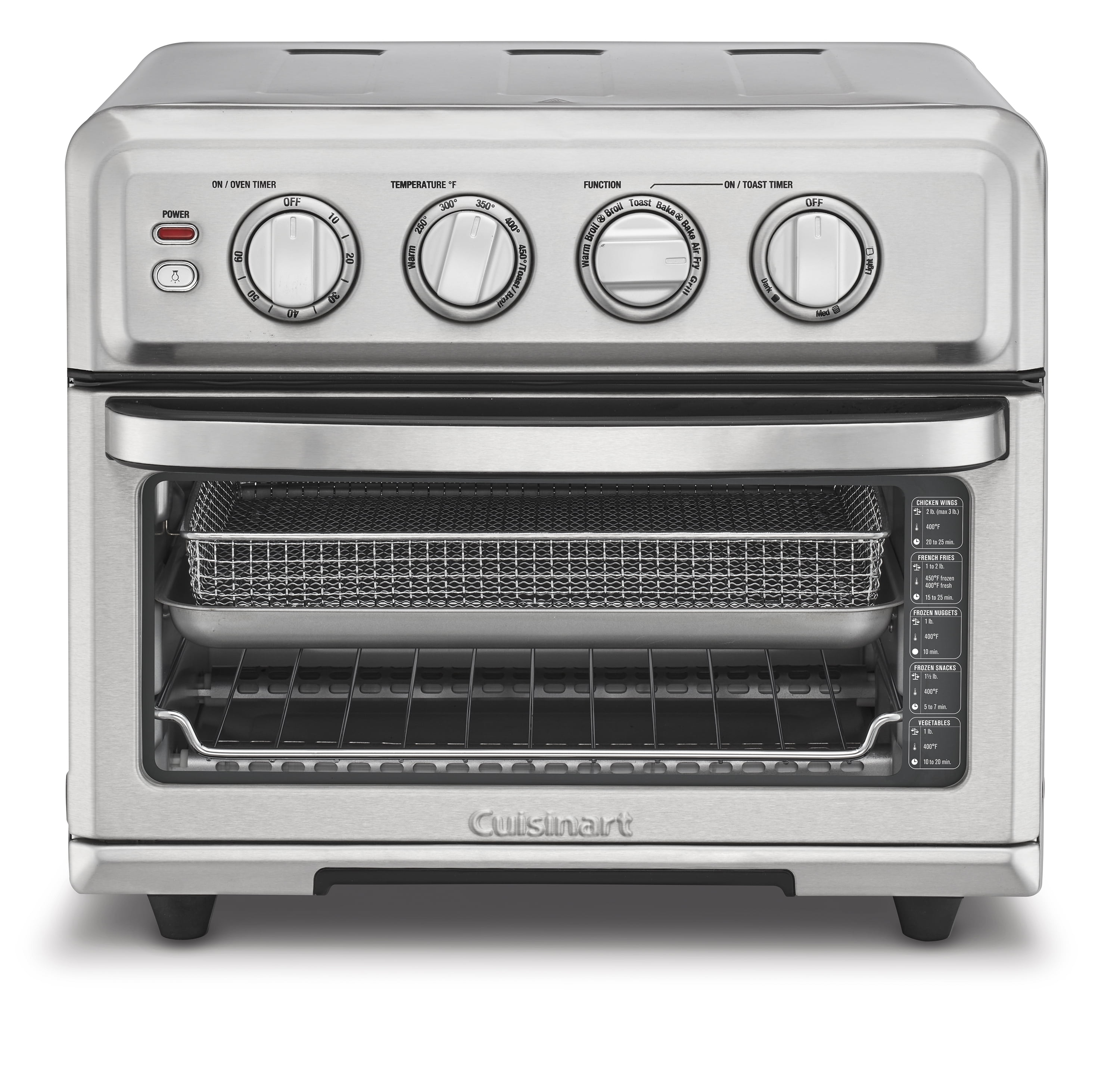
An air fryer toaster oven cooks food with electric heating elements and forced hot air. The heating elements warm the oven cavity, while a fan circulates the hot air around the food.
This moving air helps remove surface moisture. It also supports browning and crisping through surface heat and the Maillard reaction, the process that creates the brown color and savory flavor found on toasted and roasted foods.
Most models have:
- Top and bottom heating elements: These provide direct heat for baking, roasting, broiling, and toasting.
- A convection fan: This moves hot air around the food.
- A perforated air-fry basket: The holes let air reach more of the food’s surface.
- A baking or roasting pan: This catches crumbs, fat, and juices.
- A thermostat and timer: These control the cooking temperature and time.
- Preset controls: Common options include Air Fry, Bake, Broil, Toast, Roast, Reheat, and Dehydrate.
The air-fry setting usually uses stronger or more targeted airflow than a standard bake setting. However, the exact fan speed, heating pattern, and temperature range vary by model. Always check the owner’s manual for the appliance’s specific settings.
Why the air-fry basket matters
An air-fry basket allows hot air to reach the top, bottom, and sides of the food. This can improve browning compared with placing food directly on a solid baking pan.
The basket works best when food sits in a mostly single layer. If pieces overlap, air cannot reach all surfaces evenly. The result may be food that is crisp in some places and soft in others.
Does an air fryer toaster oven fry food?
Not in the same way as a deep fryer. A deep fryer cooks food while it is submerged in hot oil. An air fryer toaster oven uses hot air and usually a small amount of oil brushed or sprayed on the food.
For this reason, “air frying” is best understood as a form of high-heat convection cooking, not oil frying. It can create a crisp surface, but it may not produce the same texture as traditional deep frying.

What Can You Cook in an Air Fryer Toaster Oven?
You can cook a wide range of foods in an air fryer toaster oven, but the best setting depends on the food and the desired result.
| Food or task | Useful setting | Practical tip |
|---|---|---|
| Toast and bagels | Toast | Use the correct rack position and watch the final minutes. |
| Frozen fries and tater tots | Air Fry | Shake or turn the food partway through. |
| Chicken wings | Air Fry or Roast | Leave space between pieces for airflow. |
| Vegetables | Air Fry or Roast | Coat lightly with oil and season before cooking. |
| Cookies and small baked goods | Bake or Convection Bake | Reduce crowding and check early. |
| Open-faced sandwiches | Broil or Toast | Stay nearby because broiling can brown food quickly. |
| Pizza slices | Reheat or Bake | Use a pan if cheese or toppings may drip. |
| Bacon | Air Fry or Roast | Use the pan below the rack to catch grease. |
| Dehydrated fruit | Dehydrate, if available | Follow the manual for time and temperature. |
| Leftovers | Reheat or Bake | Avoid sealing food in a container unless it is oven-safe. |
An air fryer toaster oven is especially useful for small portions. It can preheat faster than a full-size oven and may use less energy for a small meal. The actual energy use depends on wattage, cooking time, temperature, food quantity, and whether the full-size oven would otherwise be used.
Foods that need extra care
Wet batter can drip through a perforated basket before it sets. Foods coated in loose flour may also blow around or cook unevenly. Use a solid pan for items that need support.
Very greasy foods can create smoke. Fat may drip onto a hot pan or heating element. Trim excess fat when appropriate, use the included drip pan, and clean the appliance after cooking.
Foods with loose toppings, such as shredded cheese, may move in the fan’s airflow. Place them on a solid, oven-safe tray when the manufacturer permits it.

Air Fryer Toaster Oven vs. Air Fryer
An air fryer toaster oven is larger and more versatile than a small basket-style air fryer. A basket air fryer is often faster for a small batch, while an air fryer toaster oven can handle longer foods and several cooking tasks.
| Feature | Air fryer toaster oven | Basket-style air fryer |
|---|---|---|
| Main design | Small oven with racks and trays | Pull-out basket or drawer |
| Typical capacity | Larger cooking surface | Smaller cooking chamber |
| Best for | Toasting, baking, roasting, broiling, and air frying | Fast air frying and reheating |
| Food layout | Often spreads food across a rack | Food sits in a basket |
| Cooking speed | May take longer to preheat | Often quick for small portions |
| Counter space | Usually wider or taller | Often more compact |
| Cleaning | More surfaces, racks, and trays | Usually fewer removable parts |
| Long foods | Can fit items such as toast or small pizzas | Basket shape may limit length |
Neither design is best for every kitchen. Choose a basket-style air fryer if your main goal is quick cooking for one or two people. Choose an air fryer toaster oven if you want one appliance for toast, baking, roasting, and air frying.
Air fryer toaster oven vs. regular toaster oven
A standard toaster oven may have bake, broil, and toast settings but no strong air-fry function. An air fryer toaster oven adds a fan-driven mode and usually includes a perforated basket.
Some standard toaster ovens have convection fans. Convection and air frying are related, but the terms do not always describe the same airflow pattern or performance. Check the manufacturer’s manual rather than assuming every convection toaster oven air-fries equally well.
Air fryer toaster oven vs. a full-size oven
A countertop model has a smaller cavity. That can make it convenient for small meals, but it also limits the size of cookware and food that will fit.
A full-size oven is usually better for large casseroles, multiple sheet pans, holiday meals, and large cuts of meat. A countertop appliance can be more practical for a single serving, reheating, or a small weeknight meal.
Benefits and Limitations of an Air Fryer Toaster Oven
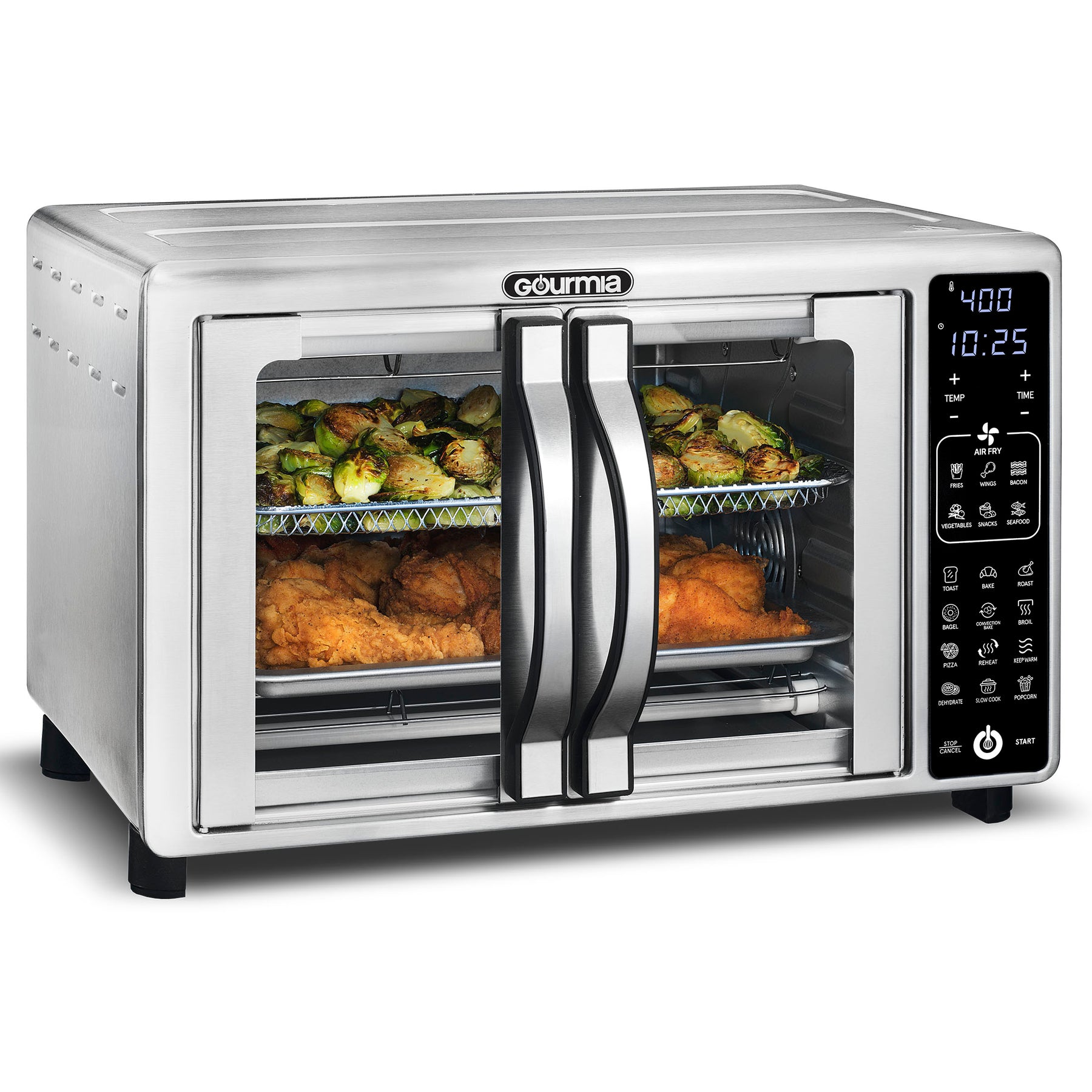
The main benefit is versatility in a smaller cooking space. One appliance can replace or reduce the need for a separate toaster, small convection oven, and air fryer.
Potential benefits
- Multiple functions: Toast, bake, roast, broil, reheat, and air fry in one unit.
- Useful for small portions: It can avoid heating a full-size oven for a small meal.
- More cooking space than many basket models: Racks and trays can accommodate larger or longer foods.
- Less added oil than deep frying: Crisp foods may need only a light coating of oil.
- Visible cooking area: A glass door lets you monitor browning.
- Convenient reheating: Pizza, fries, and roasted foods may regain texture better than in a microwave.
Less oil does not automatically make every meal healthy. The food itself, portion size, sodium, sugar, and total fat still matter.
Common limitations
- Counter space: These appliances can be bulky and heavy.
- Uneven browning: Overloaded baskets or crowded racks can block airflow.
- Longer cooking times for large batches: Multiple batches may take longer than one batch in a full-size oven.
- Cleaning needs: Grease and crumbs can collect near the heating elements and fan.
- Noise: The fan produces a steady operating sound.
- Cooking differences between models: A recipe that works in one appliance may need changes in another.
- Limited cookware size: The interior may not fit standard casserole dishes or full-size pans.
The most important trade-off is capacity versus speed. A small basket can cook a small batch quickly, while a larger toaster oven can cook more types of food but may take longer to heat.

How to Use an Air Fryer Toaster Oven
Use the owner’s manual first because controls, rack positions, temperature limits, and accessories differ by model. The following process works as a general starting point.
1. Check the cooking space
Measure the food and confirm that it fits without touching the heating elements. Leave enough room for the door to close fully.
Do not force a large pan into the oven. Do not use cookware that the manual does not approve.
2. Select the correct accessory
Use the air-fry basket for foods that benefit from airflow. Use a solid pan for foods that may drip, spread, or lose small pieces through the basket.
Place the solid pan below the basket when the manual directs you to do so. This helps catch grease and crumbs.
3. Preheat when needed
Some foods brown more evenly when the appliance is preheated. Frozen foods and baked goods often benefit from a hot cooking chamber.
Follow the manual’s instructions. Some air-fry settings are designed to start with a cold oven, while others call for preheating.
4. Arrange food in a single layer
Leave space between pieces when possible. Avoid filling the basket to the top unless the manual or recipe specifically allows it.
For larger amounts, cook in batches. A smaller, even layer often gives better results than a crowded basket.
5. Add oil carefully
A light coating of oil can support browning. Too much oil may drip, smoke, or create a greasy surface.
Use an oil that suits the cooking temperature. Never pour loose oil into the bottom of the appliance unless the manual specifically says to do so.
6. Set the time and temperature
Begin with the recipe’s instructions, then adjust based on your appliance. Air-fry cooking often needs less time than conventional oven instructions, but there is no universal conversion.
Check food early the first time you prepare it. Record the setting that works for your appliance.
7. Turn or shake the food
Turn larger pieces with tongs. Shake small foods in the basket if the basket is designed for safe removal.
Use heat-resistant gloves when handling hot trays and baskets. The handle may stay cooler than the metal basket, but do not assume it is cool without checking the manual.
8. Confirm doneness
Color and crispness do not prove that meat is fully cooked. Use a food thermometer for meat, poultry, seafood, and reheated foods.
The U.S. Department of Agriculture advises cooking poultry to 165°F and using food-safe temperature guidance for other meats and leftovers. Measure in the thickest part of the food and avoid touching bone when taking a temperature.
Signs the process worked
- Food is evenly browned.
- The center reaches a safe temperature when required.
- The surface is crisp without excessive smoke.
- The food is not crowded or coated in excess grease.
- The appliance and pan remain stable during use.
If food stays soft, reduce crowding, use the air-fry basket, or extend cooking in short intervals. If the outside browns too fast, lower the temperature or move the food farther from the heating element, if the manual permits.

Safety and Cleaning Rules
Safe use starts with the appliance manual and a clear, heat-safe location. Place the unit on a stable surface with the ventilation space required by the manufacturer.
Keep the appliance away from water, curtains, paper, and other materials that can catch fire. Do not cover ventilation openings. Never leave cooking food unattended when the manual warns against it, especially during broiling or when cooking fatty foods.
Important safety practices
- Use only accessories rated for the appliance and cooking temperature.
- Keep the door and cord away from hot surfaces.
- Do not use damaged cords, cracked trays, or broken baskets.
- Do not place plastic, paper, or non-oven-safe containers inside.
- Do not line the basket or oven floor in a way that blocks airflow.
- Keep loose parchment paper from touching heating elements.
- Remove excess grease before it can smoke or drip onto a heating element.
- Unplug the unit before cleaning, unless the manual gives different instructions.
- Let the appliance cool before handling trays or removing crumbs.
- Never immerse the main electrical body in water.
Parchment paper and aluminum foil require special care. Some manufacturers allow them only in certain positions and with food weighing them down. Others restrict their use. Follow the model’s instructions rather than assuming they are safe in every part of the oven.
How to clean it
- Unplug the appliance and let it cool.
- Remove the rack, basket, pan, and crumb tray.
- Wash removable parts as the manual allows.
- Wipe the interior with a damp cloth and mild detergent if approved.
- Remove grease and crumbs before the next use.
- Dry all parts fully before replacing them.
- Do not scrape heating elements with metal tools.
If the appliance produces unusual smoke, sparks, a burning electrical smell, or repeated overheating, turn it off and unplug it if safe to do so. Do not keep using it until you identify the cause or obtain qualified service.

How to Choose an Air Fryer Toaster Oven
Choose based on cooking tasks, available space, batch size, and cleaning needs. A larger number of preset programs does not necessarily mean better cooking performance.
Check these features
Interior dimensions: Measure the usable cooking area, not just the outside of the appliance. Confirm whether it fits the foods and pans you use most.
Air-fry basket design: Look for a basket that allows good airflow and is easy to remove. Check whether it sits above a drip pan.
Temperature range: Make sure the range supports your planned tasks, such as low-temperature drying or high-temperature broiling.
Rack positions: Several positions can help you place food closer to or farther from the heating elements.
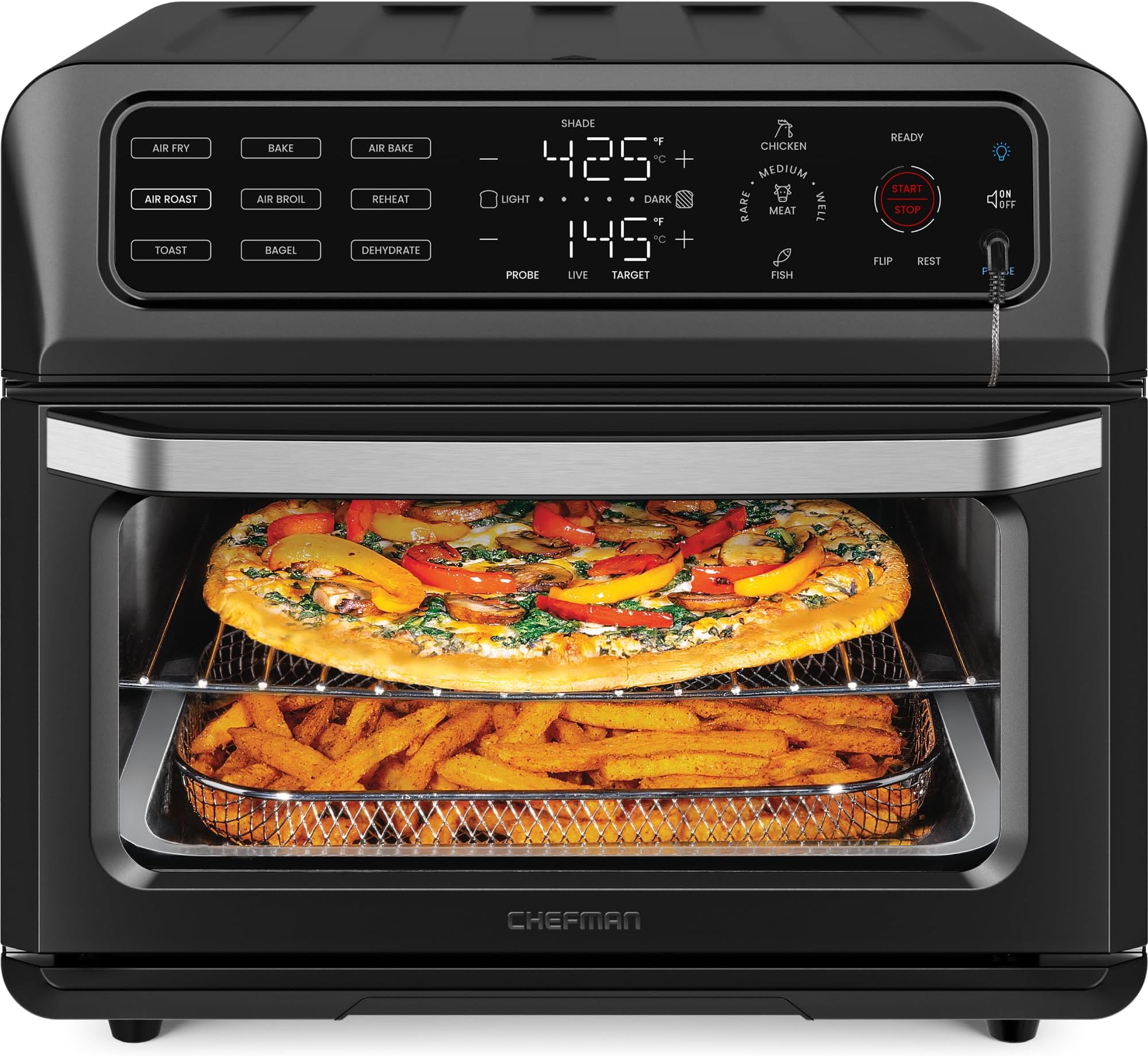
Controls: Digital controls may offer precise settings, while manual dials can be simple and fast. The best choice depends on how you cook.
Cleaning: Removable racks, a washable basket, and an accessible crumb tray can reduce daily work.
Manual and safety information: A clear manual should explain rack placement, accessory use, cleaning, and ventilation.
Electrical requirements: Check the product label and U.S. installation instructions. Use the recommended outlet and follow all electrical warnings. Avoid using an extension cord unless the manufacturer specifically permits it.
A simple decision guide
- Choose a small model for toast, reheating, and one or two servings.
- Choose a larger model for family portions, small pizzas, or several racks.
- Choose a basket-style air fryer if fast air frying is your main goal.
- Choose a full-size oven if you often cook large pans or multiple dishes.
- Choose a model with simple controls if you value ease of use over preset programs.
- Choose a model with easy-clean parts if you cook greasy foods often.
Do not choose by wattage alone. A higher wattage may support faster heating, but cooking results also depend on cavity size, fan design, temperature control, food load, and rack position.
Frequently Asked Questions
Is an air fryer toaster oven better than a regular toaster oven?
It depends on your needs. An air fryer toaster oven offers more airflow and usually supports crisping with less oil. A regular toaster oven may be enough if you mainly toast bread and bake small items.
Can you use aluminum foil in an air fryer toaster oven?
Sometimes, but only where the owner’s manual allows it. Foil can block airflow, contact heating elements, or interfere with the appliance’s operation. Never use it in a way that covers ventilation openings or rests against a heating element.
Do you need to preheat an air fryer toaster oven?
Not always. Some foods cook well from a cold start, while baking and browning may improve with preheating. Follow the recipe and appliance manual, then adjust after observing the first batch.
Can an air fryer toaster oven replace a microwave?
No. It can reheat many foods, often with a crisp texture, but it does not heat food in the same way as a microwave. It is also slower for many liquids and dense foods.
Is food from an air fryer toaster oven healthier?
The appliance may reduce the amount of added oil used for some foods, especially compared with deep frying. That does not make all air-fried food healthy. Nutrition still depends on the ingredients, preparation, portion, and overall diet.
Why does my air fryer toaster oven smoke?
Common causes include excess grease, food touching a heating element, crumbs on the crumb tray, or oil residue inside the oven. Turn off the appliance if smoke is heavy or unusual, let it cool, and clean it according to the manual. Persistent smoke or an electrical smell requires service or replacement.
Bottom Line
An air fryer toaster oven is a compact convection oven that combines air frying with toast, bake, broil, roast, and reheat functions. It is a strong fit for people who want one countertop appliance for small meals and several cooking methods.
Its main limits are counter space, cleaning, batch size, and model-to-model differences. Use the air-fry basket without crowding, follow the owner’s manual, monitor greasy foods, and verify meat with a thermometer.
Before buying one, measure your available space and list the foods you cook most often. The right model is the one that fits your kitchen, your cookware, and your usual portion size—not simply the one with the longest feature list.