For most U.S. households, the best toaster oven is not simply the model with the highest wattage or the most cooking modes. It is the oven that performs well in the tasks you use most, fits your counter and cookware, and has a current Consumer Reports rating that supports its price.
A strong starting point is the Breville Smart Oven Air Fryer Pro for shoppers who want a large, versatile countertop oven. It is not the right fit for every kitchen, however. A smaller toaster oven may be better for basic toast and reheating, while a convection model may offer better value for baking and roasting.
Consumer Reports tests toaster ovens for functions such as toasting, baking, broiling, and convection cooking. Its ratings can change when models are retested or replaced. Therefore, check the current Consumer Reports toaster oven ratings before buying.
Quick Answer: Which Toaster Oven Should You Buy?
The best toaster oven depends on your main cooking need:
| Your priority | Best type to consider | Why |
|---|---|---|
| Toast and reheating | Compact toaster oven | Simple controls, small footprint, lower cost |
| Family meals | Large convection toaster oven | More room for a 9-by-13-inch pan or multiple servings |
| Air frying | Toaster oven with an air-fry setting | Adds air circulation and may replace a separate air fryer |
| Baking and roasting | Convection toaster oven | Circulates hot air for more even cooking |
| Easy controls | Manual-dial model | Fewer settings and less digital complexity |
| Precise cooking | Digital model with sensors | Better control over time, temperature, and presets |
| Small kitchen | Compact model | Uses less counter and storage space |
| Best overall flexibility | Large convection or air-fryer oven | Handles toast, pizza, roasting, baking, and reheating |
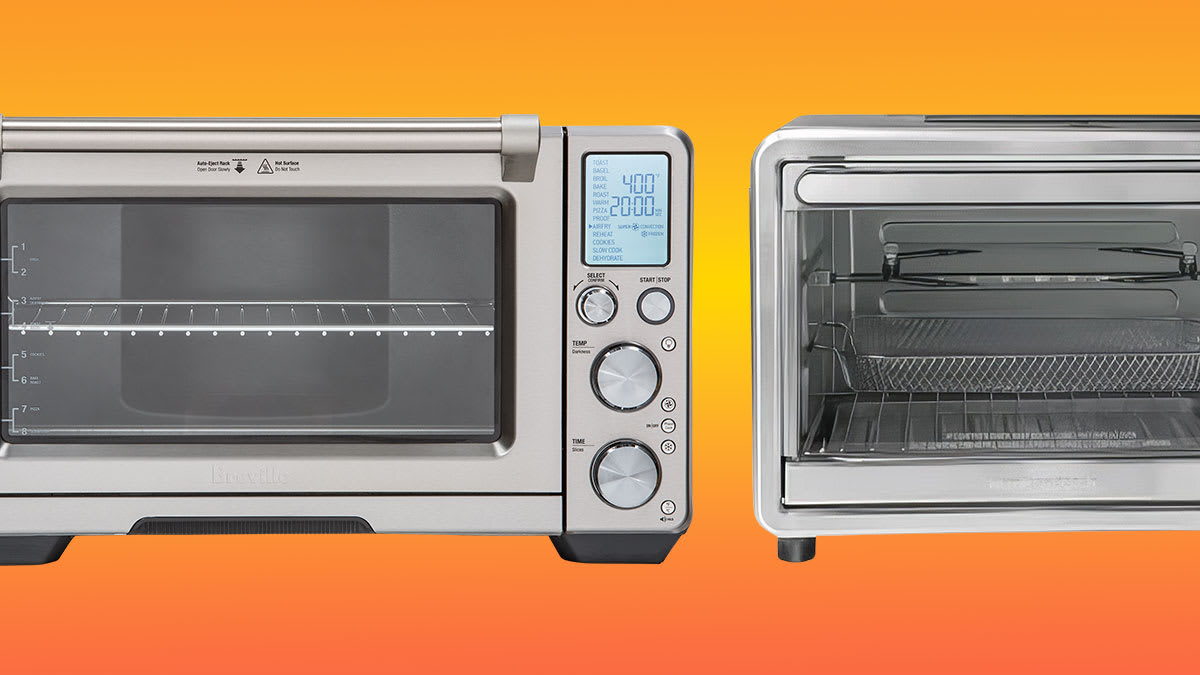
For many buyers, the Breville Smart Oven Air Fryer Pro is a logical premium choice because it offers a large interior and many cooking functions. Its size, price, and power use make it less suitable for people who only need toast or occasional reheating.
A model such as the Cuisinart Chef’s Convection Toaster Oven may appeal to buyers who want a roomy oven with convection cooking but do not need every air-fry feature. The exact model number, price, and Consumer Reports score should be checked before purchase because manufacturers may revise product lines.
How Consumer Reports Tests Toaster Ovens
Consumer Reports uses performance tests to compare toaster ovens under controlled conditions. Its testing is more useful than judging an oven by its feature list alone because two models with similar settings can cook very differently.
Common test areas include:
- Toasting speed and evenness
- Baking performance
- Broiling performance
- Convection performance
- Ease of use
- Cleaning
- Energy use
- Safety-related design factors
Consumer Reports may publish separate scores for different functions. A toaster oven can be excellent at baking but weaker at toasting. It may also score well overall while taking up more space or costing more than a basic model.
Why the Consumer Reports score matters
A toaster oven’s marketing label does not prove real cooking performance. Terms such as “smart,” “professional,” “extra-large,” and “air fry” describe features, not results.
Consumer Reports testing can help answer practical questions:
- Does the oven toast evenly?
- Does it maintain a stable temperature?
- Does convection improve baking?
- Are the controls easy to use?
- Is the oven large enough for common U.S. cookware?
- Does the price match the performance?
The score is still not a complete buying answer. Consumer Reports may not reflect your counter space, cookware, family size, or preference for physical knobs over a touch screen.
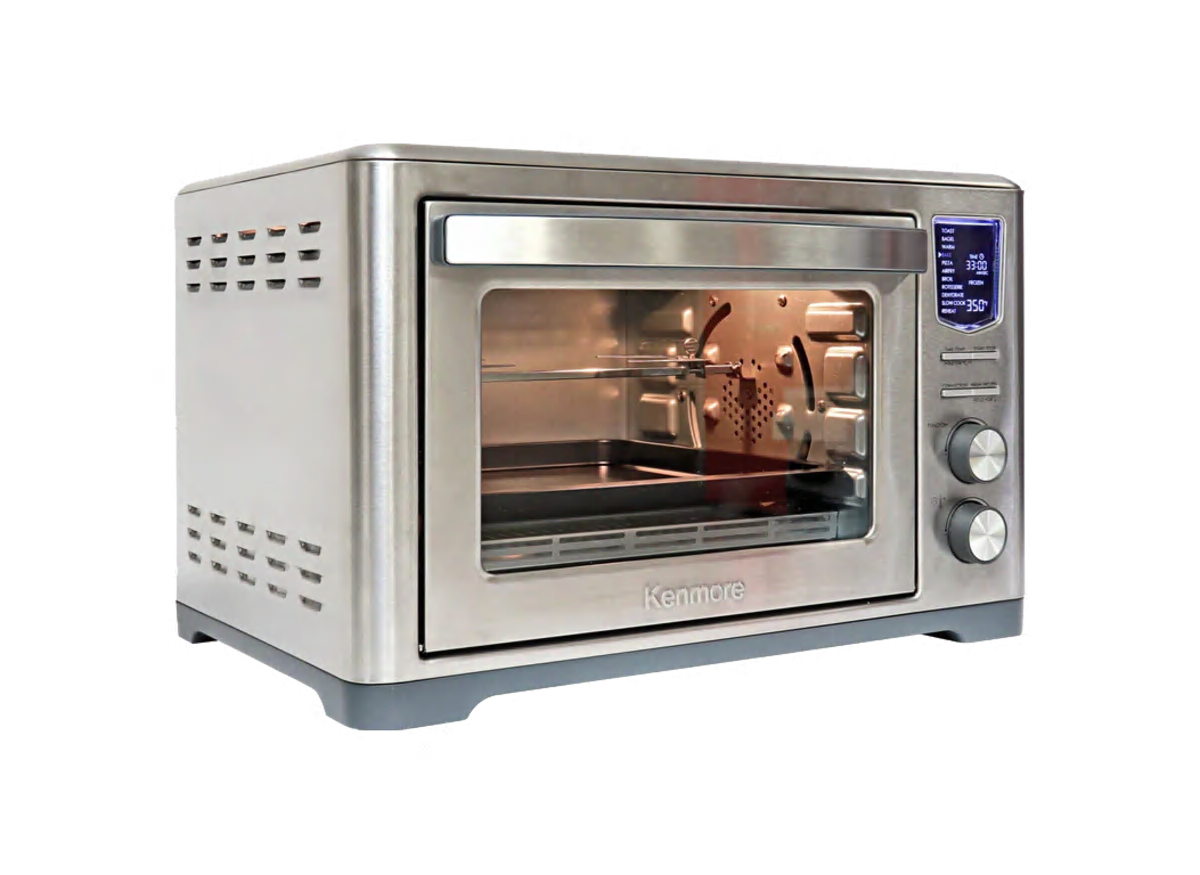
Best Toaster Oven Types for Different U.S. Homes
The best type depends on how the oven will work in your kitchen. Start with your normal meals, not the longest list of advertised functions.
Best for basic toast: a compact toaster oven
A compact model suits people who mainly toast bread, heat frozen snacks, and warm leftovers. It usually costs less and takes up less space.
The trade-off is limited capacity. A compact oven may not fit a 12-inch pizza, a standard casserole dish, or several portions at once. Its small interior may also place food close to the heating elements, which can increase the risk of over-browning if you do not watch the first few uses.
Best for family cooking: a large countertop oven
A large toaster oven can cook more food in one batch. Some models fit a 9-by-13-inch pan, a whole chicken, or several slices of pizza.
Measure before buying. “Large” does not describe a standard size. Check the interior dimensions and the manufacturer’s stated pan size. Also measure the space around the oven because heat must escape safely.
A large oven can be a poor choice for a narrow counter. It may also draw substantial power, so avoid plugging it into an overloaded outlet or extension cord.
Best for baking: convection
A convection toaster oven uses a fan to move hot air around the food. This can help food cook more evenly and may reduce hot and cold areas.
Convection does not guarantee perfect results. Pan color, food position, recipe temperature, and oven calibration still matter. Follow the recipe or manual when adjusting temperature and time.
A convection oven is often a good choice for:
- Cookies
- Roasted vegetables
- Chicken pieces
- Frozen foods
- Small casseroles
- Sheet-pan meals
Best for air frying: a toaster oven with an air-fry mode
Air-fry toaster ovens use strong air movement and a perforated basket or tray. They can brown foods with less oil than deep frying.
The main limitation is speed. A countertop air-fry oven may take longer to preheat and may circulate air less forcefully than a small basket-style air fryer. The larger cavity is useful for bigger batches but may not crisp a small portion as quickly.
Do not cover the air-fry tray with foil unless the manual allows it. Blocked airflow can reduce performance and create a safety problem.
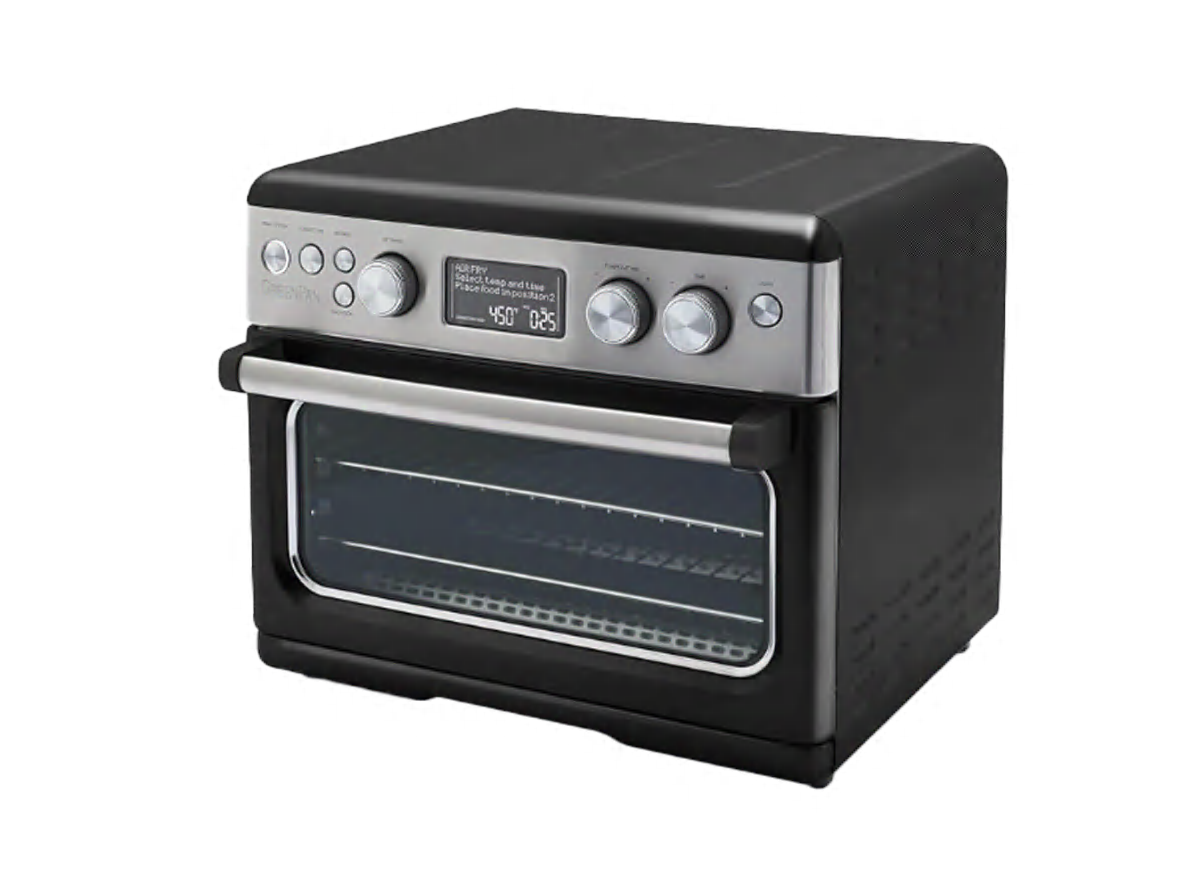
What to Look for Before You Buy
A good Consumer Reports score is useful, but the model still must fit your home. Check these points before comparing prices.
1. Interior size
Interior size is one of the most important specifications. Confirm whether the oven can hold the cookware you already own.
Measure:
- Interior width
- Interior depth
- Interior height
- Rack positions
- Door clearance
- Counter depth
Do not assume that an oven advertised as “fits a 12-inch pizza” will fit your favorite baking pan. Pizza size and pan size are not the same.
2. Counter and ventilation space
A toaster oven needs open space around its vents. The exact clearance depends on the manual, so follow the manufacturer’s instructions.
Keep the oven away from:
- Curtains
- Paper towels
- Plastic items
- Wooden cabinets with little heat clearance
- Sinks and areas where water can splash
Never place objects on top of the oven unless the manual specifically permits it.
3. Temperature control
Some toaster ovens use dials. Others use digital buttons, touch controls, or a display.
Manual controls are simple and often easy to replace mentally if the power fails. Digital controls can offer presets, timers, temperature displays, and more precise settings.
The key question is not which control type looks better. Ask whether you can set the time and temperature quickly without guessing.
4. Automatic shutoff
A timer with automatic shutoff can reduce the chance that the oven remains on after cooking. It does not make the appliance safe to leave unattended.
The U.S. Consumer Product Safety Commission advises consumers to follow appliance safety instructions and avoid leaving cooking appliances unattended. Read the manual and remain nearby during use.
5. Door and rack design
A rack that moves forward when the door opens can make food easier to remove. A glass door helps you check food without opening the oven.
Look for:
- A firm door hinge
- A rack that slides smoothly
- A crumb tray that removes easily
- Cool-touch areas where appropriate
- A clear display
- A light, if you often monitor food
These features affect daily use more than an extra preset that you may never select.
6. Replacement parts and warranty
Check whether the manufacturer sells replacement trays, racks, and crumb trays. A missing tray can make an otherwise usable oven difficult to operate.
Review the warranty terms. A warranty does not guarantee long service life, but it can help if the control panel, heating element, or door mechanism fails early.
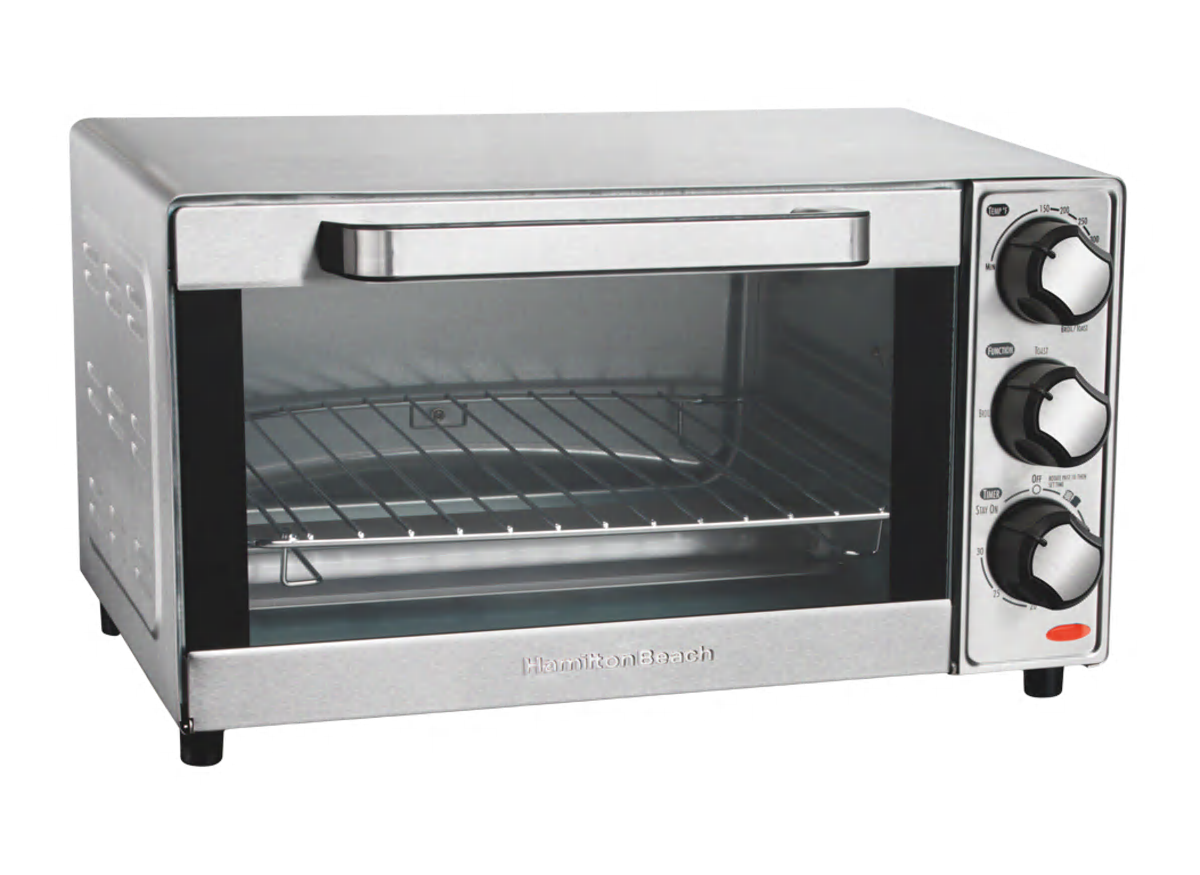
Best Toaster Oven Features: Useful or Unnecessary?
Many toaster ovens include more settings than most cooks need. Choose functions that match your routine.
| Feature | Useful when | Possible drawback |
|---|---|---|
| Convection fan | You bake or roast often | Fan noise and more complex cooking adjustments |
| Air-fry mode | You want crisp food with little oil | May need more time than a basket air fryer |
| Dehydrator | You make dried fruit or jerky | Uses space and may run for many hours |
| Slow-cook mode | You want one appliance for several tasks | May not replace a dedicated slow cooker |
| Pizza setting | You often cook frozen or fresh pizza | Preset may not suit every pizza |
| Digital probe | You cook meat often | Adds cost and another part to clean |
| Interior light | You check food often | Light can fail or add complexity |
| Wi-Fi or app control | You need remote monitoring for a specific reason | More setup, privacy, and connectivity concerns |
A preset is a starting point, not a promise. Food size, moisture, pan material, and starting temperature change cooking time.
How to Compare Consumer Reports Toaster Oven Ratings
Use the rating as one part of a short buying process.
Step 1: Set your task
Write down the three jobs you will do most often. For example:
- Toast four slices of bread.
- Reheat leftovers.
- Bake frozen pizza.
This prevents a costly mistake: paying for a large smart oven when a simple model would do the work.
Step 2: Filter by size
Remove models that cannot fit your cookware or counter. A high-rated oven is not a good choice if you cannot use it safely in your kitchen.
Step 3: Compare performance categories
Look beyond the overall score. Check the scores for:
- Toasting
- Baking
- Broiling
- Convection
- Ease of use
- Cleaning
Choose the category that matches your most important task.
Step 4: Check the exact model number
Retailers may use similar names for different versions. Compare the full model number, not just the brand and product family.
This matters because a new version may have different controls, dimensions, accessories, or performance.
Step 5: Compare total cost
The purchase price is only part of the cost. Consider:
- Required pans or baskets
- Replacement trays
- Electricity use
- Warranty coverage
- Return shipping
- Counter space
- Whether it replaces another appliance
A cheaper oven may cost more if it cannot perform your main task well.
Common Toaster Oven Mistakes
Many problems come from setup or use rather than a defective oven.
Blocking airflow
Do not push the oven tightly against a wall or place it beneath low cabinets unless the instructions allow it. Heat needs a safe path away from the appliance.
Using the wrong cookware
Some glass, ceramic, and plastic containers are not designed for toaster ovens. Use cookware labeled for the temperature and heating method.
Avoid placing paper, cardboard, or non-oven-safe plastic inside the oven.
Overcrowding the tray
Crowding blocks airflow and can lead to uneven cooking. Leave space between pieces when using convection or air fry.
Ignoring the first-use smell
A new appliance may produce a temporary smell during its first heating cycle. Follow the manual’s first-use instructions and ventilate the room.
If you see smoke, sparks, melting parts, or a burning electrical smell, turn the oven off and unplug it if safe. Do not use it again until the cause is understood.
Using an extension cord
Many countertop ovens draw significant power. Use a properly rated wall outlet and follow the manual. Do not connect the oven to a power strip unless the manufacturer expressly permits it.
Leaving crumbs inside
Crumbs can burn and create smoke. Let the oven cool, unplug it, and clean the crumb tray as directed. Never pour water into the appliance or immerse the oven.
Are Expensive Toaster Ovens Worth It?
An expensive toaster oven can be worth the price when you use its capacity and functions often. It is harder to justify when you mainly toast bread or reheat one serving.
A premium model may offer:
- Larger cooking space
- More even heating
- Better temperature control
- Convection and air frying
- More rack positions
- Stronger accessories
- A longer or better-supported warranty
The extra features do not guarantee better results for every food. A premium oven can also take more counter space and require more cleaning.
A simple value test
Estimate how often you will use the oven each week.
For example, this is a hypothetical calculation:
- Oven price: $300
- Expected use: 5 times per week
- Use over three years: about 780 uses
- Cost per use before electricity: about $0.38
This calculation is not a performance rating. It only helps compare frequent use with occasional use. If you use the oven twice a week, a less expensive model may offer better value.
Consumer Reports Alternatives and Independent Checks
Consumer Reports is useful because it provides structured testing, but it is not the only source worth checking.
Before buying, review:
- The manufacturer’s manual
- The exact product specifications
- Warranty terms
- Current retailer return rules
- Safety notices from the U.S. Consumer Product Safety Commission
- Certification marks and electrical information on the appliance
A retailer star rating can reveal recurring complaints about noise, controls, shipping damage, or durability. It does not replace controlled testing because verified buyers may use different foods, settings, and methods.
Manufacturer specifications establish what the company says the appliance can do. They do not independently prove that it toasts evenly or lasts for many years.

Frequently Asked Questions
What is the best toaster oven brand?
There is no single best brand for every U.S. buyer. Breville, Cuisinart, KitchenAid, Panasonic, Hamilton Beach, Black+Decker, and other brands make models with different strengths.
Choose by the exact model, not the logo. Compare current test results, capacity, controls, warranty, and your main cooking task.
Does Consumer Reports recommend Breville toaster ovens?
Consumer Reports has tested toaster ovens from Breville and other major brands. Ratings can vary by model and may change as products are retested or discontinued.
Check the current Consumer Reports listing for the exact Breville model before buying. Do not assume that a high score for one model applies to every model from the brand.
Is a toaster oven better than an air fryer?
A toaster oven is usually more versatile and can hold larger cookware. A basket air fryer may heat and crisp small portions faster.
Choose a toaster oven if you want baking, broiling, toast, and larger meals. Choose a basket air fryer if fast crisping is your main goal and you have limited counter space.
Can a toaster oven replace a regular oven?
It can replace a full-size oven for many small meals, such as toast, pizza, vegetables, chicken pieces, and small baked dishes.
It may not replace a regular oven for large roasts, multiple baking sheets, holiday meals, or cooking for a large group.
How long should a toaster oven last?
Service life varies by model, use, cleaning, and electrical conditions. Consumer Reports ratings and warranty terms can help compare models, but no rating guarantees a specific lifespan.
Clean the crumb tray, avoid blocked vents, use suitable cookware, and follow the manufacturer’s instructions to reduce avoidable wear.
Should I buy a toaster oven with a digital display?
Buy one if you value precise settings, cooking presets, or a clear countdown timer. A dial model may be better if you want simple controls and fewer electronic parts.
The better choice depends on usability. A complicated display is not helpful if it slows down the tasks you perform every day.
Final Recommendation
The best toaster oven according to Consumer Reports is the current high-rated model that fits your cooking needs, kitchen space, and budget—not necessarily the most expensive or most feature-rich oven.
For a large, versatile countertop appliance, begin by checking current Consumer Reports results for models such as the Breville Smart Oven Air Fryer Pro and comparable large convection ovens. For basic toast and reheating, compare smaller, simpler models instead.
Before you buy, verify the current model number, test scores, interior dimensions, ventilation instructions, warranty, and return policy. That short check is more reliable than choosing by brand name alone.