Most new household pop-up toasters sold in the United States are made overseas. Current USA-made choices are more common in the commercial food-service market, where companies such as Hatco, Antunes, and Star manufacturing produce selected conveyor or contact toasters in the United States.
The key detail is the exact model. A US brand name does not prove that a toaster was made in the USA. Before buying, check the product label, manufacturer specification sheet, and country-of-origin statement.
Introduction
If you want an American-made toaster for a home kitchen, your choices are limited. Many popular brands sold in the United States—such as Cuisinart, KitchenAid, Smeg, Breville, and Hamilton Beach—use imported manufacturing for most or all current toaster models.
Commercial toaster makers offer better prospects. Some Hatco, Antunes, and Star models are manufactured in the United States, but these units may be larger, more expensive, and designed for restaurants rather than home counters.
The safest approach is to separate three claims:
- US brand: The company is based in the United States.
- Assembled in the USA: Final assembly takes place in the United States, but some or many parts may be imported.
- Made in USA: The manufacturer claims that the product meets the applicable US origin standard.
The exact model, production date, and product label still matter.

Which Toasters Are Made in the USA?
The clearest current options are selected commercial conveyor and contact toasters. These machines toast bread as it passes through a heated chamber or between heated plates. They are not always a practical replacement for a standard two-slot home toaster.
| Manufacturer | US-made product area | Typical design | Best fit |
|---|---|---|---|
| Hatco | Selected Toast-Qwik models | Conveyor toaster | Cafés, restaurants, commercial kitchens |
| Antunes | Selected vertical contact toasters | Heated belt or contact system | High-volume food service |
| Star Manufacturing | Selected commercial conveyor toasters | Conveyor toaster | Restaurants and institutional kitchens |
| Older Toastmaster products | Some vintage models | Pop-up toaster | Collectors, not usually a modern purchase |
Hatco Toast-Qwik
Hatco’s Toast-Qwik line includes commercial conveyor toasters. Some models are identified by the manufacturer as made in the USA. The line includes different widths, belt speeds, heat settings, and electrical versions.
A Toast-Qwik toaster may suit a business that needs steady toast production. It is usually too large and costly for a small home kitchen. Buyers must also check the voltage, plug, counter depth, heat clearance, and required electrical circuit.
Do not assume that every Hatco toaster is made in the United States. Confirm the origin statement for the specific model number.
Antunes commercial toasters
Antunes makes food-service equipment, including vertical contact toasters. These machines are built for repeated use in restaurants and other commercial settings.
A contact toaster can toast bread quickly and consistently. It may also handle buns or sandwich bread better than a small household pop-up toaster. However, it can require commercial power, more cleaning, and more counter space.
Antunes product literature may identify the manufacturing location, but product origin can vary by model. Check the current specification sheet before placing an order.
Star Manufacturing commercial toasters
Star Manufacturing produces commercial cooking equipment, including conveyor-style toasters. Some products in this category have been manufactured in the United States.
These machines are designed for volume, not for the simple needs of one or two people. A Star toaster may make sense for a diner, cafeteria, church kitchen, or food truck. It is rarely the most sensible choice for a home buyer who wants two slices of toast in the morning.
Vintage Toastmaster toasters
Toastmaster made many toasters in the United States during earlier periods of American manufacturing. Vintage models can be found through estate sales, antique dealers, and resale sites.
A vintage toaster is not automatically safe to use. Old wiring, cracked insulation, damaged plugs, worn heating elements, and missing controls can create shock or fire risks. Use a qualified appliance repair professional for inspection, or keep the item as a display piece.
What about other American brands?
Several toaster brands are American-owned, American-founded, or sold through US retailers. That does not mean their current toasters are made in the USA.
Examples include:
- Black+Decker
- Cuisinart
- Hamilton Beach
- KitchenAid
- Oster
- Proctor Silex
- Revolution Cooking
- Wolf Gourmet
The manufacturing location can differ by product line and model. A US headquarters, customer-service address, or warranty center is not proof of US manufacturing.

Why Are Most Home Toasters Made Overseas?
Household toasters are often made overseas because they use a large number of low-cost, high-volume components. These include heating wire, stamped metal parts, plastic housings, circuit boards, switches, timers, springs, and power cords.
Large overseas factories can spread tooling and production costs across millions of units. That helps keep retail prices low. Commercial equipment follows a different business model: restaurants may pay more for heavier construction, service access, longer duty cycles, and specialized electrical designs.
A toaster’s country of origin also involves more than where the box is shipped. A product can be:
- Designed in the United States
- Owned by a US company
- Assembled in Mexico or China
- Built from parts sourced from several countries
- Sold by a US retailer
- Covered by a US warranty
Those facts describe different parts of the supply chain. They should not be treated as interchangeable.
“Designed in the USA” is not the same as “Made in the USA”
A design statement describes product development. It does not establish where the toaster was manufactured.
Likewise, “American company” describes ownership or headquarters. It does not tell you where the heating elements, control board, shell, or final assembly were made.
Read the claim beside the product itself. A phrase such as “designed in California” may appear close to a separate country-of-origin statement.
“Assembled in the USA” has a narrower meaning
Assembly in the United States may involve imported parts. Some domestic work may occur during final assembly, testing, or packaging, while major components come from other countries.
If US manufacturing is a deciding factor, ask the manufacturer:
- Where is final assembly performed?
- Where are the heating elements made?
- Where are the circuit board and controls made?
- Does the model carry an unqualified “Made in USA” claim?
- Does the claim apply to the current production version?
The answer may be different for two models sold under the same brand.

How to Verify That a Toaster Is Made in the USA
Use the product’s exact model number, not only its brand name. Then verify the origin through several sources.
1. Find the model number
Look on:
- The product label
- The bottom or rear of the toaster
- The carton
- The instruction manual
- The manufacturer’s product page
- The retailer’s technical specification section
A model family may contain several versions made in different facilities.
2. Read the manufacturer’s wording
Strong evidence includes:
- “Made in USA”
- “Manufactured in the USA”
- A clear country-of-origin statement in the official specifications
Less decisive wording includes:
- “American quality”
- “American company”
- “Designed in the USA”
- “Built for American kitchens”
- “Assembled in the USA”
These phrases may be accurate, but they do not all mean the same thing.
3. Check the physical label
Country-of-origin information may appear on the appliance, its packaging, or both. Commercial equipment may also carry a data plate showing the model, serial number, electrical rating, and manufacturing information.
A retailer’s title can be wrong or incomplete. The manufacturer’s current documentation is usually more useful.
4. Ask the manufacturer directly
For a costly commercial toaster, contact the manufacturer or an authorized dealer. Ask about the exact model and production version.
A useful message is:
“Can you confirm the current country of origin for model [model number]? Is it made in the USA, assembled in the USA from imported parts, or imported as a complete unit?”
Keep the written reply with your purchase records.
5. Check the date
Manufacturing locations can change. A statement found in an old review or resale listing may not apply to the current model.
This matters especially for discontinued products, rebranded appliances, and commercial equipment sold through multiple distributors.
What the FTC standard means
The Federal Trade Commission says an unqualified “Made in USA” claim generally requires that the product be “all or virtually all” made in the United States. The FTC looks at the product as a whole, including the proportion and importance of foreign content.
This does not mean every small material must come from the United States. It does mean that a manufacturer should not use an unqualified claim when important parts or processing are substantially foreign.
The FTC’s standard is a useful guide, but it does not replace checking the product’s current label and model documentation.

US-Made Commercial Toaster or Imported Home Toaster?
The best choice depends on how you use the appliance. A US-made commercial toaster may support your origin preference, but it can create practical problems in a home kitchen.
| Factor | Commercial US-made toaster | Imported household toaster |
|---|---|---|
| Country-of-origin options | More likely for selected models | Usually limited |
| Price | Often much higher | Usually lower |
| Size | Larger and heavier | Compact |
| Toasting volume | Built for frequent use | Built for normal home use |
| Electrical needs | May require special voltage or amperage | Usually standard household power |
| Repairability | Often better access to service parts | Can vary widely |
| Noise and heat | May be higher | Usually lower |
| Warranty support | Often through commercial dealers | Usually direct retail support |
Choose a commercial model when
A commercial toaster may be reasonable if you:
- Run a café, restaurant, or food stand
- Toast many slices each day
- Need a continuous conveyor system
- Have suitable electrical service
- Have enough ventilation and counter space
- Can access commercial repair support
Choose a household model when
A normal home toaster may be more practical if you:
- Toast only a few slices at a time
- Need a compact appliance
- Use a standard kitchen outlet
- Want a lower purchase price
- Need simple controls and easy replacement
This is the main trade-off: US-made availability is better in commercial equipment, while convenience and price are usually better in imported household models.
Check electrical requirements before buying
Do not plug a commercial toaster into a home outlet until you confirm its rating. Check:
- Voltage
- Amperage
- Plug type
- Required circuit
- Phase, if listed
- Heat clearance
- Ventilation needs
- Installation instructions
A 208- or 240-volt unit may not work with a standard 120-volt kitchen outlet. Do not alter a plug or bypass a circuit requirement. Ask a qualified electrician when the electrical rating is unclear.
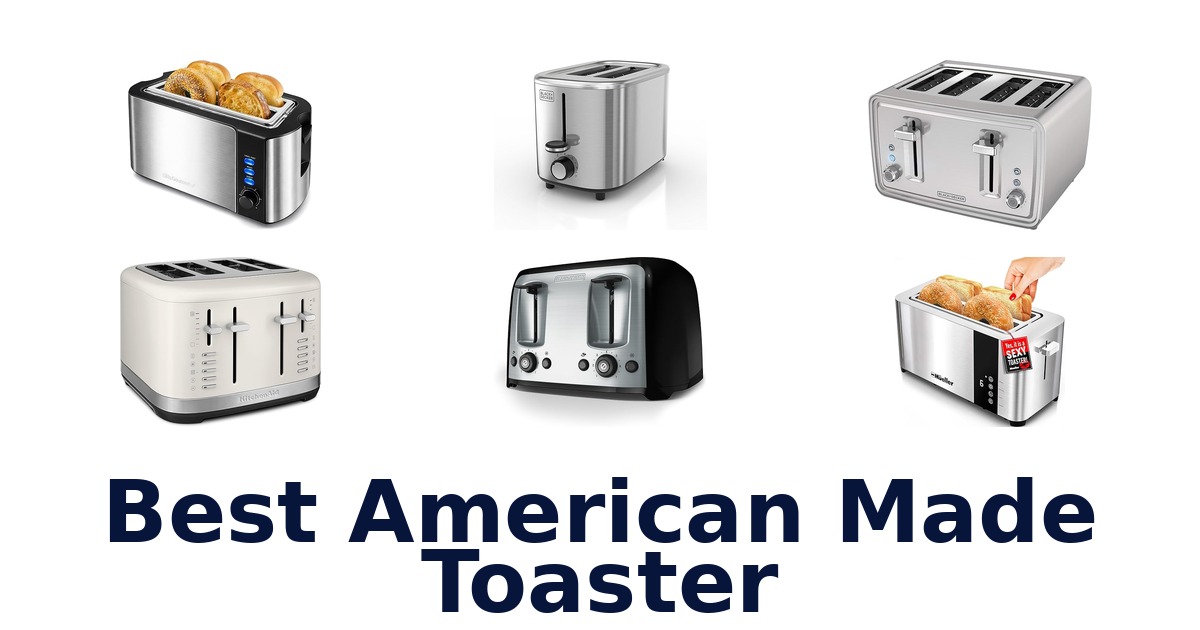
Are There Any Fully American-Made Two-Slice Toasters?
There are very few clearly documented current two-slice household toasters made entirely in the United States.
Older American-made two-slice toasters exist, but most are no longer in regular production. New products marketed as “American made” may be assembled in the USA, made by a US company, or sold through a US retailer without being fully manufactured domestically.
That does not make the product dishonest. It means the claim must be read precisely.
Why the category is difficult
A pop-up toaster contains several parts that are commonly sourced through global supply chains:
- Nichrome heating wire
- Mica insulation
- Thermal controls
- Electronic timers
- Printed circuit boards
- Plastic parts
- Metal stampings
- Springs and levers
- Power cords and plugs
A small brand may design the toaster in the United States but lack the production volume needed to manufacture every part domestically. This is one reason that US-made options are easier to find in specialized commercial equipment than in low-cost home appliances.
What about “handmade” or “artisan” toasters?
A handmade housing does not prove that the electrical toaster inside is made in the USA. Some artisan sellers produce wood, ceramic, or metal exteriors around an imported appliance.
Ask whether the claim covers:
- The complete electrical appliance
- Only the housing
- Final assembly
- The heating system
- The internal controls
This distinction protects buyers from an attractive but incomplete origin claim.

Common Mistakes When Shopping for a USA-Made Toaster
Mistake 1: Trusting the brand’s country
A US company can manufacture products in several countries. Check the product, not just the corporate address.
Mistake 2: Treating “assembled” as “made”
Assembly may be performed in the United States while the major components are imported. Look for the exact wording.
Mistake 3: Buying from an old review
A model may have moved production since the review was published. Verify the current model and date.
Mistake 4: Ignoring commercial specifications
A commercial toaster can draw more power, produce more heat, and require more cleaning than a home toaster. Review the installation manual first.
Mistake 5: Buying a vintage toaster without inspection
Old insulation and wiring can fail. Do not use a vintage toaster merely because it has a US-made label.
Mistake 6: Assuming every model in a product line has the same origin
Manufacturers may produce different sizes or electrical versions in different facilities. Verify each model number.
Mistake 7: Confusing a US warranty with US manufacturing
A US service center can support an imported product. Warranty location and manufacturing location are separate facts.

Best Buying Process for a USA-Made Toaster
Follow this short process before you buy:
-
Decide whether you need a home or commercial toaster.
Do not compare a small pop-up model with a restaurant conveyor unit as if they serve the same purpose. -
Write down the exact model number.
Avoid relying on a brand name or product family. -
Read the current manufacturer specification sheet.
Look for country of origin, voltage, dimensions, and installation requirements. -
Check the product label or carton.
Confirm that the physical item matches the online listing. -
Ask the manufacturer about imported components.
This is especially useful when the listing says “assembled in USA.” -
Check return and warranty terms.
Commercial appliances may be sold through dealers rather than ordinary retail channels. -
Confirm electrical compatibility.
A toaster is a heating appliance. The wrong circuit can create a serious safety hazard. -
Buy only when the claim and the appliance fit your needs.
Country of origin is important, but size, power, service, and safe installation also matter.
A successful purchase should satisfy both conditions: the origin claim is documented, and the appliance is suitable for the place where it will be used.

Frequently Asked Questions
Is KitchenAid made in the USA?
KitchenAid is a US brand, but current KitchenAid toaster models are not automatically made in the USA. Check the country-of-origin statement for the exact model because manufacturing locations can vary.
Is Cuisinart made in the USA?
Cuisinart is sold widely in the United States, but its current household toasters should not be assumed to be US-made. Confirm the exact model’s origin with Cuisinart or the product label.
Are Wolf toasters made in the USA?
Wolf Gourmet is a US-market brand, but brand ownership and product origin are different questions. Verify the current model before treating it as a USA-made toaster.
Are commercial toasters safe to use at home?
Some may be suitable, but only when their electrical, clearance, ventilation, and installation requirements match the home kitchen. A commercial toaster may need a circuit that a standard household outlet cannot provide.
Where can I find a truly American-made toaster?
Start with commercial manufacturers such as Hatco, Antunes, and Star Manufacturing, then verify the exact model. For a compact household toaster, clearly documented current US-made choices are much harder to find.
Does “Made in USA” mean every part is American?
No. The FTC standard allows some foreign content, but the product must be made in the United States with all or virtually all domestic content for an unqualified claim. Ask about major components when the distinction matters.
Sources for Verification
Use primary sources when checking a toaster’s origin:
- Federal Trade Commission: Complying with the Made in USA Standard
- Federal Trade Commission: Made in USA Labeling Rule
- Hatco Toast-Qwik products
- Antunes commercial food equipment
- Star Manufacturing commercial equipment
Manufacturer pages and product specifications can change. Check the current page, model number, and product label before purchasing.
Conclusion
The answer to “what toasters are made in the USA?” is narrow: selected commercial toasters from manufacturers such as Hatco, Antunes, and Star Manufacturing offer the strongest current leads, while clearly documented new two-slice household options are uncommon.
Do not rely on a US brand name, a US warranty, or “designed in the USA” wording. Verify the exact model, origin statement, electrical rating, and intended use. For most home buyers, the practical decision is between a documented commercial US-made unit and a smaller imported household toaster that better fits the kitchen.