If you are shopping in the United States for a toaster not made in China, the clearest household option is the Dualit Classic, NewGen, or Vario toaster, which Dualit states are hand-built in the United Kingdom. Some Ritter toasters are made in Germany, while several commercial conveyor toasters from Hatco are made in the United States.
The exact model matters more than the brand name. A company may sell one toaster made in the UK and another made in China. Country of origin can also change by model, production batch, and U.S. market.
This guide explains which toasters are made outside China, how to verify the claim, and what “made in” really means for a toaster sold in the United States.

Toasters Made Outside China
The following models or product families are commonly identified by their manufacturers as being made outside China. Always confirm the country-of-origin label before buying because product details can change.
| Brand and model family | Reported manufacturing location | Best fit | Important limit |
|---|---|---|---|
| Dualit Classic Toaster | United Kingdom | Buyers seeking a repairable, UK-built toaster | Confirm the U.S. 120-volt version |
| Dualit NewGen Toaster | United Kingdom | Buyers who want classic styling and extra controls | Some Dualit models, such as the Lite, are made elsewhere |
| Dualit Vario Toaster | United Kingdom | Buyers who want browning control and a long-running design | Check the exact model number |
| Ritter toasters | Germany for specified models | Buyers seeking German manufacturing | U.S. voltage and availability vary |
| Hatco Toast-Qwik commercial toasters | United States for specified models | Restaurants, cafés, and commercial kitchens | These are usually too large and costly for home use |
| Selected UK commercial toasters | United Kingdom for specified models | Hospitality and food-service use | They may require different electrical service |
The strongest consumer choice is usually a UK-made Dualit Classic, NewGen, or Vario model. Dualit’s own product information says these toaster lines are hand-built in the UK. The company also distinguishes them from other products, so do not assume every Dualit appliance has the same origin.
Dualit Classic, NewGen, and Vario
Dualit is one of the easiest brands to identify when looking for a toaster not made in China. Its Classic, NewGen, and Vario lines are associated with UK production and are sold in U.S. versions.
These models are also known for replaceable parts and repair-oriented construction. That does not guarantee a longer life in every home, but it gives the buyer more service options than a sealed, low-cost toaster.
Look for:
- The exact model name
- A U.S. 120-volt specification
- A country-of-origin statement
- A valid U.S. warranty
- Replacement parts that match the model
Do not confuse the Dualit Lite with the Classic, NewGen, or Vario. Dualit has identified the Lite as being manufactured in China.
Ritter toasters made in Germany
Ritterwerk makes several kitchen appliances in Germany, including toaster models sold under its product range. German production can be a good alternative for buyers who want to avoid Chinese manufacturing.
The main concern for U.S. shoppers is electrical compatibility. A toaster designed for the European market may use 220–240 volts and a different plug. Do not use a simple plug adapter to operate a high-wattage European toaster on a U.S. circuit. A qualified electrician would need to assess any voltage-conversion setup.
Only buy a Ritter toaster for use in the United States when the seller clearly lists:
- 120-volt operation
- A U.S.-compatible plug
- U.S. warranty support
- The actual country of origin for that model
Hatco commercial toasters made in the United States
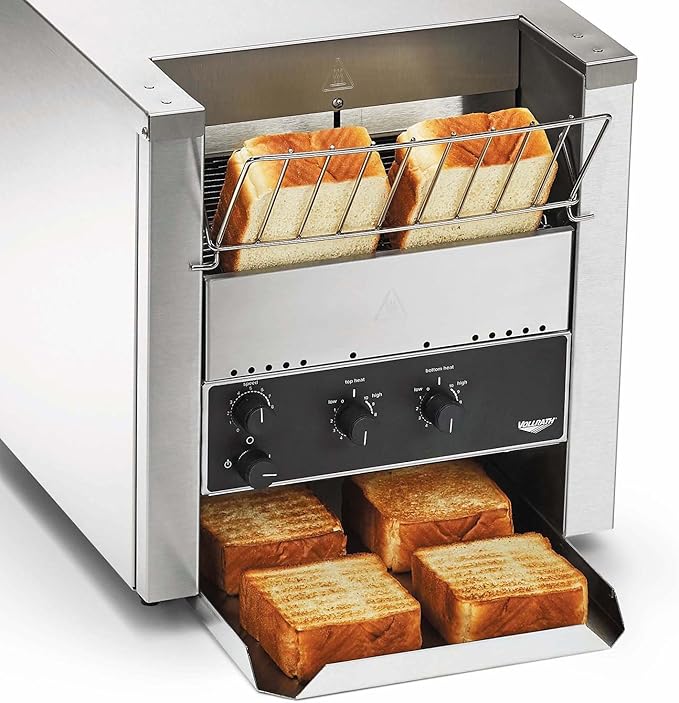
Hatco makes commercial food-service equipment, including Toast-Qwik conveyor toasters. Some models are manufactured in the United States, but these products are designed for restaurants, hotels, cafeterias, and other high-volume settings.
A commercial toaster may be a poor choice for a typical home because it can:
- Take up much more counter space
- Draw more power
- Cost far more than a home toaster
- Produce more heat
- Require commercial cleaning and service
For a home kitchen, a U.S.-made commercial toaster is usually not the most practical answer. It becomes more relevant for a café, food truck, church kitchen, or other commercial operation.

What “Made in the USA” and “Made in the UK” Mean
A country-of-origin claim usually identifies where the final substantial manufacturing or assembly took place. It does not mean that every part came from that country.
A toaster labeled “Made in the USA” may still contain imported:
- Heating elements
- Electrical switches
- Wiring
- Circuit boards
- Metal stock
- Plastic parts
- Packaging materials
The Federal Trade Commission says an unqualified “Made in USA” claim should mean that the product is “all or virtually all” made in the United States. That is a stricter marketing standard than simply saying a toaster was assembled in the United States.
“Made in the UK” or “Made in Germany” does not mean every component came from that country. It normally describes the product’s manufacturing origin, not the origin of each raw material.
For this reason, use these terms carefully:
- Made in: The product meets the seller’s or manufacturer’s country-of-origin claim.
- Assembled in: Final assembly occurred in that country, but major parts may come from other nations.
- Designed in: The company designed the product there. Manufacturing may occur somewhere else.
- Imported by: The company brought the product into the United States. This says nothing about where it was made.
A toaster can be designed in the United States, manufactured in China, and imported by a U.S. company.
How to Verify a Toaster’s Country of Origin
The safest method is to verify the exact model from more than one source. A brand’s general reputation is not enough.
1. Find the complete model number
The model number may appear:
- On the product page
- Under the toaster
- On the rear label
- On the box
- In the owner’s manual
- On the warranty card
A product family may include models made in different countries. The full model number reduces that risk.
2. Check the manufacturer’s product page
Look for phrases such as:
- Made in the United Kingdom
- Made in Germany
- Made in the USA
- Hand-built in the UK
- Country of origin
- Manufacturing location
Treat phrases such as “British design,” “American company,” or “European styling” as design claims, not manufacturing claims.
3. Read the product box and import label
For products sold in the United States, check the box for a country-of-origin statement. The marking may appear near the barcode, specifications, or importer information.
If the box says “Made in China,” the answer is clear even if the marketing page emphasizes American design.
4. Ask the seller a direct question
Use a specific question:
“Where was this exact model manufactured, and can you confirm the country-of-origin label on the current U.S. stock?”
Avoid asking only, “Is this brand made in China?” The answer may differ across product lines.
5. Compare the answer with the physical label
If the seller’s answer differs from the label, trust the current product label more than an old listing. Save a photo of the label and contact the manufacturer if the wording is unclear.
6. Confirm voltage and warranty
A toaster made outside China may be intended for another country. Before buying, confirm:
- 120 volts for standard U.S. household use
- U.S. plug configuration
- U.S. safety certification or listing
- Warranty service in the United States
- Replacement parts available for the same model

Toasters Often Made in China
Many popular toaster brands sell models that are made in China. This is not automatically a safety or quality problem. It simply means the toaster does not meet a buyer’s country-of-origin preference.
Common brands with China-made toaster models include some products from:
- Breville
- Cuisinart
- KitchenAid
- Smeg
- De’Longhi
- Krups
- Hamilton Beach
- BLACK+DECKER
- Proctor Silex
- Oster
- Dash
- Balmuda
This list should not be treated as universal. Manufacturers can change factories, suppliers, and model specifications. A brand may also sell different products in different countries.
The correct question is not:
“Is this brand made in China?”
Ask instead:
“Where was this exact toaster model made?”
Design country is not manufacturing country
A toaster may say:
- Designed in California
- Engineered in Germany
- Italian design
- British design
- Japanese technology
None of those statements proves where the toaster was manufactured. Look for a separate country-of-origin statement.
Assembly country is not parts country
“Made in the UK” does not mean all heating elements or electronic parts came from the UK. If your goal is to support a specific country’s complete supply chain, ordinary retail labels may not provide enough detail.
Most toaster brands do not publish the origin of every component. You may need to contact the manufacturer for that information.
Best Choices by Buyer Type
The right option depends on whether you want a home toaster, a repairable product, or a commercial machine.
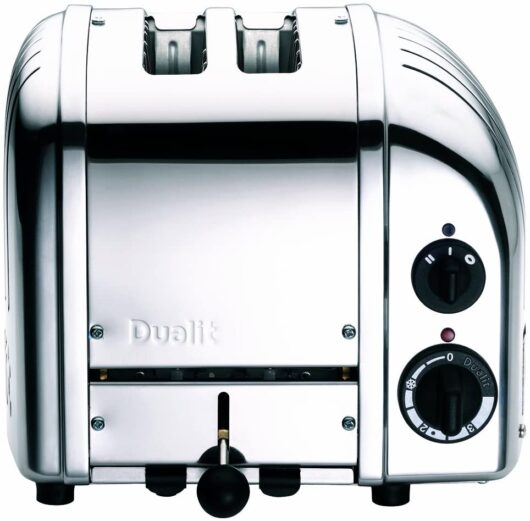
Best for most U.S. homes: Dualit Classic or NewGen
A Dualit Classic or NewGen is a strong choice when the buyer wants:
- UK manufacturing
- A recognized product line
- A U.S. version
- Replaceable parts
- A traditional lever-style design
The trade-off is price. These toasters often cost more than mass-market models. Their long-term value depends on proper care, part availability, and the owner’s willingness to repair the unit.
Best for German manufacturing: A suitable Ritter model
A Ritter toaster may fit buyers who value German production and modern design. Check the voltage with extra care. Many European appliances are not ready for standard U.S. outlets.
Best for commercial use: A qualifying Hatco model
Hatco is more suitable for:
- Restaurants
- Cafeterias
- Hotels
- Large households with unusual needs
- Commercial food-service counters
It is usually excessive for two slices of toast at breakfast.
Best for a lower price: Verify before buying
Low-cost toasters are commonly made in China or other Asian manufacturing centers. If country of origin is your main requirement, a low retail price can make verification harder because product listings often omit the information.
A lower price may also reflect:
- Simpler controls
- Fewer repairable parts
- A shorter warranty
- Higher production volume
- A lighter housing
- Less detailed documentation
Price alone does not prove poor quality, but it should encourage closer checking.
Safety Checks for Any Imported or Domestic Toaster
Country of origin is only one buying factor. A toaster must also be suitable for the U.S. electrical system and used safely.
Check the electrical rating
Most U.S. household outlets provide about 120 volts. Confirm that the toaster is rated for U.S. household power before plugging it in.
Do not operate a 220–240-volt toaster on a U.S. outlet. Do not rely on a travel adapter to solve a voltage mismatch.
Look for recognized safety certification
A toaster should carry an appropriate electrical safety mark for the U.S. market, such as:
- UL
- ETL
- CSA
The mark should appear on the product or its label. A logo in a listing photo is not enough if the current product does not carry it.
Do not use a damaged cord
Stop using the toaster if you find:
- Frayed wiring
- A cracked plug
- Burn marks
- A loose lever
- A damaged housing
- A repeated tripped circuit breaker
- Smoke during normal operation
Unplug the toaster and arrange proper replacement or service.
Keep the toaster clear
Do not place the toaster under cabinets where rising heat can damage the cabinet. Keep curtains, paper, and other flammable items away from the appliance.
Never insert a metal knife or fork into a plugged-in toaster. Unplug the unit and allow it to cool before clearing stuck food.

Common Buying Mistakes
Several errors can lead shoppers to buy the wrong toaster.
Mistake 1: Trusting the brand’s home country
A U.S., British, German, or Japanese brand may manufacture a toaster in China. The company’s headquarters do not establish the product’s origin.
Mistake 2: Confusing “designed in” with “made in”
Design language is often prominent in advertising. Manufacturing information may appear only on the box or underside label.
Mistake 3: Assuming every model in a product line is identical
A two-slice version and a four-slice version may come from different factories. A newer revision may also replace an older model.
Mistake 4: Buying a foreign-voltage model
A toaster made in Germany or the UK may not be suitable for a U.S. outlet. Confirm voltage before purchase.
Mistake 5: Relying on an old review
Reviews may describe a product made several years ago. Manufacturers can change production locations without changing the product’s name.
Mistake 6: Ignoring warranty support
A toaster may be made outside China but lack U.S. service support. A low-cost import can become expensive if it must be shipped overseas for repair.
A Simple Pre-Purchase Checklist
Before placing an order, confirm each item:
- Exact model number identified
- Country of origin confirmed
- Current product label or manufacturer page checked
- 120-volt U.S. version confirmed
- U.S.-compatible plug confirmed
- Safety certification checked
- U.S. warranty available
- Replacement parts reviewed
- Seller can explain any conflicting origin information
- Product is new or has a reliable return policy
If a seller cannot answer where the exact toaster was made, treat the origin as not verified. Do not infer the answer from the brand’s name, design language, or product photographs.
Frequently Asked Questions
Are Dualit toasters made in China?
Not all Dualit toasters are made in China. Dualit states that its Classic, NewGen, and Vario toasters are hand-built in the United Kingdom. The Dualit Lite is a different product and has been identified as manufactured in China. Check the exact model before buying.
Are any toasters made in the USA?
Yes. Some commercial toasters, including specified Hatco Toast-Qwik models, are manufactured in the United States. U.S.-made household pop-up toasters are much harder to find. Always verify the model-specific country-of-origin claim.
Are Smeg toasters made in China?
Many Smeg toaster models sold in the United States are listed as made in China, although product origin can vary by model and market. Check the current box or manufacturer specification for the exact toaster.
Is a toaster made in China unsafe?
No. Country of origin alone does not determine whether a toaster is safe. Electrical certification, design, construction, condition, and proper use matter more. Avoid any toaster with damaged wiring, a counterfeit safety mark, or an incorrect voltage rating.
Can I use a UK-made toaster in the United States?
Only if the model is rated for U.S. voltage and has a suitable U.S. plug. Many UK models use a different voltage. Check the rating plate before use, and ask a qualified electrician if the electrical specifications are unclear.
Where can I find the country-of-origin label?
Look on the product box, the underside or back of the toaster, the owner’s manual, and the manufacturer’s product page. Retail listings are useful, but the physical label on the current product is usually the most relevant evidence.
Conclusion
For a U.S. shopper seeking a toaster not made in China, start with the Dualit Classic, NewGen, or Vario and verify the exact U.S. model. Ritter offers German-made options in some product lines, while Hatco provides U.S.-made commercial choices.
The key is model-level verification. Check the country-of-origin label, voltage, safety certification, warranty, and replacement-part support before buying. “Designed in” is not the same as “made in,” and a brand’s national identity does not prove where its toaster was manufactured.