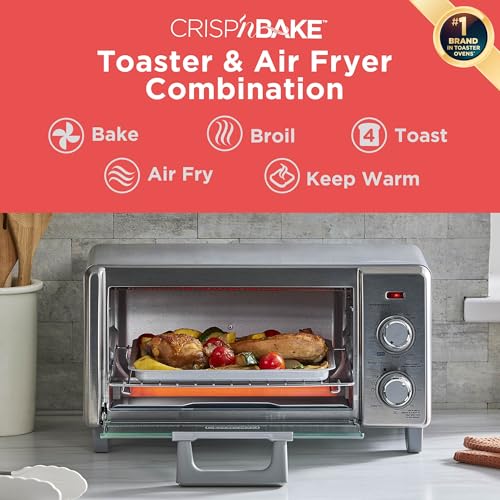
In the United States, a toaster oven is a small electric oven used to toast bread, bake food, broil meals, roast small portions, and reheat leftovers. It heats food with electric heating elements, much like a full-size oven, but its smaller chamber can make small meals easier and faster to prepare.
A toaster oven can replace a pop-up toaster for bread and a large oven for many small cooking jobs. Some models also include convection, air-fry, proofing, dehydrating, or warming settings. The exact features depend on the model.
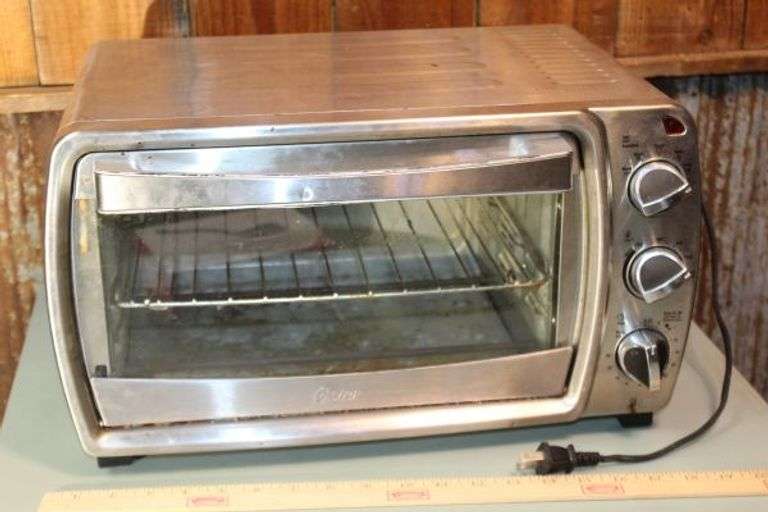
What Can You Use a Toaster Oven For?
A toaster oven is useful for cooking or heating small portions without turning on a full-size oven. Its most common uses include:
- Toasting bread, bagels, English muffins, and waffles
- Baking cookies, biscuits, and small pizzas
- Reheating pizza, fries, roasted vegetables, and sandwiches
- Broiling fish, steaks, vegetables, or open-faced sandwiches
- Roasting small portions of meat or vegetables
- Melting cheese and browning toppings
- Cooking frozen snacks and prepared foods
- Keeping cooked food warm
- Air frying, if the model has an air-fry setting and basket
- Dehydrating foods, if the model supports that function
A toaster oven works best when you need a small amount of food. It may be less useful for large casseroles, a full turkey, or meals that need a deep pot.
Toasting bread and bagels
The toast setting usually turns on the upper and lower heating elements. You place the food on the rack, select a shade or time, and let the hot elements brown the surface.
Bagels often need a special setting. The cut side should face the top heating element so it browns while the outer side warms. Follow the appliance instructions, since controls differ among models.
Baking small foods
A toaster oven can bake many foods that fit inside its cooking chamber, such as:
- Cookies
- Muffins
- Biscuits
- Brownies
- Small cakes
- Personal pizzas
- Casseroles in an oven-safe dish
- Stuffed vegetables
Use a pan that fits without touching the heating elements or blocking the door. A smaller chamber may heat food more quickly than a full-size oven, so check it before the recipe’s stated finish time.
Reheating leftovers
Reheating is one of the most useful toaster oven functions. Dry foods often come out better than they do in a microwave because the oven restores some surface crispness.
Good foods to reheat include:
- Pizza
- French fries
- Fried chicken
- Roasted potatoes
– Garlic bread - Sandwiches
- Baked pasta
- Roasted vegetables
A toaster oven may not be the best choice for soup, sauce, or other liquids. Use a microwave or stovetop for those foods, unless you have a suitable oven-safe container and enough time.
Broiling and browning
Broiling uses intense heat from the upper element. It is useful for browning cheese, crisping a topping, or cooking thin foods.
Stay near the oven when broiling. Food can brown or burn quickly, especially when placed close to the top element. Use a broiler-safe pan when the manufacturer permits one.
Roasting small portions
The roast setting uses steady oven heat. It can cook foods such as:
- Chicken breasts
- Sausages
- Fish fillets
- Small pork portions
- Potatoes
- Carrots
- Brussels sprouts
- Other cut vegetables
Use a food thermometer for meat, poultry, and fish. Color alone does not show whether food has reached a safe internal temperature. The U.S. Department of Agriculture provides safe minimum temperature guidance for different foods.
How Does a Toaster Oven Work?
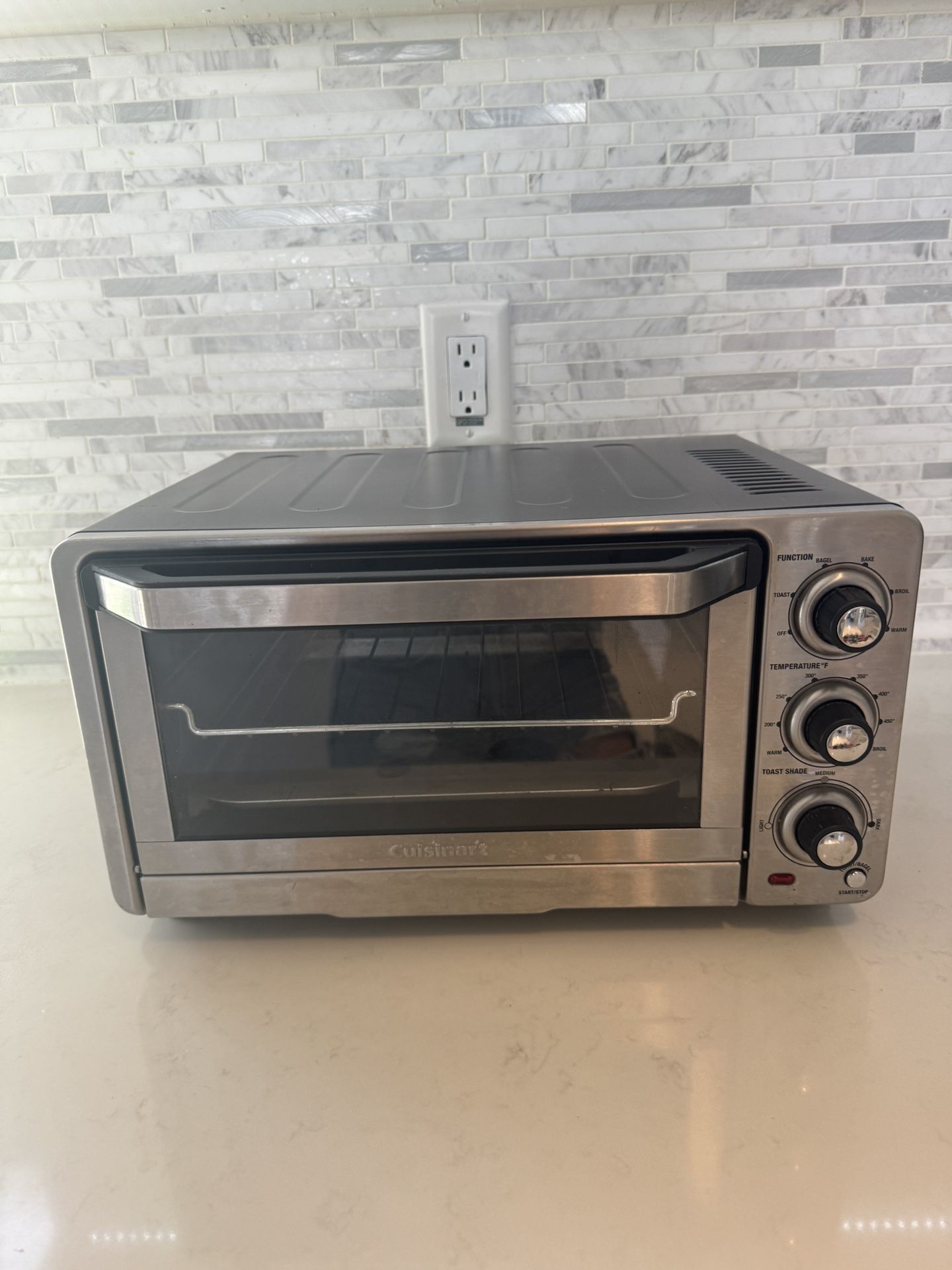
A toaster oven cooks with electric heating elements inside a small insulated chamber. When you choose a setting, the control system sends power to one or more elements. A thermostat or electronic sensor helps regulate the heat.
The small chamber reaches cooking temperature with less space to heat than a standard oven. That can make the toaster oven convenient for small meals. It does not mean every model always preheats faster or uses less electricity in every situation.
Main toaster oven settings
The names vary by brand, but most settings work in similar ways.
| Setting | Main function | Common foods |
|---|---|---|
| Toast | Heats both sides for browning | Bread, bagels, waffles |
| Bake | Uses controlled oven heat | Cookies, casseroles, biscuits |
| Broil | Uses strong heat from above | Cheese, fish, open sandwiches |
| Roast | Cooks with steady heat | Vegetables, chicken, sausages |
| Convection | Circulates hot air with a fan | Roasted foods and baked goods |
| Air fry | Circulates hot air around food | Fries, wings, frozen snacks |
| Warm | Holds cooked food at a low heat | Rolls, cooked dishes |
| Dehydrate | Removes moisture over time | Fruit, herbs, jerky where supported |
A setting label is not a guarantee that the appliance performs like a separate specialty appliance. For example, an “air fry” mode may use the same fan and heating elements as convection cooking. Read the manual for rack position, temperature limits, and recommended accessories.
What convection does
Convection uses a fan to move hot air around the food. This may help food cook more evenly and brown more readily. It can also reduce cooking time or require a lower temperature, depending on the recipe and the appliance.
Do not automatically change every recipe by the same amount. Start with the instructions for your model. Check food early until you learn how the toaster oven behaves.
What a toaster oven cannot do
A toaster oven is not a microwave. It does not heat food through microwave energy, so it usually takes longer to warm dense or moist foods.
It also cannot safely replace every cooking appliance. It may not have enough space for:
- Large roasting pans
- Tall baking dishes
- Full-size pizzas
- Large cuts of meat
- Multiple shelves of food
- Deep pots or pans
Never use a toaster oven as a storage space. Items left inside can touch heating elements or catch fire when the oven turns on.
Toaster Oven vs. Regular Oven, Microwave, and Air Fryer
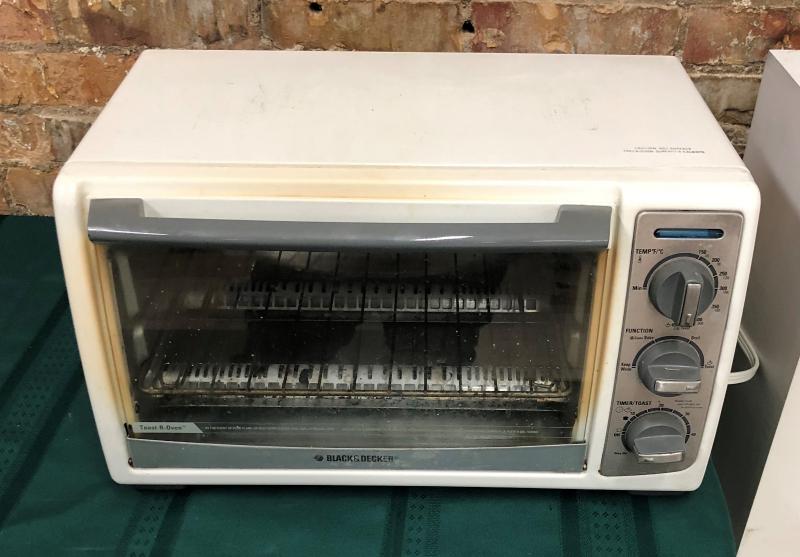
The best appliance depends on the food, portion size, texture, and time available. No single appliance is best for every task.
| Appliance | Best for | Main limitation |
|---|---|---|
| Toaster oven | Toasting, baking small portions, reheating crisp foods | Limited interior space |
| Full-size oven | Large meals, roasting, baking several dishes | Takes more time and space to heat |
| Microwave | Fast heating of liquids and moist foods | Does not usually crisp food |
| Air fryer | Small portions with fast circulating heat | Smaller capacity and less useful for liquids |
| Pop-up toaster | Basic toast and bagels | Cannot bake or reheat most meals |
Toaster oven vs. a full-size oven
Use a toaster oven when the food fits comfortably and you are cooking a small portion. Use a regular oven for large meals, deep dishes, or several trays of food.
The toaster oven can also help avoid heating a large oven for one serving. The actual energy savings depend on the appliance’s power rating, cooking time, preheating time, and the amount of food.
You can estimate electricity use with this formula:
Energy used in kilowatt-hours = power in kilowatts × cooking time in hours
For example, a hypothetical 1,500-watt toaster oven running for 30 minutes would use about 0.75 kilowatt-hours if it drew its full rated power for the entire period. Heating elements cycle on and off, so actual use may be lower.
Toaster oven vs. microwave
Choose a toaster oven when you want browning or crisp edges. Choose a microwave when speed matters most or when heating soup, coffee, oatmeal, or other moist foods.
Some meals benefit from both appliances. You might warm the center of a thick food in a microwave and then crisp the outside in a toaster oven. Use care when transferring hot food and containers.
Toaster oven vs. air fryer
An air-fryer toaster oven offers more functions than a small basket air fryer. It may hold a pizza, a baking dish, or several slices of toast. A basket air fryer may circulate air more directly around a small batch of food.
The deciding factor is capacity. If you often cook one or two servings of fries or wings, a basket may be convenient. If you want to bake, toast, broil, and reheat different foods, a toaster oven may be more flexible.
How to Use a Toaster Oven Safely
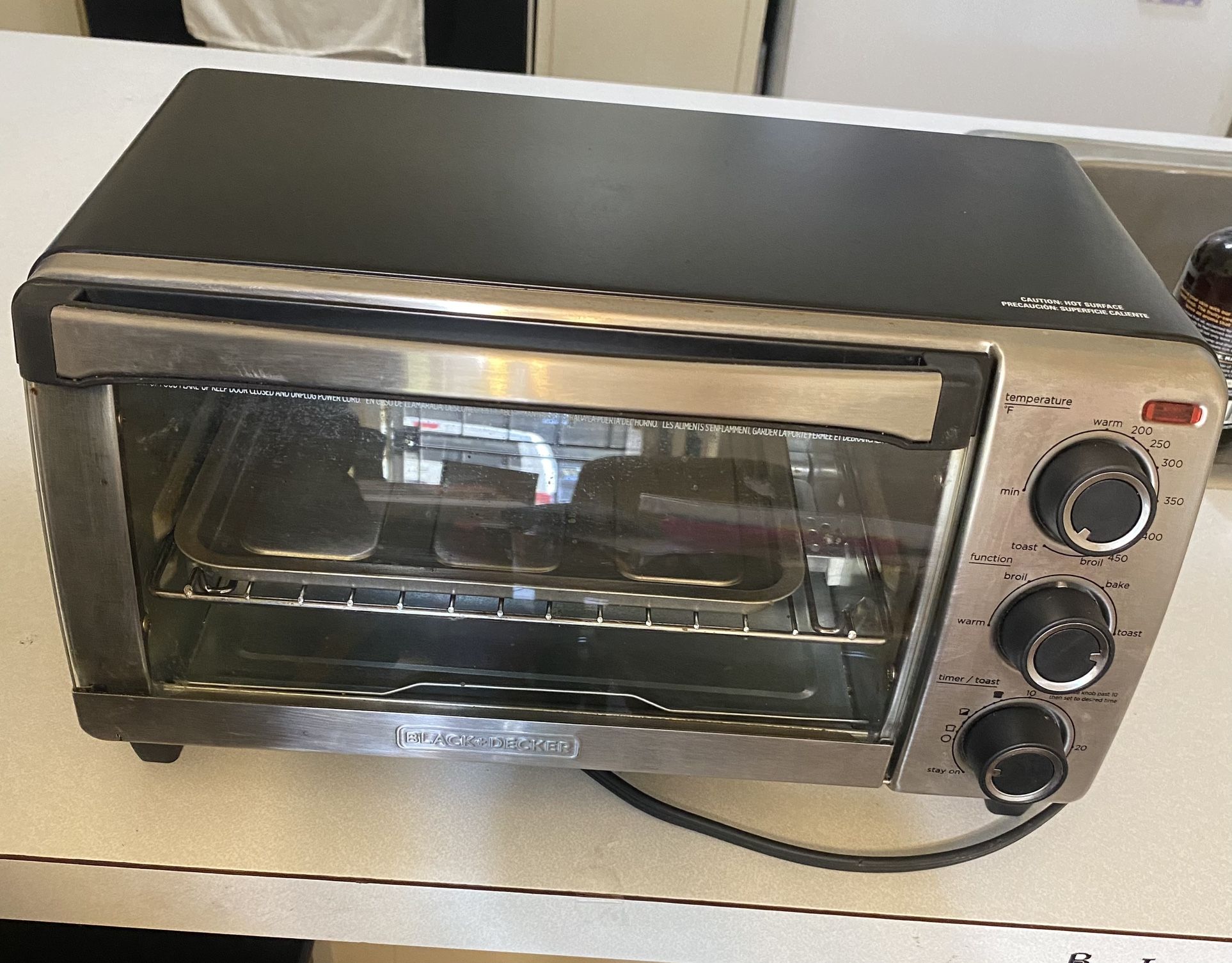
Use a toaster oven on a stable, heat-resistant surface with open space around the vents. Keep it away from curtains, paper products, cabinets that can be damaged by heat, and other objects that may ignite.
The U.S. Consumer Product Safety Commission advises consumers to follow appliance instructions and maintain clear space around heating appliances. Always follow the safety directions for your specific model.
Safe operating steps
- Read the manual before first use. Check permitted cookware, rack positions, maximum temperatures, and cleaning instructions.
- Inspect the cord and plug. Do not use the appliance if the cord is damaged.
- Place the oven on a stable surface. Keep the ventilation openings clear.
- Use oven-safe cookware. Glass, ceramic, and metal products must be rated for oven use.
- Keep food away from the heating elements. Food that touches an element can smoke or ignite.
- Watch food during broiling and toasting. These settings can brown food quickly.
- Use a timer. Do not rely on memory when leaving the kitchen.
- Unplug the oven after use if the manual recommends it. Let it cool before cleaning.
- Clean crumbs and grease regularly. Built-up food can smoke or catch fire.
- Use oven mitts. The door, rack, pan, and food can become very hot.
Materials to avoid
Do not place these items in a toaster oven unless the manufacturer specifically allows them:
- Plastic containers
- Paper plates
- Plastic wrap
- Non-oven-safe glass
- Wooden utensils
- Foam containers
- Sealed containers
- Ordinary parchment paper that is not rated for the cooking temperature
Aluminum foil can reflect heat, block airflow, or contact heating elements. Use it only as described in the manual. Never cover the entire crumb tray or block vents with foil.
Fire and smoke response
If food catches fire inside the toaster oven, turn the appliance off and unplug it if you can do so safely. Keep the door closed to limit oxygen. Do not pour water into an electrical appliance or onto a grease fire. Leave the area and call 911 if the fire does not go out quickly or spreads.
How to Cook Food in a Toaster Oven
Cooking times vary by model, food thickness, starting temperature, pan type, and rack position. Use the steps below as a general method rather than a universal recipe.
Basic cooking method
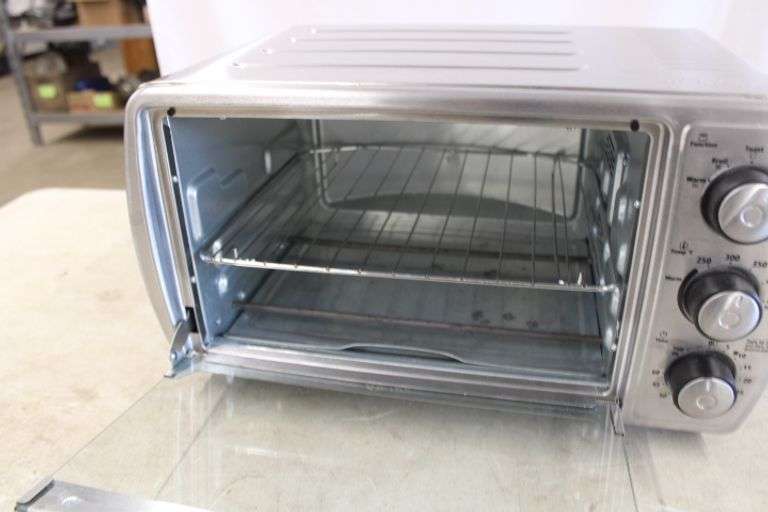
- Check the food size. Make sure the dish or tray fits with space around it.
- Select the setting. Use bake for general cooking, broil for top browning, and convection or air fry for circulating heat.
- Preheat when the recipe requires it. Some foods need a hot chamber from the start.
- Place the rack correctly. Use the manual’s recommended position.
- Set the temperature and timer.
- Check the food early. Small ovens can cook the surface quickly.
- Measure internal temperature when needed. Use a food thermometer for meat, poultry, seafood, and reheated leftovers.
- Let hot food rest safely. Use a heat-resistant surface and avoid touching the pan with bare hands.
Signs that cooking is going well
Food should brown at a steady rate without excessive smoke. The heating elements may cycle on and off during normal operation. A mild odor during the first use may come from manufacturing residue, but follow the manual’s first-use instructions.
Stop using the appliance if you see sparks, damaged wiring, repeated heavy smoke, melting parts, or a burning electrical smell. Unplug it when safe and contact the manufacturer or a qualified repair service.
How to Choose a Toaster Oven
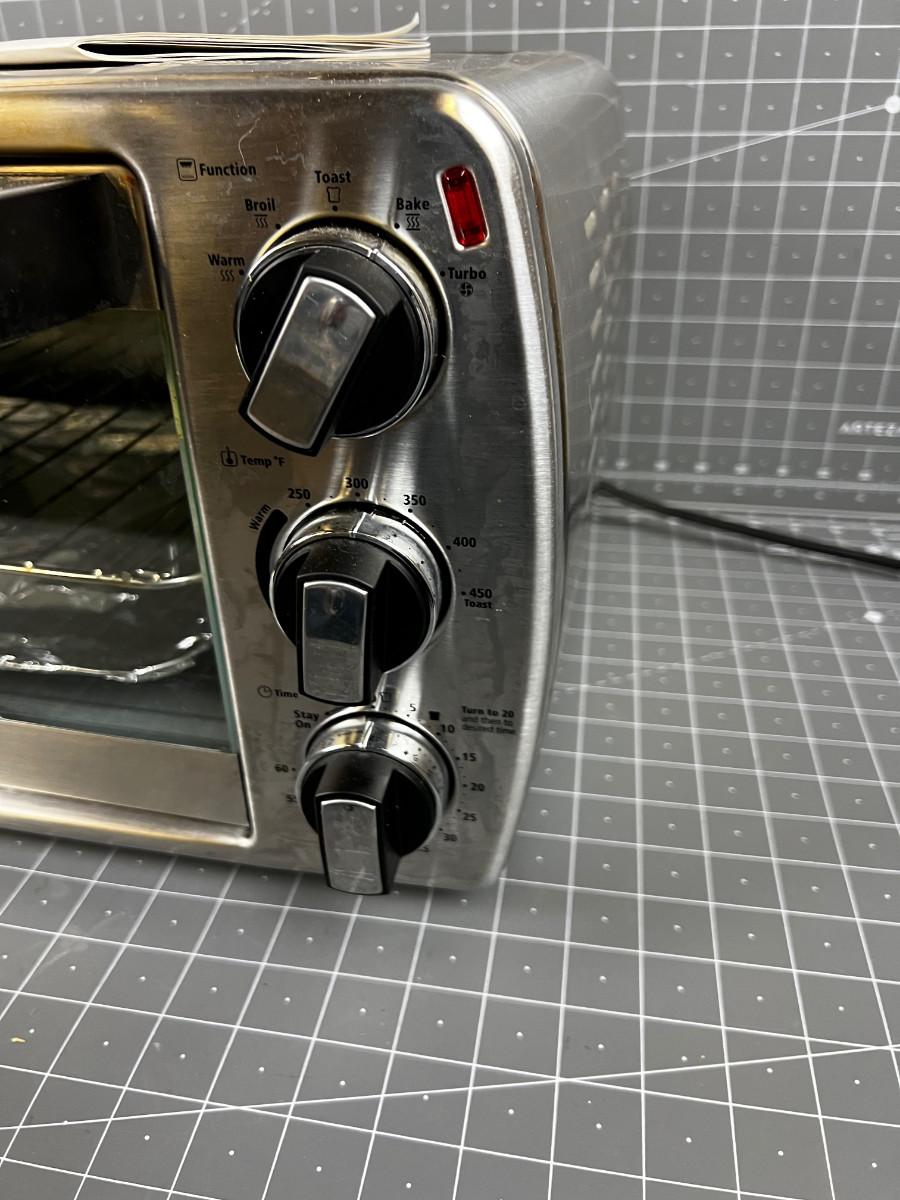
Choose based on the food you cook, the available counter space, and the controls you will actually use. More settings do not always make an appliance more useful.
Consider these features:
- Interior size: Check whether it fits your usual pan, pizza, or casserole dish.
- Temperature range: Confirm that it supports your recipes.
- Convection fan: Useful for circulating hot air and browning.
- Air-fry mode: Helpful for foods that benefit from moving hot air.
- Rack positions: Multiple levels give you more control.
- Removable crumb tray: Makes routine cleaning easier.
- Timer and automatic shutoff: Helpful for reducing unattended heating.
- Door and handle design: These should remain easy to use with oven mitts.
- Controls: Digital controls can offer precision, while simple dials may be easier to repair or operate.
- Manual and warranty: Clear instructions and available support matter more than a long feature list.
Measure the counter and the space above the appliance before buying. The outside dimensions do not show the full clearance needed for ventilation.
How to Clean a Toaster Oven
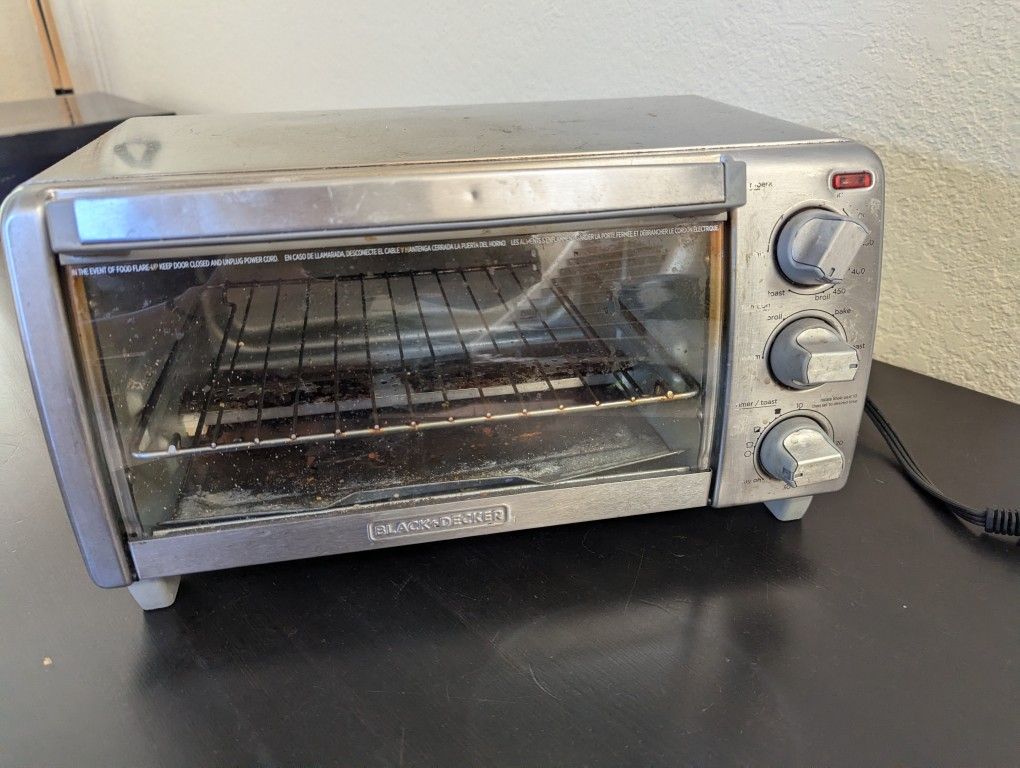
Clean the toaster oven only after it has been switched off, unplugged when appropriate, and allowed to cool. Remove the rack and crumb tray according to the manual.
Brush or wipe away loose crumbs. Wash removable parts with the method recommended by the manufacturer. Wipe the inside with a damp cloth, but do not pour water into the appliance or immerse the main body.
Avoid harsh cleaners unless the manual allows them. Do not scrape heating elements. Remove grease before it builds up, because grease and crumbs can create smoke or increase fire risk.
If the oven continues to smoke after cleaning, check for food stuck near an element, spilled grease, or an accessory that is not rated for the selected temperature. Persistent smoke or an electrical odor requires service rather than repeated use.
Common Toaster Oven Mistakes
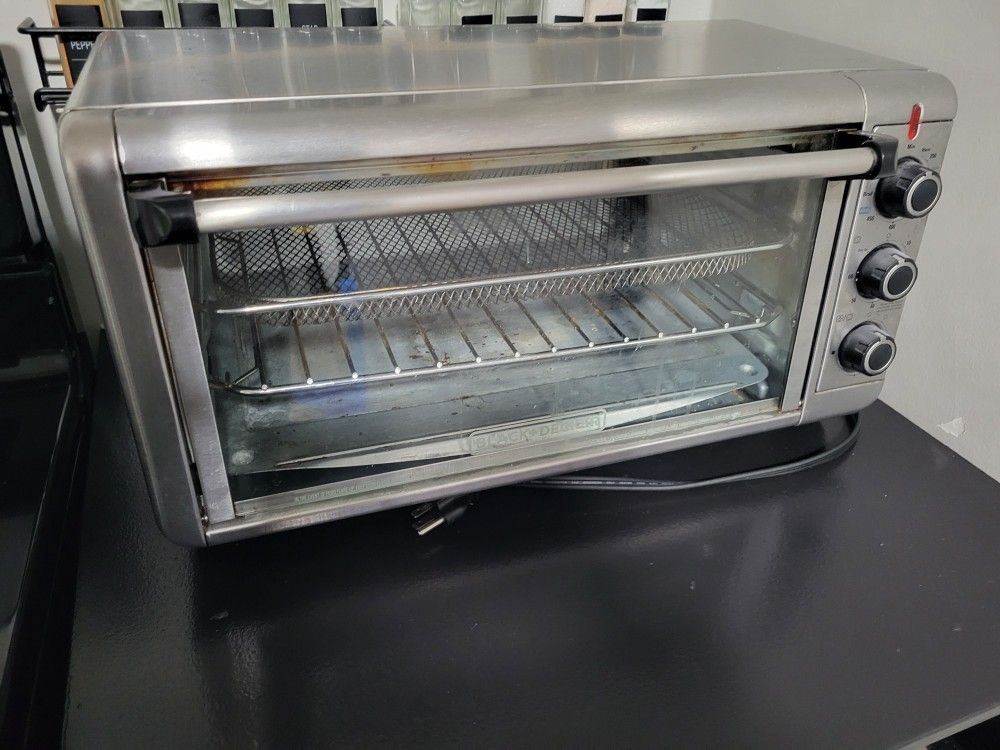
Several simple mistakes can lead to poor results or safety problems.
Overcrowding the oven
Food needs room for heat to move around it. Overcrowding can cause uneven cooking and weak browning. Cook in batches when needed.
Using the wrong rack position
Food placed too close to the top element may burn before the center cooks. Food placed too low may cook slowly. Follow the manual and adjust based on the result.
Ignoring pan size
A pan that is too large can touch the sides or block airflow. A pan that is too small may allow grease to spill onto the heating elements.
Treating the timer as a safety feature
A timer helps, but it does not replace supervision. Some models continue to stay warm after the timer ends, and some settings may not shut off in the same way.
Assuming all glass is oven-safe
Only use glass marked or documented as safe for oven temperatures. Sudden temperature changes can cause unsuitable glass to break.
Skipping temperature checks
Use a thermometer for foods that require a safe internal temperature. A browned outside does not prove that the inside is safe.
Key Takeaways
- A toaster oven is a small electric oven for toasting, baking, broiling, roasting, and reheating.
- It is most useful for small portions and foods that benefit from crisping.
- It is not a microwave and does not work well for large meals or liquid foods.
- Convection and air-fry settings circulate hot air, but performance depends on the model.
- Use oven-safe cookware and keep food, foil, and paper away from heating elements.
- Clean crumbs and grease often, and monitor food during broiling and toasting.
- Use a food thermometer for meat, poultry, seafood, and other foods that require safe internal temperatures.
Frequently Asked Questions
Can you cook raw meat in a toaster oven?
Yes, if the meat fits safely and the toaster oven can maintain the needed cooking temperature. Use a food thermometer and follow USDA safe-temperature guidance. Do not rely only on color or cooking time.
Can you put aluminum foil in a toaster oven?
Sometimes, but only if the manufacturer permits it and the foil does not touch heating elements or block vents. Never cover the entire crumb tray with foil unless the manual specifically says that it is safe.
Is a toaster oven cheaper to run than a regular oven?
It can use less electricity for a small meal because it heats a smaller chamber. The actual difference depends on wattage, cooking time, preheating, and the amount of food. Compare appliances using watt-hours or kilowatt-hours rather than size alone.
Can you use a toaster oven like an air fryer?
A toaster oven can perform a similar function when it has a convection or air-fry setting. Use the recommended basket or tray and leave space for air to circulate. Results may differ from a dedicated basket air fryer.
Can you bake a cake in a toaster oven?
Yes, if the pan fits and the model supports the required temperature. Use a smaller pan only when the recipe allows it, and watch for fast browning on top. A loose foil shield may help protect the top in some recipes, but keep foil away from the heating elements.
Should you preheat a toaster oven?
Preheating is useful for baking, roasting, and recipes that depend on a precise starting temperature. It may be less important for simple reheating. Follow the recipe and the appliance manual.
Why does my toaster oven smoke?
Common causes include crumbs, grease, food touching a heating element, or residue from a new appliance. Turn it off, let it cool, and clean it according to the manual. Stop using it if the smoke smells electrical, continues after cleaning, or comes from damaged parts.
Conclusion
A toaster oven is used for much more than toast. In a U.S. kitchen, it can handle small baking jobs, crisp leftovers, broiling, roasting, and some air-frying tasks while using less counter space than a full-size oven.
Its best use is matching the appliance to the portion and food type. Use it for small, crisp, browned, or baked foods; use a microwave for fast heating of liquids; and use a regular oven when the meal is large or the cookware does not fit. Always follow the model’s manual, use safe cookware, and supervise high-heat settings.