A 3 blade ceiling fan often moves air faster, while a 4 blade fan usually offers smoother, quieter comfort.
Choosing between a 3 blade vs 4 blade ceiling fan is not just about counting blades. Blade pitch, motor power, fan size, room height, airflow rating, and energy use all affect performance. This guide explains the real differences so you can choose a fan that fits your room, comfort needs, and budget.
3 blade vs 4 blade ceiling fan: What is the difference?
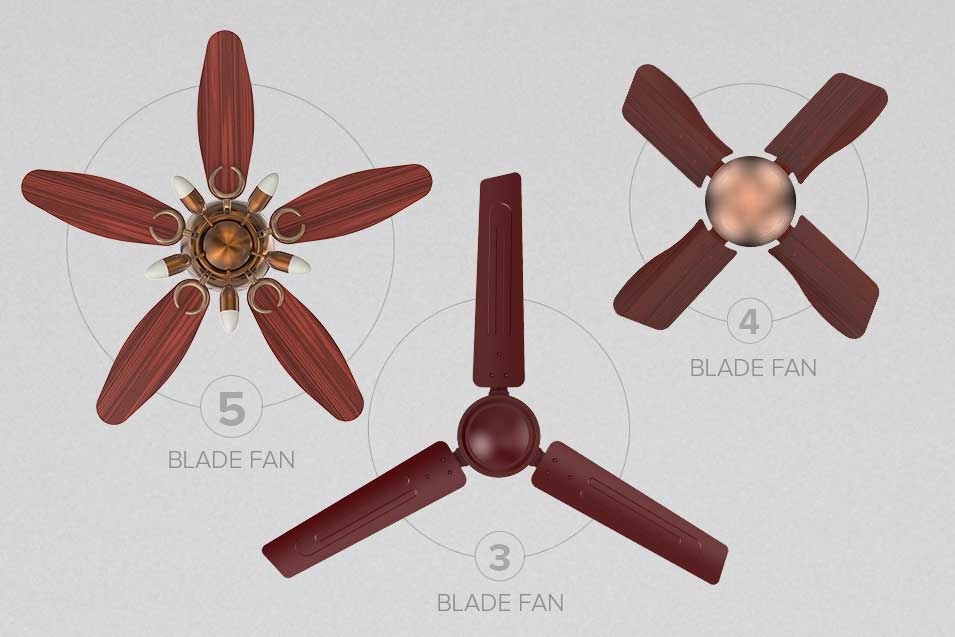
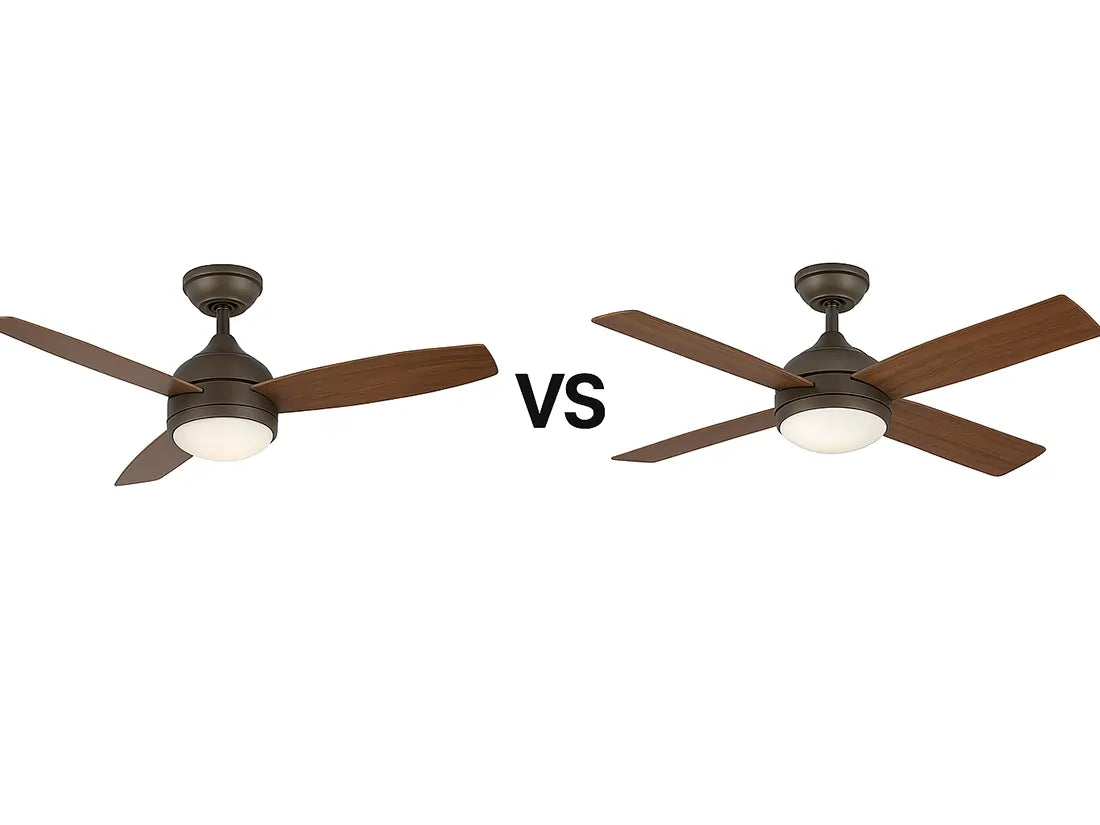
The main difference is the number of blades attached to the motor. A 3 blade ceiling fan has fewer blades, so it often creates less drag and can spin at a higher speed. A 4 blade ceiling fan adds more blade surface, which may produce a smoother feel but can place more load on the motor.
Still, blade count does not tell the whole story. A well-designed 4 blade fan can move more air than a poorly designed 3 blade fan. The most useful rating to check is CFM, or cubic feet per minute. CFM shows how much air the fan moves.
Here is a simple comparison:
| Feature | 3 blade ceiling fan | 4 blade ceiling fan |
|---|---|---|
| Air speed | Often feels stronger | Often feels softer |
| Motor load | Usually lower | Usually higher |
| Noise | Can be slightly louder at high speed | May feel smoother |
| Energy use | Often lower, but varies | May use more, depending on the motor |
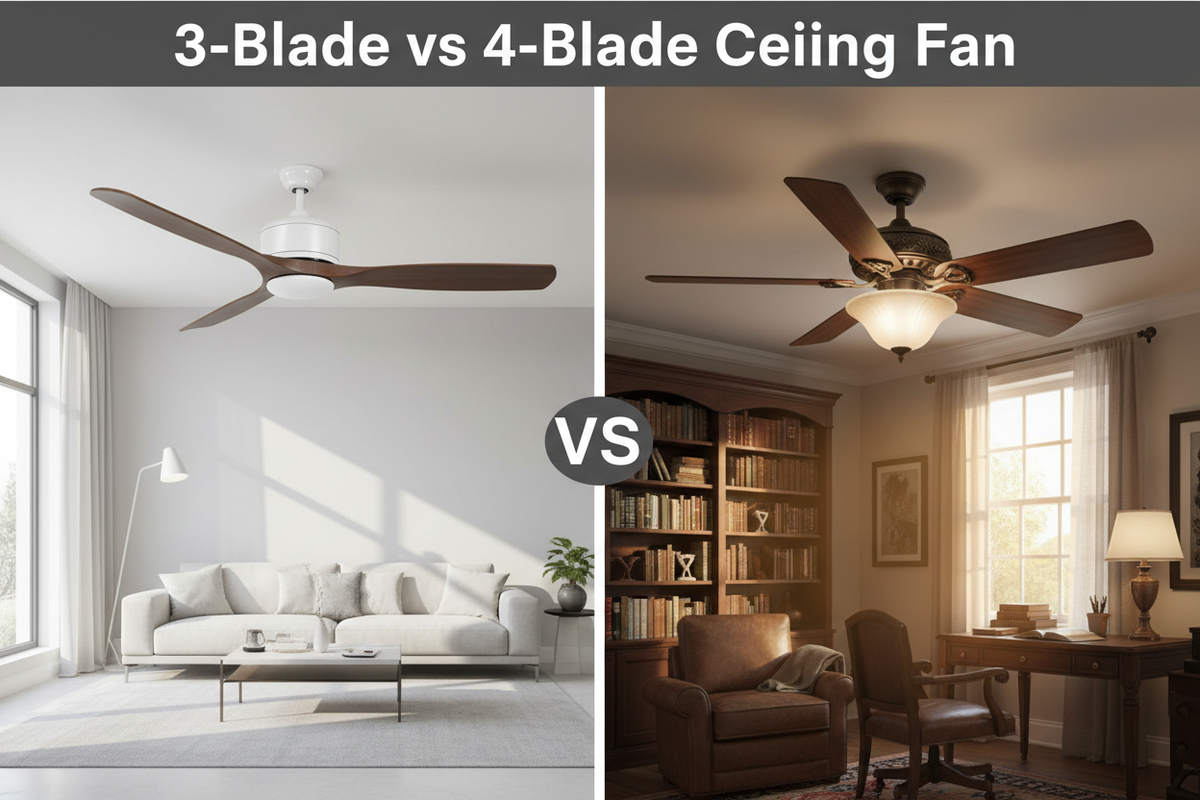
| Style | Modern and simple | Balanced and classic |
| Best for | Strong air movement and efficiency | Smooth comfort and quieter rooms |
A 3 blade vs 4 blade ceiling fan comparison should always include the motor, blade angle, blade width, and fan diameter. Two fans with the same blade count can perform very differently.
How blade count affects airflow
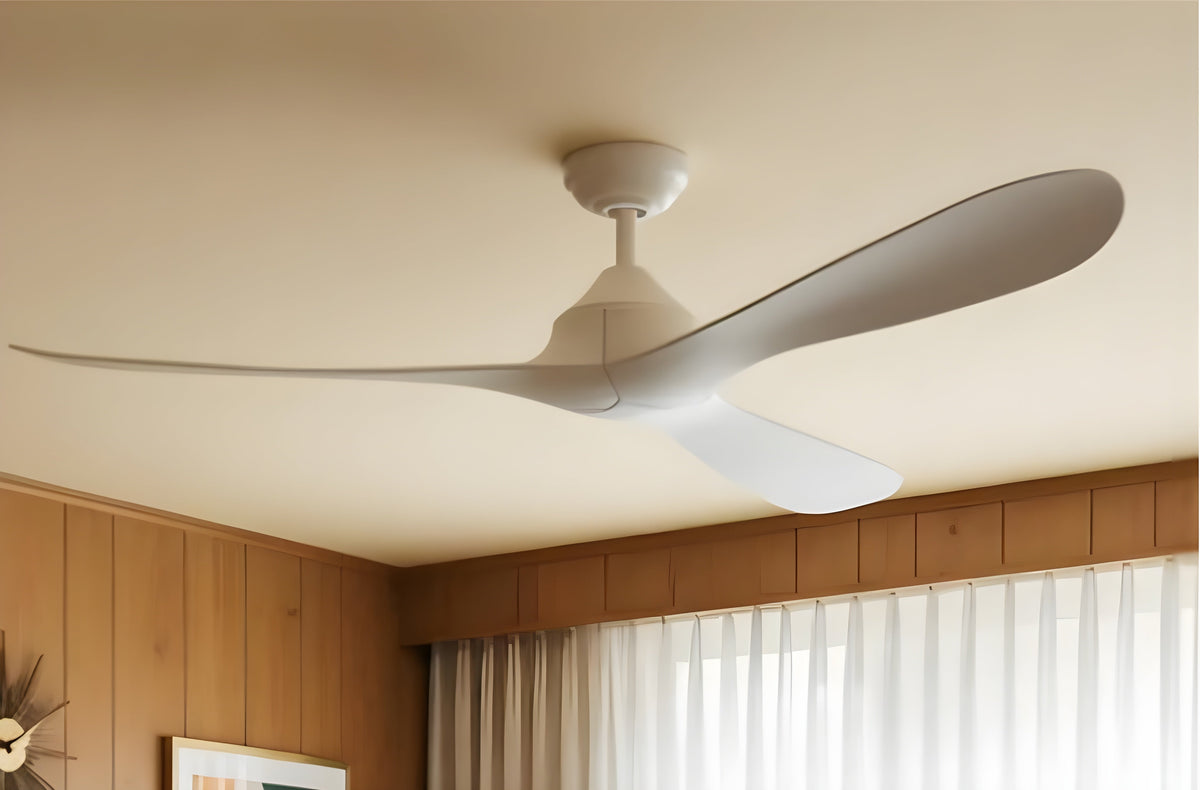
Every ceiling fan blade pushes air as it rotates. Adding another blade increases the total surface area that touches the air. However, it also adds weight and drag.
This creates a balance. A 4 blade fan may spread airflow more evenly, but its motor must work harder to turn the blades. A 3 blade fan has more space between blades. This can help it move air quickly, much like a cyclist travels faster with less weight.
The blade pitch also matters. Blade pitch is the angle of the blade as it cuts through the air. A steeper pitch can move more air, but it needs a stronger motor. Most quality ceiling fans use a blade pitch designed to balance airflow, noise, and energy use.
Other factors include:
• Blade length: Longer blades cover more space and suit larger rooms.
• Blade width: Wider blades can move more air at lower speeds.
• Motor strength: A powerful motor can support a higher blade pitch.
• Rotation speed: Faster rotation often creates a stronger breeze.
• Blade shape: Curved or sculpted blades may improve airflow and reduce noise.
• Fan direction: Counterclockwise rotation usually creates a cooling breeze in summer.
This is why the best 3 blade vs 4 blade ceiling fan cannot be chosen by blade count alone. Look at the complete design.
Airflow and cooling performance
A ceiling fan does not lower the actual room temperature in the same way an air conditioner does. It cools people by increasing air movement across the skin. This process helps sweat evaporate and makes the room feel cooler.
A 3 blade ceiling fan often creates a sharper breeze. This can feel refreshing in a living room, bedroom, garage, or covered patio. If you like strong air movement while sitting or sleeping, a 3 blade model may be the better choice.
A 4 blade ceiling fan can produce a steady and gentle breeze. This may feel more comfortable in a nursery, home office, dining room, or quiet bedroom. The airflow can feel less forceful, even when the fan provides good circulation.
For the best result, match the fan size to the room:
• Rooms up to 75 square feet: Choose a fan around 29 to 36 inches.
• Rooms from 76 to 144 square feet: Choose a fan around 36 to 42 inches.
• Rooms from 145 to 225 square feet: Choose a fan around 44 to 50 inches.
• Rooms larger than 225 square feet: Consider a fan 52 inches or larger.
These are general guidelines. Ceiling height, furniture, room shape, and fan location also affect airflow. A large fan in a small room may feel overwhelming, while a small fan in a large room may struggle.
Noise and comfort
Noise is a common reason people compare a 3 blade vs 4 blade ceiling fan. In general, a 4 blade fan may sound smoother because the blades create a more even airflow pattern. This does not mean every 4 blade fan is quiet.
A 3 blade fan may produce more wind noise at high speed. Yet a well-built 3 blade fan with a balanced motor can run very quietly. Most fan noise comes from the motor, loose parts, poor installation, or blade imbalance rather than blade count alone.
If quiet operation matters, look for:
• A DC motor or high-quality AC motor
• A stable mounting bracket
• Balanced blades
• A low-noise rating from the manufacturer
• Multiple speed settings
• A solid downrod and tight screws
One practical lesson is simple: installation matters. I have seen a quiet fan become noisy because one blade screw was loose. Before replacing the fan, turn off the power and check the mounting hardware, blade screws, and light kit.

Energy efficiency and operating cost
A 3 blade ceiling fan often uses less power because it has less weight and drag. It may also reach a useful airflow level with a smaller motor. However, blade count alone does not determine energy efficiency.
Motor design has a major effect. Modern DC motor fans often use less electricity than older AC motor fans. Efficient electronics, aerodynamic blades, and automatic speed controls can also reduce power use.
When comparing a 3 blade vs 4 blade ceiling fan, check these details:
• CFM: Higher CFM means more air movement.
• CFM per watt: This shows how efficiently the fan moves air.
• Motor type: DC motors are often efficient and offer more speed control.
• Sleep mode: A timer or gradual speed reduction can save energy.
• Reversible motor: Reversing the direction can help circulate warm air in winter.
A fan that uses slightly more power but keeps you comfortable at a lower thermostat setting may still provide good value. The best choice depends on your climate, room size, electricity price, and daily use.
Which ceiling fan is better for each room?
The best 3 blade vs 4 blade ceiling fan depends on how you use the room. A strong breeze may be welcome in one space but annoying in another.
Bedroom
A 4 blade fan can be a good choice for a bedroom because it may provide smooth airflow at low speed. Look for a quiet motor, a sleep timer, and a dimmable light if the fan includes a light kit.
A 3 blade fan also works well if you sleep warm or prefer strong air movement. Use a lower speed at night to reduce noise and prevent an uncomfortable draft.
Living room
Both options can work well in a living room. Choose a 3 blade model for noticeable airflow across a wide seating area. Choose a 4 blade model for a softer breeze and a more traditional appearance.
The room layout matters. Place the fan near the center of the main seating area, not simply in the center of the ceiling if the furniture is arranged to one side.
Home office
A 4 blade ceiling fan may suit an office because its airflow often feels less aggressive. This can help prevent papers from blowing around the desk.
A 3 blade model can also be effective, especially in a warm room. Use a low speed and make sure the fan does not create glare or move loose papers.
Patio or garage
A 3 blade ceiling fan is often useful in a garage or covered patio where strong airflow is helpful. For outdoor areas, choose a fan rated for damp or wet locations as required.
Never install an indoor-rated fan in an exposed outdoor space. Moisture can damage the motor and create a safety risk.

3 blade vs 4 blade ceiling fan: Pros and cons
Benefits of a 3 blade ceiling fan
• Often provides a stronger feeling of air movement
• Usually creates less drag on the motor
• May use less energy, depending on the model
• Often costs less
• Offers a clean and modern look
• Usually has a lighter visual appearance
Limitations of a 3 blade ceiling fan
• May produce more wind noise at high speed
• Can feel too strong in a small bedroom
• May need careful balancing during installation
• Does not always provide the smoothest airflow
Benefits of a 4 blade ceiling fan
• Often creates a steady, gentle breeze
• May feel smoother at low speed
• Can suit bedrooms and quiet spaces
• Offers a balanced, classic appearance
• May circulate air evenly across a room
Limitations of a 4 blade ceiling fan
• Can place more demand on the motor
• May use more electricity in some designs
• May produce less noticeable air speed
• Can cost more
• May not perform well if the motor is weak
The best 3 blade vs 4 blade ceiling fan is the one that matches your comfort preference and room conditions. Neither design wins in every situation.
Important features to check before buying
Blade count should be only one part of your buying decision. Check the following features before placing an order.
CFM rating
CFM is one of the clearest ways to compare airflow. A higher CFM usually means the fan moves more air, but it may also use more electricity. Compare CFM with wattage to find a more efficient model.
Blade pitch
A blade pitch between about 12 and 15 degrees is common in many residential fans. The ideal pitch depends on motor strength and blade design. A steep pitch with a weak motor can reduce performance.
Motor type
DC motors are often quiet and efficient. They may also offer more speed settings and smoother control. AC motors remain common and can be reliable, but their performance depends on the design and quality.
Fan size
Choose a fan based on room size. A 3 blade vs 4 blade ceiling fan with the wrong diameter may give poor airflow, even if its motor is powerful.
Ceiling height
For standard ceilings, a flush mount or short downrod may work well. For high ceilings, a longer downrod can place the fan at a better height. The blades should usually sit at least 7 feet above the floor for safety.
Controls
Remote controls, wall controls, timers, and smart home features can improve convenience. Make sure the control system is compatible with the fan motor.
Reversible operation
A reversible motor allows the fan to move air downward in warm weather and circulate rising warm air in cool weather. This feature can improve comfort throughout the year.
Installation and maintenance tips
A good fan can perform poorly if it is installed incorrectly. Mount the fan to an electrical box designed for ceiling fans. A standard light fixture box may not support the weight or movement.
Keep the blades clean. Dust can add weight and cause imbalance. It can also reduce airflow and make the motor work harder.
Use this simple maintenance routine:
-
Turn off the fan and power before cleaning.
-
Wipe each blade with a soft, dry cloth.
-
Check that blade screws are tight.
-
Inspect the canopy and mounting bracket.
-
Look for wobbling during operation.
-
Replace damaged blades or worn parts.
-
Keep the remote control batteries fresh.
If the fan wobbles, do not assume it is defective. Check that the blades are installed in the correct positions. Many fans include a balancing kit, and small adjustments can solve the issue.
A useful mistake to avoid is installing a large fan too close to a wall or cabinet. Leave enough clearance for safe blade movement and good airflow.
Common buying mistakes to avoid
Many shoppers focus on appearance first and airflow second. A beautiful fan may not cool the room if it is too small or has a weak motor.
Avoid these common mistakes:
• Choosing blade count instead of checking CFM
• Buying a fan that is too small for the room
• Ignoring ceiling height
• Installing an indoor fan outdoors
• Selecting a weak motor with a steep blade pitch
• Forgetting to check the light brightness
• Overlooking remote and wall control compatibility
• Installing the fan without proper ceiling support
• Expecting a ceiling fan to cool an empty room
A ceiling fan cools people, not furniture. Turn it off when nobody is in the room unless you need air circulation for another reason. This simple habit can reduce unnecessary energy use.
My practical take on 3 blade vs 4 blade ceiling fan
When comparing fans in real rooms, I pay attention to the feel of the air rather than the blade count alone. A 3 blade fan often feels lively and direct, which works well in warm living spaces and workshops. A 4 blade fan often feels calmer, which many people prefer near a bed or desk.
One lesson stands out: the motor and fan size matter more than many shoppers expect. I have seen a well-designed 4 blade model outperform a basic 3 blade model because it had a better motor, wider blades, and a higher CFM rating.
My advice is to stand below the fan, if possible, and test each speed. Listen for motor hum, clicking, or blade movement. Also check the return policy, because comfort is personal and product descriptions cannot fully show how airflow will feel in your room.
Frequently Asked Questions about 3 blade vs 4 blade ceiling fan
Is a 3 blade ceiling fan better than a 4 blade ceiling fan?
Neither design is always better. A 3 blade fan may provide stronger airflow and use less power, while a 4 blade fan may offer smoother and quieter comfort.
Does a 4 blade ceiling fan move more air?
Not automatically. Airflow depends on CFM, motor power, blade pitch, blade size, and fan speed, so a 4 blade fan can move more or less air than a 3 blade model.
Which is quieter, a 3 blade or 4 blade ceiling fan?
A 4 blade fan may feel smoother, but blade count does not guarantee quiet operation. Motor quality, balance, installation, and speed have a greater effect on noise.
Is a 3 blade ceiling fan more energy efficient?
It often can be, because fewer blades may create less drag. However, motor efficiency and CFM per watt are more reliable ways to compare energy use.
Which ceiling fan is best for a bedroom?
A quiet 4 blade ceiling fan can suit a bedroom because it may provide gentle airflow. A 3 blade fan is also a good choice if you prefer a stronger breeze or sleep in a warm room.
Can I use a 4 blade ceiling fan in a large room?
Yes, as long as the fan has the correct diameter and a suitable CFM rating. For a large room, fan size and airflow capacity matter more than the number of blades.
Does blade pitch matter more than blade count?
In many cases, yes. Blade pitch affects how much air each blade can push, but the motor must be strong enough to handle that angle without losing speed.
Conclusion
The 3 blade vs 4 blade ceiling fan choice comes down to airflow style, room size, noise, energy use, and personal comfort. A 3 blade fan often delivers a stronger breeze with less drag, while a 4 blade fan may provide smoother and gentler circulation.
Before buying, compare CFM, blade pitch, motor type, fan diameter, controls, and installation requirements. Choose the fan that fits your room instead of relying on blade count alone. Explore more ceiling fan guides, compare trusted models, and share your experience with the 3 blade vs 4 blade ceiling fan in the comments.